Inspirational journeys
Follow the stories of academics and their research expeditions
The Hidden Cost of Using the Wrong SBOM Format for Financial Sector Compliance
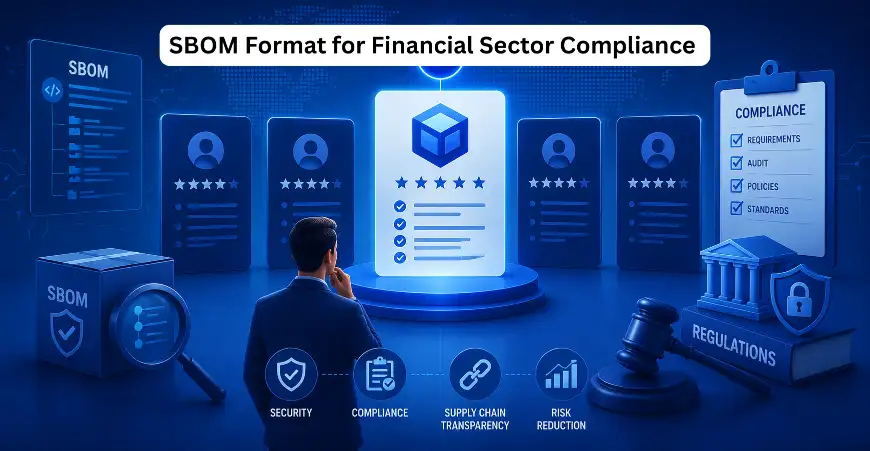
Financial institutions have spent years strengthening identity controls, fraud detection, and transaction monitoring. Yet software supply chain visibility still remains uneven across much of the sector. The problem is not always a lack of tooling. In many cases, organisations generate Software Bills of Materials but fail to standardise the structure and format properly.
That creates a quieter risk. One that usually surfaces during audits, vendor assessments, or incident investigations.
Using the wrong SBOM Format for Financial Sector Compliance can introduce reporting gaps, slow down vulnerability response, complicate third-party reviews, and increase operational overhead across security and compliance teams. Most organisations only realise the impact after regulators or customers begin asking harder questions about software provenance and component traceability.
By then, correcting the issue becomes far more expensive than selecting the right format from the beginning.
Table of Contents
- Financial institutions face stricter software scrutiny
- SBOM generation alone is not enough
- Why format compatibility matters more in finance
- The three formats most organisations encounter
- The hidden operational cost appears later
- Choosing the right format requires operational thinking
- A useful framework for internal evaluation
- Financial regulators increasingly expect software transparency
- Conclusion
Financial institutions face stricter software scrutiny
Banks, payment processors, insurance firms, and financial service providers operate under tighter operational resilience expectations than most industries. Regulators increasingly expect organisations to understand the software components running inside critical systems, especially where third-party software and open-source dependencies are involved.
The pressure comes from multiple directions:
- Supply chain attacks targeting financial ecosystems
- Third-party software concentration risks
- Regulatory focus on operational resilience
- Faster breach disclosure expectations
- Growing software procurement scrutiny
An effective SBOM Format for Financial Sector Compliance supports transparency across these areas. A weak or incompatible format does the opposite. It fragments visibility and creates friction between security, engineering, compliance, and procurement teams.
SBOM generation alone is not enough
A common mistake in financial environments is assuming that any SBOM output automatically satisfies compliance objectives.
It rarely works that way.
The format itself determines whether the data can be:
- Shared consistently across vendors
- Parsed by security tooling
- Correlated with vulnerability databases
- Reviewed during audits
- Retained for governance purposes
Two organisations may technically generate SBOMs while operating at completely different levels of maturity.
One produces structured, interoperable data that integrates cleanly across workflows. The other generates static exports that nobody uses operationally.
The difference often comes down to choosing the correct SBOM Format for Financial Sector Compliance.
Why format compatibility matters more in finance
Financial institutions rarely operate inside isolated environments. Systems depend heavily on third-party vendors, cloud services, fintech integrations, payment processors, and external software providers.
That interconnected structure creates a dependency chain that regulators increasingly want visibility into.
An incompatible SBOM format creates several operational problems:
|
Issue |
Business Impact |
|
Limited interoperability |
Security tools cannot parse data consistently |
|
Poor vulnerability correlation |
Threat exposure remains unclear |
|
Inconsistent reporting |
Audit preparation slows down |
|
Weak supplier alignment |
Third-party reviews become fragmented |
|
Manual data handling |
Operational costs increase |
The financial sector already deals with complex governance obligations. Adding inconsistent software inventory formats only increases compliance fatigue.
The three formats most organisations encounter
Most discussions around SBOM Format for Financial Sector Compliance eventually narrow down to three widely recognised standards.
SPDX
Originally developed under the Linux Foundation, SPDX focuses heavily on licence transparency and software component tracking. It is widely recognised and commonly used across open-source ecosystems.
Many organisations favour SPDX for procurement and software governance processes.
CycloneDX
CycloneDX was designed with security operations in mind. It places stronger emphasis on vulnerability management, dependency tracking, and risk analysis.
This format has gained significant traction within DevSecOps and enterprise security programmes.
SWID
Software Identification Tags, or SWID, are often associated with asset management and software inventory control. Adoption varies depending on industry requirements and tooling ecosystems.
SWID can still appear in regulated environments where asset visibility requirements are deeply embedded.
No single format universally fits every financial institution. The correct choice depends on operational priorities, regulatory exposure, and ecosystem compatibility.
The hidden operational cost appears later
Most SBOM format mistakes do not cause immediate disruption. The issues surface gradually.
A procurement team requests software transparency documentation from a vendor. The existing tooling cannot ingest the file properly.
An audit requires historical component traceability. The exported data lacks consistency.
A critical vulnerability emerges in a transitive dependency. Security teams struggle to correlate affected systems because component relationships are incomplete.
These are not theoretical scenarios anymore. They are increasingly common in large enterprise environments.
The wrong SBOM Format for Financial Sector Compliance creates hidden labour costs that spread across multiple teams:
- Security operations spend longer validating exposure
- Compliance teams manually reconcile reporting gaps
- Engineering teams rebuild integrations
- Procurement teams repeat supplier assessments
- Risk teams lose confidence in software inventories
The technology cost may appear manageable initially. The operational cost rarely stays contained.
Choosing the right format requires operational thinking
Many organisations select formats based purely on vendor defaults. That approach creates long-term problems because software ecosystems evolve faster than procurement decisions.
A more practical approach starts with operational use cases.
Before selecting an SBOM Format for Financial Sector Compliance, organisations should evaluate:
Ecosystem Fit
Does the format integrate properly with existing vulnerability management and governance tooling?
Regulatory Mapping
Can compliance teams generate evidence cleanly during audits and supplier reviews?
Automation Support
Will security workflows process the data without requiring manual transformation?
Supplier Alignment
Can external vendors and software partners exchange compatible SBOM data?
Scalability
Will the format still function effectively as cloud workloads and dependencies expand?
This evaluation process often reveals that technical compatibility matters just as much as compliance alignment.
A useful framework for internal evaluation
Security and governance teams often benefit from a structured review process before standardising an SBOM strategy.
Before finalising any format decision, assess these areas in sequence:
- Tool Support:
Verify whether existing security and governance platforms support the format properly. - Data Quality:
Check whether dependency relationships remain accurate across complex applications. - Audit Readiness:
Confirm that reporting outputs satisfy regulatory review requirements. - Vendor Alignment:
Assess whether third-party suppliers can exchange compatible SBOM data. - Operational Scale:
Evaluate whether workflows remain sustainable as software inventories grow.
This process prevents organisations from adopting formats that look compliant on paper but fail operationally.
Financial regulators increasingly expect software transparency
The direction of travel is fairly clear. Financial regulators are placing more emphasis on operational resilience, third-party risk management, and software supply chain visibility. Institutions that cannot demonstrate reliable software component traceability may eventually face:
- Increased audit scrutiny
- Procurement delays
- Higher vendor risk exposure
- Slower incident response timelines
- Greater regulatory reporting pressure
A mature SBOM Format for Financial Sector Compliance supports resilience efforts by improving visibility and reducing uncertainty during investigations or vulnerability disclosures.
That matters because financial institutions rarely have the luxury of extended remediation windows after major security events.
Conclusion
Choosing the correct SBOM Format for Financial Sector Compliance is not simply a technical standardisation exercise. It directly affects how effectively financial institutions manage software supply chain risk, regulatory reporting, vulnerability response, and third-party oversight.
The wrong format may appear manageable initially, especially during early deployment stages. The real cost usually emerges later through operational inefficiencies, fragmented reporting, and delayed security response efforts.
Financial organisations need formats that support interoperability, automation, audit readiness, and long-term governance maturity. That requires evaluating how SBOM data moves across the broader ecosystem rather than focusing only on generation capability.
CyberNX can help organisations assess, implement, and operationalise the right SBOM Format for Financial Sector Compliance based on regulatory requirements, tooling environments, and software supply chain risk exposure. The focus remains on building practical, scalable visibility without adding unnecessary operational complexity.

Categories
Related Posts
Importance of Procurement Management Software in Modern Business
Fri, 28 February 2025

5 Best Custom Packaging Suppliers Compared (MOQ, Cost, Lead Time)
Fri, 09 January 2026

Mastering Agile Project Management for High-Performing Teams
Mon, 05 January 2026

5 Ways to Navigate Workers' Compensation Claims
Tue, 13 January 2026

What Is Fire Safety Software?
Mon, 06 April 2026
What to Do if You’re Accused of Using AI (Step‑by‑Step Workflow)
Wed, 01 April 2026

Essential Tools for Agile Project Management 2024
Fri, 15 March 2024

Successful Product Strategies for Introduction Stage of Product Life Cycle
Thu, 19 October 2023



 USA : +1315-322-7821
 UK : +44 7700 174870
 IND : +919036108287
 AUS : +61 480 005 455