How Certified Professionals Turn a Credential Into Career Momentum
Wed, 21 October 2026

Inspirational journeys
Follow the stories of academics and their research expeditions
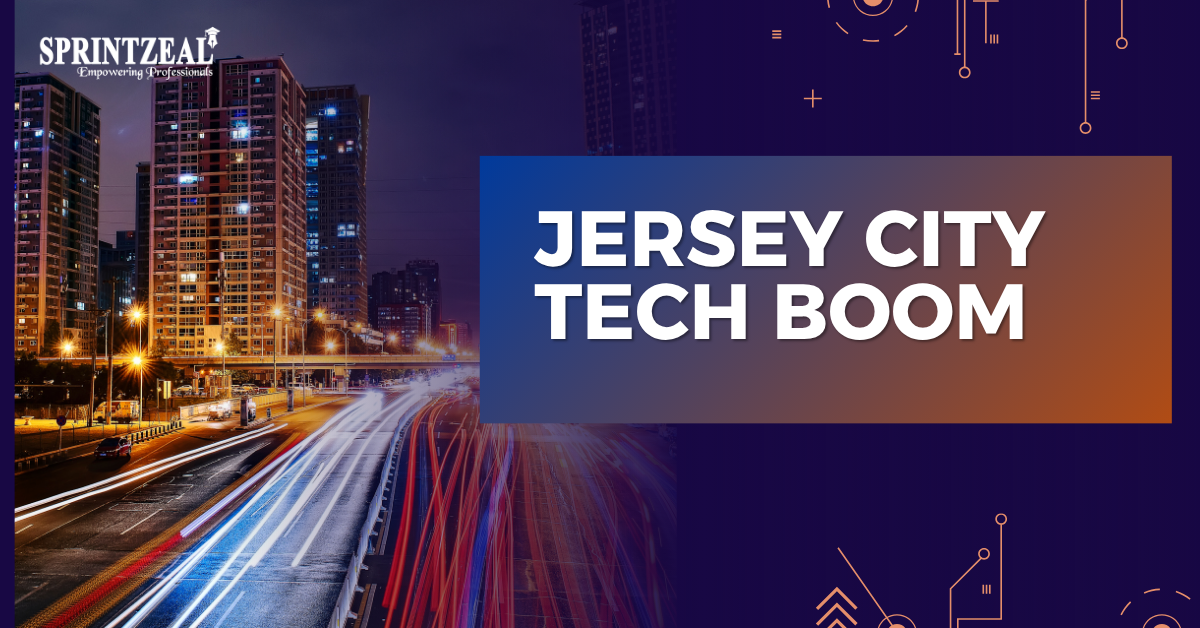
Jersey City has emerged as one of the most dynamic economic centers in the northeastern United States, driven in large part by an expanding technology workforce that is fundamentally reshaping both the employment landscape and residential real estate market.
New Jersey ranked among states with the biggest net tech employment gains during the 2024 reporting period, and much of that growth has concentrated in Jersey City's accessible waterfront districts.
This transformation extends well beyond simple job creation, influencing everything from commercial development patterns to housing demand and the types of professional skills that command premium compensation in the region.
The city's tech sector expansion represents a strategic evolution from its historical identity as primarily a financial services hub. While finance remains dominant, technology roles now permeate virtually every major industry cluster operating within city limits, creating a more diversified and resilient economic base that positions Jersey City as a serious competitor to traditional tech centers.
Finance and insurance employ 19,910 people in Jersey City, with the highest average salary at $141,851, establishing the foundation for a high-income professional class. Yet the economic story extends far beyond traditional banking.
The tech industry in Jersey City contributed over $2.5 billion to the state's economy in 2021, which is a massive 18% increase from the previous year, demonstrating rapid acceleration in technology sector influence.
Fintech innovation sits at the intersection of these two powerful forces. Jersey City has become a natural laboratory where established financial institutions integrate cutting-edge technology platforms, creating hybrid roles that demand both financial expertise and technical proficiency.
Since 1993, Jersey City has seen 500% growth in FIRE businesses with companies like Goldman Sachs, UBS, Citigroup, and JPMorgan Chase choosing Jersey City's waterfront over Manhattan offices.
Cloud infrastructure development represents another critical growth vector. Major enterprises operating in Jersey City require sophisticated cloud architecture to support trading platforms, data analytics, and customer-facing applications. This infrastructure demand creates sustained employment opportunities for cloud engineers, DevOps specialists, and security professionals.
Professional services firms have also expanded their technology capabilities dramatically. Consulting practices, legal firms, and marketing agencies now employ data scientists, automation specialists, and digital transformation experts to serve increasingly tech-savvy clients.
Professional services employs the most people at 25,618 workers across consulting, legal, marketing, and tech firms.
Perhaps most importantly, the Manhattan talent spillover effect continues to reshape Jersey City's competitive position.
Jersey City is a fast-growing commercial hub with convenient proximity and connection to New York City that enhances its appeal to startups and established firms alike, offering access to top talent, investors, and global markets while maintaining a more affordable and scalable business environment. This proximity advantage allows companies to attract New York-caliber talent without New York-level real estate costs, creating a compelling value proposition that has accelerated corporate relocations.
Professional certification programs have become increasingly valuable for workers seeking to capitalize on these employment trends, particularly in project management, cloud platforms, and cybersecurity domains where credential verification carries significant weight with employers.
Jersey City emerges as a tech powerhouse with data analysis jobs growing by 27% and software development by 19%, reflecting the types of technical skills commanding highest demand. These growth rates substantially exceed national averages and signal sustained employer investment in technology capabilities.
Jersey City's tech workforce grew by an impressive 18.5tween 2014 and 2019, establishing a pattern of consistent expansion that has continued through subsequent years.
The New Jersey Economic Development Authority expects a whopping 25% increase in tech jobs within the city by 2025, suggesting the acceleration shows no signs of moderating.
The compensation structure for technology professionals reflects the high stakes employers place on attracting skilled workers.
Salaries for tech professionals in Jersey City are competitive, with roles like Data Scientist ranging from $107,500 to $182,000 annually and Cloud Architects at IBM earning between $126,750 and $165,000. These salary ranges create substantial purchasing power that directly influences local housing markets.
Specific occupational categories demonstrate particularly robust expansion.
Jersey City's tech job market in 2025 is booming with a 27% rise in data analysis and 19% in software development roles, with major firms like DraftKings fueling growth alongside fintech, AI, and cybersecurity sectors. The diversification across multiple technology domains provides market stability that single-industry boom towns lack.
Federal employment projections support optimistic outlooks for sustained growth.
Overall employment in computer and information technology occupations is projected to grow much faster than the average for all occupations from 2024 to 2034, according to U.S. Bureau of Labor Statistics data, indicating favorable long-term trends that should continue benefiting tech-forward markets like Jersey City.
The influx of well-compensated technology professionals has created measurable impacts on Jersey City's residential real estate sector.
The city has seen a 7.5 percent population increase between 2020 and 2024, and despite a 20 percent increase in Jersey City's apartment inventory over the past five years, its multifamily vacancy rate is just 2.8 percent as of Q2 2025.
This exceptionally low vacancy rate reflects intense competition for housing units, driven substantially by incoming tech workers seeking proximity to employment clusters.
Tech companies and financial institutions continue to expand into Jersey City, boosting demand for housing while home prices have risen. The relationship between employment growth and housing demand creates a reinforcing cycle that supports continued property value appreciation.
Specific neighborhoods have experienced differential impacts based on their proximity to major employment centers and transportation infrastructure.
Tech workers should explore growing companies in Newport and Harborside, areas that have seen concentrated development of both office space and residential high-rises designed to appeal to the professional demographic.
Price appreciation patterns confirm the sustained demand pressure.
Home prices in the city have grown by over 45% in the last five years, speaking to fierce demand for real estate. This appreciation rate substantially exceeds national averages and reflects the particular appeal Jersey City holds for professionals working in high-compensation industries.
The rental market demonstrates similar dynamics.
The demand for rental units is consistently high, making it an ideal market for investors looking for long-term rental income. Technology professionals, particularly younger workers or those recently relocated from other markets, frequently choose rental housing initially, supporting robust occupancy rates and stable rental income streams for property investors.
Commercial real estate patterns also reflect the technology sector's influence.
Average asking rent for office space along the Hudson River waterfront currently sits at $44.51 per square foot, which is 32 percent above the broader Northern New Jersey average but still 42 percent below the Manhattan average, creating an attractive middle ground for companies seeking quality space at reasonable costs.
The rapid expansion of technology employment has created corresponding demand for workforce development programs that can supply employers with qualified candidates.
New Jersey is home to several top-ranked research universities, including Princeton University, Stevens Institute of Technology, Rutgers University, and the New Jersey Institute of Technology, and through partnerships with government, business, and industry leaders, these universities work to strengthen workforce talent and accelerate innovation within the State.
These academic institutions provide a steady pipeline of technically trained graduates who can enter the workforce with relevant skills.
The New York metro area, which includes Jersey City, ranked third among 50 North American markets in CBRE's Scoring Tech Talent 2025 report, with more than half of Jersey City's population having a bachelor's degree or higher.
Beyond traditional four-year degree programs, alternative training pathways have emerged to serve career changers and those seeking rapid skill acquisition.
Tech Elevator's Jersey City campus, launched in November 2022, is leading the charge in tech education with impressive results, featuring a 95% graduation rate and 90% job placement rate within 180 days. These outcomes demonstrate the effectiveness of focused, practical training programs in meeting employer needs.
Professional certification and continuing education have become essential components of career advancement in technology fields. Strategic leadership development and technical certification programs help professionals stay current with rapidly evolving technology platforms and methodologies, increasing their value to employers operating in competitive markets.
The educational infrastructure supporting workforce development creates a sustainable foundation for continued economic growth, ensuring that technology sector expansion can be sustained by local talent rather than requiring constant recruitment from distant markets.
Jersey City's transformation from a primarily financial services center to a diversified technology employment hub represents one of the most significant economic shifts in the New York metropolitan area over the past decade. The combination of expanding job opportunities, rising compensation levels, and strong educational infrastructure creates conditions for sustained growth that should continue reshaping both the employment landscape and residential real estate market for years to come.

Wed, 21 October 2026
Thu, 15 October 2026

Wed, 14 October 2026

Tue, 13 October 2026
Wed, 07 October 2026

Fri, 02 October 2026

Wed, 30 September 2026

Tue, 29 September 2026

Fri, 25 September 2026

Tue, 22 September 2026


© 2026 Sprintzeal Americas Inc. - All Rights Reserved.

 USA : +1315-322-7821
 UK : +44 7700 174870
 IND : +919036108287
 AUS : +61 480 005 455