The Best No-Code AI App Builders for Businesses in 2026
Fri, 18 September 2026
Inspirational journeys
Follow the stories of academics and their research expeditions
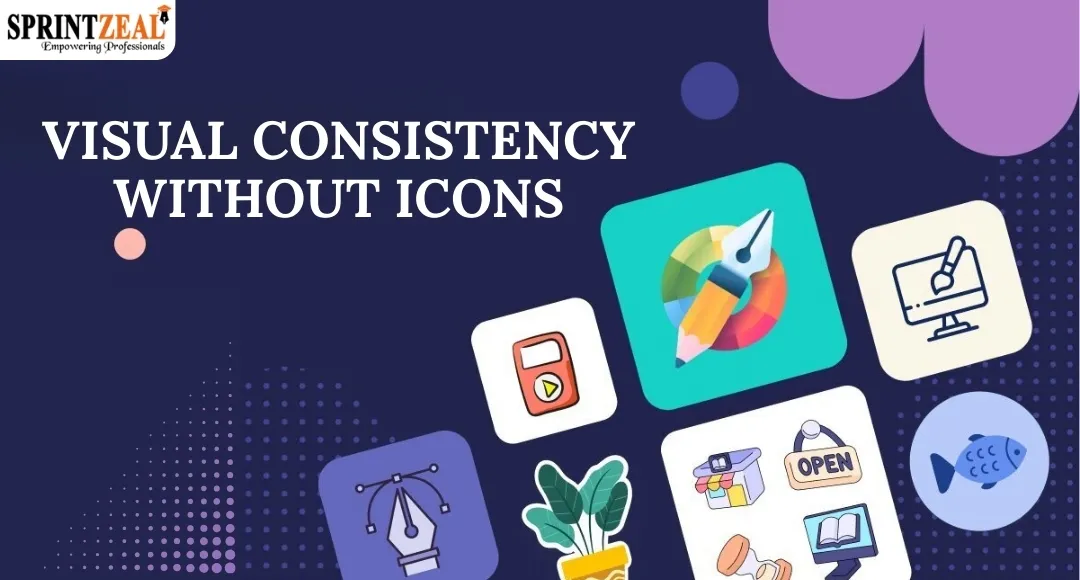
Product teams constantly face a frustrating bottleneck when scaling their visual assets. You start with a clean, cohesive set of icons for a new web application. Six months later, the marketing team needs graphics for a presentation, the mobile developers require specific assets for an Android port, and the original icon set simply lacks the necessary metaphors.
The traditional solution is to build and maintain every icon set in house. This requires hundreds of hours of dedicated design time to ensure every line weight, corner radius, and bounding box aligns perfectly. Icons8 offers a different approach. With a library of over 1,476,100 icons spread across 45 distinct visual styles, it attempts to solve the fragmentation problem that plagues growing products.
To understand how a massive library integrates into actual project work, we need to look at how different disciplines interact with the platform.
Consider a front-end developer tasked with building a new settings dashboard for a web application and its companion Android app. The developer needs the interface to strictly follow Material Design guidelines. Instead of bothering the design team for every single asset, they open the Icons8 web interface and filter the library by the Material Outlined style.
This specific pack contains over 5,500 icons, ensuring they will not run out of matching metaphors. They locate the required gear, user profile, and notification bells. Because they need clean code for the web dashboard, they keep the "Simplified SVG" setting checked before downloading the Base64 HTML fragments to embed directly into their markup.
For the Android build, they download the standard SVGs. The entire process takes minutes and bypasses the design department entirely.
A completely different workflow happens in the marketing department. A content manager is building a slide deck for an upcoming product launch and needs visually striking graphics. They are not using vector design software. Instead, they navigate to the 3D Fluency style within Icons8.
They find a suitable graphic but notice the default colors clash with their corporate branding. Without leaving the browser, they open the built-in editor. They input their brand's exact HEX codes to recolor the 3D asset, add a circular background behind it, and overlay a short text label using the Roboto font. They export the final graphic as a 1600px PNG, dropping it straight into their presentation.
A typical morning for a UI designer relies on even tighter integration. Working on a mobile app prototype, the designer realizes the footer needs an updated social media block. They open Pichon, the Icons8 Mac app, which sits quietly in their menu bar. They type a quick search query, locate an instagram icon right from the dropdown interface, and drag it directly onto their Figma canvas.
Realizing they need a dozen more icons for various partner integrations, they create a new collection inside the app. They drag all the necessary partner logos into this collection, apply a bulk recolor using the brand's primary RGB value, and generate a single SVG sprite sheet to hand off to the development team later that afternoon.
When evaluating an external asset library, you have to weigh it against the other common approaches used in the industry.
Building an in-house set gives you absolute control over your visual language. Every pixel serves your specific product. The trade-off is the immense cost. Creating 500 cohesive icons takes weeks. Creating the 30,000 icons available in the Icons8 iOS 17 pack is impossible for a standard product team.
Open-source packs like Feather or Heroicons are excellent, reliable, and completely free. Many developers default to these. The issue arises when you hit the boundary of their libraries. Open-source packs typically contain a few hundred icons. If you are building a niche medical application or a complex financial dashboard, you will inevitably need a metaphor that Feather simply does not include.
Aggregator services like Noun Project or Flaticon offer massive volume, often exceeding Icons8 in total numbers. Because these platforms accept submissions from thousands of independent authors, the visual consistency is wildly unpredictable. You might find five different shopping carts, but each will have a different line thickness and perspective. Icons8 maintains consistency because their packs are designed as unified systems. Every icon in the Windows 11 Outline style shares the exact same design DNA.
Navigating a database of over a million assets requires specific strategies to avoid wasting time.
Use the image search function when migrating from an old design system. You can upload a screenshot of an existing icon to find its closest match within a new style pack.
Take advantage of the Subicon tool in the browser editor. If you need to add a small warning badge or a plus sign to an existing folder icon, you can overlay it, resize it, and recolor it without ever opening Illustrator.
Uncheck the "Simplified SVG" option in the download menu if you plan to manipulate the vector paths later in a tool like Lunacy.
Submit requests for missing metaphors. If a specific icon does not exist, use the request feature. It only takes eight votes from the community to push a new icon into production.
No tool fits every project perfectly. You must understand the strict limitations of the platform before integrating it into your pipeline.
The free tier is highly restrictive and functions more like a trial. Unless you are browsing the Popular, Logos, or Characters categories, free users are locked out of all vector formats. You can only download PNGs up to a maximum size of 100px. You are also legally required to provide attribution with a link back to Icons8. If you need SVGs for professional web development, the free plan will not work for you. You will need the paid Icons plan at $13.25 per month.
The platform is not the right choice if your product relies on highly proprietary, industry-specific metaphors that require deep domain knowledge to illustrate correctly. A generic library will always prioritize broad usability over niche specificity.
Working with animated assets also presents rigid boundaries. While the library includes over 4,500 animated icons available in GIF, Lottie JSON, and After Effects formats, these files cannot be edited in associated tools like Lunacy or Mega Creator. You must use dedicated animation software to modify them.
Maintaining a consistent visual language across platforms does not have to mean drawing every asset from scratch. Leveraging a unified library allows teams to move faster while keeping their web, iOS, and Android interfaces visually aligned. By relying on massive, pre-built style packs, designers can spend their time solving actual user experience problems rather than pushing pixels to create yet another calendar icon.
To understand how a massive library integrates into actual project work, we need to look at how different disciplines interact with the platform.
Consider a front-end developer tasked with building a new settings dashboard for a web application and its companion Android app. The developer needs the interface to strictly follow Material Design guidelines. Instead of bothering the design team for every single asset, they open the Icons8 web interface and filter the library by the Material Outlined style.
This specific pack contains over 5,500 icons, ensuring they will not run out of matching metaphors. They locate the required gear, user profile, and notification bells. Because they need clean code for the web dashboard, they keep the "Simplified SVG" setting checked before downloading the Base64 HTML fragments to embed directly into their markup.
For the Android build, they download the standard SVGs. The entire process takes minutes and bypasses the design department entirely.
A completely different workflow happens in the marketing department. A content manager is building a slide deck for an upcoming product launch and needs visually striking graphics. They are not using vector design software. Instead, they navigate to the 3D Fluency style within Icons8.
They find a suitable graphic but notice the default colors clash with their corporate branding. Without leaving the browser, they open the built-in editor. They input their brand's exact HEX codes to recolor the 3D asset, add a circular background behind it, and overlay a short text label using the Roboto font. They export the final graphic as a 1600px PNG, dropping it straight into their presentation.
A typical morning for a UI designer relies on even tighter integration. Working on a mobile app prototype, the designer realizes the footer needs an updated social media block. They open Pichon, the Icons8 Mac app, which sits quietly in their menu bar. They type a quick search query, locate an instagram icon right from the dropdown interface, and drag it directly onto their Figma canvas.
Realizing they need a dozen more icons for various partner integrations, they create a new collection inside the app. They drag all the necessary partner logos into this collection, apply a bulk recolor using the brand's primary RGB value, and generate a single SVG sprite sheet to hand off to the development team later that afternoon.
When evaluating an external asset library, you have to weigh it against the other common approaches used in the industry.
Building an in-house set gives you absolute control over your visual language. Every pixel serves your specific product. The trade-off is the immense cost. Creating 500 cohesive icons takes weeks. Creating the 30,000 icons available in the Icons8 iOS 17 pack is impossible for a standard product team.
Open-source packs like Feather or Heroicons are excellent, reliable, and completely free. Many developers default to these. The issue arises when you hit the boundary of their libraries. Open-source packs typically contain a few hundred icons. If you are building a niche medical application or a complex financial dashboard, you will inevitably need a metaphor that Feather simply does not include.
Aggregator services like Noun Project or Flaticon offer massive volume, often exceeding Icons8 in total numbers. Because these platforms accept submissions from thousands of independent authors, the visual consistency is wildly unpredictable. You might find five different shopping carts, but each will have a different line thickness and perspective. Icons8 maintains consistency because their packs are designed as unified systems. Every icon in the Windows 11 Outline style shares the exact same design DNA.
Navigating a database of over a million assets requires specific strategies to avoid wasting time.
No tool fits every project perfectly. You must understand the strict limitations of the platform before integrating it into your pipeline.
The free tier is highly restrictive and functions more like a trial. Unless you are browsing the Popular, Logos, or Characters categories, free users are locked out of all vector formats. You can only download PNGs up to a maximum size of 100px. You are also legally required to provide attribution with a link back to Icons8. If you need SVGs for professional web development, the free plan will not work for you. You will need the paid Icons plan at $13.25 per month.
The platform is not the right choice if your product relies on highly proprietary, industry-specific metaphors that require deep domain knowledge to illustrate correctly. A generic library will always prioritize broad usability over niche specificity.
Working with animated assets also presents rigid boundaries. While the library includes over 4,500 animated icons available in GIF, Lottie JSON, and After Effects formats, these files cannot be edited in associated tools like Lunacy or Mega Creator. You must use dedicated animation software to modify them.
Maintaining a consistent visual language across platforms does not have to mean drawing every asset from scratch. Leveraging a unified library allows teams to move faster while keeping their web, iOS, and Android interfaces visually aligned. By relying on massive, pre-built style packs, designers can spend their time solving actual user experience problems rather than pushing pixels to create yet another calendar icon.

Fri, 18 September 2026
Tue, 18 August 2026
Thu, 30 July 2026
Thu, 21 May 2026
Fri, 15 May 2026
Tue, 26 May 2026
Thu, 22 January 2026

© 2026 Sprintzeal Americas Inc. - All Rights Reserved.

 USA : +1315-322-7821
 UK : +44 7700 174870
 IND : +919036108287
 AUS : +61 480 005 455