How Certified Professionals Turn a Credential Into Career Momentum
Wed, 21 October 2026

Inspirational journeys
Follow the stories of academics and their research expeditions
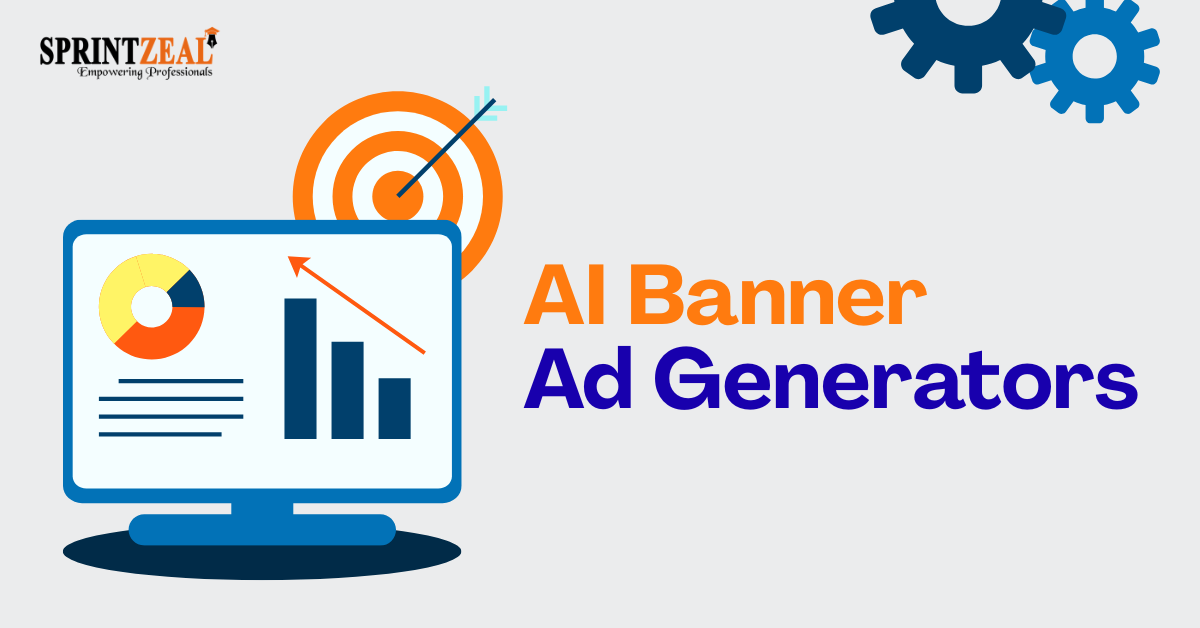
If you've worked in digital marketing for even a few years, you've probably noticed one thing: banner ads never stop multiplying.
A campaign that once needed two or three graphics now requires dozens. There are display ads for Google, banners for partner websites, social media placements, retargeting campaigns, and multiple versions for A/B testing. Creating all of them manually can easily consume more time than planning the campaign itself.
That explains why AI-powered design platforms have become part of many marketing teams' everyday workflow. They're no longer just interesting experiments—they're practical tools that help designers and marketers move faster without sacrificing quality.
One of the biggest shifts I've seen recently is that marketers are spending less time building every banner from scratch. Instead, they use platforms like AITER to generate a strong first draft, then refine it based on the campaign's goals and brand guidelines.
This approach doesn't eliminate creativity. It removes repetitive work.
A modern AI banner design tool can suggest layouts, recommend font combinations, organize visual hierarchy, and generate multiple concepts within seconds. Rather than staring at a blank canvas, you're editing ideas that already make sense from a design perspective.
For small businesses, agencies, and startups that launch campaigns frequently, this alone can save hours every week.
Good display advertising isn't about making something flashy.
A successful banner has to communicate one message almost instantly. Most people don't stop to study an advertisement—they glance at it for a second or two before deciding whether to ignore it or click.
That's why experienced designers spend so much time thinking about hierarchy, spacing, typography, and contrast. Every element has a job.
Artificial intelligence has become surprisingly good at handling these fundamentals. While it won't replace experienced designers, it can build layouts that already follow many established design principles, giving marketers a much stronger starting point than an empty template.
Not every AI banner ad generator is designed for the same audience.
Some focus on speed, helping users produce dozens of variations in minutes. Others offer more advanced editing features for designers who want greater creative control.
When evaluating an ai banner ad generator, I usually look beyond the marketing claims. The questions that matter are practical:
The strongest tools don't try to replace the creative process. They simply remove the repetitive production work that slows campaigns down.
The biggest advantage of AI isn't that it designs better than humans.
It's that it dramatically shortens the distance between an idea and a finished creative.
Instead of opening design software, searching for stock images, adjusting spacing, resizing graphics, and creating six additional formats manually, marketers can generate an initial version in minutes and spend their time polishing the details.
That shift changes how teams work.
Instead of debating which single design to publish, marketers can create ten variations, launch them all, and let real campaign data determine the winner.
In digital advertising, that kind of testing often matters far more than trying to predict the perfect design in advance.
For anyone wondering how to create banner ads with AI, the process is much simpler than most people expect.
It usually begins with a campaign brief. You describe the product, define your audience, write a headline, and specify the call to action.
From there, the platform generates several layouts based on your input.
The next step is editing rather than designing. You review the options, replace images if necessary, adjust colors, fine-tune the messaging, and make sure everything aligns with your brand.
Once you're satisfied, the platform exports the banners in the required sizes.
Learning how to create banner ads with AI isn't really about mastering complicated software. It's about understanding good marketing fundamentals and using automation to speed up production.
There are several reasons companies now create banner ads with AI, but speed is only part of the story.
Cost is another major factor.
Hiring designers for every campaign variation isn't realistic for many startups or growing businesses. AI gives smaller teams the ability to produce professional-looking creatives internally while reserving designer time for larger branding projects.
There's also the advantage of experimentation.
Digital advertising has always rewarded testing. Different headlines, colors, images, and calls to action often produce very different results.
Since AI makes it easy to generate multiple versions, marketers can test more ideas without significantly increasing production costs.
That's ultimately where the technology creates the most value—not by replacing designers, but by making continuous testing practical.
I can generate attractive visuals remarkably quickly, but good advertising still depends on sound marketing decisions.
Keep headlines short.
Use one clear call to action.
Avoid cluttering the banner with too much information.
Maintain consistent branding across every creative.
Most importantly, keep testing.
Even experienced marketers are often surprised by which version performs best once a campaign goes live. Real audience behavior is still the most valuable source of feedback.
AI has quietly become one of the most useful additions to the digital marketing toolkit. Rather than replacing designers, it handles many of the repetitive tasks that once slowed campaign production, allowing creative teams to focus on messaging, branding, and performance.
Whether you're managing campaigns for a startup, an ecommerce business, or a marketing agency, today's AI-powered design platforms make it possible to produce polished display ads much faster than traditional workflows.
The companies getting the most from these tools aren't handing creativity over to algorithms. They're using AI to remove routine work, generate fresh ideas more quickly, and spend more time on the decisions that actually improve campaign results.

Wed, 21 October 2026
Thu, 15 October 2026

Wed, 14 October 2026
Tue, 13 October 2026
Wed, 07 October 2026
Fri, 02 October 2026
Wed, 30 September 2026
Tue, 29 September 2026
Fri, 25 September 2026
Tue, 22 September 2026

© 2026 Sprintzeal Americas Inc. - All Rights Reserved.

 USA : +1315-322-7821
 UK : +44 7700 174870
 IND : +919036108287
 AUS : +61 480 005 455