Employee Experience Management: Key Drivers and How to Improve Them
Tue, 08 September 2026

Inspirational journeys
Follow the stories of academics and their research expeditions
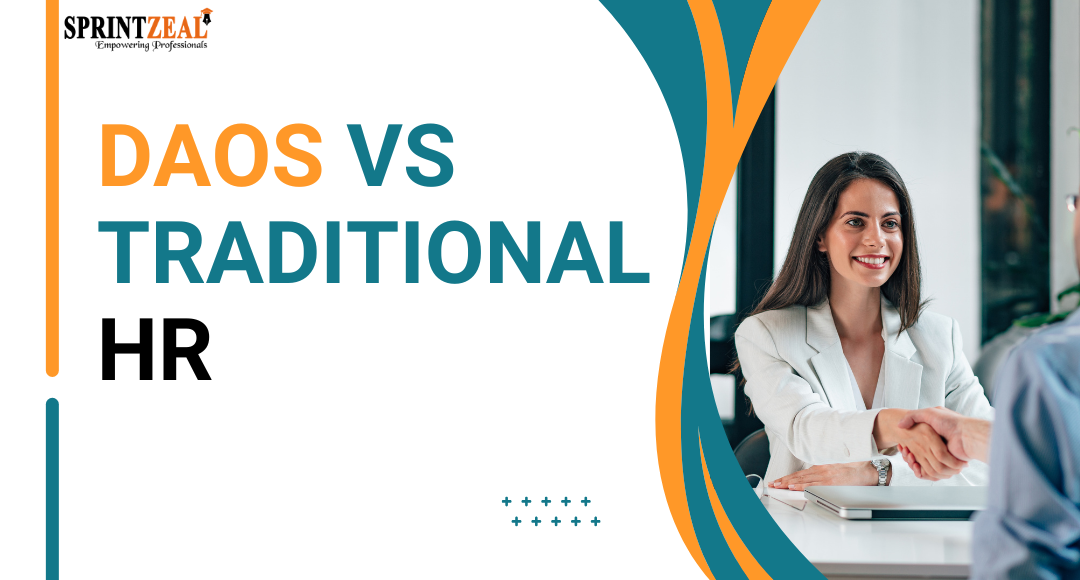
HR, as we all know it, has limped through the many corporate reshuffles, digital transformation, and virtual work revolutions. Harrowed by what is essentially negation, it finds hereni to say that un -people- govern the so called organization anyway.
Decentralized Autonomous Organizations, or DAOs, navigate things on smart contracts, community governance, and token-based incentives. No HR director will be there to schedule calls for your orientation. No performance reviews will be given at any conference room. There is nobody to complain to.
The primary question must now transition into that no longer of philosophical significance, as it stands still. It is now moving with feet into the humdrum of real life.
As DAOs grow from being merely crypto niche experiments to significant revenue-generating business models, the world will need to determine just exactly what Human Resources is expected to be like when the "organization" is but code embedded in a blockchain.
To understand the latter, one must first understand what an HR department does. Strip away the code words and essentially you're left with three basic functions: recruiting and onboarding, compliance and conflict resolution, and culture and retention. All are designed to be decentralized by DAOs.
In a DAO, recruitment is done through community votes and contribution history. Your GitHub commits and governance participation with on-chain reputation become your resume. Onboarding often entails a discord server and a wiki. Token incentives and forum discussions, not a company retreat or a values poster in the break room, shape the culture.
This model works well for technical contributors in open-source ecosystems. But it raises real questions about what gets lost when you remove the human layer entirely.
This is also the main area where the DAO excitement mostly crumbles. It is not that there is labor law for the whit of it. The minimum wage regulations, the non-discrimination laws, and laws about minimum work safety standards did not come up on their own. They were products of almost a whole century of labor fights. All the fine case law on these matters comes from the stories of millions of marginalized real human beings.
A discrimination complaint of a smart contract is not quite enough. Voting in governance cannot substitute for an actual review against harassment in the workplace. Another problem is that token-based compensation will not magically comply with tax law in all the jurisdictions where contributors are.
Mark McShane, Managing Director at SSSTS Course, which trains safety and supervisory professionals across industries, puts it plainly: "Decentralization does not decentralize liability. If workers are contributing to an organization, even a tokenized one, questions of duty of care, safe working conditions, and fair treatment do not disappear. Someone has to be accountable, and right now in most DAOs, nobody clearly is."
This is not a minor administrative hurdle. It is a structural gap that grows more dangerous as DAOs take on larger workforces and more complex operations.
The present conventional model of HR management should not be treated as sacrosanct or immune to criticism.
The domestic HR system has a history of having its loyalty called into question, with people generally agreeing that the structures put up in the name of this formation continuously serve corporate interests with no stake towards any individual employee. Performance management systems, throughout time, have been said to be inherently biased.
The recruitment process in itself falls short of providing equal opportunities for applicants from minority groups. And a formal HR organizational structure often outright discourages, rather than encourages, the reporting of wrongdoing.
Andrew Reichek, CEO of Bode Builders, has seen this tension play out in construction and contracting, an industry that operates with a mix of full-time staff, subcontractors, and project-based workers. "The problem with a lot of traditional HR is that it optimizes for risk management rather than people. Companies need both, but when HR becomes purely defensive, it stops being useful to the actual humans inside the organization."
This critique is relevant to the DAO conversation because it reframes the question. The goal should not be to preserve HR as it currently exists. It should be to ask which human functions are genuinely essential and which ones DAOs can legitimately replace or improve.
Before DAOs had even made an entrance, remote work already required a re-thinking of fundamental assumptions about HR.
By having teams dispersed over varied time zones, the traditional management structure became less effective.
Asynchronous communication also replaced the in-person dynamics that the previous performance evaluation systems had been designed to account for.
Tim, Founder of Remote Job Assistant, has worked closely with distributed teams navigating these changes. "Remote work already proved that presence-based management is mostly theater. What actually matters is output, communication, and trust. DAOs are just taking that logic one step further and asking: do you even need a central authority to coordinate those things?"
His point is important. The infrastructure of remote work, async documentation, transparent task management, digital collaboration tools, already looks a lot like the infrastructure of a DAO. The leap is smaller than it appears from the outside.
But don't leave out the sentiments of DAO veterans! True, code-based systems disintegrate into chaos as complexity increases.
For conflicts among contributors and confrontations about intellectual property, for example, bare human shouting is by far the principal guiding light.
A vote in governance might become a wrong and improper tool, solving just a surface level issue, missing a critical need for humanism and institutions with warm empathy.
Claude Hamilton, CEO of HMG Careers, which works at the intersection of talent acquisition and workforce strategy, sees a clear role for human expertise even in decentralized environments. "The technology can automate a lot of the transactional work of HR. Scheduling, compliance tracking, even parts of hiring. But the moment a real human conflict enters the picture, you need a real human being to navigate it. That is not inefficiency. That is just how people work."
DAOs are not going to entirely wipe away HR. However, they will push HR to change in the directions that conventional models have been known to resist for decades.
Animistic and control functions of HR can be rightly replaced through improvements in tooling with transparent governance while ethical compliance and human-centered functions can't be.
The decentralized world does not need less humanity. It needs humanity applied more precisely, in places where it actually matters. The organizations that figure out that balance, whether they call themselves a DAO, a startup, or something else entirely, will be the ones that actually work.

Tue, 08 September 2026
Thu, 20 August 2026
Mon, 27 July 2026
Mon, 06 July 2026
Tue, 23 June 2026

Thu, 20 March 2025

Tue, 26 May 2026
© 2026 Sprintzeal Americas Inc. - All Rights Reserved.



 USA : +1315-322-7821
 UK : +44 7700 174870
 IND : +919036108287
 AUS : +61 480 005 455