The Best No-Code AI App Builders for Businesses in 2026
Fri, 18 September 2026

Inspirational journeys
Follow the stories of academics and their research expeditions
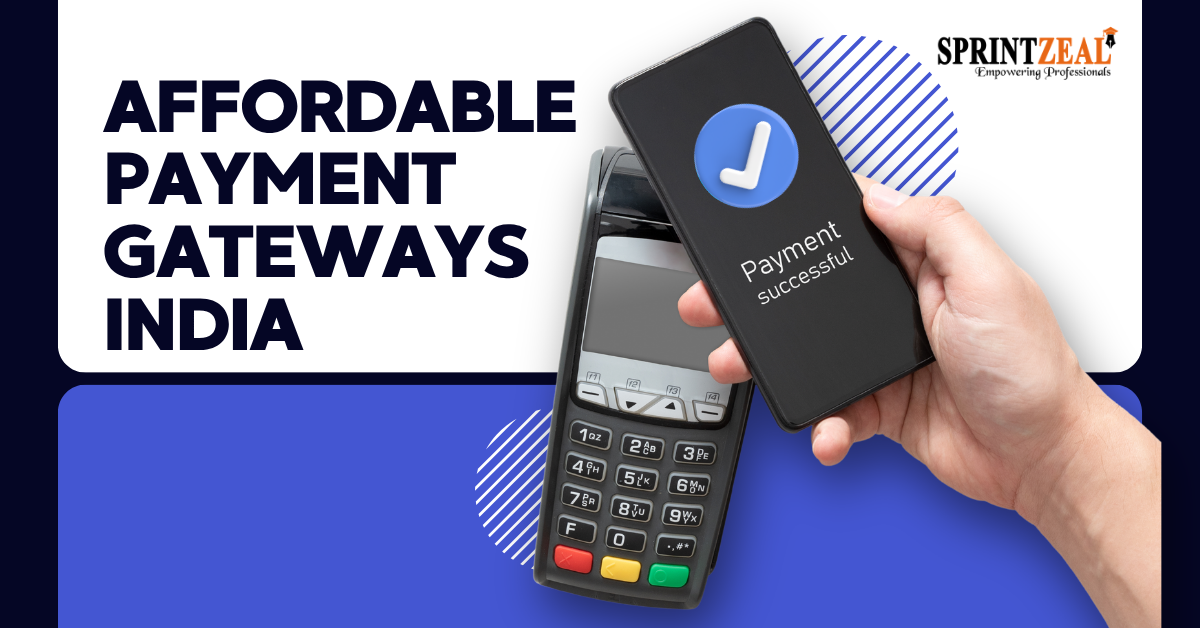
For any new business entering the digital economy, managing cash flow and protecting profit margins are strict priorities. When a startup begins to sell products or services online, integrating a payment gateway is the first major technical milestone. However, choosing the right provider often becomes a confusing financial exercise. Startups naturally gravitate toward the lowest advertised transaction fees, assuming that a cheaper percentage rate automatically translates to a better financial decision.
In reality, digital payment pricing in India is highly nuanced. The true cost of a payment partner is not just the basic transaction fee; it includes annual maintenance charges, initial setup fees, integration timelines, and the technical transaction success rate. A payment gateway that looks cheap on paper can quickly become a financial burden if its servers frequently crash, causing the business to lose customer orders.
This guide breaks down the pricing of India's top payment gateway providers, helping startups find the most cost-effective options for long-term financial success.
Key Takeaways
Before comparing providers, founders must understand how digital payment pricing works in India. The real cost of running a payment gateway usually falls into four main categories:
When startups calculate all four elements together, they understand their true Total Cost of Ownership. Looking only at the headline percentage fee can be misleading. Below is a detailed comparison of how leading platforms in India align with this financial framework.
To understand modern payment pricing, one must look deeply at Razorpay. Widely considered the standard benchmark for early-stage startups, direct-to-consumer (D2C) brands, and software-as-a-service (SaaS) businesses, Razorpay offers a pricing model that challenges the traditional definition of a "budget" gateway.
The Pricing Structure
Razorpay operates on a highly transparent, pay-as-you-go model designed for scalability.
The Pricing Reality
At first glance, a startup founder might see Razorpay’s 2eand compare it to a budget competitor's 1.8% rate. On a surface level, the 1.8% rate appears cheaper. However, the exact mathematics for an early-stage startup tells a different story. Most budget providers that drop their charges to 1.8% compensate for that lost revenue by charging an Annual Maintenance Charge (AMC), which often ranges from ₹5,000 to ₹10,000 per year. Because Razorpay charges zero AMC and zero setup fees, it eliminates the fixed capital risk for a new business.
If a startup processes ₹5,00,000 per month, a ₹10,000 annual fee effectively adds about 0.16% to the transaction cost. This turns a marketed 1.8% rate into nearly 1.96%, making it comparable to Razorpay’s pricing. With zero setup and zero AMC, startups pay only when they successfully make a sale.
Razorpay’s real financial advantage comes from higher transaction reliability. While some budget gateways average 70–75% success rates due to downtime, Razorpay’s Smart Routing system helps maintain 90%+ domestic success rates by automatically redirecting failed transactions. Even a modest improvement in success rates can significantly increase recovered revenue, often offsetting small differences in processing fees.
CCAvenue is one of the oldest and most established digital payment platforms in India. It is highly regarded for supporting a massive array of over 200 payment modes, including niche regional banks and international currencies.
The Pricing Structure
The Pricing Reality
CCAvenue offers a "Startup Pro" plan that charges zero setup fees. Its domestic transaction fees generally range between 2.0% and 3.0%, depending on the exact payment instrument used by the customer. However, startups must account for their Annual Software Upgradation Charge (A.S.U.C) of ₹1,200. While this is often waived for the first financial year, it becomes a fixed recurring cost from the second year onward. CCAvenue remains a strong choice for businesses that specifically require access to 27 major foreign currencies or rare net banking options, provided the finance team accounts for the variable percentage rates.
It is important to differentiate between PayU’s standard consumer offerings and PayUbiz, which is an enterprise-grade product built to handle large-scale transaction volumes for major corporations and established e-commerce giants.
The Pricing Structure
The Pricing Reality
Because PayUbiz targets large enterprises, its historical pricing structure relies on heavier initial commitments. Setup fees for specialized enterprise plans can range from ₹4,900 up to ₹29,000, depending on the integration complexity, and annual maintenance charges typically apply. The domestic fees are variable, scaling up to 3.90sed on the selected package. For a brand-new startup, paying thousands of rupees in upfront setup fees drains critical seed capital. Early-stage startups are better off starting with zero-fee platforms and moving to enterprise-grade solutions like PayUbiz only when they reach massive scale and require deeply customized server architectures.
ePaisa takes a radically different approach to payment processing. It operates as a Software-as-a-Service (SaaS) Point-of-Sale (POS) application specifically designed to help small offline merchants, physical retail shops, and omnichannel businesses digitize their sales.
The Pricing Structure
The Pricing Reality
Because ePaisa provides inventory management software, digital cash registers, and physical card-swiping hardware alongside online payment capabilities, its pricing model is primarily subscription-based. Merchants pay a flat annual software fee alongside transaction charges. If a startup is purely a digital business, like a software tool or an online-only apparel brand, ePaisa is not the right fit. However, if a startup operates a hybrid model, such as selling on a website while also running physical pop-up stores, ePaisa is highly cost-effective for unifying both operations under one system.
For startups whose absolute primary concern is securing the lowest possible percentage rate on every transaction without paying any fixed fees, PayKun positions itself as an aggressive budget option tailored for small and medium enterprises (SMEs).
The Pricing Structure
The Pricing Reality
PayKun simplifies its offering with a flat 1.75% rate for basic domestic transactions, undercutting the industry average. It also charges absolutely zero setup fees and zero AMC. On paper, this makes PayKun definitely one of the cheapest payment gateways in India, highly attractive for individuals and micro-businesses with tight margins. However, startups using ultra-low-cost providers must monitor their analytics dashboards closely. If a high number of customer payments fail at the checkout screen due to server timeouts, the revenue lost from those abandoned carts will quickly exceed the money saved by the 1.75% rate.
Choosing the best low-cost payment gateway requires a startup's finance and engineering teams to look past marketing materials and ask operational questions. Before signing an agreement with any provider, businesses should use the following checklist:
The narrative surrounding payment gateway pricing in India often misleads new founders. The industry tends to fixate on the fractional differences between a 1.75eand a 2.0e. However, the true financial cost of digital payments is defined by fixed annual charges, integration labor, and the technical reliability of the checkout infrastructure.
For large-scale, offline-heavy businesses, tools like ePaisa or PayUbiz serve highly specific, complex needs. For micro-businesses looking to save every penny on fees, PayKun offers an ultra-low percentage rate. But for the vast majority of growing, online-first startups, paying a transparent 2.0e to a platform like Razorpay, which guarantees zero hidden fixed costs and maximum transaction success rates, is the most mathematically sound decision. Investing in stable, high-quality financial infrastructure from day one ensures that a startup never loses a hard-earned customer to a server error, ultimately securing the highest possible return on investment.
1. Is GST applied to payment gateway transaction charges?
Yes. As per the rules set by the Government of India, an 18% Goods and Services Tax (GST) applies to the processing fee charged by the payment service provider. It is important to note that this GST is calculated only on the processing fee itself, not on the total value of the customer's purchase.
2. Do startups need a traditional merchant bank account to use a payment gateway?
In the past, setting up online payments required a business to undergo a lengthy process to open a complex merchant account directly with a specific bank. Today, modern payment gateways operate as master aggregators. They bundle the merchant account within their service, meaning a startup only needs a standard business current account to start accepting payments securely and legally.
3. Are UPI transactions completely free for a business to process?
Currently, yes. Under government regulations, standard consumer-to-merchant UPI transactions carry a zero percent Merchant Discount Rate (MDR). This means processing standard UPI payments through your payment gateway will not cost the business any transaction fees.
4. How long does it take for a payment gateway to send the collected money to my bank account?
The standard timeline for transferring funds to a merchant's bank account is "T+2," which stands for the day of the transaction plus two business days. However, premium providers often offer optional features for "Instant Settlements" or "T+0" settlements for a small additional fee. This allows startups to access their cash flow on the same day the sale occurs.
5. What is the difference between a payment gateway and a payment aggregator?
A payment gateway is the strict underlying technology that securely transmits card data from the business website to the bank network. A payment aggregator is a financial institution that boards multiple merchants under one master umbrella account, allowing them to accept multiple payment methods (cards, UPI, net banking) without needing separate bank agreements. Most modern solutions function as both simultaneously to provide a seamless onboarding experience for startups.

Fri, 18 September 2026
Tue, 18 August 2026

Thu, 30 July 2026

Thu, 21 May 2026

Fri, 15 May 2026

Tue, 26 May 2026

Thu, 22 January 2026


© 2026 Sprintzeal Americas Inc. - All Rights Reserved.

 USA : +1315-322-7821
 UK : +44 7700 174870
 IND : +919036108287
 AUS : +61 480 005 455