Networking Roulette: Can Random Video Chats Boost Your Professional Communication Skills?
Wed, 30 September 2026

Inspirational journeys
Follow the stories of academics and their research expeditions
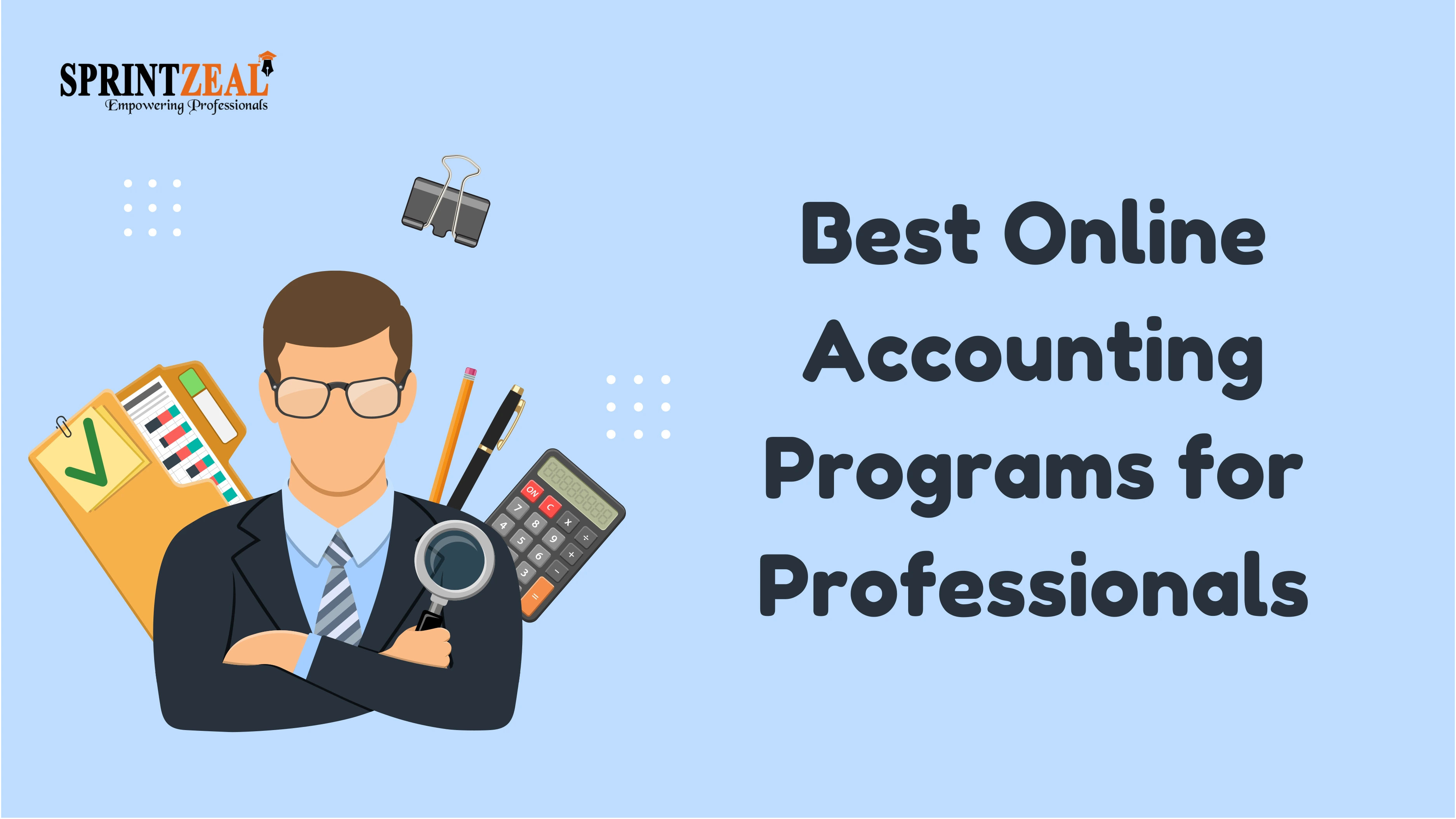
The right bachelor's degree in accounting opens doors to careers in financial reporting, auditing, taxation, corporate accounting, consulting, and business leadership - but the degree that most effectively prepares any specific student for those careers is the one whose curriculum, delivery format, and career preparation approach most directly develop the capabilities those careers require rather than simply providing a credential that signals completion.
Future financial professionals entering accounting careers need more than technical accounting knowledge. They need the analytical capability to interpret financial data in the context of business decisions, the communication skills to translate complex financial information for non-financial stakeholders, and the problem-solving frameworks that financial roles across public accounting, corporate finance, government, and nonprofit sectors consistently depend on. The five programmes below develop those capabilities through different approaches and with different institutional strengths - each most specifically suited for different student profiles and career directions.
TL;DR - Best Picks
|
School |
Format |
Career Focus |
Transfer-Friendly |
Best For |
|
Wilmington University |
Online, flexible |
Strong |
Yes |
Career readiness, flexible pathways, diverse sector preparation |
|
Penn State World Campus |
Online |
Strong |
Varies |
National credential, comprehensive business foundation |
|
Franklin University |
Online |
Strong |
Yes - generous |
Transfer students, practical curriculum |
|
Southern New Hampshire University |
Online |
Strong |
Yes |
Flexible scheduling, broad business applications |
|
UMGC |
Online |
Strong |
Yes |
Practical financial management, career-focused delivery |
Career readiness in accounting education is more specifically defined than general programme quality - and the distinction matters for students whose degree investment is specifically oriented toward entering and advancing in accounting and financial professional careers.
Technical accounting competency is the foundational layer. Financial accounting, managerial accounting, auditing, taxation, and accounting information systems are the technical domains that accounting career entry most specifically requires - and programmes that develop genuine competency across all of them produce more practice-ready graduates than those that survey the same topics without depth.
Business context integration is the differentiating layer. Accounting professionals who understand how financial information connects to business strategy, operational decisions, and organisational performance are more valuable to employers than those who can produce accurate financial outputs without understanding the business decisions those outputs inform. Programmes that integrate economics, finance, business law, and management alongside the accounting technical curriculum develop that integrative capability most systematically.
Analytical and communication capability is the advancement layer. The accounting professionals who advance most quickly into leadership and management roles are those who can not only perform technical accounting work but analyse its implications, communicate findings to non-financial audiences, and contribute to strategic decisions. Programmes whose curriculum develops those capabilities alongside technical accounting competency produce the most complete preparation for long-term financial professional career growth.
Wilmington University's bachelor’s degree in accounting for future financial professionals blends accounting theory with practical business education in a programme whose career-focused orientation reflects a consistent institutional commitment to preparing graduates for the specific professional roles their degrees are intended to enable - not credential completion alone.
The curriculum builds expertise across financial and managerial accounting, auditing, taxation, economics, finance, and business law - developing the full range of technical competencies that accounting careers across public practice, private industry, government, and nonprofit organisations most consistently require alongside the business context integration that makes those technical competencies most professionally applicable. Financial and managerial accounting develop the foundational reporting and analysis capability that accounting careers draw from continuously. Auditing develops the evidence-based examination and internal control assessment skills that assurance careers require and that strengthen analytical judgment across all accounting contexts. Taxation develops the regulatory knowledge and compliance application that tax practice and corporate tax functions most specifically need. Economics and finance develop the market, investment, and business valuation understanding that contextualises accounting data within the business decisions it informs. Business law develops the regulatory and contractual awareness that accounting professionals operating across organisational boundaries most specifically benefit from.
The Wilmington University accounting program is designed to support students pursuing long-term professional growth through flexible learning options that accommodate different student circumstances - including online delivery formats that allow students to progress toward career readiness alongside current professional and personal responsibilities. Personalised academic support helps students navigate the curriculum effectively rather than managing a large programme independently. The transfer-friendly pathway for eligible students recognises prior college credit toward degree completion, making the career preparation investment most accessible for students who have already begun their educational journeys. Students should confirm current policies and eligibility directly with Wilmington University.
Key differentiator: Best for students seeking a flexible, career-focused accounting bachelor's programme that prepares graduates for diverse financial and business careers through practical curriculum combining technical accounting depth with business context integration
Penn State World Campus combines accounting fundamentals with business strategy, financial reporting, auditing, and taxation through a comprehensive curriculum that develops the broad accounting and business capability applicable across the widest range of accounting career destinations - backed by Penn State's nationally recognised institutional standing and the employer recognition that credential carries in financial services, corporate finance, and public accounting hiring contexts. For future financial professionals whose career preparation includes both comprehensive accounting curriculum coverage and the institutional credential recognition that matters most in the most competitive hiring contexts, Penn State World Campus is most directly relevant.
Key differentiator: Comprehensive accounting education with a strong business foundation and nationally recognised institutional credential, most directly serving future financial professionals whose career preparation prioritises both curriculum breadth and the employer recognition that Penn State's credential specifically carries
Franklin University's online accounting programme emphasises practical accounting skills, financial analysis, taxation, and business decision-making through a flexible structure and transfer-friendly policies most specifically designed for students completing previously started degrees. For future financial professionals with prior college credit whose career preparation most efficiently builds on existing educational investment rather than starting the accounting curriculum from the beginning, Franklin's combination of practical curriculum and generous transfer recognition is most directly relevant.
Key differentiator: Practical accounting curriculum with strong transfer flexibility, most directly serving future financial professionals with prior college credit who need a programme that efficiently builds toward accounting career readiness while recognising prior educational investment
SNHU's online accounting bachelor's degree covers accounting systems, auditing, financial reporting, and business operations through flexible scheduling that allows students to progress toward graduation alongside other commitments. The broad business applications that SNHU integrates alongside the core accounting curriculum develop the cross-functional business understanding that future financial professionals most benefit from as their careers expand beyond entry-level accounting roles into broader financial and management responsibilities.
Key differentiator: Flexible online accounting education with broad business applications, most directly serving future financial professionals whose career preparation requires maximum scheduling flexibility alongside curriculum that develops accounting technical competency within a broader business context
UMGC's online accounting bachelor's degree prepares students through accounting, finance, economics, taxation, and business management - with online delivery that provides the accessibility that students seeking career-focused business education most specifically need alongside the practical financial management emphasis that accounting careers in corporate, government, and financial services environments most directly require. For future financial professionals whose career direction includes the financial management and business operations dimensions of accounting careers alongside technical accounting practice, UMGC's practical emphasis and accessible delivery are most directly relevant.
Key differentiator: Flexible accounting degree emphasising practical financial management skills, most directly serving future financial professionals whose career direction includes the financial management and business operations dimensions of accounting careers in corporate, government, and financial services environments
What should future financial professionals look for in an accounting programme?
Future financial professionals evaluating accounting programmes should prioritise curriculum coverage across the core accounting technical domains - financial accounting, managerial accounting, auditing, taxation, and accounting information systems - alongside business education that develops the economic, finance, and management context that makes technical accounting competency most professionally applicable. Career preparation resources including employer connections, internship opportunities, and alumni networks determine how directly the programme connects academic preparation to financial professional career entry. Accreditation from a recognised body confirms that the credential will be recognised by employers and graduate programmes. And delivery flexibility determines whether the programme is operationally compatible with each student's circumstances.
What careers can I pursue with a bachelor's degree in accounting?
A bachelor's degree in accounting prepares future financial professionals for careers across public accounting, corporate finance and accounting, government financial management, nonprofit financial administration, financial services, banking, consulting, and business management. Entry-level positions include staff accountant, financial analyst, audit associate, tax preparer, and accounting coordinator. With experience and additional credentials, accounting graduates advance into senior accounting, financial management, controller, chief financial officer, and executive leadership roles. Some graduates pursue professional certifications including the CPA, CMA, or CIA - which have their own educational, examination, and experience requirements that vary by state and certification body.
How does business education alongside accounting curriculum benefit future financial professionals?
Business education alongside accounting technical curriculum develops the integrative capability that distinguishes accounting professionals who advance into leadership roles from those who remain in technical individual contributor positions throughout their careers. Understanding how accounting information connects to business strategy, operational decisions, investment analysis, and organisational performance allows financial professionals to contribute more valuably to the organisations they serve - participating in strategic conversations rather than only producing the technical outputs those conversations draw from. Programmes that integrate economics, finance, management, and business law alongside accounting technical content develop that integrative capability most systematically.
Is an online accounting degree a good preparation for accounting careers?
Yes, when the programme carries recognised accreditation and develops genuine technical accounting competency alongside the business context that accounting careers require. Employers evaluate accounting credentials on accreditation quality and curriculum relevance rather than delivery format. Students should confirm that any programme being considered holds current accreditation from a recognised body and that the specific curriculum covers the technical accounting domains most relevant to their intended career direction.
Can I transfer prior college credits into an online accounting programme?
Yes, most programmes accept some transfer credit, though policies vary significantly. Wilmington University and Franklin University both offer transfer-friendly pathways for eligible students with prior college experience. Other programmes on this list have varying policies that should be confirmed directly. Future financial professionals with prior college credit should provide transcripts to each programme being considered and confirm exactly what transfers and toward which requirements before making enrolment decisions.
Why choose Wilmington University's accounting programme?
Wilmington University's accounting programme is most specifically suited for future financial professionals whose career preparation benefits most from the combination of practical career-focused accounting curriculum, flexible delivery options that accommodate different student circumstances, personalised academic support, and transfer-friendly pathways for eligible prior college credit. That combination makes the career readiness investment most directly achievable for students at different stages of their educational and professional journeys - and most directly connected to the diverse accounting and financial professional career destinations the programme is designed to prepare graduates for.

Wed, 30 September 2026
Tue, 29 September 2026
Fri, 25 September 2026
Thu, 24 September 2026

Tue, 22 September 2026

Tue, 22 September 2026

Thu, 17 September 2026

Wed, 16 September 2026
Wed, 16 September 2026

Tue, 15 September 2026

© 2026 Sprintzeal Americas Inc. - All Rights Reserved.

 USA : +1315-322-7821
 UK : +44 7700 174870
 IND : +919036108287
 AUS : +61 480 005 455