What Evidence Can Strengthen A Car Accident Injury Claim Today
Tue, 22 September 2026

Inspirational journeys
Follow the stories of academics and their research expeditions
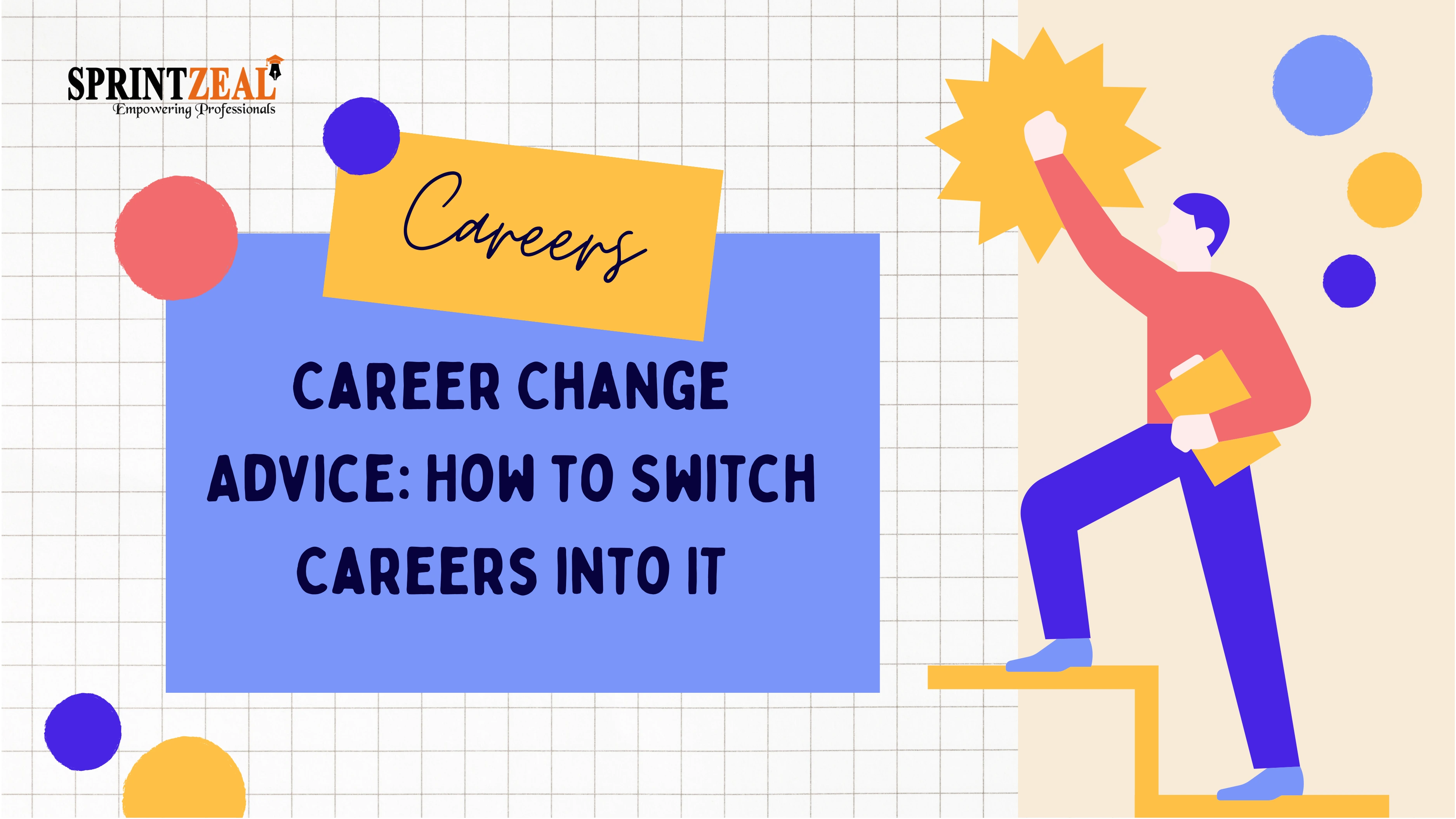
Career change advice related to transitioning into IT has become increasingly popular in today's age. According to Adiuvisti, both generations are trying their best to switch. Almost 45% of junior employees and 25% of long-serving employees are changing their careers into IT. Therefore, it reflects that someone looking for a switch definitely needs career change advice. The research generated by Indeed shows that freshers can expect somewhere between $45,000 and $60,000 per annum. While the recent occurrence of layoffs is a matter of concern, there is also demand for some roles that require specialized skills. Nonetheless, this blog titled “Career Change Advice: How to Switch Careers Into IT” thoroughly describes career switching advice as well as challenges attached to it.
Taking that leap from a non-IT to an IT background sounds stressful. Especially if one keeps thinking about which skills to choose or begin with. But, having the right guidance or career change advice can uplift your confidence in why this change can be achieved and satisfying at the same time.
One of the most sought-after sectors for job seekers is the tech industry. Moreover, with the introduction of AI and cloud, there has been a surge in new roles in the IT sector worldwide. AI/ML Engineer, Cloud architect, MLOps Engineer, AI Product Manager, and many more are some of the various roles currently in demand.
Therefore, to ensure career stability for the long term, following career change advice should be the first step.
How much can I earn? This is another important question that an individual seeking a job wants to inquire about. IT jobs generally pay well, even at the entry level. As experience grows, it will lead to promotion and a salary hike. Therefore, choosing a career in the tech industry is fruitful, with financial stability being its strongest advantage.
Is a computer science engineering (CSE) or an engineering degree a must-have degree to transition into the tech industry? Career change advice breaks this myth. Individuals can transition into IT by taking up online courses, acquiring certifications, and doing practical projects. It is the skills that will prove your stance more than a degree.
IT industry is not limited to just coding, there are also other roles individuals can apply for like:
Based on someone’s interests, strengths, and the skills that they acquire, it is easy to switch. This proves the flexible nature of the tech industry.
IT jobs come with the perk of working from home (WFH). Not just WFH, IT jobs also come with other benefits, including freelance opportunities and global exposure. Along with career satisfaction, an individual can have a good work-life balance.
Faster growth in the IT sector is one of the highlighted advantages mentioned in the career change advice. Years of experience take a backseat when compared to the skills someone acquires and the performance that they deliver. These individuals have a higher possibility of getting promoted. So, the above information suggests that career switchers can advance quickly.
The tech industry is a fast-paced industry. With the integration of new technologies like AI, cloud computing, and automation, there are always new things to learn for job seekers. So, as per career change advice, the IT industry is perfect for individuals who want to keep progressing their learning graph.
No-code/low-code tools, bootcamps, and online learning platforms are some of the recommendations that practical career change advice suggests for beginners. These options make it easier for non-IT professionals to make the transition to IT.
Making use of the existing background is one of the underrated aspects of career change advice. For example, if you had previously worked in finance, you can transition to fintech. Similarly, those who have worked in healthcare can transition to HealthTech, and those in the marketing industry can easily transition to digital analytics.
When domain expertise and IT skills collaborate, it increases the value of an individual.
An effective career change advice also emphasizes the future security of the job. Due to the acceleration of digital transformation, the skills related to IT are becoming increasingly important. Therefore, if someone wants to transition to the tech industry, it is best advised to make the change now. It will ensure long-term professional relevance.
Almost all industries are going digital to enhance the quality of work they provide to their customers. The IT industry at a global stage has shown rapid and durable growth.
The companies are heavily investing in the technologies, including cloud computing (the data is stored online instead of on your own device), AI (identifies patterns and predicts the best-suited data based on the prompt), cybersecurity (safeguarding information from intruders), and data analysis (inspecting raw data to make better decisions).
The growing curve indicates that the IT sector is the backbone of modern economies. Therefore, before taking that leap into this industry, one should be thorough with the career change advice related to it.
The IT industry is moving ahead, adapting to the major trends. It is better to be thorough with the career change advice before taking the step.
The time to wrap up tasks is getting trimmed. All thanks to the introduction of artificial intelligence (AI). Especially in the case of industries, AI has the capability to automate repetitive tasks, help businesses in better decision-making, and also create new job opportunities.
AI comes with advantages that one can not count on their fingers. Therefore, companies are spending lavishly on AI, which is the reason why IT spending is increasing globally.
Cloud makes it possible to store information online rather than on personal devices. Therefore, the companies are moving to cloud platforms. Cloud platforms help companies to scale operations and improve work efficiency.
Almost 70% of the companies are using cloud technology. In return, the cloud helps modernize the infrastructure and make it more flexible.
This is a non-negotiable area. Individuals seeking career change advice must already be privy to the increase in cyber threats. Therefore, to curb the major issue, the demand for cybersecurity professionals is on the rise. Companies are taking precautions in advance by protecting their data and systems.
The other job role in demand is that of a data professional. There is a large amount of data and analytics that companies use to make better business strategies. A data professional’s job is to analyze this information.
Remote work or work from home (WFH) is quite common in the tech industry. There are digital tools that make it possible for companies to recruit people from different locations. As a result, there are chances of more people getting hired.
These trends suggest that the IT jobs hold a specialized category demanding higher levels of skills and expertise. It is advisable for job switchers to consider the career change advice related to trends seriously.
The IT industry continues to expand, and so do the job opportunities. There are also particular roles that are gaining significance over time. Individuals seeking career change advice should particularly have an idea of the job roles with high value.
According to industry insights, roles related to AI, big data, and cybersecurity are among the fastest-growing globally.
Transitioning to IT from a non-IT background can be rewarding, but there are several challenges that can affect you both practically and mentally. Being aware of these challenges in advance will help you navigate through the transition and prepare with confidence.
Lack of Technical Background
Fear of Starting Over
Skill Gaps and Learning Curve
Time and Financial Constraints
Programming
Data Skills
Cloud Computing
Communication Skills
Problem-Solving Ability
Adaptability & Learning Mindset
Examples of Transferable Skills:
For example:
You need to have an organized plan if you want to enter the realm of tech industry from a non-tech. Following step-by-step career change advice eventually lands you in your first job.
Self-Assessment and Goal Setting
Choosing the Right IT Career Path
Popular Entry-Level Paths:
Choose a path based on:
Learning Through Courses and Certifications
Building Practical Projects
Creating a Strong Portfolio
Applying for Jobs and Networking
Job Applications:
Networking:
Freelancing and Internships
Open Source Contributions
There are thousands of open-source projects present on a platform like GitHub, so you can join and help it.
This demonstrates initiative and teamwork—qualities employers value.
Personal and Real-World Projects
Projects are proof of your skills.
Real-world relevance makes your projects more impactful.
Presenting your skills effectively is just as important as learning them.
Crafting an IT-Focused Resume
Your resume should reflect your transition clearly.
Focus on what you can do, not just your past roles.
Showcasing Transferable Skills
Your previous experience is an advantage—use it strategically.
Position yourself as someone with both technical and domain knowledge.
Preparing for Technical Interviews
Interviews test both knowledge and thinking ability.
Employers value how you think and solve problems, not just correct answers.
Building visibility can significantly improve your job opportunities.
Leveraging LinkedIn and Online Communities
Online platforms help you connect and learn.
Consistent activity increases your visibility to recruiters.
Attending Tech Events and Meetups
Networking in real-time creates stronger connections.
These interactions can lead to referrals and opportunities.
Building a Personal Brand in IT
Your personal brand reflects your expertise and passion.
A strong personal brand builds trust and credibility.
Avoiding common mistakes can save time and effort during your transition.
Trying to Learn Everything at Once
Focus on one clear path at a time.
Ignoring Practical Experience
Always combine learning with hands-on projects.
Lack of Consistency
Even 1–2 hours daily can create significant progress over time.
Unrealistic Expectations
Be patient and focus on steady improvement.
Role of AI and Automation
After the introduction of AI and automation, businesses are continuously changing their usual way of working
While automation may replace some traditional tasks, it is also creating more advanced and higher-value job opportunities.
The demand is shifting toward:
Emerging Technologies
Several cutting-edge technologies are driving the next wave of IT jobs:
Cloud Computing
Cybersecurity
Data Science & Big Data
Internet of Things (IoT)
Blockchain Technology
The presence of these technologies says a lot about IT jobs. IT jobs will keep changing and evolving. Moreover, with growing technologies, new job roles will also come.
Long-Term Career Growth
IT offers strong long-term career prospects compared to many other industries.
Continuous Learning Opportunities
High Earning Potential
Global Opportunities
Career Flexibility
If you want to completely shift to IT, you might feel frightened to take the plunge, but the right career change advice can definitely help you. First, you should know why you want to switch; after that, which roles you are looking forward to working in. Then the main part comes, which is knowing what exactly you need to learn and how much time it will require. You should also know as a beginner, which roles can be easily or are best to crack.
Our company Sprintzeal offers a plethora of courses on IT; here is one of them.
CompTIA Cloud+ Certification Training
For more, you can check our website.
1. 30-30-30 rule for career change advice, what is it?
Spend 30 minutes learning something new, 30 minutes you should spend in building and also practicing a skill, and you should spend another 30 minutes building connections with people who are currently in the same job position you wish to join in the future. Connecting with professionals on LinkedIn and directly messaging them and asking them what skills are exactly required for the job is a great option to begin without uncertainty.
There are other options as well, such as connecting with your colleagues, joining groups, attending webinars, and commenting on posts of people related to the same field.
No, a degree, particularly in an IT background, is not necessary. If you have learned from online courses, taken a few certifications, and worked on some hands-on projects, these will also work at the time when you will switch.
If you consistently put in effort, then expect to switch within 3 to 9 months. But how many months or years it will take for you to transition fully to an IT background depends on which job role you want to go for. Moreover, how fast you can learn is also a condition.
Data Analytics, IT Support, Web Development, and Cloud Computing are good options for a beginner to start their career in IT. Why? Because these job roles have well-organized learning paths, and many companies always have openings for these positions.
Yes, you can gain experience by doing internships, freelancing, open-source contributions, and personal projects. All these will validate you as a candidate who has practical skills to work in the IT sector.
Technical skills such as working with data and using a cloud platform are a must, but soft skills such as good communication skills, adapting to new changes, and solving problems will get you the job.

Tue, 22 September 2026
Tue, 22 September 2026
Thu, 17 September 2026
Wed, 16 September 2026
Wed, 16 September 2026
Tue, 15 September 2026
Tue, 15 September 2026

Mon, 14 September 2026
Mon, 14 September 2026

© 2026 Sprintzeal Americas Inc. - All Rights Reserved.


 USA : +1315-322-7821
 UK : +44 7700 174870
 IND : +919036108287
 AUS : +61 480 005 455