How Certified Professionals Turn a Credential Into Career Momentum
Wed, 21 October 2026

Inspirational journeys
Follow the stories of academics and their research expeditions
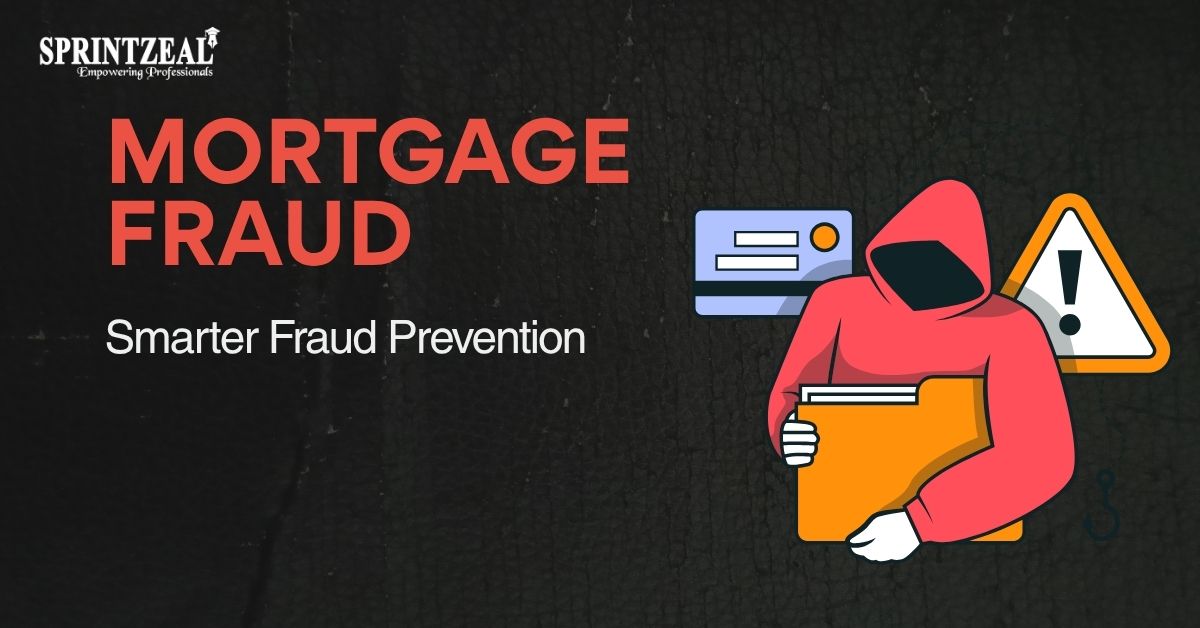
Mortgage loan processing moves fast, and so does the data inside it. If that data contains errors or signs of fraud, the impact can quickly move downstream into underwriting, closing, QC, investor delivery, or audit.
That is the concerning part. If an error is missed at any point during origination, it can quickly create problems downstream.
A fake pay stub may look fine until someone compares it with bank deposits. A borrower may claim a property as a primary residence, but the mailing address may tell a different story. A document may show the right numbers, but the formatting, file history, or reused template may raise questions.
That is why mortgage fraud is hard to catch through manual review alone.
Automated verification helps prevent mortgage fraud by checking the full file at scale. It extracts data, compares values across documents, flags mismatches, checks document quality, finds missing evidence, and routes risky files to human review.
Hence, in this blog, we’ll break down how and where automated verification helps prevent mortgage fraud.
Automated verification in mortgage lending uses AI, document intelligence, business rules, and workflow checks to validate borrower data across loan documents.
It checks whether the information in the loan file is complete, consistent, current, and supported by evidence.
For example, automated verification can compare income on a pay stub with deposits on a bank statement. It can compare an employer name across a pay stub, W-2, VOE, and URLA. It can check whether a stated property address matches title, appraisal, and insurance records.
The system does not call every mismatch fraud. That would create noise. A good system flags risk, shows the evidence, assigns confidence, and sends the right exception to the right reviewer.
Manual review depends on people reading mortgage documents, comparing fields across the loan file, and spotting problems with their eyes. This approach may work for a small number of clean files, but it becomes harder to manage as loan volume increases.
A reviewer may need to verify the same borrower name across the URLA, bank statement, credit report, ID, pay stub, and Closing Disclosure. The same reviewer may also need to check document versions, page counts, signature fields, dates, employer names, income values, addresses, and property details.
That kind of review takes time. It also creates fatigue, especially when teams handle large loan files every day.
Automated verification helps by completing the first pass before the file reaches a reviewer. It reads every page, extracts key fields, compares values across documents, and flags exceptions that need attention. This allows reviewers to spend more time evaluating real risk and less time searching through pages for possible issues.
Basic OCR reads text from a document. That is helpful, but it is not enough for mortgage fraud prevention.
Mortgage teams need more than text. They need document understanding. The system must know whether it is reading a pay stub, W-2, bank statement, URLA, Closing Disclosure, appraisal, tax return, or title document. It must know which fields matter. It must compare those fields across the loan file.
OCR may read “$8,500” from a pay stub.
Automated verification asks better questions. Does that income match deposits? Does the employer match the W-2? Does the pay frequency make sense? Is the document complete? Does the file look altered? Is this the latest version?
That is the difference.
Automated verification fits across the mortgage workflow.
It can start at intake, when borrower documents first arrive. It can support processing teams as they collect missing items. It can help underwriters by surfacing verified income, employment, identity, property, and occupancy evidence.
It also supports pre-close review, post-close QC, servicing, and investor audits.
The earlier it runs, the more value it creates. Fraud signals caught at intake are easier to handle than fraud signals found after closing.
Mortgage fraud is hard to catch manually because the warning signs rarely sit in one obvious place. A fake pay stub may look clean on its own, but the issue may appear only when someone compares it with bank deposits, employer records, tax forms, or the URLA. The same problem applies to occupancy claims, identity details, property data, and document edits. In large loan files, these signals can spread across hundreds of pages, making manual review slow, inconsistent, and easy to miss under deadline pressure.
Let’s break them down in detail.
Large mortgage loan files are hard to review manually. A single file can include dozens of documents and hundreds of fields. The same borrower name, income value, address, loan term, or fee may appear across several documents. A reviewer has to compare all of these details by eye, which takes time and increases the chance of missing something.
Automated verification solves this by applying the same checks across every file. It reads the documents, extracts key values, compares them, and flags mismatches before they move further down the workflow.
Mortgage fraud does not always appear in one document. A pay stub may look real on its own. The issue may appear only when the pay stub is compared with bank deposits, W-2s, employer records, or tax documents.
The same issue can happen with occupancy fraud. A borrower may claim the property as a primary residence, but mailing addresses, bank statements, credit records, or past addresses may suggest otherwise.
Automated verification helps by checking the relationship between documents. It connects the data points and flags patterns that a reviewer may miss during manual review.
Borrowers, brokers, and third parties often submit documents as PDFs, scans, images, or portal uploads. These files can be edited, cropped, rescanned, renamed, or saved through different tools before they reach the lender.
Some changes may look normal at first glance. Others may point to document tampering.
Automated verification can flag suspicious formatting, image issues, unusual file patterns, missing pages, reused templates, and inconsistent data. It does not need to prove fraud on its own. It only needs to show which files need closer review.
Mortgage teams often work under tight timelines. Backlogs grow, conditions pile up, and closing dates move closer. Even experienced reviewers can miss repeat checks when they handle large files at high volume.
Manual review depends on attention. But attention drops when the work is repetitive and time-sensitive.
Automated verification reduces this risk by handling routine checks before the file reaches a person. It gives reviewers a shorter exception list, clearer evidence, and more time to focus on real fraud risk.
|
Mortgage Fraud Type |
How Automation Helps Flag It |
|
Income fraud |
Compares income data across pay stubs, W-2s, 1099s, tax returns, bank statements, and the URLA to find unsupported or inflated income. |
|
Inflated income |
Compares stated income with pay stubs, year-to-date values, W-2s, tax returns, and bank deposits. |
|
Fake pay stubs |
Checks pay stub fields against employer data, deductions, pay periods, formatting patterns, and bank deposits. |
|
Mismatched bank deposits |
Compares net pay values with bank deposits and flags missing or unusual deposit patterns. |
|
Employment fraud |
Compares employment data across the URLA, pay stubs, W-2s, VOE records, bank statements, and credit documents. |
|
Fake employer details |
Flags employer names, addresses, phone numbers, or identification details that do not match across documents. |
|
Incorrect employment duration |
Compares start dates, pay periods, W-2 years, and employment records. |
|
Inconsistent job titles |
Groups similar job titles and flags true mismatches for human review. |
|
Occupancy fraud |
Compares stated occupancy intent with borrower addresses, bank statements, credit documents, IDs, insurance records, and mailing records. |
|
Primary residence conflicts |
Flags files where the primary residence claim conflicts with the supporting address or borrower data. |
|
Mailing and property address mismatch |
Compares the subject property address, current address, mailing address, and address history. |
|
Identity fraud |
Compares borrower names, aliases, dates of birth, SSNs, addresses, and ID data across documents. |
|
Borrower identity inconsistencies |
Helps separate normal name variation from true identity risk. |
|
Mismatched names, addresses, and IDs |
Shows where each value appears and which document supports it. |
|
Appraisal and property fraud |
Compares appraisal values, loan values, property data, title records, insurance records, and closing documents. |
|
Property value inconsistencies |
Flags unusual differences between appraisal values, loan values, and related property data. |
|
Title or collateral mismatches |
Compares property address, legal description, title data, insurance records, and closing documents. |
|
Document tampering and forged records |
Flags suspicious edits, file-generation patterns, formatting issues, image changes, and metadata concerns. |
|
Altered PDFs |
Checks for suspicious edits, image changes, formatting shifts, and unusual file history. |
|
Reused templates |
Flags repeated document layouts across unrelated applications. |
|
Suspicious formatting, fonts, metadata, or image artifacts |
Surfaces font changes, image patches, spacing issues, inconsistent logos, or unusual metadata for closer review. |
Automated verification works best when it runs across the full loan lifecycle, not only at the end. If fraud checks happen only during post-close QC or investor review, the damage may already be done. The file may have moved through underwriting, closing, and delivery with hidden mismatches or missing evidence.
The better approach is to verify documents as they enter the workflow and continue checking them as new information arrives. This helps teams catch income gaps, identity issues, occupancy conflicts, document tampering, and property mismatches earlier. It also gives processors, underwriters, QC teams, and auditors a cleaner file to work with at each stage.
Application intake:
At intake, automated verification checks whether uploaded documents are readable, complete, and tied to the right borrower. This is the best place to stop bad files from entering the workflow.
Processing and document collection:
Processing teams can use automated checks to see which documents are missing, which versions are outdated, and which fields do not match. This reduces back-and-forth with borrowers and brokers.
Pre-close review:
Pre-close review needs clean disclosures, signatures, dates, loan terms, and fee values. Automation can compare versions and flag mismatches before closing.
Post-close QC:
Post-close QC teams often find problems after the borrower experience is complete. Automated verification helps QC teams catch missing documents, mismatches, and suspicious data before investor review.
Servicing and investor audit:
Servicing and investor audit teams need clear proof. Automation logs checks, evidence, confidence scores, reviewer actions, and exception outcomes. That makes the file easier to explain later.
Automated verification can only help prevent mortgage fraud when it checks the right things at the right time. A strong system should do more than extract text from documents. It should understand mortgage-specific files, compare data across the full loan package, flag suspicious patterns, route risky cases to reviewers, and keep a clear record of every check performed. Use the checklist below to evaluate whether an automated verification system can support fraud prevention across your mortgage workflow.
A strong automated verification system should include:
While it is important to understand how automation helps, it is even more important to understand what should not be automated.
Automation cannot and should not remove the need for human judgment. In mortgage workflows, automation should be used to prepare the data, organize the file, surface risks, and reduce manual effort. The people working at each stage of the workflow should still make the final decisions.
For example, if a file audit usually takes two hours, automation can complete most of the data preparation work first. It can extract key fields, compare values, flag missing documents, identify mismatches, and show the reviewer where attention is needed. The reviewer can then focus on the final judgment instead of spending hours searching through the file.
This is the right balance. Use automation for the repeatable 80% of the work, and leave the judgment-heavy 20% to people. That way, a long review can become much faster while still keeping human oversight where it matters most.
The following areas should not be replaced completely with automation.
Automation can flag risk, but it should not make final underwriting decisions on its own. Underwriters still need to assess borrower context, loan risk, policy requirements, and exceptions that require human review.
Compliance teams still need to define rules, monitor outcomes, and review sensitive cases. Automation can give them better evidence, but it does not remove accountability.
Low-confidence files should not move forward without review. If a document is blurry, incomplete, suspicious, or inconsistent, the system should route it to a person.
The best automation does not overwhelm teams with alerts. It shows the mismatch, the source document, the page, the field, the confidence score, and the reason for review.
That is what makes automation useful. It helps reviewers move faster, but it still leaves the final call with the people responsible for the loan.
Automated verification helps mortgage teams catch fraud signals earlier in the loan process. It checks documents, compares data across the loan file, flags mismatches, and sends risky cases to human reviewers.
However, it's also important to note that automated verification should not replace underwriting judgment, compliance review, or human decision-making.
The best use of automation is simple: let it handle the repeatable checks and surface clear evidence, so reviewers can focus on the files that need real attention.
Automated verification uses AI, rules, and document intelligence to check mortgage data across loan documents, borrower records, and supporting evidence with less manual review.
It helps catch mismatches, missing evidence, suspicious edits, fake documents, and inconsistent borrower information before the loan moves further downstream.
Automation can help flag income fraud, employment fraud, occupancy fraud, identity inconsistencies, appraisal-related inconsistencies, and document tampering.
Yes. It can compare pay stub data against bank deposits, employer details, formatting patterns, and other income documents to identify suspicious inconsistencies.
Automation can help flag occupancy risk by comparing the stated occupancy intent with addresses, mailing records, borrower documents, and other supporting data.
No. It supports fraud analysts by surfacing risky files, suspicious fields, and evidence trails faster. Human reviewers still handle judgment-heavy cases.
Common documents include pay stubs, W-2s, tax returns, bank statements, URLA, IDs, credit reports, appraisal documents, title documents, Closing Disclosures, and Loan Estimates.
Strong systems use confidence scores, cross-document validation, business rules, and human-in-the-loop review, so every mismatch does not automatically become a fraud case.
It logs extracted data, checks performed, mismatches found, reviewer actions, timestamps, and exception outcomes. This makes fraud review easier to explain later.
Yes. It can help post-close QC teams detect missing documents, mismatches, suspicious changes, and data issues before investor review or audit.
Document automation reads, extracts, classifies, and validates document data. Fraud detection uses that data, plus rules and risk signals, to identify suspicious activity.
The best approach combines automated document verification, cross-document validation, confidence scoring, risk flags, exception routing, and human review for high-risk files.

Wed, 21 October 2026
Thu, 15 October 2026

Wed, 14 October 2026

Tue, 13 October 2026
Wed, 07 October 2026

Fri, 02 October 2026

Wed, 30 September 2026

Tue, 29 September 2026

Fri, 25 September 2026

Tue, 22 September 2026


© 2026 Sprintzeal Americas Inc. - All Rights Reserved.

 USA : +1315-322-7821
 UK : +44 7700 174870
 IND : +919036108287
 AUS : +61 480 005 455