How Certified Professionals Turn a Credential Into Career Momentum
Wed, 21 October 2026

Inspirational journeys
Follow the stories of academics and their research expeditions
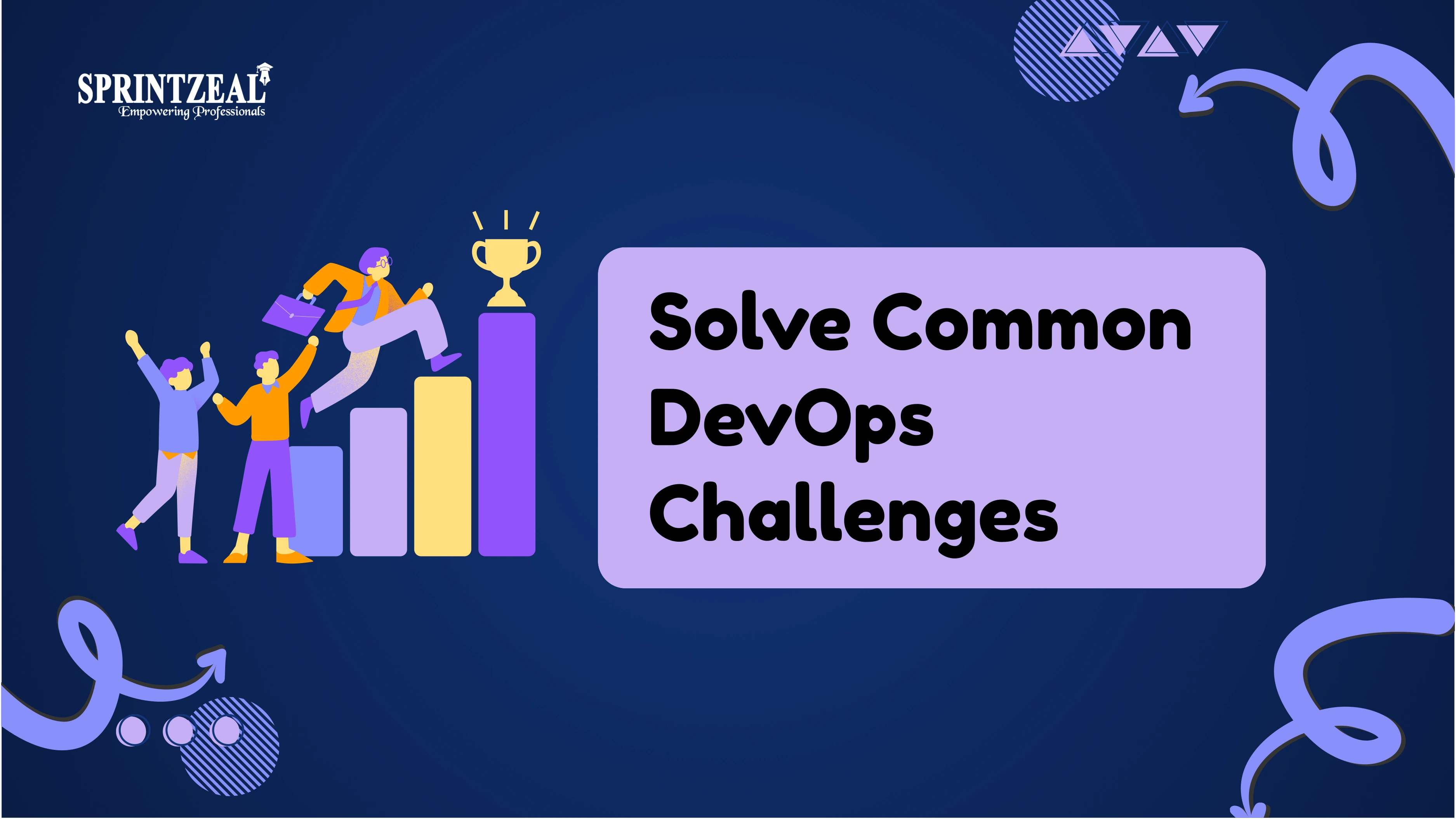
DevOps promises faster releases, fewer failures, and better collaboration between development and operations teams. In practice, though, many organizations struggle to make it work the way it's supposed to. Pipelines break, deployments slow down, and teams end up firefighting instead of shipping. This is often where businesses start looking into DevOps consulting services, not because DevOps itself is flawed, but because implementing it well requires more structure and experience than most in-house teams initially expect.
This blog walks through the most common DevOps challenges teams run into, and the practical solutions that actually resolve them, not just theoretical best practices, but approaches that hold up in real production environments.
Key Takeaways
Most DevOps challenges come from process and culture gaps, not just tooling problems.
Automation, monitoring, and security need to be built in from the start, not added later.
DevOps consulting services can help organizations avoid the most expensive, time-consuming mistakes.
Solving these challenges requires both the right tools and the right team structure working together.
Many teams adopt DevOps tools, CI/CD pipelines, containerization, infrastructure as code without addressing the underlying process and communication issues that made releases slow in the first place. This is one of the main reasons organizations eventually turn to DevOps consulting services: an outside team can spot structural problems that internal teams often overlook simply because they're too close to the daily workflow.
DevOps is built on the idea that development and operations work as one team, but old organizational habits are hard to break. Many companies still have developers writing code with little visibility into how it performs in production, while operations teams are left scrambling to fix issues after deployment.
Automation is central to DevOps, but partial automation often causes more problems than it solves. A pipeline that automates testing but still requires manual deployment steps, for example, creates a false sense of progress while bottlenecks remain.
Traditional development often treats security as a final review step before release. In a DevOps environment, where releases happen frequently, this approach creates serious risk vulnerabilities can ship to production simply because there wasn't time for a full manual security review.
Many organizations turning to DevOps consulting services do so specifically because building this level of security integration in-house requires specialized expertise that's expensive and time-consuming to develop from scratch.
Without proper monitoring, teams often find out about problems from customers before their own systems flag anything. This reactive approach undermines one of DevOps' core goals catching and resolving issues before they affect users.
What works for a five-person engineering team often breaks down once an organization scales to dozens of teams and multiple products. Processes that felt lightweight and flexible early on can become chaotic without proper structure.
Not every organization needs external support, but there are clear signs it's worth considering.
An experienced consulting partner can often identify root causes far faster than an internal team working through trial and error, particularly when the problems span multiple areas, culture, tooling, and security, at once. This mirrors a decision many businesses face outside of DevOps too: much like a startup might choose a clone app development company to launch faster instead of building every piece of technology from scratch, bringing in outside DevOps expertise can help teams skip years of trial-and-error and get straight to a system that actually works.
Most DevOps challenges aren't really about the tools, they're about the process gaps, communication breakdowns, and incomplete automation that tools alone can't fix. Whether it's poor collaboration between teams, fragile automation, security treated as an afterthought, or the difficulty of scaling practices across a growing organization, the solutions that actually work require a combination of the right technical approach and organizational change.
For teams that don't have this expertise in-house, DevOps consulting services can help identify what's actually broken and build a more resilient, well-integrated system, rather than continuing to patch symptoms one at a time.
Poor collaboration between development and operations teams is one of the most common causes, often because tools are adopted without addressing the underlying organizational silos.
Small teams can benefit too, especially when scaling quickly or dealing with security and automation gaps that internal teams don't have the bandwidth or expertise to solve alone.
If deployments, rollbacks, or configuration changes still require manual steps, your automation likely has gaps that are creating bottlenecks even if parts of your pipeline are automated.
It depends on the organization's needs some businesses use consulting for a specific implementation project, while others maintain an ongoing relationship for continuous optimization and support.
Start with an honest audit of your current pipeline, team collaboration, and security practices to identify where the actual bottlenecks are before investing in new tools or processes.

Wed, 21 October 2026
Thu, 15 October 2026

Wed, 14 October 2026
Tue, 13 October 2026
Wed, 07 October 2026

Fri, 02 October 2026

Wed, 30 September 2026

Tue, 29 September 2026

Fri, 25 September 2026

Tue, 22 September 2026


© 2026 Sprintzeal Americas Inc. - All Rights Reserved.

 USA : +1315-322-7821
 UK : +44 7700 174870
 IND : +919036108287
 AUS : +61 480 005 455