Inspirational journeys
Follow the stories of academics and their research expeditions
7 Ways Hybrid Workplaces Are Reshaping the Future of Work
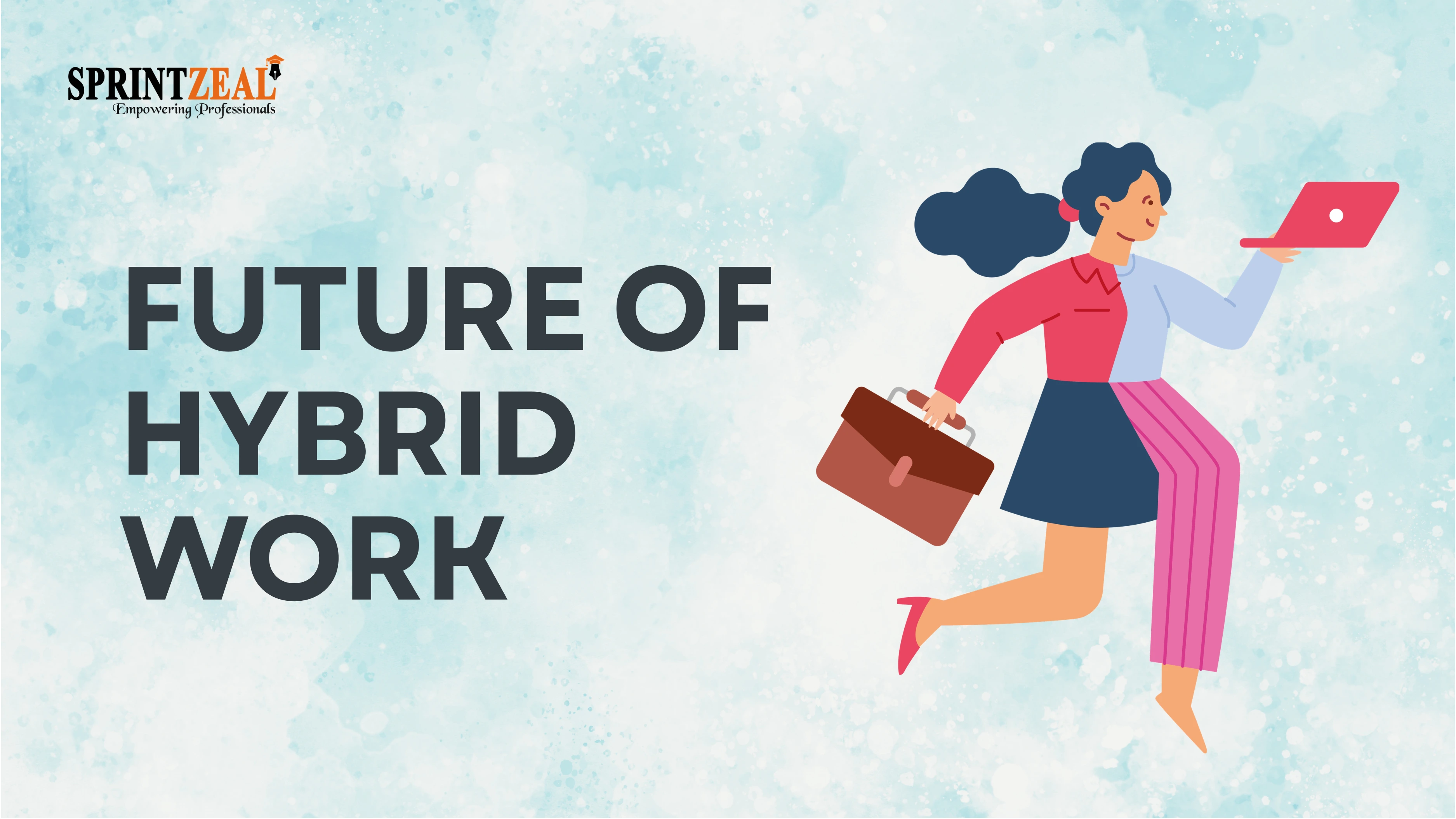
Calling hybrid work "working from home a few days a week" barely scratches the surface of what it has become.
A few years ago, hybrid work was a stopgap. Offices shut, nobody had a plan, and companies just tried something. That something stuck around. Today, it's how millions of people build careers, raise kids, and shape their days.
And it's not slowing down. New tools push it forward. Employee expectations keep shifting. Companies keep learning, sometimes the hard way, what actually works. The old "office versus home" argument already feels dated. The bigger story is that work itself is being rebuilt, piece by piece, right now.
Where is this leading, then? Whether you work from a kitchen table or a corner office, these are seven of the biggest shifts and what they mean for you.
Table of Contents
- Beyond Remote vs. Office: 7 Ways Hybrid Work Is Building the Future
- Where Hybrid Work Goes From Here
Beyond Remote vs. Office: 7 Ways Hybrid Work Is Building the Future
The hybrid work culture is the future of workplaces. You'll spot it in flexible schedules and smarter offices. Each shift below marks a real change in how teams collaborate, how leaders judge performance, and how employees expect to be treated.
1. The 9-to-5 Schedule Is Losing Its Grip
The workday had a single form for decades. Everyone should be online at the same time, clocking in at nine and out at five. That mold is being quietly broken by hybrid work.
Nowadays, workers desire more than merely working from home. They want to be in charge of both where and when they work. Perhaps you begin early in order to pick up your children by the middle of the afternoon. It's also acceptable if your brain doesn't activate till nine o'clock at night.
This tendency is more noticeable among younger professionals who prefer to work in short and focused bursts rather than spend eight continuous hours in front of a screen.
Data supports this. According to Owl Labs’ 2025 State of Hybrid Work survey, 83% of workers believe that flexible hours are just as vital as flexible days and locations.
That doesn't mean chaos, though. Most teams still keep a few overlapping hours for meetings. But the rigid everyone-at-once schedule is fading fast. What's replacing it is something simpler: get the work done on a timeline that works for you and your team.
This is how it appears on a daily basis:
- You pick start and end times around your real life
- Your team agrees on a few core overlap hours instead of a fully synced day
- Your work gets judged by what you deliver, not the hours you logged in
2. The Office Is Becoming a Destination, Not a Default
If flexibility is winning, what happens to the office? It's not vanishing. It's just being redefined.
Fewer companies treat the office as the default place where work simply happens. Rows of assigned desks are giving way to shared workstations, meeting pods, and lounge spots built for actual conversation, not solo typing.
That shift is changing budgets, too. Rather than lease more square footage, many companies are trimming their real estate and pouring the savings into better meeting tech and spaces worth the commute.
Here's what that looks like in practice:
- Offices get redesigned around collaboration zones, not endless rows of desks
- Companies shrink their footprint and reinvest the savings into better tools
- You show up for a reason rather than out of habit
|
Traditional Office Model |
Modern Hybrid Office Model |
|
Assigned desks for every employee |
Shared desks and flexible seating |
|
Office is used daily by default |
Office used intentionally for specific tasks |
|
Focus on attendance and hours logged |
Focus on outcomes and collaboration |
|
Large and fixed real estate footprint |
Smaller and flexible workspace footprint |
|
One-size-fits-all meeting rooms |
Mix of huddle rooms, quiet zones, and lounges |
3. AI Tools Are Becoming Everyday Coworkers
AI has gone from novelty to a genuine part of a hybrid workday. Gradually, it's chewing through the small and repetitive stuff that used to eat your hours.
Meeting notes that write themselves. Emails are summarized before you even open your inbox. Scheduling tools that find a time that works for everyone, without 10 back-and-forth messages.
For teams scattered across time zones, that's more than a time-saver. It keeps everyone on the same page.
Here's how this plays out day to day:
- AI handles meeting notes, summaries, and routine schedulings
- Automating repetitive processes frees up time for important work
- Companies set clear rules around data privacy and reliability
4. Trust Is Replacing Visibility as the New Performance Metric
For years, being seen at your desk basically counted as proof you were working. Hybrid work has torn that assumption apart.
Managers simply can't watch every employee all day anymore. Most have concluded that they are not required to.
Now, it doesn't matter whether you were visible from nine to five; what counts is whether the work is completed efficiently and on schedule. However, this transition isn't always easy. When it comes to promotions, some employees are concerned that those who appear in person more frequently would be given priority.
Nevertheless, the path is obvious. Businesses that prioritize trust and well-defined objectives have greater employee loyalty and reduced attrition compared to those that adhere to strict attendance monitoring.
Managers who need a clear picture of how work gets done across distributed teams can use tools like BrowseReporter to gain real-time workforce visibility. This gives them meaningful insights without requiring employees to be monitored from a desk.
In practical terms, this means:
- Your performance gets measured by results and deadlines instead of desk time
- Managers set clear goals instead of tracking who's logged in
- Honest and regular feedback replaces rigid monitoring
5. Employee Well-Being Has Become a Business Priority
Constant notifications. Back-to-back video calls. The nagging pressure to always be reachable, even at home. It adds up, and it wears people down. So, companies that are serious about hybrid work are finally tackling the root causes of that fatigue instead of covering it up with perks.
Here's what you'll typically see:
- No-meeting blocks get carved into a week, so people can focus
- Clear boundaries form around after-hours messages and emails
- Mental health days get treated as seriously as sick days
- Home office setups or a nearby coworking desk are covered by stipends
This isn't just about being kind, though that matters. It's good business, too. Supported employees are far less likely to quietly check out or start job hunting.
A lot of this well-being challenge traces back to communication itself, knowing when to switch off, how to set boundaries, and how to raise concerns before they turn into burnout. All of this depends on strong interpersonal communication skills, both from managers and employees alike.
6. Hybrid Work Is Redrawing the Talent Map
One of the less obvious shifts in hybrid work is geography, and it might be the biggest one. When a job no longer requires you to live near an office, the whole talent pool changes.
Companies are hiring outside their home cities, sometimes outside their home countries. Hybrid-friendly roles just don't depend on a local commute anymore. Plenty of employees say they'd move cities or countries if their employer allowed it, and job seekers now rank flexibility right up there with salary.
Local economies are also changing as a result. Coworking spaces are becoming more and more popular in smaller cities and suburbs as individuals move away from expensive city cores while retaining employment that formerly required relocation.
Here's how this shows up in the workplace:
- Companies hire beyond their home city or country
- You choose where to live, independent of where an office sits
- Employers compete for talent against a much wider field of businesses
|
What Employees Say They Want |
Why It Matters to Employers |
|
Control over their weekly schedule |
Higher retention and lower turnover |
|
Fewer and more purposeful office days |
Lower real estate and overhead costs |
|
Clear written expectations |
Less confusion and fewer missed deadlines |
|
Freedom to work from different locations |
Access to a wider and more diverse talent pool |
|
Recognition based on results, not hours |
Stronger trust and team morale |
7. Hybrid Strategy Is Becoming Data-Driven
In the early days, hybrid policies were built on gut feeling. Two days in the office sounded about right, so that became the rule. That guesswork approach is fading fast.
These days, forward-thinking companies treat hybrid work as something to measure and fine-tune, not set once and forget. They track which days the office gets used. They notice which teams collaborate better in person versus online. They watch for where meeting fatigue creeps in.
This kind of structured framework-driven thinking isn't new to the business world. To apply the same discipline to service management, IT teams have long depended on well-established frameworks, such as ITIL procedures.
To put it simply, a hybrid work strategy applies the same discipline to people's workplace, schedules, and methods. Frequent surveys and open avenues for feedback are becoming standard practices rather than nice extras.
Why is this important? Due to the dynamic nature of hybrid work. What your team did well the previous year might not work this year. Instead of presuming they got it right the first time, the companies that are making the most of hybrid work continue to ask questions and make adjustments.
This is what it looks like in everyday work:
- Office usage and collaboration patterns are not just assumed but tracked
- Regular surveys and feedback loops become a part of the routine
- Hybrid policies get revisited and adjusted since they are no longer set in stone
Where Hybrid Work Goes From Here
Hybrid work is no longer just a short-term compromise between home and the office. Where, when, and how you work are all completely redesigned. Your schedule is more flexible. Offices have become purposeful instead of mandatory. AI is taking over the repetitive stuff. And trust has replaced visibility as the real measure of performance.
None of this means hybrid work is finished evolving. The reverse is true. Great individuals are more likely to be drawn to and stay with firms that approach it as a live strategy, one they continuously listen to and improve.
Ultimately, choosing between work and home won't determine the nature of work in the future. The goal is to create something that is superior to either one alone.
Are you prepared to develop a hybrid work approach that benefits your team? To get started, take a look at Sprintzeal's leadership and workplace training packages.

Categories
Related Posts
What Are the Key Things to Consider When Choosing Kajabi Alternatives?
Fri, 11 September 2026

How Do You Choose the Right Coaching Certification in Canada?
Wed, 09 September 2026

Best Shopify Plus Partners for Mid-Market and Enterprise Brands
Fri, 04 September 2026


How CMMC Solutions Strengthen Cybersecurity for Small Businesses
Thu, 03 September 2026

Practical Tech Gadgets That Actually Improve Daily Team Productivity
Thu, 03 September 2026

The Advantages of 3D Model-Based Engineering Training
Thu, 03 September 2026

Why Employee Engagement Is the Missing Link in Corporate Learning and Development
Wed, 02 September 2026

I Ran a Week of Lookups on ClarityCheck.com. Here's What Came Back
Mon, 31 August 2026

 USA : +1315-322-7821
 UK : +44 7700 174870
 IND : +919036108287
 AUS : +61 480 005 455