What Is Gamification in Education?
Wed, 07 October 2026

Inspirational journeys
Follow the stories of academics and their research expeditions
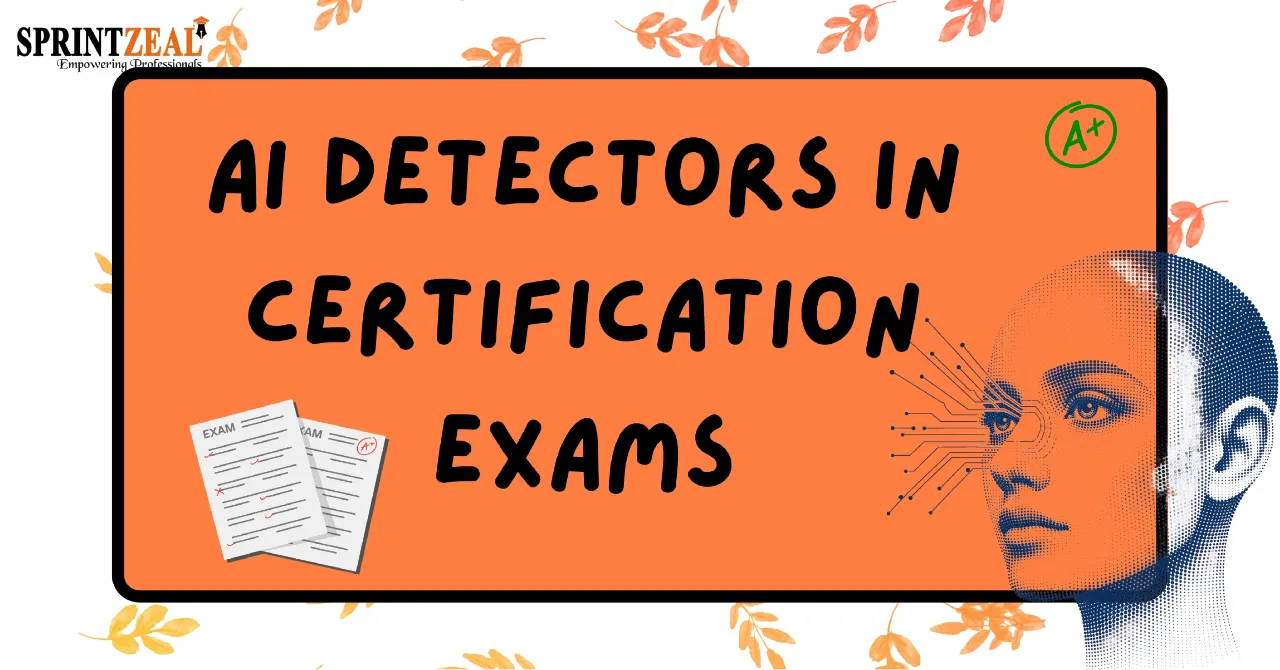
If you’ve turned in a capstone project, case study, or writing assignment for a certification program lately, your submission likely got run through an AI detector before anyone actually read it. In the last two years, many training companies, colleges, and certification organizations have started including AI detection in their grading workflow, mostly because so many people have been turning to LLMs to write papers and projects. That’s totally understandable: they want to make sure a credential still means something. However, this has introduced another set of challenges that candidates taking certification exams like PMP, Six Sigma, CISSP, and ISO lead auditor training now need to address.
The motivation here is pretty simple: if a candidate is submitting a capstone paper, case study, or essay, certification organizations want to know that the person actually did the work and understands the material. A PMP capstone project, or a CISSP case study assignment, isn’t just busywork, it’s supposed to prove that you know how to apply what you’ve learned. Once generative AI started gaining traction, many of these programs jumped on board with using AI detectors to vet submissions, usually by adding a third-party AI detection tool to their standard plagiarism check.
The issue is that these detectors aren’t designed to account for the kinds of writing you see in professional settings, or even in academic assignments.
AI detectors work by looking for things like predictability in word choice, consistency in sentence structure, and low “burstiness” (the unevenness in sentence length that humans tend to produce). Unfortunately, that’s also a lot of what you see in technical and process-oriented writing, which is precisely what certification exams ask you to generate. Here are some examples of who tends to trigger these detectors at higher rates:
Non-native English speakers who write in a more rigid style due to how they acquired the language, and this can trigger detectors that were mostly built using native-speaker data.
Technical writers who deal with highly structured fields (like compliance, auditing, and project management), where the nature of the content naturally leads to repetitive language and terminology.
Students who’ve legitimately used tools such as spellcheck, outline tools, or even study guides, which can lead to phrasing that gets misidentified as AI-generated.
This isn’t some made-up scenario. There are multiple studies about GPT-detection tools that highlight high rates of false positives, and the repercussions of a false positive can vary from a failed assignment to a complete audit of the certification. If you’re putting in hours of studying for the PMP, or paying hundreds of dollars to sit for the CISSP exam, then having your results determined by an imperfect algorithm is a pretty big deal.
There’s no need to be concerned about all of this, but if your program does have a tool that flags AI writing, there are a few things you can do to avoid issues.
Show your work. If your program allows you to upload files with drafts, outlines, or other documentation, submit those along with your assignments. This is the easiest way to prove your work wasn’t generated by AI if a false positive occurs.
Know your program’s AI-writing policy. Not all certification programs ban AI-generated content. Some programs allow AI to assist with the brainstorming and research stages of writing assignments but require students to write their own essays. Others completely prohibit AI usage. You’ll want to read the fine print to see what’s allowed before starting an assignment, not after your work has been flagged.
Write in your voice. AI detectors look for standardized writing styles, so it’s important that you write in your own voice. Vary your sentence length, write from personal experience, and avoid phrases like “In today’s digital economy…” Both because your writing will be better and because it’s less likely to trip AI detectors.
Use AI carefully. Even if your program permits AI use in certain capacities, some AI writing tools are flagged as having been AI-generated even when they’ve been edited. This is where software like StealthGPT’s AI humanizer comes in handy. StealthGPT was created to help users, including students and professionals, produce AI-assisted text that doesn’t trigger false-positives in AI detectors. Keep in mind that this isn’t about evading detection at all costs, the reality is that detectors aren’t 100curate and they’ll catch legitimate human editing or AI-assisted drafting as AI-generated.
There’s an ongoing discussion happening within e-learning platforms and certifying organizations such as Sprintzeal regarding AI writing detection. How do you ensure the quality and integrity of a certification when AI tools have become a standard part of the writing process? Unfortunately, there’s no clear answer to that question right now. Most training programs don’t have specific AI policies, so rules will change frequently as detection technology improves (or is discarded for being inaccurate).
The best approach is to follow the guidelines set forth by your certification program, keep a record of your writing process, and write in your own voice.

Wed, 07 October 2026
Fri, 02 October 2026

Wed, 30 September 2026
Tue, 29 September 2026
Fri, 25 September 2026

Tue, 22 September 2026

Tue, 22 September 2026

Thu, 17 September 2026
Wed, 16 September 2026

Wed, 16 September 2026

© 2026 Sprintzeal Americas Inc. - All Rights Reserved.

 USA : +1315-322-7821
 UK : +44 7700 174870
 IND : +919036108287
 AUS : +61 480 005 455