How Certified Professionals Turn a Credential Into Career Momentum
Wed, 21 October 2026

Inspirational journeys
Follow the stories of academics and their research expeditions
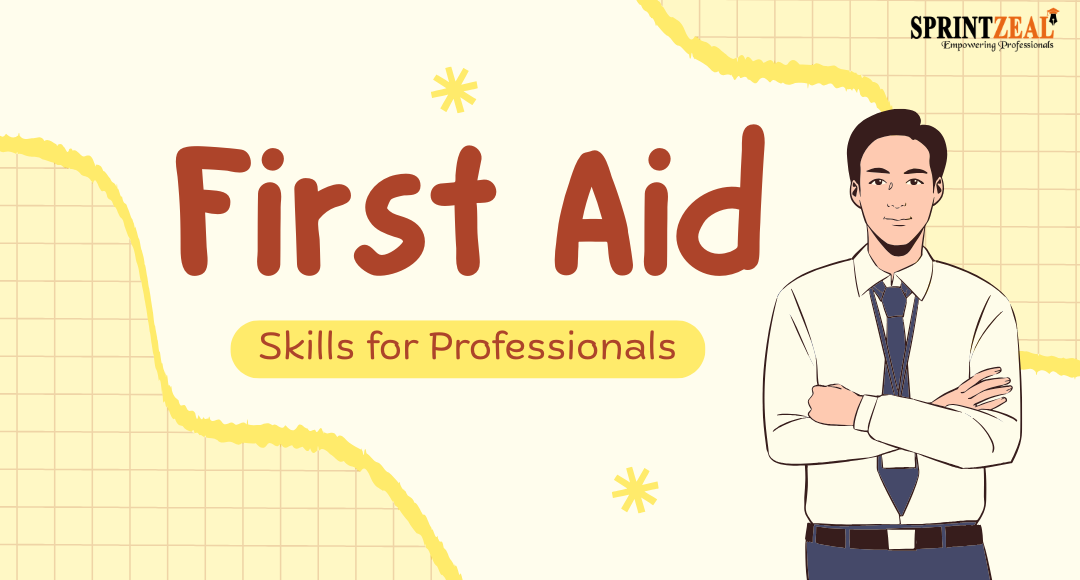
Professionals are constantly chasing new certifications to stay competitive, but they often ignore physical emergency preparedness. In rapidly evolving business hubs like Oshawa, modern leaders are realizing that true workplace resilience requires first aid training right alongside traditional project management and IT credentials.
We live in a corporate culture obsessed with upskilling. If you glance at any ambitious professional's LinkedIn profile today, you will see a massive alphabet soup of certifications. People spend thousands of hours mastering Agile methodologies, earning their PMP, or getting certified in the latest AWS cloud infrastructure. We optimize our technical brains to handle complex digital workflows. Yet, we completely ignore our physical bodies and the very real medical emergencies that can happen in the cubicle right next to us.
What good is a highly optimized project sprint if your entire team completely freezes when a coworker suddenly collapses in the breakroom? This exact gap in operational readiness is driving a major shift in corporate training priorities this year. Savvy office managers and ambitious team leads are actively seeking out first aid training Oshawa to round out their professional skill sets. They are finally recognizing that knowing how to handle a human crisis is the ultimate form of crisis management.
Oshawa has undergone a massive economic transformation over the last decade. It used to be strictly known as the automotive capital of Canada, heavily reliant on a single manufacturing giant. Today, it is a bustling hub for education, healthcare technology, and modern startups, anchored by institutions like Ontario Tech University.
This rapid shift from the factory floor to the carpeted office has completely changed how local companies view workplace safety. In a heavy manufacturing plant, safety protocols are physically drilled into every worker on day one. In a modern tech office or a marketing agency, that physical safety culture is often entirely absent. Professionals are waking up to the fact that sitting at a desk all day doesn't make you immune to sudden cardiac arrest, severe allergic reactions, or choking. In fact, highly stressful, sedentary work environments carry their own hidden health risks.
We talk endlessly about leadership skills in the corporate world. We attend seminars on how to communicate effectively, how to inspire direct reports, and how to manage conflict. But real leadership is defined by how you act when everything suddenly goes completely sideways.
Imagine a scenario where a senior executive suffers a stroke during a massive quarterly pitch. The room erupts into pure chaos. If you are the one person who stays perfectly calm, directs a coworker to call 911, and immediately begins providing proper care, you aren't just a bystander anymore. You are the absolute authority in that room. First aid training teaches you how to violently break the bystander effect. It gives you the mechanical confidence to take charge, delegate tasks under pressure, and manage a highly stressful situation. That is raw, undeniable leadership.
Let's break down a very realistic office scenario. It is a busy Tuesday morning, and your team is rushing to meet a hard software launch deadline. The stress levels are incredibly high, and everyone is heavily caffeinated. Suddenly, a junior developer slumps out of their ergonomic chair and hits the floor, completely unresponsive.
If nobody on that floor is trained, the resulting panic is terrifying. People will stand around screaming, debating whether they should move the person or wait for an ambulance. Those wasted minutes are deadly. The human brain begins taking irreversible damage within just four to six minutes of oxygen deprivation. By the time Durham Region paramedics navigate through Oshawa traffic, find parking, and get up to your floor, it might be too late. When your staff is properly trained, that chaotic delay simply doesn't happen.
In human resources, we strictly divide talents into hard skills (like coding or accounting) and soft skills (like empathy and communication). First aid perfectly bridges that gap. The physical act of doing chest compressions is a hard, learnable skill. But the situational awareness required to execute it is purely a soft skill.
When you learn how to treat a wound or assist someone having a panic attack, you are developing massive amounts of empathy. You learn how to speak calmly to someone who is terrified. You learn how to read physical cues and anticipate problems before they escalate. These are the exact same communication skills that make someone a phenomenal project manager or a trusted client success director. You are basically cross-training your brain to handle high-stakes human interaction.
One of the biggest excuses professionals use to avoid safety training is a lack of time. They argue that pulling their top performers out of the office for two full days to sit in a dull classroom will destroy their quarterly production metrics. A few years ago, that was a valid complaint. Today, it is just a weak excuse.
The training industry has completely evolved to match the speed of modern business. Blended learning is now the absolute standard for corporate certifications. Your employees can complete all the heavy reading, instructional videos, and theoretical quizzes online through a dedicated portal. They can do it on their laptops during a slow afternoon or while commuting on the GO train. After the online theory is done, they just visit the training facility for a brief, hands-on skills session to prove their physical competency. It minimizes disruption while maximizing retention.
Beyond the moral obligation to keep your team alive, there is a very sharp financial and legal angle to consider. The Workplace Safety and Insurance Board (WSIB) in Ontario does not view first aid as an optional perk. It is a strict, legally mandated requirement.
If your office falls out of compliance by not having enough certified staff on shift, you are operating illegally and face massive fines during an audit. But the hidden costs are even worse. If an emergency is handled poorly on the office floor, the psychological trauma ripples through your entire workforce. Morale absolutely tanks. Your best employees will start looking for the exit, realizing that their company views them as disposable assets rather than human beings worth protecting.
If you hold a PMP or work in complex operations, your entire job revolves around risk mitigation. You build extensive contingency plans for server crashes, supply chain delays, and budget overruns. Yet, many project managers fail to build a contingency plan for the sudden loss of a key team member due to a medical emergency.
Treating physical safety as a core component of your operational risk management is a brilliant professional move. When you mandate CPR training for your core team, you are effectively installing a human backup system. You are ensuring that a health crisis doesn't completely derail your project timeline, because your team knows exactly how to stabilize the situation and hand it off to medical professionals smoothly.
You have probably noticed those Automated External Defibrillator (AED) boxes mounted near the elevators in modern office buildings. A shocking number of highly educated professionals are terrified to touch them. They assume you need a medical degree to press the buttons without accidentally electrocuting someone.
This is a massive misconception. AEDs are essentially smart devices designed for completely untrained, panicked bystanders. They are foolproof. Once you open the lid, a calm digital voice literally talks you through the entire process. It tells you exactly where to place the sticky pads on the person's bare chest. The machine reads the heart rhythm entirely on its own and will actively refuse to deliver a shock unless the patient is in genuine cardiac arrest. Training just gives you the mental permission to pull the machine off the wall.
We waste a lot of corporate budget on highly ineffective team-building exercises. Trust falls and awkward escape rooms rarely build actual camaraderie. If you want to see your team bond on a deep, meaningful level, send them to get certified in life-saving skills together.
When coworkers practice chest compressions on mannequins side-by-side, it changes the dynamic of the room. They learn how to communicate under simulated pressure. They quickly figure out who naturally steps up to lead and who excels at following clear directions. It builds a very raw, genuine level of trust. Knowing that the person sitting in the cubicle next to you actually knows how to save your life creates a workplace culture that a ping-pong table simply cannot match.
Not all training certificates carry the same weight. If you are going to invest your company's time and training budget, you need to ensure the certification is fully recognized. Look for training partners that are WSIB-approved and follow the absolute latest guidelines from the Canadian Red Cross.
You also want to find a provider that understands corporate logistics. You want a facility with modern, responsive mannequins and instructors who have real-world emergency experience. They need to be able to answer tough questions from skeptical professionals and clearly explain the 'why' behind every physical action. You want your team walking out of that room feeling deeply empowered and fully capable.
If you are looking for first aid training near Central Oshawa, the major intersection of Simcoe Street South and Bloor Street, or other areas close to our facility, then you may reach out to Coast2Coast First Aid/CPR - Oshawa in that area. For more info and articles like this visit: https://www.c2cfirstaidaquatics.com/
How many first aid certified employees does my Ontario office actually need?
WSIB regulations clearly dictate that if your workplace has 1 to 5 workers on a given shift, you need at least one person certified with Emergency First Aid. If you have 6 or more workers on shift, you must have at least one person equipped with a Standard First Aid certificate.
Does the employer have to pay for the employee's first aid training?
Yes. Under Ontario health and safety laws, the employer is entirely responsible for covering the cost of the mandated training course. You must also pay the employee their regular hourly wages while they are completing the class.
Are online-only CPR certificates accepted for professional compliance?
No, they are not. The WSIB does not recognize safety certifications that are earned entirely online. To be legally compliant, your staff must complete a course that includes a physical, in-person skills assessment with a qualified instructor.
Will my employees be held legally liable if they make a mistake during CPR?
No. Ontario has a Good Samaritan Act that legally protects individuals who voluntarily step in to help during a medical emergency. As long as they are acting in good faith without expecting a reward, and are not acting with gross negligence, they are fully protected.
How often must my office team renew their safety certifications?
In Ontario, first aid and CPR certifications are valid for exactly three years from the date of completion. To remain legally compliant, employees must take a recognized recertification course before their current three-year certificate expires.

Wed, 21 October 2026
Thu, 15 October 2026

Wed, 14 October 2026
Tue, 13 October 2026
Wed, 07 October 2026

Fri, 02 October 2026

Wed, 30 September 2026
Tue, 29 September 2026
Fri, 25 September 2026

Tue, 22 September 2026

© 2026 Sprintzeal Americas Inc. - All Rights Reserved.

 USA : +1315-322-7821
 UK : +44 7700 174870
 IND : +919036108287
 AUS : +61 480 005 455