Inspirational journeys
Follow the stories of academics and their research expeditions
How Production Data helps you Automate ESG Reporting
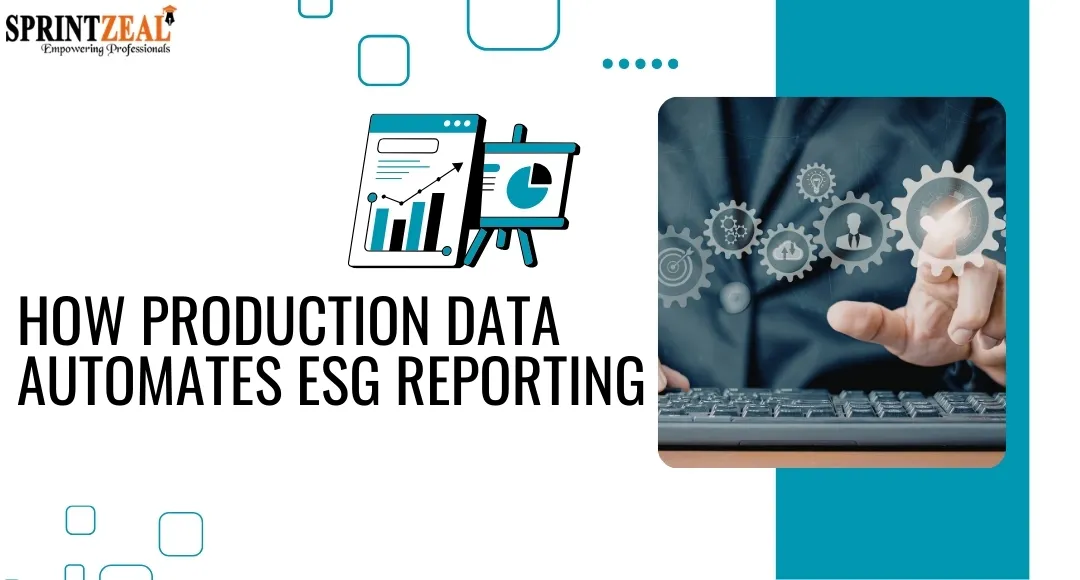
As sustainability requirements tighten and new regulations such as CSRD and ESRS come into force, many organizations face a recurring challenge: ESG reporting still relies heavily on manual work, fragmented spreadsheets, and incomplete or inconsistent data. Sustainability teams often spend weeks consolidating information, while the most reliable source of truth already exists inside the plant - production data.
Modern, automated ESG reporting is no longer based on estimates or annual surveys. Instead, it depends on the continuous flow of validated operational data. When production data is connected to modern sustainability and reporting platforms, organizations can automate compliance, improve data quality, shorten reporting cycles, and track carbon footprint KPIs in near real time. This shift transforms ESG reporting from a yearly burden into a continuous, data-driven capability.
Table of Contents
Why production data is the foundation of automated ESG reporting
Eliminating manual errors and accelerating ESG reporting cycles
Sustainability analytics: turning ESG data into real improvements
Why production data is the foundation of automated ESG reporting
Production environments generate vast amounts of information - from energy consumption and emissions to water usage, waste generation, machine efficiency, and process deviations. These data streams naturally align with ESG metrics, making production data the ideal foundation for automation.
Unlike external estimates or manually collected reports, production data is:
Continuous, not periodic.
Measured, not approximated.
Traceable, not manually adjusted.
Near real-time, not purely historical.
This makes it especially valuable for sustainability analytics. When production data is connected to ESG systems, organizations can automatically calculate environmental indicators, compare performance across sites, generate audit-ready datasets, and respond to regulatory requirements without rebuilding reports from scratch every quarter.
Turning raw signals into actionable ESG metrics
To automate ESG reporting, raw production data must be transformed into meaningful sustainability indicators. Data from energy meters, IoT devices, emissions sensors, and machine logs is processed to calculate metrics such as:
total energy consumption,
CO₂ emissions by process or production line,
water intake and discharge,
waste generation and recycling ratios,
carbon footprint KPIs per product, site, or business unit.
Once calculated, these indicators flow directly into ESG dashboards and reporting frameworks. Automation eliminates repetitive manual work and ensures that every metric is supported by a digital audit trail.
This is particularly critical for CSRD compliance, which requires organizations to demonstrate data provenance, calculation logic, and validation - something spreadsheet-based processes cannot reliably provide.
Continuous, real-time sustainability monitoring
Modern manufacturers no longer wait until year-end to understand their environmental performance. When production data feeds ESG systems continuously, sustainability metrics can be monitored on an ongoing basis.
Real-time monitoring enables organizations to:
identify abnormal energy consumption patterns,
detect emission spikes as they occur,
react to water usage anomalies,
address waste management issues before audits,
track carbon footprint KPIs as they evolve over time.
Instead of reporting sustainability results after problems arise, organizations gain the ability to proactively manage ESG performance through daily operational decisions.
Collaboration across teams, sites, and organizations
Automated ESG reporting also changes how teams work together. With production data centralized in a single platform, multiple teams - often across different locations or companies within a group - collaborate on one shared source of truth.
Sustainability teams, operations, finance, and compliance departments can work simultaneously on the same validated datasets, regardless of geography. This eliminates local data silos, inconsistent versions of reports, and duplicated effort. Whether across different plants, regional branches, or legal entities, everyone operates on the same definitions, metrics, and assumptions.
As a result, ESG reporting becomes a coordinated, organization-wide process rather than a fragmented exercise handled in isolation.
Clear visualizations, benchmarking, and ESG forecasting
Automation is not only about collecting data - it is also about making it understandable and actionable. Modern ESG platforms enable clear, intuitive visualizations built on production data.
Organizations gain the ability to:
visualize ESG indicators over time,
compare performance period-over-period,
benchmark sites, departments, or companies within a group,
track actual performance against defined ESG targets,
identify trends and early warning signals.
Beyond historical analysis, production data enables forecasting. Based on current trends, organizations can project key ESG indicators - including emissions and energy consumption - to the end of the reporting year. This allows sustainability teams to assess whether targets will be met and take corrective actions early, rather than discovering gaps during year-end reporting.
Eliminating manual errors and accelerating ESG reporting cycles
One of the biggest weaknesses of traditional ESG reporting is its reliance on manual inputs from spreadsheets, emails, and local documents. This introduces errors, inconsistencies, and values that are difficult or impossible to trace - all of which undermine compliance.
Production data addresses this challenge directly.
Automated data capture dramatically reduces the risk of human error and ensures that ESG reporting is based on accurate, validated, and reproducible information. Many organizations reduce reporting cycles by more than half once manual data collection is replaced with automated pipelines.
Faster reporting means sustainability teams can focus on improving performance, not consolidating data.
Management, investor, and regulatory reporting at scale
Automated ESG systems built on production data make it easy to generate tailored summaries and presentations for different stakeholders.
Organizations can automatically prepare:
executive-level ESG dashboards for management and boards,
standardized reports for investors and financial institutions,
regulatory submissions aligned with CSRD, ESRS, GRI, or other frameworks.
Instead of manually rebuilding presentations and reports, teams generate consistent, up-to-date outputs directly from the same data foundation. This ensures alignment between operational reality, management reporting, and external disclosures.
Building trust through transparency and audit-ready data
For regulators, investors, and customers, transparency is a key indicator of ESG maturity. Automated systems based on production data provide consistent, traceable metrics with clear documentation showing:
where each value originated,
how it was calculated,
which system validated it,
when it was last updated.
Audit readiness becomes a built-in capability rather than an annual stress point. This level of traceability is increasingly required by frameworks such as CSRD, ESRS, and GRI, making automated production data pipelines essential for long-term compliance.
Integrating external systems for complete ESG coverage
Not all ESG indicators come directly from production systems. Automated ESG platforms must also integrate with external systems to provide a complete picture.
This includes integration with:
HR systems (e.g. workforce metrics, training, safety indicators),
financial and ERP systems,
supplier and procurement platforms,
external emission factors and reference databases.
By combining production data with these external inputs, organizations can calculate complex ESG indicators consistently and at scale - without manual reconciliation across systems.
Sustainability analytics: turning ESG data into real improvements
Automation is not just about reporting - it is about performance. With sustainability analytics powered by production data, organizations can benchmark results, analyze trends, identify inefficiencies, and quantify the impact of operational changes on carbon footprint KPIs.
ESG evolves from a compliance obligation into a strategic capability. Companies gain insight into why consumption spikes occur, where emissions originate, and which operational changes deliver the greatest sustainability impact.
A new standard for ESG reporting
When ESG reporting is powered by production data, organizations gain:
Real-time insights instead of delayed snapshots.
Accurate carbon footprint KPIs at every level.
Automated compliance aligned with regulatory frameworks.
Significantly reduced reporting workload.
Greater trust from auditors, investors, and customers.
The ability to proactively manage sustainability risks.
Most importantly, they move from reactive reporting to continuous ESG intelligence.
Production data is the engine of ESG automation
As sustainability expectations continue to rise, organizations can no longer rely on disconnected tools or manual processes. Automated ESG reporting requires a robust, integrated data backbone - and production data is the most reliable backbone available.
With real-time insights, automated calculations, validated carbon footprint KPIs, advanced visualizations, and powerful sustainability analytics, manufacturers gain a clear path to regulatory compliance and operational efficiency. ESG reporting becomes faster, more accurate, and more meaningful - enabling organizations to focus on what truly matters: reducing environmental impact and building a more sustainable future.
Smart RDM connects production data directly with ESG reporting. It automatically transforms validated OT and IT data into audit-ready ESG metrics, real-time dashboards, and CSRD/ESRS-aligned reports.
Instead of spreadsheets and manual consolidation, organizations get automated data pipelines, full traceability, and continuously updated carbon footprint KPIs — making ESG reporting faster, more accurate, and fully data-driven.
Table of Contents
- Introduction
- Why production data is the foundation of automated ESG reporting
- Collaboration across teams, sites, and organizations
- Eliminating manual errors and accelerating ESG reporting cycles
- Sustainability analytics: turning ESG data into real improvements
Introduction
As sustainability requirements tighten and new regulations such as CSRD and ESRS come into force, many organizations face a recurring challenge: ESG reporting still relies heavily on manual work, fragmented spreadsheets, and incomplete or inconsistent data. Sustainability teams often spend weeks consolidating information, while the most reliable source of truth already exists inside the plant - production data.
Modern, automated ESG reporting is no longer based on estimates or annual surveys. Instead, it depends on the continuous flow of validated operational data. When production data is connected to modern sustainability and reporting platforms, organizations can automate compliance, improve data quality, shorten reporting cycles, and track carbon footprint KPIs in near real time. This shift transforms ESG reporting from a yearly burden into a continuous, data-driven capability.
Why production data is the foundation of automated ESG reporting
Production environments generate vast amounts of information - from energy consumption and emissions to water usage, waste generation, machine efficiency, and process deviations. These data streams naturally align with ESG metrics, making production data the ideal foundation for automation.
Unlike external estimates or manually collected reports, production data is:
- Continuous, not periodic.
- Measured, not approximated.
- Traceable, not manually adjusted.
- Near real-time, not purely historical.
This makes it especially valuable for sustainability analytics. When production data is connected to ESG systems, organizations can automatically calculate environmental indicators, compare performance across sites, generate audit-ready datasets, and respond to regulatory requirements without rebuilding reports from scratch every quarter.
Turning raw signals into actionable ESG metrics
To automate ESG reporting, raw production data must be transformed into meaningful sustainability indicators. Data from energy meters, IoT devices, emissions sensors, and machine logs is processed to calculate metrics such as:
- total energy consumption,
- CO₂ emissions by process or production line,
- water intake and discharge,
- waste generation and recycling ratios,
- carbon footprint KPIs per product, site, or business unit.
Once calculated, these indicators flow directly into ESG dashboards and reporting frameworks. Automation eliminates repetitive manual work and ensures that every metric is supported by a digital audit trail.
This is particularly critical for CSRD compliance, which requires organizations to demonstrate data provenance, calculation logic, and validation - something spreadsheet-based processes cannot reliably provide.
Continuous, real-time sustainability monitoring
Modern manufacturers no longer wait until year-end to understand their environmental performance. When production data feeds ESG systems continuously, sustainability metrics can be monitored on an ongoing basis.
Real-time monitoring enables organizations to:
- identify abnormal energy consumption patterns,
- detect emission spikes as they occur,
- react to water usage anomalies,
- address waste management issues before audits,
- track carbon footprint KPIs as they evolve over time.
Instead of reporting sustainability results after problems arise, organizations gain the ability to proactively manage ESG performance through daily operational decisions.
Collaboration across teams, sites, and organizations
Automated ESG reporting also changes how teams work together. With production data centralized in a single platform, multiple teams - often across different locations or companies within a group - collaborate on one shared source of truth.
Sustainability teams, operations, finance, and compliance departments can work simultaneously on the same validated datasets, regardless of geography. This eliminates local data silos, inconsistent versions of reports, and duplicated effort. Whether across different plants, regional branches, or legal entities, everyone operates on the same definitions, metrics, and assumptions.
As a result, ESG reporting becomes a coordinated, organization-wide process rather than a fragmented exercise handled in isolation.
Clear visualizations, benchmarking, and ESG forecasting
Automation is not only about collecting data - it is also about making it understandable and actionable. Modern ESG platforms enable clear, intuitive visualizations built on production data.
Organizations gain the ability to:
- visualize ESG indicators over time,
- compare performance period-over-period,
- benchmark sites, departments, or companies within a group,
- track actual performance against defined ESG targets,
- identify trends and early warning signals.
Beyond historical analysis, production data enables forecasting. Based on current trends, organizations can project key ESG indicators - including emissions and energy consumption - to the end of the reporting year. This allows sustainability teams to assess whether targets will be met and take corrective actions early, rather than discovering gaps during year-end reporting.
Eliminating manual errors and accelerating ESG reporting cycles
One of the biggest weaknesses of traditional ESG reporting is its reliance on manual inputs from spreadsheets, emails, and local documents. This introduces errors, inconsistencies, and values that are difficult or impossible to trace - all of which undermine compliance.
Production data addresses this challenge directly.
Automated data capture dramatically reduces the risk of human error and ensures that ESG reporting is based on accurate, validated, and reproducible information. Many organizations reduce reporting cycles by more than half once manual data collection is replaced with automated pipelines.
Faster reporting means sustainability teams can focus on improving performance, not consolidating data.
Management, investor, and regulatory reporting at scale
Automated ESG systems built on production data make it easy to generate tailored summaries and presentations for different stakeholders.
Organizations can automatically prepare:
- executive-level ESG dashboards for management and boards,
- standardized reports for investors and financial institutions,
- regulatory submissions aligned with CSRD, ESRS, GRI, or other frameworks.
Instead of manually rebuilding presentations and reports, teams generate consistent, up-to-date outputs directly from the same data foundation. This ensures alignment between operational reality, management reporting, and external disclosures.
Building trust through transparency and audit-ready data
For regulators, investors, and customers, transparency is a key indicator of ESG maturity. Automated systems based on production data provide consistent, traceable metrics with clear documentation showing:
- where each value originated,
- how it was calculated,
- which system validated it,
- when it was last updated.
Audit readiness becomes a built-in capability rather than an annual stress point. This level of traceability is increasingly required by frameworks such as CSRD, ESRS, and GRI, making automated production data pipelines essential for long-term compliance.
Integrating external systems for complete ESG coverage
Not all ESG indicators come directly from production systems. Automated ESG platforms must also integrate with external systems to provide a complete picture.
This includes integration with:
- HR systems (e.g. workforce metrics, training, safety indicators),
- financial and ERP systems,
- supplier and procurement platforms,
- external emission factors and reference databases.
By combining production data with these external inputs, organizations can calculate complex ESG indicators consistently and at scale - without manual reconciliation across systems.
Sustainability analytics: turning ESG data into real improvements
Automation is not just about reporting - it is about performance. With sustainability analytics powered by production data, organizations can benchmark results, analyze trends, identify inefficiencies, and quantify the impact of operational changes on carbon footprint KPIs.
ESG evolves from a compliance obligation into a strategic capability. Companies gain insight into why consumption spikes occur, where emissions originate, and which operational changes deliver the greatest sustainability impact.
A new standard for ESG reporting
When ESG reporting is powered by production data, organizations gain:
- Real-time insights instead of delayed snapshots.
- Accurate carbon footprint KPIs at every level.
- Automated compliance aligned with regulatory frameworks.
- Significantly reduced reporting workload.
- Greater trust from auditors, investors, and customers.
- The ability to proactively manage sustainability risks.
Most importantly, they move from reactive reporting to continuous ESG intelligence.
Production data is the engine of ESG automation
As sustainability expectations continue to rise, organizations can no longer rely on disconnected tools or manual processes. Automated ESG reporting requires a robust, integrated data backbone - and production data is the most reliable backbone available.
With real-time insights, automated calculations, validated carbon footprint KPIs, advanced visualizations, and powerful sustainability analytics, manufacturers gain a clear path to regulatory compliance and operational efficiency. ESG reporting becomes faster, more accurate, and more meaningful - enabling organizations to focus on what truly matters: reducing environmental impact and building a more sustainable future.
Smart RDM connects production data directly with ESG reporting. It automatically transforms validated OT and IT data into audit-ready ESG metrics, real-time dashboards, and CSRD/ESRS-aligned reports.
Instead of spreadsheets and manual consolidation, organizations get automated data pipelines, full traceability, and continuously updated carbon footprint KPIs — making ESG reporting faster, more accurate, and fully data-driven.

Categories
Related Posts

Fundamentals of Data Visualization Explained
Tue, 16 April 2024

What is Data Visualization? A Comprehensive Guide
Mon, 08 April 2024

Top 10 Data Visualization Tips for Clear Communication
Fri, 31 May 2024

Data Visualization Strategy and its Importance
Wed, 10 April 2024

Top 10 Best Data Science Frameworks: For Organizations
Thu, 11 April 2024

Data Science Frameworks: A Complete Guide
Mon, 15 April 2024

How to Create Data Visualizations in Excel: A Brief Guide
Wed, 11 September 2024

How to repair a crashed MySQL table?
Wed, 13 August 2025
5 Popular Data Science Careers That Are in Demand
Fri, 29 August 2025



 USA : +1315-322-7821
 UK : +44 7700 174870
 IND : +919036108287
 AUS : +61 480 005 455