How Social Proof Influences the Way People Discover Brands Online
Thu, 17 September 2026

Inspirational journeys
Follow the stories of academics and their research expeditions
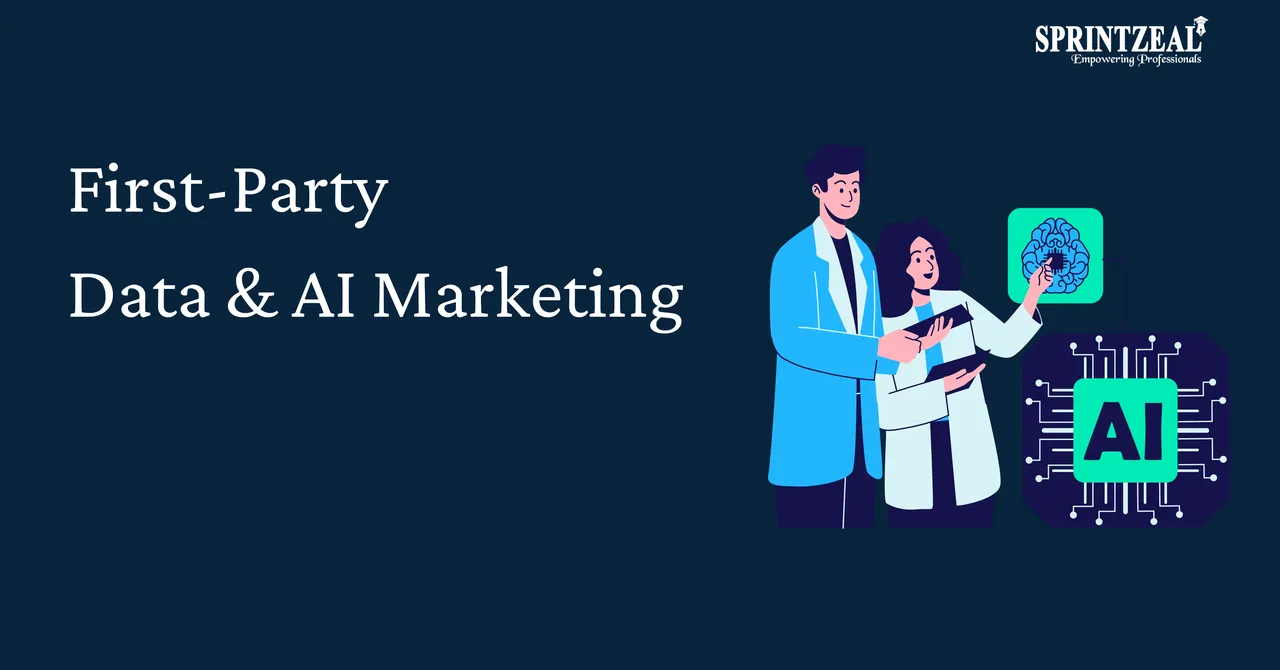
If your campaigns still rely heavily on third-party tracking, it's time to rethink the strategy. A modern SEO Agency understands that sustainable digital visibility now depends on first-party data, useful content, and a strong understanding of customer intent. In 2026, brands are moving away from unreliable tracking signals and investing more in information they collect directly from their customers. This shift is influencing everything from SEO and personalisation to paid advertising and AI search visibility.
For Australian businesses, combining first-party data with effective Digital Marketing Services in Australia can create campaigns that are more relevant, measurable, and resilient as search and privacy expectations continue to evolve.
Here's the part most articles get wrong: Google never fully killed third-party cookies in Chrome. After years of delays, Google reversed its deprecation plan and instead gave users a choice over whether to allow them. Safari and Firefox, on the other hand, have blocked third-party cookies by default for years.
The practical result is messier than a clean "cookiepocalypse." Roughly half the web is already cookieless through Safari and Firefox alone, and a growing share of Chrome users are opting into stricter privacy settings. Marketers can't build reliable audiences or attribution on a foundation that behaves differently depending on the browser, the region, and the individual user's settings.
That inconsistency is exactly why first-party data has become the safer bet. It doesn't depend on a browser vendor's next policy reversal.
McKinsey's long-running research on personalization found that companies excelling at it generate significantly more revenue than those that don't, largely because they use data they actually own to shape offers, content, and timing. More recent joint research from Google and BCG found that businesses using first-party data in campaigns saw close to a threefold increase in revenue lift compared with those relying on other data sources.
That gap keeps widening as third-party targeting gets noisier. First-party data email lists, purchase history, on-site behaviour, loyalty program activity stays accurate because customers gave it to you directly, in exchange for something they wanted.
Worth noting: personalization isn't automatically good. Gartner's 2025 research into B2B and consumer buyers found a majority of people reported negative experiences with personalization that felt intrusive or off-target, and those buyers were considerably more likely to regret their purchase. The lesson isn't "collect more data." It's "use owned data to be relevant, not creepy."
This is the part agencies can't afford to ignore anymore. Semrush's research shows AI Overviews now appear on a meaningful and growing share of desktop search queries, and industry analysis from Bain & Company and others puts the zero-click rate on AI Overview queries well above 80%. When a Google AI Overview, ChatGPT, Gemini, Claude, or Perplexity answers a question directly in the results, the user often never visits your site at all.
That doesn't make organic traffic worthless, it makes citation the new click. Seer Interactive's analysis found brands cited inside AI Overviews earned substantially more organic and paid clicks than brands the AI ignored on the same query. Being the source an AI model trusts enough to quote is now a ranking outcome in its own right, and first-party data is what makes a brand citable: real numbers, real customer outcomes, and original research that no competitor can copy-paste.
|
Factor |
First-Party Data |
Third-Party Data |
|
Ownership |
Collected and owned directly by the brand |
Purchased or licensed from external vendors |
|
Accuracy |
High sourced from real customer interactions |
Declining degraded by cookie inconsistency and opt-outs |
|
Consent |
Built in, transparent to the customer |
Often unclear to the end user |
|
AI/GEO value |
Powers original stats and case studies AI engines can cite |
Rarely citable aggregated, not attributable |
|
Longevity |
Stable regardless of browser policy changes |
Exposed to further platform and regulatory shifts |
|
Cost over time |
Higher upfront investment, lower ongoing cost |
Ongoing licensing and media spend |
Collecting data is only the first step. The real opportunity comes from turning that information into useful campaigns and content.
Answer engines favour content with specific, verifiable numbers over generic claims. If your first-party data shows your average customer saves four hours a week using your product, that's a stronger AI Overview candidate than "our product saves you time." Original survey data, customer benchmarks, and case study results are the raw material for content that Google AI Overviews, ChatGPT, and Perplexity are more likely to surface and attribute to your brand.
Siloed data is wasted data. When customer relationship management and customer data platform insights feed directly into content planning, teams can identify the questions real customers are asking and the challenges they need to solve. These insights can then shape content strategies, SEO services, and GEO initiatives around genuine search intent, helping brands create more relevant content that performs across both traditional search and AI-powered answer engines.
Treat Consent as a Trust Signal, Not a Compliance Checkbox
Clear, easy consent isn't just a legal requirement under Australian Privacy Principles or GDPR. It shapes how much usable data you actually collect, because customers give more willingly when they understand the exchange. Brands with transparent data practices tend to build larger, more engaged first-party datasets over time - which compounds into a real content and targeting advantage.
Australia's digital advertising market isn't slowing down. IAB Australia's Internet Advertising Revenue Report, prepared by PwC, recorded $18.4 billion in spend for 2025 an 11.5% jump year-on-year with search advertising alone reaching $8 billion, a new annual high. That growth is happening at the same time attribution is getting harder, which means Australian brands competing for that spend need first-party measurement that doesn't fall apart when a browser update changes the rules again.
For an SEO or GEO agency working across the Australian market, this is the practical brief: build campaigns on data you control, then use that data to earn citations across Google, AI Overviews, and the growing set of AI answer engines your customers are already using to research before they buy.
With work involving off-page SEO, content marketing, technical SEO, and AI visibility optimization, the change in the approach becomes this: audit the first-party data that already exists but is going to waste in the business’s CRM system and ecommerce site; convert the best data into unique and credible content; structure this content to allow it to be found, validated, and cited by both search engines and AI-based answer engines. Answer engine optimisation services are more and more beginning from this point of view, not from investing in even more third-party media.
As search becomes more conversational, businesses need to think about how customers ask questions rather than focusing exclusively on individual keywords.
This is where Answer engine optimisation services can become valuable.
Answer-focused strategies help businesses create content that directly addresses customer questions with clear, concise, and useful information.
Strong answer-focused content typically includes:
These practices can also strengthen traditional SEO because content created around genuine search intent is generally more useful to readers.
The decline of third-party tracking is not simply a technology change. It represents a broader shift toward customer-owned relationships.
Effective Digital Marketing Services in Australia increasingly need to bring together SEO, content, analytics, customer data, personalisation, conversion optimisation, and emerging AI search channels.
Instead of constantly searching for external audience signals, businesses should first look at what they already know about their customers.
What questions do customers ask?
What products do they explore?
What content influences conversions?
Where do prospects leave the buying journey?
What customer results can the business prove?
These answers can become the foundation of stronger campaigns.
The third-party cookie era has made one thing clear: businesses cannot build their entire marketing strategy around data they don't control.
First-party data provides a more sustainable foundation.
When combined with responsible personalisation, original content, SEO, GEO, and AI-assisted marketing, it can help businesses create campaigns that are more relevant, measurable, and adaptable.
For Australian brands, the opportunity is particularly significant. As competition increases across traditional search and AI-powered discovery, businesses that can demonstrate genuine expertise, original insights, and real customer outcomes will have more opportunities to stand out.

Thu, 17 September 2026
Tue, 15 September 2026
Fri, 04 September 2026
Wed, 26 August 2026

Mon, 24 August 2026

Tue, 18 August 2026

Tue, 11 August 2026
Mon, 27 July 2026
Fri, 17 July 2026

© 2026 Sprintzeal Americas Inc. - All Rights Reserved.

 USA : +1315-322-7821
 UK : +44 7700 174870
 IND : +919036108287
 AUS : +61 480 005 455