Employee Experience Management: Key Drivers and How to Improve Them
Tue, 08 September 2026

Inspirational journeys
Follow the stories of academics and their research expeditions
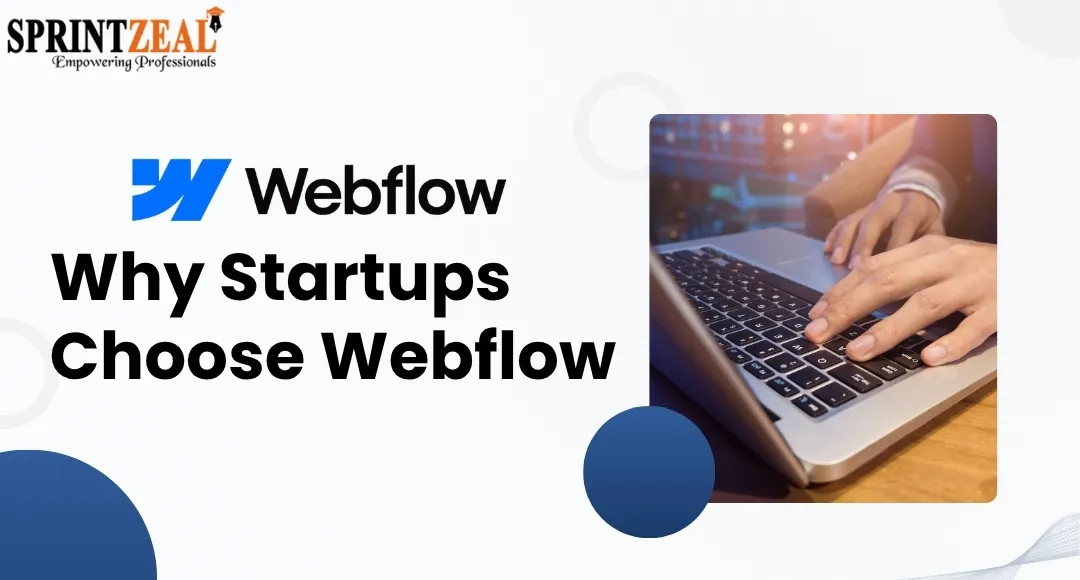
Webflow helps you translate your idea into a responsive, production-grade site without turning every change into a ticket. You move faster because design and build happen in the same place, and you can publish updates the moment you learn something new. That speed matters most when your positioning is still moving.
If your designs live in a tool that never ships, you end up rebuilding the same decisions twice. With Webflow, you can map your visual system into real components and styles so the “approved” layout is also the live layout. That reduces translation errors, even on responsive breakpoints where small inconsistencies kill trust.
Lean execution depends on saying “no” to duplication. When you build reusable components with configurable properties, you avoid maintaining five slightly different versions of the same section. A tight component library also makes your site feel consistent, which is one of the easiest ways to look more established than you are.
Webflow makes small iterations feel low-risk because you can review edits, stage them, and push them live without a custom deployment pipeline. That changes your behavior: you test new pricing copy, refine onboarding pages, or adjust a signup flow as soon as you notice friction.
Webflow makes it easier to ship content that ranks, answers questions clearly, and captures intent without a heavy content stack. You win by writing pages that are specific, structured, and genuinely helpful.
When your pages are specific and structured, even readers asking what does mvp stand for in business can land on an explanation that connects directly to your offer, then move from curiosity to action.
Low Keyword Difficulty comes from specificity, not tricks. Instead of chasing broad terms like “project management software,” you target phrases that match real early-stage queries, such as “Webflow MVP website for SaaS waitlist” or “client onboarding checklist for small agencies.” Those searches have clearer intent and fewer entrenched competitors.
Answer engines reward clarity: direct definitions, short explanations, and scannable sections that can be quoted without losing meaning. Webflow helps you keep headings consistent, manage metadata cleanly, and maintain a readable hierarchy that works for both humans and machines.
Use Webflow CMS collections for use cases, integration pages, customer stories, changelogs, and help articles, then update them as your product changes. This keeps your site aligned with the truth, which is surprisingly rare in early-stage teams. When content updates are easy, you publish more, measure more, and learn faster.
Traffic is expensive when you’re small because you can’t afford to waste it. Webflow’s advantage is that it supports fast iteration while still letting you stay disciplined about performance and conversion clarity. Recent product improvements in optimization tooling and analytics make it easier to treat your site like a funnel, not a poster.
A slow site quietly destroys early momentum because it raises skepticism and increases bounce. Build pages that load quickly by keeping layouts simple, using clean typography, and treating media like a product feature - not decoration. Speed also helps visibility, because fast pages tend to perform better in search and feel more trustworthy.
When you can test variations, you stop arguing and start learning. Webflow’s optimization tools make it easier to run experiments on headlines, CTAs, and page structure, and AI-assisted suggestions can generate a few viable variants quickly.
Your job is to apply judgment: choose tests that reflect real uncertainty and measure outcomes that actually matter.
You need to track a handful of actions that represent real progress: waitlist joins, demo requests, pricing-page views, and key scroll depth points. Modern Webflow analytics and goal setting help you focus on those moments and spot drop-offs without wiring up a complicated stack.
Even if you start in one city or one niche, you’re building for expansion the moment your offer resonates. Webflow makes scaling less painful because it encourages modular design and supports modern localization workflows.
Recent improvements in localization features reduce the “copy-paste chaos” that usually happens when you add a second language.
Good localization is selective. Your product names, UI terms, and core value props may need adaptation, while your structure and design system should stay consistent. Webflow’s localization tooling supports localized fields and smarter locale switching so you’re not duplicating entire pages just to translate a few lines.
A component-driven build helps you keep typography, spacing, buttons, and layouts aligned while allowing language-specific content to change safely. This is where design-system thinking becomes practical: you avoid “translation broke the layout” surprises because the underlying structure is stable.
Set up a predictable flow: draft copy, translate, review tone, then publish updates in batches. If you’re scaling content, automation and APIs can help you keep translations synchronized without inventing a bespoke process. The lean principle stays the same: make the right work repeatable, and everything else optional.
Webflow’s AI tooling can speed up layout creation, content variants, and even interactive elements, even when you treat it as a junior teammate. You keep quality high by setting constraints, applying taste, and measuring results instead of trusting the first output.
AI can give you a starting point for sections, copy, and structure when you’re staring at a blank page. The trap is publishing generic text that sounds like everyone else, which hurts trust and makes ranking harder. Take the draft, then sharpen it with specifics: your audience, your constraints, and the real trade-offs your product makes.
Early-stage sites increasingly behave like products: calculators, onboarding quizzes, interactive pricing, and guided demos. Webflow’s growing support for code components and modern interaction tooling lets you add these touches without building a full web app from scratch.
The goal isn’t flash but clarity - a small interactive element that helps someone self-qualify can outperform pages of persuasive copy.
Webflow is strong when your primary job is to ship a marketing site, validate positioning, and build a content engine. It becomes less ideal when you need complex authentication flows, heavy business logic, or deeply customized backend behavior.
The lean move is to stay in Webflow until the constraints are real, not imagined - then shift to a hybrid approach or a dedicated app stack when the ROI is obvious.
Webflow stays popular with early-stage startups because it makes learning cheaper. You can ship a credible MVP site, test positioning, publish content that targets low-competition queries, and iterate on conversion without turning every change into a development project.
The real advantage isn’t “no-code,” it’s fewer bottlenecks between what you discover and what you change. If you treat your site as an evolving product surface - measured, modular, and specific—Webflow helps you move with the pace that early-stage reality demands.
You don’t need a “perfect” product to learn - you need a real one that people can find, understand, and try. Early-stage work lives or dies on speed-to-feedback, and your website is often the first place that feedback shows up: in clicks, signups, replies, and drop-offs.
Webflow keeps that loop tight because it lets you build something that looks and behaves like a finished product without waiting on a full engineering cycle. When AI-assisted creation, answer-engine visibility, localization, and constant experimentation are becoming normal expectations.
Webflow helps you translate your idea into a responsive, production-grade site without turning every change into a ticket. You move faster because design and build happen in the same place, and you can publish updates the moment you learn something new. That speed matters most when your positioning is still moving.
If your designs live in a tool that never ships, you end up rebuilding the same decisions twice. With Webflow, you can map your visual system into real components and styles so the “approved” layout is also the live layout. That reduces translation errors, even on responsive breakpoints where small inconsistencies kill trust.
Lean execution depends on saying “no” to duplication. When you build reusable components with configurable properties, you avoid maintaining five slightly different versions of the same section. A tight component library also makes your site feel consistent, which is one of the easiest ways to look more established than you are.
Webflow makes small iterations feel low-risk because you can review edits, stage them, and push them live without a custom deployment pipeline. That changes your behavior: you test new pricing copy, refine onboarding pages, or adjust a signup flow as soon as you notice friction.
Webflow makes it easier to ship content that ranks, answers questions clearly, and captures intent without a heavy content stack. You win by writing pages that are specific, structured, and genuinely helpful.
When your pages are specific and structured, even readers asking what does mvp stand for in business can land on an explanation that connects directly to your offer, then move from curiosity to action.
Low Keyword Difficulty comes from specificity, not tricks. Instead of chasing broad terms like “project management software,” you target phrases that match real early-stage queries, such as “Webflow MVP website for SaaS waitlist” or “client onboarding checklist for small agencies.” Those searches have clearer intent and fewer entrenched competitors.
Answer engines reward clarity: direct definitions, short explanations, and scannable sections that can be quoted without losing meaning. Webflow helps you keep headings consistent, manage metadata cleanly, and maintain a readable hierarchy that works for both humans and machines.
Use Webflow CMS collections for use cases, integration pages, customer stories, changelogs, and help articles, then update them as your product changes. This keeps your site aligned with the truth, which is surprisingly rare in early-stage teams. When content updates are easy, you publish more, measure more, and learn faster.
Traffic is expensive when you’re small because you can’t afford to waste it. Webflow’s advantage is that it supports fast iteration while still letting you stay disciplined about performance and conversion clarity. Recent product improvements in optimization tooling and analytics make it easier to treat your site like a funnel, not a poster.
A slow site quietly destroys early momentum because it raises skepticism and increases bounce. Build pages that load quickly by keeping layouts simple, using clean typography, and treating media like a product feature - not decoration. Speed also helps visibility, because fast pages tend to perform better in search and feel more trustworthy.
When you can test variations, you stop arguing and start learning. Webflow’s optimization tools make it easier to run experiments on headlines, CTAs, and page structure, and AI-assisted suggestions can generate a few viable variants quickly.
Your job is to apply judgment: choose tests that reflect real uncertainty and measure outcomes that actually matter.
You need to track a handful of actions that represent real progress: waitlist joins, demo requests, pricing-page views, and key scroll depth points. Modern Webflow analytics and goal setting help you focus on those moments and spot drop-offs without wiring up a complicated stack.
Even if you start in one city or one niche, you’re building for expansion the moment your offer resonates. Webflow makes scaling less painful because it encourages modular design and supports modern localization workflows.
Recent improvements in localization features reduce the “copy-paste chaos” that usually happens when you add a second language.
Good localization is selective. Your product names, UI terms, and core value props may need adaptation, while your structure and design system should stay consistent. Webflow’s localization tooling supports localized fields and smarter locale switching so you’re not duplicating entire pages just to translate a few lines.
A component-driven build helps you keep typography, spacing, buttons, and layouts aligned while allowing language-specific content to change safely. This is where design-system thinking becomes practical: you avoid “translation broke the layout” surprises because the underlying structure is stable.
Set up a predictable flow: draft copy, translate, review tone, then publish updates in batches. If you’re scaling content, automation and APIs can help you keep translations synchronized without inventing a bespoke process. The lean principle stays the same: make the right work repeatable, and everything else optional.
Webflow’s AI tooling can speed up layout creation, content variants, and even interactive elements, even when you treat it as a junior teammate. You keep quality high by setting constraints, applying taste, and measuring results instead of trusting the first output.
AI can give you a starting point for sections, copy, and structure when you’re staring at a blank page. The trap is publishing generic text that sounds like everyone else, which hurts trust and makes ranking harder. Take the draft, then sharpen it with specifics: your audience, your constraints, and the real trade-offs your product makes.
Early-stage sites increasingly behave like products: calculators, onboarding quizzes, interactive pricing, and guided demos. Webflow’s growing support for code components and modern interaction tooling lets you add these touches without building a full web app from scratch.
The goal isn’t flash but clarity - a small interactive element that helps someone self-qualify can outperform pages of persuasive copy.
Webflow is strong when your primary job is to ship a marketing site, validate positioning, and build a content engine. It becomes less ideal when you need complex authentication flows, heavy business logic, or deeply customized backend behavior.
The lean move is to stay in Webflow until the constraints are real, not imagined - then shift to a hybrid approach or a dedicated app stack when the ROI is obvious.
Webflow stays popular with early-stage startups because it makes learning cheaper. You can ship a credible MVP site, test positioning, publish content that targets low-competition queries, and iterate on conversion without turning every change into a development project.
The real advantage isn’t “no-code,” it’s fewer bottlenecks between what you discover and what you change. If you treat your site as an evolving product surface - measured, modular, and specific—Webflow helps you move with the pace that early-stage reality demands.

Tue, 08 September 2026
Thu, 20 August 2026

Mon, 27 July 2026
Mon, 06 July 2026

Tue, 23 June 2026

Thu, 20 March 2025

Tue, 26 May 2026

© 2026 Sprintzeal Americas Inc. - All Rights Reserved.




 USA : +1315-322-7821
 UK : +44 7700 174870
 IND : +919036108287
 AUS : +61 480 005 455