How Split PDFs Improve Document Management in Professional Workflows?
Mon, 17 August 2026
Inspirational journeys
Follow the stories of academics and their research expeditions
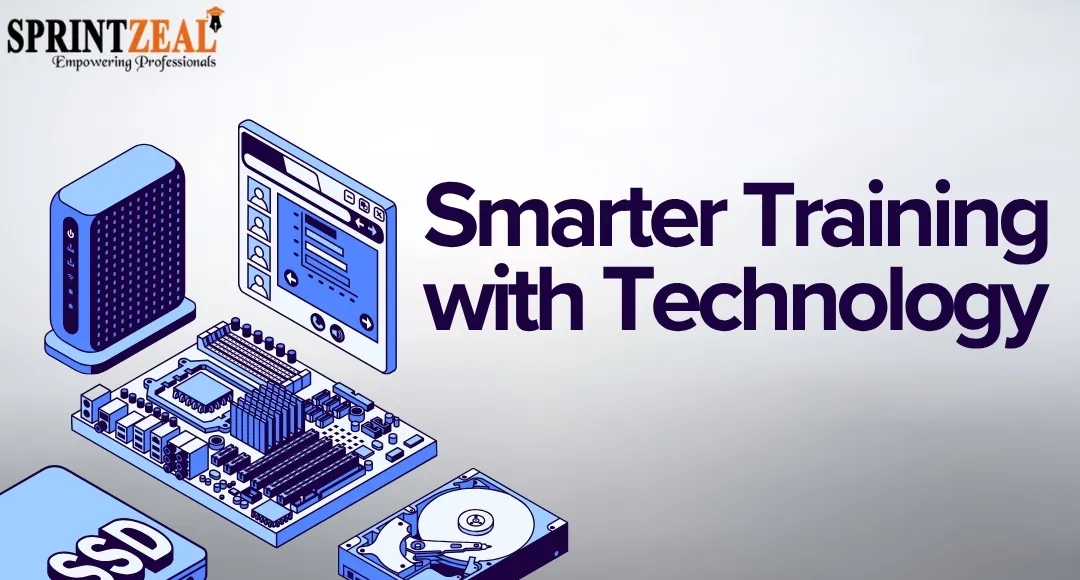
One big upgrade - things feel way more real now. Not in a marketing way, but in an actual “this could happen” kind of way.
Instead of reading through scenarios, you get thrown into them. Simulations, VR, interactive setups - all that stuff makes training feel closer to doing than studying. And yeah, if you had to choose, you’d probably pick a realistic simulation over a 40-page manual. No contest.
Also, messing up in a simulation doesn’t cost you anything, which is kind of the point. You get to fail, adjust, try again. That loop is what actually builds skill, not just knowledge. After a while, your brain stops treating it like theory. It starts feeling familiar. So when something similar happens in real life, you’re not starting from zero.
This is where things start getting a little wild - but in a good way. AI is slowly turning training into something that actually adjusts to you, instead of forcing you to keep up with everyone else.
No more of that fixed pace where half the group is lost and the other half is bored out of their minds. If you hit a wall, the system kind of picks up on it and shifts gears. If something feels too easy, it doesn’t drag it out forever.
It’s not flawless, obviously. Sometimes it still misses the mark. But compared to how things used to work, it’s a huge step closer to having someone guide you personally instead of just throwing content at you.
And you do feel the difference after a while. You spend less time zoning out and more time actually working through stuff that matches your level. It’s also kind of weird how fast this became normal. A few years ago it would sound like overkill. Now it’s just… expected.
And yeah, this is where things like generative ai development services start showing up behind the scenes. You might not see them directly, but they power tools that generate content, simulate conversations, or even create custom learning paths in real time. It’s not sci-fi anymore – it’s already baked into a lot of platforms you use.
Let’s not pretend – nobody wants to sit through a three-hour training session anymore. Technology figured that out and adapted.
Microlearning basically chops everything into smaller pieces. Not in a complicated way - just short chunks you can actually get through without losing focus. Like 5 or 10 minutes, done.
It works mostly because it doesn’t try to take over your whole day. You can squeeze it in while waiting for coffee, sitting on a bus, or between two tasks when your brain isn’t fully fried yet.
No big commitment, no feeling like you have to “prepare” for it.
And funny enough, this format sticks better. Your brain handles small bits way easier than those massive info dumps where you forget half of it ten minutes later. Who knew.
This might sound a bit cringe at first, but hear it out. Gamification is basically adding game-like elements to training – points, levels, rewards, challenges.
And it works. A lot.
Why? Because it taps into basic human psychology. You like progress. You like winning. You like seeing your name on a leaderboard - even if you act like you don’t care. It still hits a bit.
Training used to be a pretty solo thing. You’d go through the material, maybe pass a test, and that was it.
Now it’s way more social. Most platforms are built around interaction, not just content. And yeah, that part matters. Because in an actual job, you’re almost never doing everything on your own. So training that includes teamwork is just more realistic.
This part is slightly creepy, but also super useful. Modern training platforms collect a lot of data about how you learn.
They track things like:
how long you spend on each topic;
where you struggle or drop off;
what type of content you engage with most;
how often you revisit certain concepts.
All of that gets analyzed to improve your experience. It’s like the system is constantly asking, “How can I make this easier or more effective for you?”
Here’s the thing – technology didn’t just change how you learn, it changed when you learn.
Before, training was something you did at specific stages. Now it’s continuous. You’re always picking up new skills, updating old ones, adapting to new tools.
And that’s kind of necessary. Industries move fast. What you learned two years ago might already be outdated.
The upside? You’re never stuck. You can always pivot, level up, or completely change direction if you want to.
Not everything is perfect. More tech doesn’t automatically mean better training.
Sometimes platforms overcomplicate things. Sometimes there’s too much content and not enough guidance. And yeah, sometimes you miss that human element – the mentor who actually understands you beyond algorithms.
There’s also the issue of access. Not everyone has the same tech, the same internet speed, or the same opportunities. So while things are improving overall, gaps still exist.
Here’s something worth thinking about. You’re not just a user of these systems. You can also shape them. So don’t just passively go through training modules. Question them. Break them. Improve them. Because at the end of the day, technology is transforming professional training – but people like you are the ones deciding what that transformation actually looks like.
Let’s be honest - professional training used to be… yeah, not exactly exciting. Long lectures, slides that never end, and that one PDF someone sends like “you’ll totally read this” (you won’t).
Now compare that to what’s happening today. It’s not even the same thing anymore. Technology didn’t just make training better - it kind of broke the old format and rebuilt it from scratch.
You’re not sitting in a room fighting the urge to check your phone every five minutes. The phone is the training now. Which sounds obvious, but it actually changes a lot more than it seems at first.
And it’s not just about tools. The bigger shift is how you interact with learning itself. It’s less “show up and absorb” and more like… you’re inside the process. You tweak things, test stuff, sometimes even shape the experience as you go. That wasn’t really a thing before.
One big upgrade - things feel way more real now. Not in a marketing way, but in an actual “this could happen” kind of way.
Instead of reading through scenarios, you get thrown into them. Simulations, VR, interactive setups - all that stuff makes training feel closer to doing than studying. And yeah, if you had to choose, you’d probably pick a realistic simulation over a 40-page manual. No contest.
Also, messing up in a simulation doesn’t cost you anything, which is kind of the point. You get to fail, adjust, try again. That loop is what actually builds skill, not just knowledge. After a while, your brain stops treating it like theory. It starts feeling familiar. So when something similar happens in real life, you’re not starting from zero.
This is where things start getting a little wild - but in a good way. AI is slowly turning training into something that actually adjusts to you, instead of forcing you to keep up with everyone else.
No more of that fixed pace where half the group is lost and the other half is bored out of their minds. If you hit a wall, the system kind of picks up on it and shifts gears. If something feels too easy, it doesn’t drag it out forever.
It’s not flawless, obviously. Sometimes it still misses the mark. But compared to how things used to work, it’s a huge step closer to having someone guide you personally instead of just throwing content at you.
And you do feel the difference after a while. You spend less time zoning out and more time actually working through stuff that matches your level. It’s also kind of weird how fast this became normal. A few years ago it would sound like overkill. Now it’s just… expected.
And yeah, this is where things like generative ai development services start showing up behind the scenes. You might not see them directly, but they power tools that generate content, simulate conversations, or even create custom learning paths in real time. It’s not sci-fi anymore – it’s already baked into a lot of platforms you use.
Let’s not pretend – nobody wants to sit through a three-hour training session anymore. Technology figured that out and adapted.
Microlearning basically chops everything into smaller pieces. Not in a complicated way - just short chunks you can actually get through without losing focus. Like 5 or 10 minutes, done.
It works mostly because it doesn’t try to take over your whole day. You can squeeze it in while waiting for coffee, sitting on a bus, or between two tasks when your brain isn’t fully fried yet.
No big commitment, no feeling like you have to “prepare” for it.
And funny enough, this format sticks better. Your brain handles small bits way easier than those massive info dumps where you forget half of it ten minutes later. Who knew.
This might sound a bit cringe at first, but hear it out. Gamification is basically adding game-like elements to training – points, levels, rewards, challenges.
And it works. A lot.
Why? Because it taps into basic human psychology. You like progress. You like winning. You like seeing your name on a leaderboard - even if you act like you don’t care. It still hits a bit.
Training used to be a pretty solo thing. You’d go through the material, maybe pass a test, and that was it.
Now it’s way more social. Most platforms are built around interaction, not just content. And yeah, that part matters. Because in an actual job, you’re almost never doing everything on your own. So training that includes teamwork is just more realistic.
This part is slightly creepy, but also super useful. Modern training platforms collect a lot of data about how you learn.
They track things like:
All of that gets analyzed to improve your experience. It’s like the system is constantly asking, “How can I make this easier or more effective for you?”
Here’s the thing – technology didn’t just change how you learn, it changed when you learn.
Before, training was something you did at specific stages. Now it’s continuous. You’re always picking up new skills, updating old ones, adapting to new tools.
And that’s kind of necessary. Industries move fast. What you learned two years ago might already be outdated.
The upside? You’re never stuck. You can always pivot, level up, or completely change direction if you want to.
Not everything is perfect. More tech doesn’t automatically mean better training.
Sometimes platforms overcomplicate things. Sometimes there’s too much content and not enough guidance. And yeah, sometimes you miss that human element – the mentor who actually understands you beyond algorithms.
There’s also the issue of access. Not everyone has the same tech, the same internet speed, or the same opportunities. So while things are improving overall, gaps still exist.

Mon, 17 August 2026
Fri, 14 August 2026
Fri, 31 July 2026
Thu, 30 July 2026
Wed, 29 July 2026

Wed, 29 July 2026
Thu, 23 May 2024

Tue, 13 October 2026

Thu, 29 May 2025
© 2026 Sprintzeal Americas Inc. - All Rights Reserved.

 USA : +1315-322-7821
 UK : +44 7700 174870
 IND : +919036108287
 AUS : +61 480 005 455