How to Choose the Right Laptop for Learning Technical Skills
Tue, 01 September 2026
Inspirational journeys
Follow the stories of academics and their research expeditions
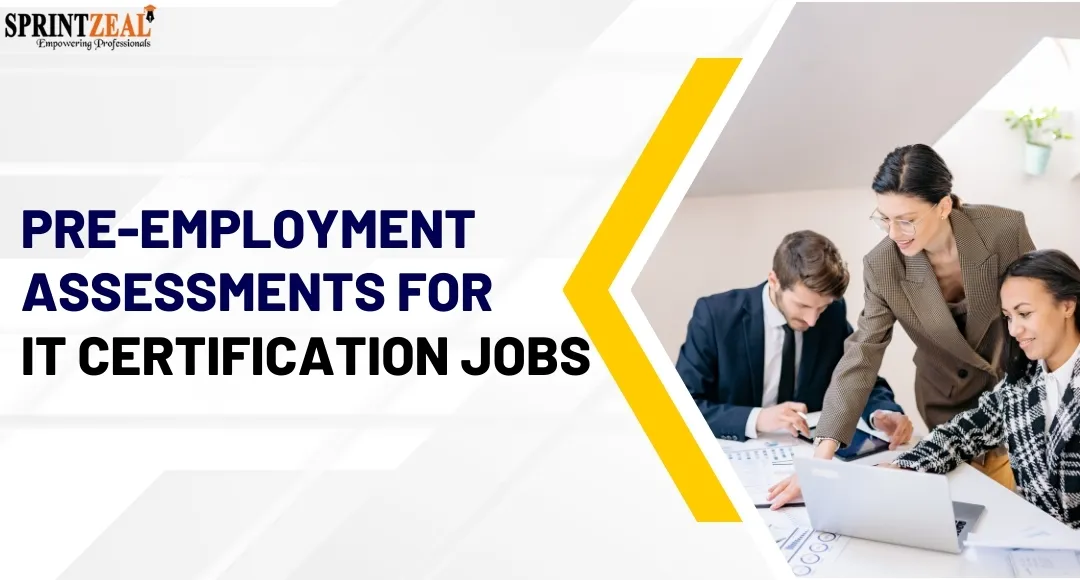
Landing your dream IT job requires more than just technical skills and certifications. Today's hiring managers rely heavily on pre-employment assessments to evaluate candidates before scheduling interviews. These standardized tests help employers identify the most qualified professionals from a large pool of applicants, making your performance on these evaluations critical to your success.
If you're pursuing IT certification roles, understanding how to prepare for and excel in these assessments can dramatically improve your chances of getting hired. This comprehensive guide will walk you through everything you need to know about pre-employment testing and provide actionable strategies to help you succeed.
Pre-employment tests serve as objective evaluation tools that measure various candidate attributes beyond what appears on a resume. For IT positions, these assessments typically evaluate technical knowledge, cognitive abilities, problem-solving skills, and personality traits that align with specific job requirements.
Research shows that cognitive aptitude tests are among the most accurate predictors of job performance, proving more reliable than unstructured interviews, previous work experience, or education level alone. This explains why companies across the technology sector have embraced skills testing as a standard part of their recruitment process.
When applying for IT certification jobs, you may encounter several different evaluation formats:
Technical Skills Assessments measure your proficiency in specific technologies, programming languages, software platforms, or systems administration. These tests often include hands-on simulations where you solve real-world problems using the tools and techniques relevant to the position.
Cognitive Aptitude Tests evaluate your ability to learn quickly, solve complex problems, and think critically under pressure. Popular options like the Criteria Cognitive Aptitude Test (CCAT) present 50 questions covering verbal reasoning, mathematical logic, and spatial awareness within a tight 15-minute timeframe.
Personality Assessments help employers understand how your work style, communication preferences, and behavioral tendencies align with team dynamics and company culture. While these tests have no right or wrong answers, honesty remains your best approach.
Situational Judgment Tests present hypothetical workplace scenarios and ask you to choose the most appropriate response. These evaluations reveal how you handle challenging situations, prioritize tasks, and make decisions.
Your technical preparation should begin by thoroughly reviewing the job description. Pay close attention to the specific certifications, programming languages, frameworks, and tools mentioned. This information guides your study focus and helps you understand what the employer values most.
Create a checklist of technical competencies listed in the job posting. If the role requires expertise in cloud computing platforms, database management, cybersecurity protocols, or specific development frameworks, allocate extra study time to these areas. Your goal is to demonstrate proficiency in the exact skills the employer needs.
Many IT professionals make the mistake of studying broadly when targeted preparation yields better results. Instead of trying to review everything you've ever learned, concentrate on the technologies and concepts most relevant to the specific position.
Hands-on practice makes a significant difference in technical assessments. Set up a test environment where you can work with the actual tools and technologies you'll be evaluated on. If the job involves troubleshooting network issues, practice diagnosing and resolving common problems. For development roles, write code that solves typical challenges in your target programming language.
Working through pre-employment testing samples on online coding assessment platforms before your actual assessment helps you become familiar with question formats, difficulty levels, and time constraints. This practice reduces anxiety and improves your performance when facing the real evaluation.
Cognitive ability tests present unique challenges that require specific preparation strategies. These assessments measure how quickly you process information, recognize patterns, and solve problems rather than testing memorized knowledge.
Most cognitive tests operate under strict time limits designed to evaluate your processing speed alongside accuracy. The CCAT, widely used in IT hiring, gives you just 15 minutes for 50 questions. That works out to roughly 18 seconds per question, making time management absolutely critical.
Don't expect to finish every question. The average test taker completes only about 24 questions correctly, so scoring above this benchmark already places you ahead of half the candidate pool. For competitive IT positions, aim for scores in the 75th percentile or higher, which typically means answering 30 or more questions correctly. To better track your performance across practice tests and understand your score trends, using a test grade calculator can help you quickly convert raw scores into percentages and monitor your improvement over time.
Develop Your Problem-Solving Speed
Regular practice with timed tests helps you develop faster problem-solving reflexes. Work through numerical reasoning questions without a calculator to build mental math fluency. Practice identifying patterns in abstract sequences. Strengthen your vocabulary and verbal reasoning by working through synonym, antonym, and analogy exercises.
As you practice, note which question types consume the most time. If spatial reasoning puzzles slow you down, either skip them temporarily during the test or dedicate extra practice time to improving this weakness.
Since most cognitive tests don't penalize wrong answers, make educated guesses rather than leaving questions blank. If you find yourself spending more than 45 seconds on a single problem, mark your best guess and move forward. You can always return to difficult questions if time remains.
Questions often increase in difficulty as the test progresses. Answer easier questions first to maximize your score, then tackle more challenging problems with any remaining time. This strategy ensures you capture points from questions within your capability before struggling with harder items.
Your testing environment significantly impacts performance, yet many candidates overlook this crucial factor. Taking control of external conditions helps you focus entirely on demonstrating your abilities.
If you're taking the assessment remotely, choose a quiet location where interruptions are unlikely. Inform family members or roommates about your testing schedule. Silence your phone, close unnecessary browser tabs, and disable desktop notifications. Even minor distractions can derail your concentration during timed evaluations.
Position yourself comfortably at a desk or table. Have scratch paper and pens available for calculations and note-taking. Ensure your internet connection is stable and your device is fully charged or plugged in.
For on-site assessments, plan to arrive at least 30 minutes before your scheduled time. This buffer prevents last-minute rushing and gives you time to settle your nerves. Use this period to review any notes, practice deep breathing exercises, and mentally prepare for the challenges ahead.
Adequate sleep the night before makes a measurable difference in cognitive performance. Your brain processes information more efficiently when well-rested, and you'll maintain focus more easily throughout the entire assessment period.
One of the most common mistakes candidates make is rushing through test instructions. These guidelines often contain valuable information about scoring methods, time allocation, and question navigation features.
Instructions may reveal whether wrong answers carry penalties or if unanswered questions simply receive zero points. This information should directly influence your guessing strategy. Instructions might also specify whether you can revisit previous questions, which affects how you pace yourself through the test.
Some assessments provide hints about question difficulty distribution or suggest specific approaches to certain problem types. Take the time to absorb these details before starting the timed portion.
If any instruction seems unclear, ask for clarification before beginning the test. Assessment administrators can explain procedural details, though they typically cannot help with actual questions once the evaluation starts. Making sure you understand the rules prevents costly mistakes during the test itself.
Feeling nervous before an important assessment is completely normal. The key is preventing that nervousness from interfering with your performance.
The most effective way to reduce test anxiety is thorough preparation. When you've practiced extensively and know what to expect, you approach the assessment with deserved confidence. Each practice test you complete builds familiarity and reduces the fear of the unknown.
Track your progress as you prepare. Watching your practice scores improve provides tangible evidence that your preparation is working, which naturally boosts confidence heading into the actual evaluation.
Deep breathing exercises can quickly calm your nervous system. Try the 4-7-8 breathing technique: inhale for 4 counts, hold for 7 counts, then exhale for 8 counts. Repeat this cycle several times before starting your test.
Reframe how you think about the assessment. Instead of viewing it as a high-stakes evaluation where failure means rejection, consider it an opportunity to demonstrate your capabilities. This mental shift reduces pressure and helps you perform more naturally.
Personality tests differ fundamentally from skills and cognitive evaluations. These assessments explore your work preferences, communication style, and behavioral tendencies rather than measuring abilities.
Many candidates try to game personality tests by selecting answers they think employers want to hear. This approach usually backfires for two reasons. First, sophisticated assessments include validity checks that flag inconsistent responses. Second, even if you successfully present a false image, getting hired for a role that doesn't match your actual personality leads to job dissatisfaction.
The goal of personality testing is finding the right match between candidate and position. Honest responses help ensure you land in a role where you'll thrive rather than struggle against your natural tendencies.
While honesty remains paramount, you can still think about your answers in the context of professional behavior. Most personality assessments present scenarios or statements and ask how strongly you agree or relate to them. Consider how you typically behave in work settings rather than how you might act in personal situations.
If a question asks about your comfort level with frequent change, think about how you've adapted to new processes, technologies, or team structures in previous roles. This work-focused mindset helps you provide responses that accurately reflect your professional personality.
Your existing certifications and professional experience provide a foundation that supports strong assessment performance. Make sure you're effectively utilizing this background knowledge.
When facing technical questions, draw on situations you've encountered in actual IT work. If a question involves troubleshooting network connectivity issues, recall similar problems you've solved. This connection between theory and practice often triggers faster, more confident responses.
Your certification studies have already prepared you for many assessment topics. Material you learned while pursuing CompTIA, Cisco, Microsoft, AWS, or other certifications directly applies to technical skills tests. Refresh your memory on key concepts from these certification programs.
Technology evolves rapidly, and pre-employment assessments for IT positions often include questions about current tools, methodologies, and best practices. Stay informed about emerging trends in your specialty area. Follow industry publications, participate in online communities, and experiment with new technologies.
This ongoing learning serves you beyond just passing assessments. It demonstrates to employers that you maintain relevant skills and adapt to the changing technology landscape, both highly valued traits in IT professionals.
Knowing how employers interpret and apply assessment results helps you understand what matters most during these evaluations.
Pre-employment tests rarely serve as the sole deciding factor in hiring decisions. Instead, they work alongside your resume, cover letter, references, and interview performance to create a complete picture of your candidacy. Even an exceptional test score won't overcome a weak resume or poor interview, and conversely, a slightly lower score won't necessarily eliminate you if other elements of your application are strong.
Understanding this broader context helps maintain perspective. While you should definitely prepare thoroughly and perform your best, remember that assessments are just one component of the overall evaluation process.
Employers set different score thresholds depending on the role's complexity and seniority level. Entry-level positions might accept candidates scoring in the 50th percentile on cognitive tests, while senior engineering roles could require 75th percentile or higher. Technical skills assessments are often pass/fail based on demonstrating minimum competency levels.
Don't fixate on achieving a perfect score. Instead, aim to demonstrate that you meet or exceed the requirements for your target position. Focus on consistent performance across all assessment types rather than excelling in one area while struggling in others.
Learning what not to do can be just as valuable as knowing the right strategies. Avoid these common pitfalls that undermine assessment performance.
Some candidates approach pre-employment tests cold, assuming their knowledge and experience will carry them through. This overconfidence often leads to disappointing results. Even highly qualified professionals benefit from familiarizing themselves with test formats, time constraints, and question styles.
Treating practice tests seriously provides invaluable preparation. Time yourself strictly, work in test-like conditions, and review your mistakes afterward to understand where improvement is needed.
Sophisticated assessment platforms incorporate multiple safeguards against dishonesty. Employers may monitor how you answer questions, looking for patterns suggesting you're getting outside help. Inconsistent response times, impossibly fast answers to difficult questions, or sudden jumps in performance can all trigger red flags.
Beyond the practical risk of getting caught, dishonesty defeats the purpose of testing. These assessments help match you with appropriate roles. Misrepresenting your abilities leads to job placements where you'll struggle, creating stress and likely resulting in poor performance or early departure.
In rushing to prove their expertise, some candidates spend excessive time on difficult questions while making careless errors on easier ones. This approach sacrifices guaranteed points in pursuit of challenging problems you might not solve anyway.
Answer questions you know well quickly and accurately, then allocate remaining time to harder items. This strategy maximizes your overall score by ensuring you capture all available points from your areas of strength.
Your preparation and performance don't end when you submit your test. How you follow up can influence the overall impression you make.
After completing an assessment, take time to reflect on how it went. Which sections felt comfortable? Where did you struggle? This self-assessment helps you prepare for similar tests with other employers and identifies areas for ongoing skill development.
Some testing platforms provide immediate feedback or score reports. Review these carefully to understand your strengths and weaknesses. If you don't receive results, consider asking the employer about your performance during follow-up communications.
Send a brief thank-you note to your recruiter or hiring manager, expressing appreciation for the opportunity to complete the assessment. Keep this message professional and concise. Don't apologize for your performance or make excuses; instead, reiterate your interest in the position and highlight relevant qualifications.
This courteous follow-up reinforces your professionalism and keeps you positively positioned in the hiring manager's mind as they review candidates.
The best approach to pre-employment testing is viewing it as part of your ongoing professional development rather than a one-time hurdle.
Regularly challenging yourself with new technical skills, complex problems, and learning opportunities keeps your mind sharp and your abilities current. This consistent development means you're always prepared for assessments rather than cramming before each application.
Consider setting aside time each week for skill building. Work through coding challenges, study emerging technologies, read industry research, or pursue additional certifications. These activities improve your overall competence while simultaneously preparing you for whatever assessments come your way.
Every assessment you complete teaches you something about the testing process, your own capabilities, and areas for improvement. Maintain a log of the tests you've taken, noting question types, difficulty levels, and topics covered. This information helps you refine your preparation strategy over time.
Apply lessons learned from one assessment to your preparation for the next. If time pressure proved challenging, practice working faster. If certain technical areas expose knowledge gaps, dedicate study time to strengthening those skills.
Succeeding in pre-employment assessments for IT certification jobs requires a balanced approach combining technical knowledge, strategic test-taking skills, and thorough preparation.
Start by understanding the specific tests you'll face and what they measure. Research the job requirements carefully and tailor your preparation to match what the employer values most. Practice regularly with realistic test scenarios and time constraints.
Create optimal testing conditions by eliminating distractions and arriving physically and mentally prepared. Read instructions thoroughly, manage your time wisely, and answer honestly on personality assessments.
Remember that these evaluations are just one component of the hiring process. Strong performance improves your chances, but it works together with your resume, experience, certifications, and interview presence to create a complete picture of your qualifications.
View assessment preparation as an investment in your career development. The skills you build while preparing serve you far beyond any single job application. Your commitment to continuous learning and improvement will benefit your entire professional journey in the IT field.
With proper preparation, strategic test-taking approaches, and a confident mindset, you can excel in pre-employment assessments and move one step closer to landing your ideal IT certification role. Start your preparation today, practice consistently, and approach each assessment as an opportunity to demonstrate the valuable skills and knowledge you bring to potential employers.

Tue, 01 September 2026
Fri, 28 August 2026

Wed, 19 August 2026
Fri, 24 July 2026
Tue, 14 April 2026
Thu, 30 January 2025

Tue, 04 February 2025

Wed, 29 January 2025

© 2026 Sprintzeal Americas Inc. - All Rights Reserved.


 USA : +1315-322-7821
 UK : +44 7700 174870
 IND : +919036108287
 AUS : +61 480 005 455