Best AI Video Generators in 2027: Tested & Compared
Mon, 28 September 2026

Inspirational journeys
Follow the stories of academics and their research expeditions
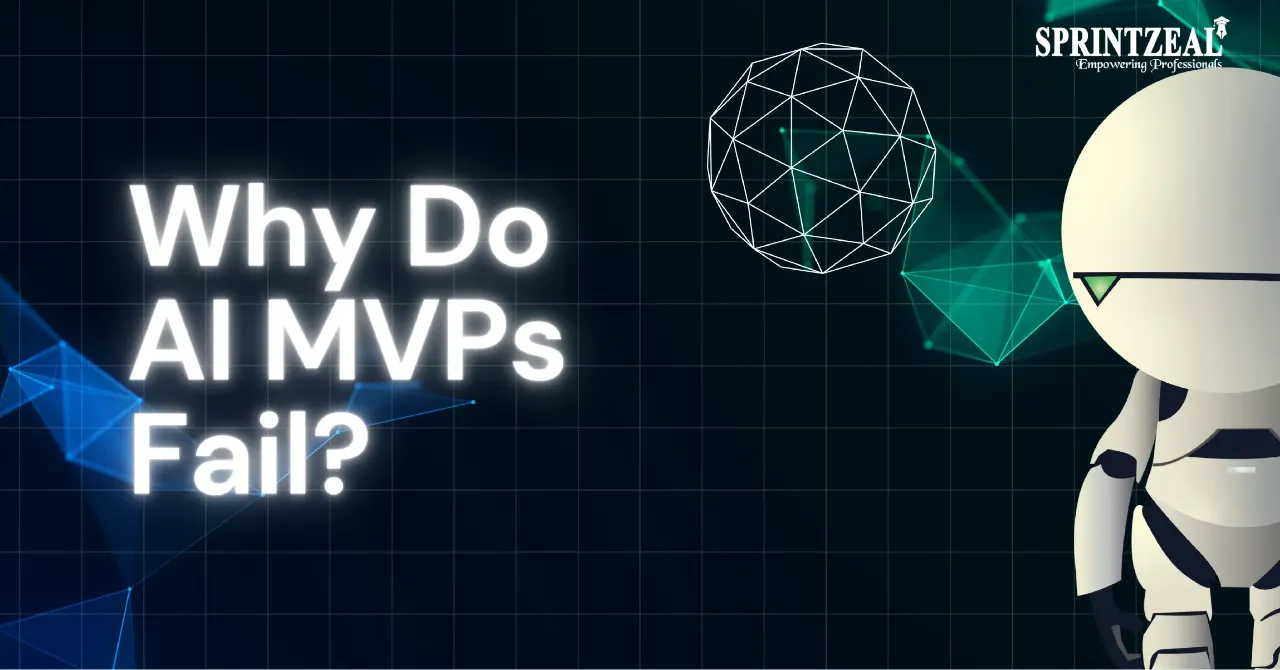
You launched your AI MVP, got some early users, and expected things to pick up. Instead, users stopped coming back, key features were barely used, and the feedback was not what you expected.
Now you are asking the obvious question: Did the idea fail, or did the MVP fail?
That is where a proper post-mortem can help.
An MVP is not meant to be a perfect final product. It is a way to test an idea with real users before putting more time and money into it. For founders considering MVP development for startups in Australia, this learning process can be just as important as the launch itself.
If the first version does not work, the results can still tell you what to change.
Go back to the reason you built the MVP.
What problem were you trying to solve? Who had that problem? What did you expect customers to do with your product?
Write down the assumptions you made before development started.
For example:
Now compare these assumptions with what you actually learned.
Maybe customers had the problem but did not consider it important. Maybe they liked the idea but did not want to pay for it. Or perhaps your product solved a problem they rarely faced.
This helps you identify whether the business idea needs to change or whether the MVP simply needs improvement.
If you are still validating the concept, product idea validation before rebuilding can help you test the assumptions that matter most.
Customer comments are useful, but behaviour often tells you more.
Someone might say they like your product and still never use it again.
Look at your actual data:
Suppose 100 people sign up but only 15 return after the first week. That is worth investigating.
Do not immediately assume the product is bad.
Perhaps the onboarding was confusing. Maybe the main feature did not deliver the expected result. Or users simply did not have a strong enough reason to return.
These details give you a much clearer direction for the next version.
MVPs often become bigger than they need to be.
You start with one important feature, then add dashboards, integrations, reports, user roles, and other requests. By launch, you have spent months building something without properly testing the main idea.
Ask yourself:
What could we have left out and still tested the main assumption?
This is particularly important for startups working with limited budgets.
A focused MVP lets you learn faster. An experienced MVP development partner should be able to challenge unnecessary features rather than simply build everything requested.
A practical MVP approach keeps the first release focused on testing demand, user behaviour and the features that actually matter.
An AI feature can look impressive in a demo and still be frustrating in real use.
If AI was a key part of your MVP, review it separately.
Ask:
For example, an AI tool that creates a report in seconds sounds useful. But if users have to spend 20 minutes checking every report, the actual value may be much lower than expected.
Do not ask only whether the technology worked.
Ask whether it solved the customer's problem well enough.
This is something to consider when choosing AI MVP development services for Australian startups as well. The focus should be on proving the use case, not simply adding an AI feature because it is popular.
One of the best ways to understand an unsuccessful MVP is to speak with people who tried it and left.
You do not need a long survey.
Ask simple questions such as:
Do not try to sell them on the product during the conversation.
You are trying to find the truth, even if the answer is uncomfortable.
If several customers mention the same issue, that is a strong signal that it needs attention.
Sometimes the MVP works, but the business model does not.
Customers may find the product useful but still refuse to pay the price you have set.
Ask potential and existing customers what they currently spend on the problem, what they believe your product is worth, and what would make them comfortable paying for it.
Also look at your own costs.
This is especially important for products that rely heavily on AI. If every customer interaction is expensive to process, strong user growth could create another problem.
The goal is not simply to get more users. You need a model that can support those users.
Now look at how the MVP was built.
Ask:
If an external MVP development company helped build the product, review the working process honestly.
The question is not simply whether the team delivered the product.
Ask whether the process helped you learn what customers wanted.
For Australian founders comparing MVP development services in Australia for startups, ask potential partners:
"How will you help us validate the idea while building the MVP?"
A strong development team should be comfortable recommending a smaller scope when that is the better way to test the idea.
Once you have reviewed the evidence, there are three realistic options.
Choose this when users understand the product and see value, but some parts are not working well.
You may need to simplify the experience, improve the core feature, or fix reliability issues.
A pivot may make sense if your research reveals a better customer group or a more valuable problem.
For example, you may discover that small businesses are not interested in your solution, but larger companies have a clear need for it.
That is not wasted effort. It is useful market learning.
Sometimes the evidence says there is not enough demand.
If customers do not care about the problem, the economics do not work, or there is no clear path forward, stopping can be the right choice.
It is better to make that decision early than keep spending money because you have already invested in the product.
Do not jump straight into another development cycle.
Create a simple post-mortem covering:
|
Question |
What to Find Out |
|
What problem were we solving? |
Is it still important? |
|
Who needed it? |
Did we target the right users? |
|
What did users use? |
Which features created value? |
|
Where did they leave? |
What caused friction? |
|
What did customers dislike? |
What needs to change? |
|
What did they value? |
What should stay? |
|
What did the MVP cost? |
Can the model work commercially? |
|
What should we test next? |
What is the biggest remaining assumption? |
This gives your next development cycle a much stronger starting point.
If you decide to rebuild, look for an AI MVP development partner that understands the lessons from your first version rather than simply starting the same project again.
You could also consider an MVP development agency in Australia that can help with discovery, design, development and testing as one process.
The important thing is not the label. Ask how the team handles scope, validation, user feedback and changes after launch.
Your first MVP does not have to succeed commercially to be useful.
It may show that customers want a different feature, that your pricing is wrong, that another audience has a stronger need, or that the problem is not important enough.
The key is to use those findings.
Before spending more money on MVP development solutions, understand what users actually told you through their actions and feedback.
Sometimes the right move is to improve the MVP. Sometimes you need to change direction. And sometimes stopping is the smartest decision.
The real value of an MVP is not just launching something. It is learning enough from the market to make a better decision about what to build next.
Author Bio: Bhumi Patel is a Client Partner at Bytes Technolab, working with organisations across Australia and New Zealand to deliver real business outcomes through AI-powered product engineering and AI/ML Development services. As part of a leading Digital Product Modernisation Agency, she helps teams modernise their systems, improve operational efficiency, and bring new digital products to life with confidence.
With experience across project delivery, operations, and client onboarding, Bhumi acts as the link between business goals and technology execution. She partners with startups and established enterprises to shape practical, high-impact solutions from AI-first MVPs and scalable SaaS platforms to Agentic AI systems, Generative AI initiatives, and intelligent product development.

Mon, 28 September 2026
Tue, 22 September 2026

Tue, 08 September 2026

Mon, 24 August 2026
Wed, 19 August 2026

Mon, 17 August 2026

Mon, 17 August 2026

Thu, 13 August 2026

Mon, 24 August 2026

© 2026 Sprintzeal Americas Inc. - All Rights Reserved.

 USA : +1315-322-7821
 UK : +44 7700 174870
 IND : +919036108287
 AUS : +61 480 005 455