Best AI Photo Enhancer Tools for Marketing Teams in 2026
Tue, 08 September 2026

Inspirational journeys
Follow the stories of academics and their research expeditions
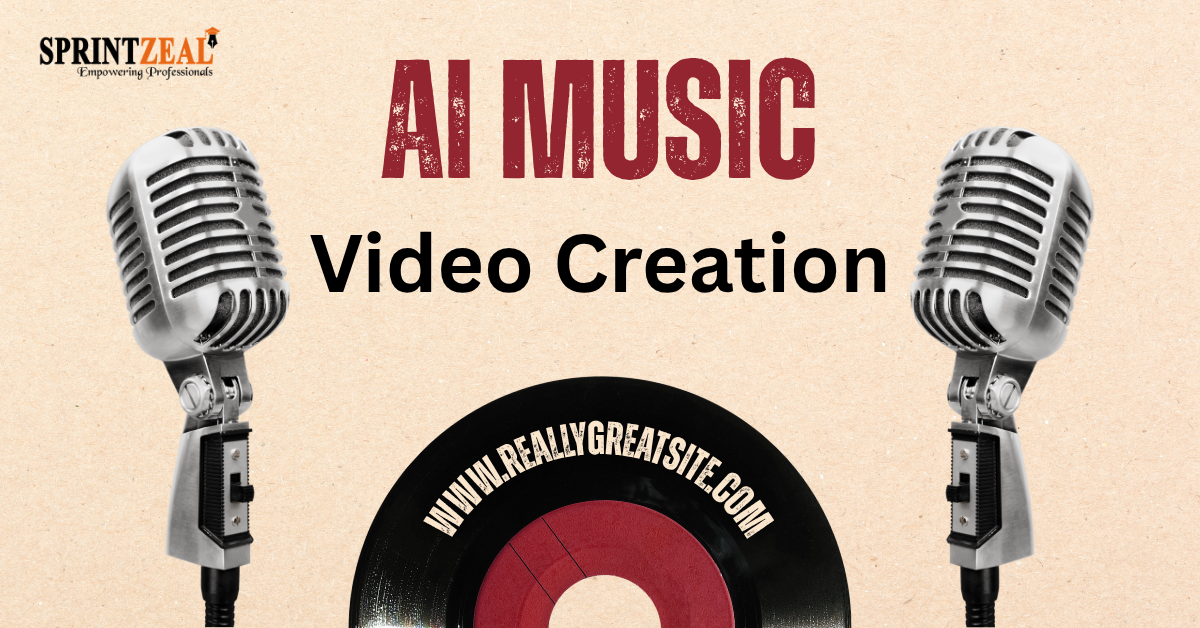
There’s a new kind of creative moment happening online in 2026, and it usually starts with something almost too casual to notice. Someone opens a tool, types a rough idea like “cinematic synthwave track with rainy neon visuals and emotional buildup,” and within minutes they’re watching a complete music video unfold on screen.
No studio. No editing timeline. No crew coordination. No “let’s schedule another meeting about the color grading.”
Just an idea → instantly turned into sound and visuals.
That’s the reality of modern AI music video generators. And the real shift isn’t just speed—it’s the disappearance of the gap between imagination and execution.
Creativity is no longer something you prepare for. It’s something you trigger.
Before AI tools entered the scene, music video production followed a very familiar but painfully slow structure. It was structured, yes—but also fragile, because every step depended on human coordination and timing.
A typical workflow looked like this:
concept development → songwriting → production → recording → mixing → storyboard planning → filming → editing → revisions → approvals → final export → delayed release
By the time the final product was ready, the original creative emotion often felt diluted. What started as excitement gradually turned into project management fatigue.
The biggest limitation was never imagination. It was friction.
And friction has always been the quiet killer of creative momentum.
The rise of AI music and video generation tools didn’t happen randomly. It came from multiple pressures hitting creative culture at the same time.
First, content platforms changed expectations. Publishing occasionally is no longer enough—creators are expected to produce consistently or disappear from visibility.
Second, audience behavior shifted. People now decide within seconds whether something is worth watching or listening to.
Third, traditional production pipelines became too slow for modern digital cycles. Too many tools. Too many steps. Too many chances for momentum to collapse.
AI didn’t introduce creativity—it removed waiting.
And when waiting disappears, experimentation becomes the default mode.
One of the most noticeable transformations in creative tools is how music can now be generated directly from text.
An AI Song Generator allows users to turn simple descriptions into fully structured music without needing instruments, software skills, or production experience.
Instead of technical instructions, users provide emotional direction:
The system interprets these inputs and builds a complete musical structure—rhythm, melody, harmony, pacing, and emotional tone included.
But the most interesting change is behavioral, not technical.
Users begin to iterate instinctively. They adjust moods, compare variations, and refine emotional direction. They start understanding music not through theory, but through interaction.
Creation becomes less about skill and more about expression.
In today’s content-driven ecosystem, music rarely exists alone. A track without visuals often feels incomplete, especially on platforms built around short-form video and aesthetic storytelling.
So naturally, music begins to ask for visuals.
And AI responds.
Instead of manually editing footage or searching for stock material, creators now allow systems to interpret audio directly as visual logic.
Beat structure influences motion.
Emotional tone influences color palettes.
Song progression influences scene transitions.
A soft introduction might generate slow cinematic movement. A rhythmic build might increase visual energy. A drop might trigger fast transitions or surreal visual effects.
This is where tools like the AI Music Video Generator become especially important—not because they automate video creation, but because they translate sound into visual storytelling rules.
The result is not a video added to music.
It is a video generated from music.
If you’ve ever used AI creative tools, you’ve probably experienced this pattern:
You generate something → you think it’s “pretty good” → you tweak a small detail → you generate again → suddenly you’re comparing subtle emotional differences between multiple versions and it’s been 45 minutes
This happens because AI removes the cost of iteration.
In traditional workflows, every change requires effort, time, and coordination. That naturally limits experimentation.
AI removes that limitation completely.
So the workflow becomes:
generate → evaluate → adjust → generate again → repeat
There is no penalty for exploring variations, which means exploration becomes natural rather than intentional.
And when exploration becomes effortless, people don’t stop quickly—they keep going.
Despite sounding futuristic, AI music video generation is already widely used in real creative workflows.
Independent musicians use it to quickly prototype songs and release visuals without expensive production cycles. Social media creators rely on it to maintain consistent output without creative burnout. Marketing teams generate campaign visuals that adapt quickly to trends. Indie game developers use it to produce cinematic previews before full assets exist. Casual users experiment simply because the process feels intuitive and entertaining.
Across all these groups, one consistent pattern emerges:
when friction decreases, creative output increases.
But more importantly, exploration expands.
People don’t just create more—they try more directions.
For decades, creative advantage belonged to those who mastered tools. Knowing software, workflows, and production systems determined output quality.
That structure is now shifting.
In AI-assisted creation, the advantage is moving toward iteration speed, taste, and decision-making rather than technical execution.
The person who explores more variations quickly often produces stronger results than someone who spends days refining a single version.
This doesn’t eliminate craftsmanship—it repositions it.
Craft becomes less about building and more about selecting.
Creators evolve from operators into curators of possibility.
It would be easy to frame AI music and video generators as productivity improvements. But the impact goes deeper because it changes how ideas enter reality.
In the old system, ideas were filtered by effort. Many never survived past the “too complex to attempt” stage.
In the AI system, ideas are instantly testable. They either evolve or get replaced—but they are no longer blocked by friction.
This creates a new creative environment:
Creativity becomes less about commitment and more about discovery.
And discovery naturally increases diversity in output.
At the center of this transformation is a simple but powerful shift: creativity no longer waits.
The workflow is no longer linear:
idea → plan → execute → finish
It has become cyclical:
idea → generate → evaluate → refine → repeat
Inside this loop, something fundamental changes. Creativity stops feeling like a scheduled production process and starts feeling like an interactive system.
AI music and video generators don’t replace creativity. They remove the waiting time between imagination and expression.
And once that waiting time disappears, creators often realize something surprising:
They didn’t need more ideas—they just needed faster ways to see them become real.

Tue, 08 September 2026
Mon, 24 August 2026
Wed, 19 August 2026

Mon, 17 August 2026
Mon, 17 August 2026
Thu, 13 August 2026
Mon, 24 August 2026
Tue, 28 July 2026
Thu, 23 July 2026

© 2026 Sprintzeal Americas Inc. - All Rights Reserved.

 USA : +1315-322-7821
 UK : +44 7700 174870
 IND : +919036108287
 AUS : +61 480 005 455