How to Choose the Right Laptop for Learning Technical Skills
Tue, 01 September 2026
Inspirational journeys
Follow the stories of academics and their research expeditions
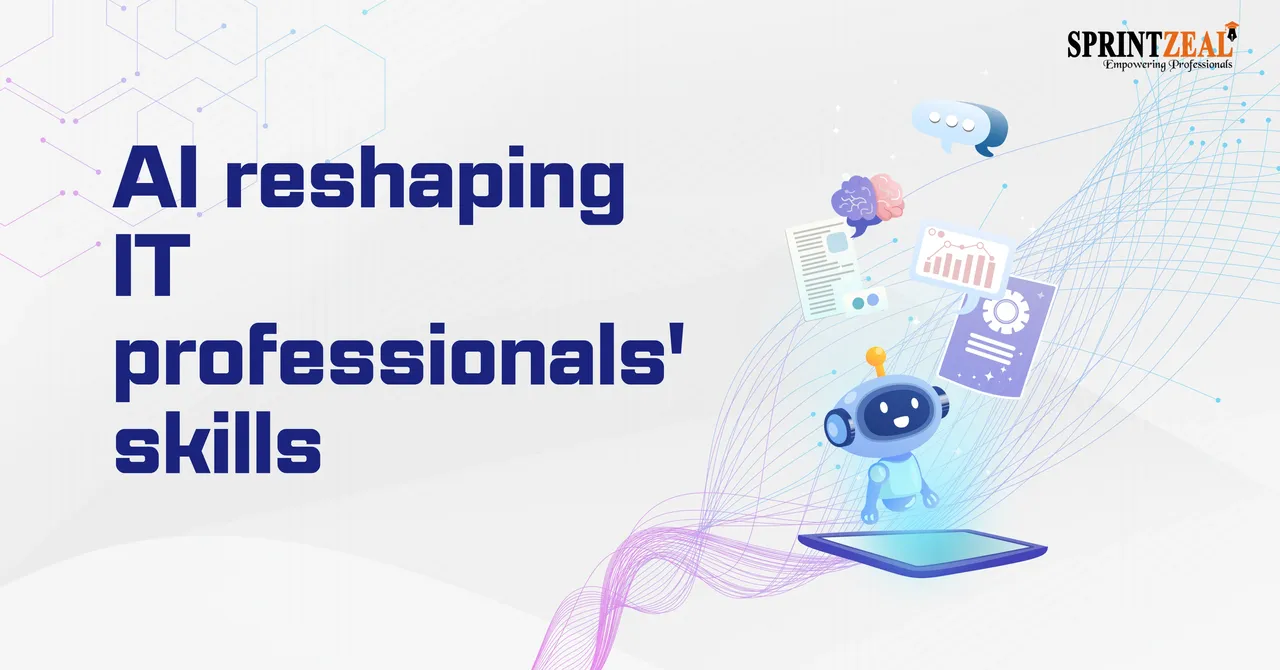
A decade ago, technical professionals proved their worth through physical endurance and strict memorization. They spent hours in cold data centers listening to the steady hum of cooling fans. They memorized exact port numbers and subnet masks and knew precisely which hardware rack required a manual reset in the middle of the night.
Today, that rigid routine is fading. Silent software now handles the tedious configurations and baseline troubleshooting that once consumed entire work weeks. This reality fundamentally alters the certification landscape for the modern technology worker.
“Earning credentials no longer means proving an ability to fix a broken machine. It requires demonstrating the capacity to govern the complex architecture doing the fixing.”
This structural shift is highly visible at the enterprise help desk. Routine password resets and basic network diagnostics are increasingly managed by automated systems. The rapid adoption of agentic AI in IT service management means intelligent platforms are currently diagnosing anomalies and resolving tickets without human input. Because these systems operate independently, the daily grind of the department is transforming.
Workers are stepping away from the reactive break-and-fix model. They are transitioning into system orchestrators. Earning a modern certification means learning how to audit an autonomous agent, refine its operational parameters, and ensure its actions align with broader company policies.
The physical patching of cables is becoming a rare necessity. Foundational training once focused heavily on manual setups and static hardware configurations. Now, the emphasis lands squarely on software management and workflow automation.
Understanding the network engineer's role in an AI-driven IT department involves a deep dive into software-defined networking and cloud architecture. Engineers must grasp how dynamic systems allocate bandwidth on the fly to prevent bottlenecks before they form. They are tasked with designing the parameters that allow a network to heal itself.
Similarly, administrators must completely rethink their domain expertise. Grasping what the shift from tools to agents means for the future of B2B software represents a crucial pivot toward visionary technology leadership. Organizations are no longer buying static programs that sit idle waiting for keyboard commands. They are investing in active digital employees that make independent decisions based on real-time data streams.
This is a massive paradigm shift because IT leaders must now evaluate software based on its cognitive autonomy and decision-making frameworks. Examining boards recognize this transition. They are prioritizing skills in data governance, API integration, and complex workflow orchestration over simple installation procedures.
Granting autonomy to digital systems creates a massive new attack surface. When a network manages itself, a single security breach can cascade through an organization faster than a technician can type a kill command. This harsh reality makes advanced security credentials strictly non-negotiable.
Reviewing the top 5 reasons to earn cybersecurity certification reveals that modern threats are highly automated. Defending against them requires a practical understanding of machine learning vulnerabilities. Professionals must learn to secure data pipelines and audit automated decisions to ensure malicious actors cannot manipulate the underlying algorithms.
Security is only half the equation when dealing with intelligent systems. Deploying autonomous software brings heavy compliance and moral obligations. Studying ethics in AI is transitioning from an interesting elective concept to a mandatory core requirement.
Leaders must guarantee their algorithms respect user privacy and operate strictly within international legal boundaries. Future credentials will inevitably test candidates on algorithmic transparency and data bias just as rigorously as they currently test on firewall configurations.
The table below maps traditional IT certifications to the emerging skills reshaping the field:
|
Traditional certification focus |
Emerging certification focus |
Why the shift matters |
|
Manual networking |
Cloud networking and SDN |
IT teams increasingly manage software-defined infrastructure across distributed environments. |
|
Hardware troubleshooting |
AI-assisted diagnostics and AI auditing |
Professionals need to evaluate automated recommendations and understand when human intervention is required. |
|
Firewall configuration |
Machine learning security and automated threat detection |
Security work increasingly involves systems that can identify patterns and respond to changing threats. |
|
Manual server administration |
Cloud and infrastructure automation |
Administrators increasingly manage infrastructure through repeatable, automated workflows. |
|
Static access management |
Identity automation and policy-based access |
Modern environments require access rules that can adapt across users, devices, and services. |
|
Manual incident response |
AI-assisted incident response |
Professionals need to validate automated findings, prioritize incidents, and manage escalation. |
|
Traditional compliance |
AI governance and regulatory compliance |
AI systems introduce additional requirements around accountability, documentation, transparency, and oversight. |
|
Basic scripting |
Automation and agent orchestration |
IT professionals increasingly need to connect tools and design workflows that can execute multi-step processes. |
As algorithms absorb the technical heavy lifting, the industry is placing a massive human premium on capabilities that code cannot replicate.
The most resilient professionals in the market are those who master strategic thinking and cross-departmental communication. A machine can restart a crashed server in milliseconds. It cannot sit in a boardroom and explain the financial impact of that outage to a frustrated executive team.
The modern worker must develop empathy, leadership, and the ability to negotiate with non-technical stakeholders. Bridging the gap between the engineering team and the sales department is a uniquely human skill.
Technical certifications remain the undisputed foundation of a successful career in the sector. Yet the most valuable workers use their technical knowledge merely as a baseline because they build their real value by translating complex digital data into actionable business strategies.
The era of resting comfortably on a single hardware credential is over. Pearson’s 2026 Value of IT Certification Employer Report found that 76% of organizations report skills gaps in AI and machine learning, while 52% report gaps in cloud computing.
To stay relevant, tech workers must update their learning paths aggressively. Skills to prioritize include:
Gaining expertise in cloud orchestration, automated security, and algorithmic governance will separate the next generation of leaders from the rest of the pack.
The goal is no longer to compete with intelligent machines. The objective is to master them while elevating the deeply human skills that keep an enterprise running smoothly.

Tue, 01 September 2026
Fri, 28 August 2026
Wed, 19 August 2026
Fri, 24 July 2026
Tue, 14 April 2026
Thu, 30 January 2025

Tue, 04 February 2025

Wed, 29 January 2025


© 2026 Sprintzeal Americas Inc. - All Rights Reserved.

 USA : +1315-322-7821
 UK : +44 7700 174870
 IND : +919036108287
 AUS : +61 480 005 455