How Split PDFs Improve Document Management in Professional Workflows?
Mon, 17 August 2026
Inspirational journeys
Follow the stories of academics and their research expeditions
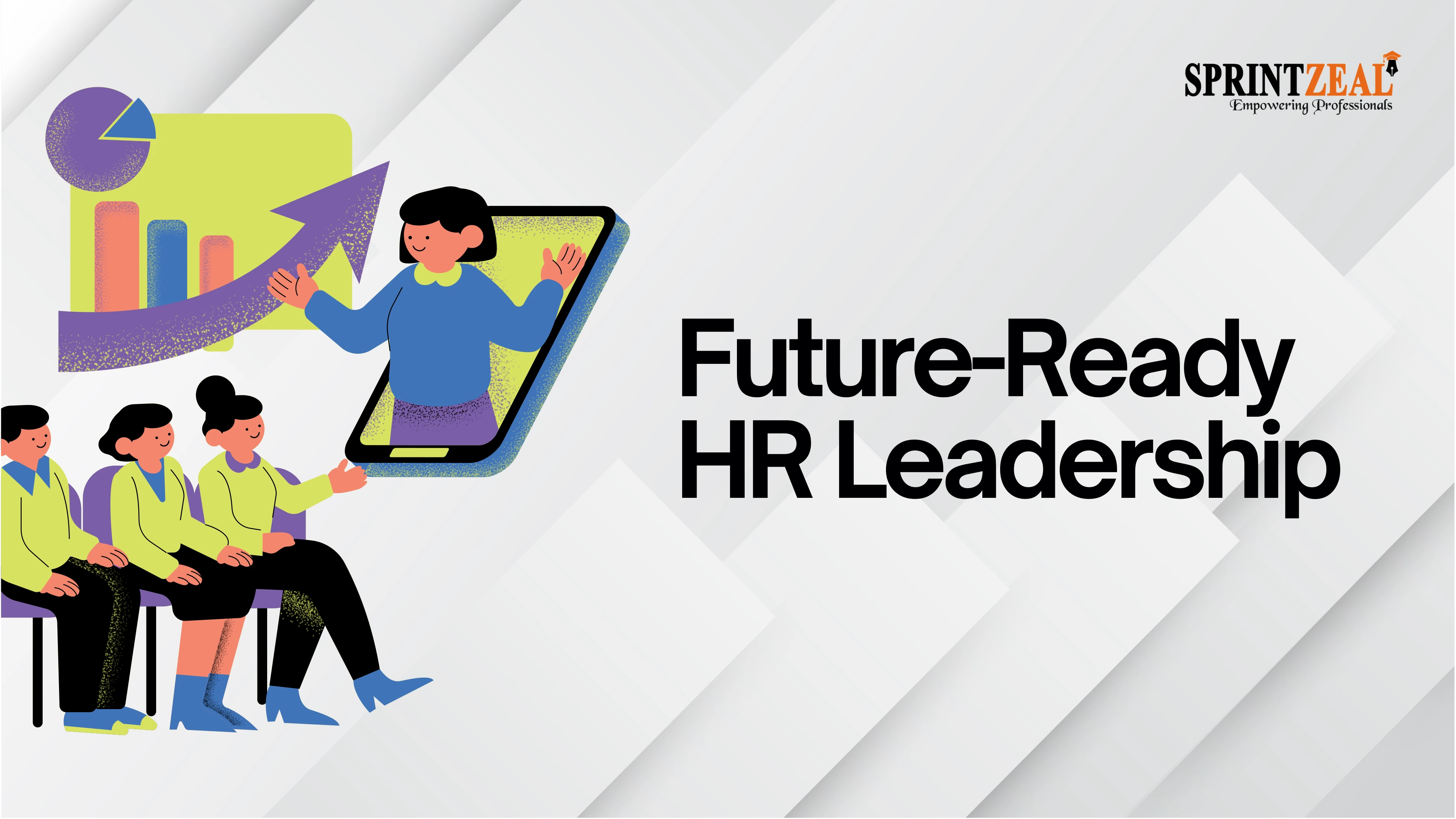
Global change isn't slowing down, and HR leaders who see that clearly are the ones taking the lead in shaping what workplaces look like next. Strategic thinking paired with real technological fluency — that combination is what lets today's HR professionals push organizations forward even when the ground keeps shifting. Getting this right takes more than just adopting new tools; it means building cultures flexible enough to bend without breaking.
Early-career professionals and seasoned HR veterans alike stand to gain from formal training here — an MBA in human resource management online gives people the strategic grounding and leadership tools that today's workplaces are actually asking for.
HR's job description has stretched way past the old personnel-management playbook, whether the focus lands on tech, agility, or developing people. Human capital now functions as a strategic asset in its own right — something that needs constant investment, not just occasional attention, if organizations want to hold up through technological, economic, and social upheaval. That shift alone has redefined what makes an HR leader actually influential.
Resume screening, candidate sourcing, employee sentiment analysis — AI and smart automation are already handling chunks of this, and HR leaders are the ones driving that shift. Freeing teams up from repetitive tasks means more room for the strategic work that actually needs a human in the loop. Gartner has put a number on where this is headed too: by 2030, roughly half of today's HR activities will be automated or run by AI agents outright, which is a pretty fundamental reshaping of the role.
None of that rolls out smoothly on its own, though. New platforms and smarter tools still need people to manage the transition — transparency, real communication, training that actually sticks. Miss those steps and adoption stalls. Handle them well and resistance fades faster, with the AI payoff showing up sooner too.
Resilience runs on agility at this point. Cultures that make room for experimentation, fast learning, and quick pivots give employees the space to actually respond when things shift — internally or externally. Flatter structures, open communication, teams that collaborate across functions instead of staying in lanes: that's how leaders build this kind of environment in practice.
The companies leading on agility aren't just reacting to whatever's happening now — they're setting themselves up for whatever comes next too. Uncertainty and new tech aren't going anywhere, so HR's ability to keep mindsets open and adaptable matters more than it used to. KPMG's research backs this up, pointing to human-centered, resilient organizations as the ones that actually thrive as AI reshapes the landscape.
Learning never really stops being necessary in a future-ready workplace — it's not a bonus anymore. Processes shift, technology shifts, sometimes entire business models shift, and none of that waits around. That's exactly why HR leaders are building out serious upskilling and reskilling programs, the kind Arkansas State University has been a resource on, to help employees keep pace with what their roles need and move into new ones as they emerge. Do this well and skill gaps shrink, retention improves, and people feel steadier navigating whatever career shift comes their way.
Putting real investment into learning and development isn't just about closing gaps — it signals a genuine commitment to where employees' careers are headed. Do that consistently and the employer brand gets stronger almost as a side effect, pulling in people who'd otherwise have gone somewhere else.
Well-being and engagement aren't side items on a checklist — take them away and resilient, productive organizations basically stop being possible. HR leaders are increasingly building strategies that cover physical health, sure, but also mental and emotional wellness — work-life balance, flexible schedules, real access to mental health resources. Get this right and satisfaction and performance both tend to follow.
A positive work environment cuts down on burnout and absenteeism while pushing motivation and productivity up. Take Google, take Salesforce — both built well-being programs around stress management, mindfulness, flexible work, and other companies keep borrowing from that same playbook. The logic behind it isn't complicated: a healthier workforce just performs better.
Strategic decisions in HR increasingly run through data now. Talent acquisition metrics, productivity, engagement, retention — dig into these and HR leaders get a much clearer read on what's actually driving results inside their organizations. Predictive analytics goes a step further, flagging attrition risks before they become a problem and pointing to where targeted development might pay off most. One-size-fits-all policy is fading out because of this, basically — what's replacing it is something built around what one particular organization actually needs, not a generic template borrowed from somewhere else.
Diverse, inclusive workplaces pay off for employees and organizations both. The research keeps pointing the same direction — diverse teams tend to outperform less diverse ones, largely because a wider range of perspectives means better creativity and sharper problem-solving. HR leaders sit right at the center of this, shaping recruitment practices, stripping bias out of evaluations, and making sure growth opportunities are actually open to everyone, not just some.
Inclusivity isn't just the right thing to do, either — it pulls in top talent and fuels innovation. Treating it as optional is a business risk organizations take on at their own expense.
Remote and hybrid work keep pushing HR leaders to rethink policy, team structure, engagement — pretty much everything. Getting this right means balancing flexibility against accountability, putting real investment into digital collaboration tools, and making sure people feel connected no matter where they're logging in from.
Clear guidelines, support for managers, genuine inclusion for teams spread across locations — that's what falls to HR here. Bigger talent pools, more flexibility — remote work brings real upside, no argument there. But onboarding has to change too, and virtual communication needs its own strategy, or culture and performance both start slipping.
Vision, agility, and genuine compassion — that's the combination shaping the future of work through HR leadership right now. Tech is part of it. So is strategic upskilling, a real commitment to well-being, and a steady push toward inclusion and flexibility — HR professionals are stitching all of that together to build organizations that can actually hold up under pressure. The business landscape won't stop shifting anytime soon, and the learning and leadership behind HR can't afford to either.

Mon, 17 August 2026
Fri, 14 August 2026
Fri, 31 July 2026
Thu, 30 July 2026
Wed, 29 July 2026
Wed, 29 July 2026
Thu, 23 May 2024

Tue, 04 March 2025

Thu, 29 May 2025

© 2026 Sprintzeal Americas Inc. - All Rights Reserved.

 USA : +1315-322-7821
 UK : +44 7700 174870
 IND : +919036108287
 AUS : +61 480 005 455