From AI Theory to Practice: Building a Local LLM Workflow for Developers (2026)
Tue, 13 October 2026

Inspirational journeys
Follow the stories of academics and their research expeditions
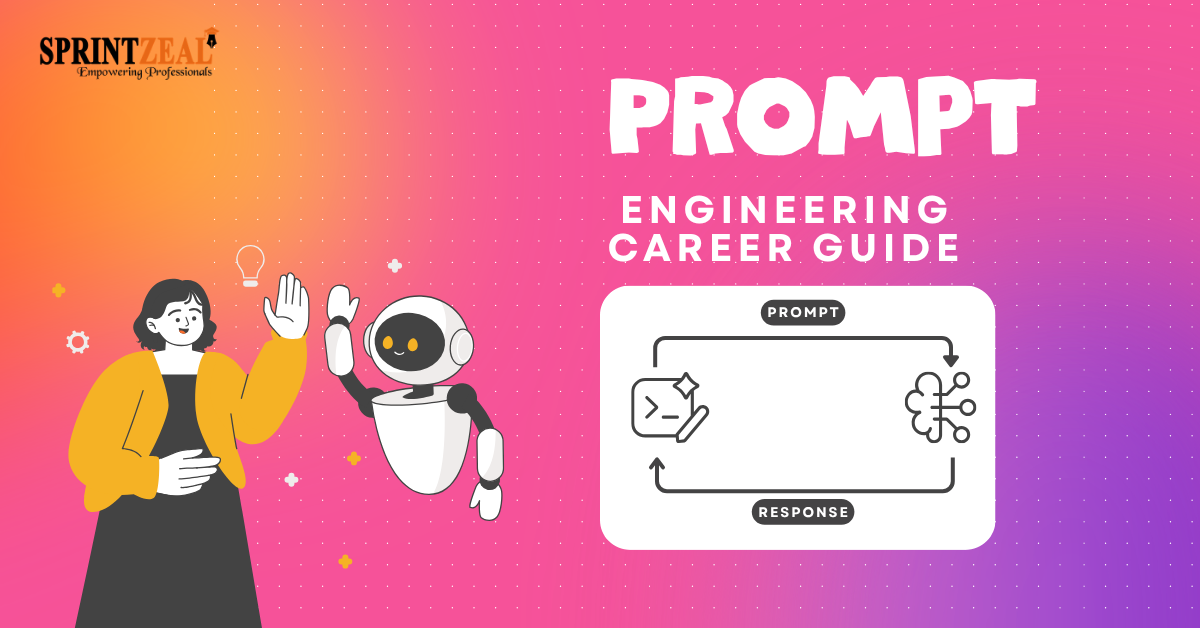
We all talk to AI every day. But do you want to talk in a way that pays you? Why don’t you learn prompt engineering? Also, if you learn prompt engineering, you are most likely to end up getting a job in the sectors of technology, SaaS, and AI-driven startups. Well, the data extracted from LHH says that you don’t even need an IT background to attain the position of a prompt engineer.
Moreover, in the US, you can earn an average salary of $112,447. At present, 1000 companies and more around the world are looking for prompt engineers. There are many other knowledge-gaining topics attached to this topic titled “Learn Prompt Engineering: Skills, Techniques & Tips, don’t miss out; continue to learn more.
Prompt: What Is Meant By That?
If we want to know about something, especially from the AI tools like ChatGPT or Google Gemini, we usually type our queries, explain what exactly we are expecting as a result, or just give any other input. Any kind of wording or text given to an AI expecting an answer in return is a prompt.
If we give a prompt to the widespread AI tools that are ChatGPT, Google Gemini, and Claude, we will get a response. That is what a layman can do. In terms of “prompt engineering,” the word engineering attached makes all the difference. Here, engineering refers to the repeated steps taken so that the final result reaches the expectations.
The cycle starts from an idea: what we want to know, or what we want the AI model to do for us. The second thing we do is to enter a prompt into the AI tools. AI models (LLM) scan the prompt, understand it, and accordingly provide a response. What if the final outcome is not what could have satisfied you? That’s when we re-enter the prompt in the AI tool, emphasizing that the result seemed vague and we want an output that covers all the aspects.
Simple Definition: Prompt Engineering is a trial-and-improvement process, where the prompt given to AI tools is specific, not a single detail is missed, and is clear enough, so that the outcome received is not only correct, factual, and original, but also is engaging.
With the growing demand for generative AI, the number of prompt engineers required has also spiked. As mentioned earlier, it is the job of a prompt engineer to create a prompt in such a way that the result matches what was expected; if not, it's the job of a prompt engineer to provide useful feedback to an AI tool in case the results aren’t up to the mark.
A proper process is followed where a prompt engineer’s duty is to use the trial-and-error method on n prompts available to finally find out the best one for the desired results. Not only do they save the prompt, but also templates for later use.
Prompt engineers do not just enter a prompt; they also add additional instructions to help AI tools get a better understanding of the idea that is presented and provide the output that meets the needs of the user. Here are some of the reasons why it is important to learn prompt engineering:
The prompt that is vague is obvious to lead to producing a result that lacks the main details or looks like made-up answers. A user must have already visualized what their final output will look like, so while entering the prompt, they should add all the instructions that AI needs to follow along with the exact details that have to be added, and background information (eg, this is for beginners, write it in a formal tone, and so on). If an AI tool clearly understands what is needed, you can expect the desired outcome on the first go.
Once someone has overcome the stage of trying and improving various prompts, it means they already have a useful amount of prompts. Later, if they have to write the same type of emails, analyze data, or debug code, they won’t take much time to use the prompts and get the desired results.
AI is the new normal in the professional background as well. Therefore, individuals who adapt to the changes mean they develop skills related to AI will have high chances to get hired by the companies as AI and human brainstorming work simultaneously nowadays.
A prompt engineer will generate prompts that are clear, have all the details, and have the ability to make an AI tool clearly understand what is expected in the results. It will be easier for the developers to get results quickly. If fewer prompts can give the results, then it can also reduce the cost of using and running AI systems.
So far, it is clear that a prompt engineer commands an AI chatbot, and in return, the chatbot presents the outcome without skipping any details. But are those commands random? There’s more that you need to know:
If a prompt is entered, as it consists of some random details, like create a Java code for me, AI won’t be able to give you any result. But if you generate a prompt saying, " Create a Java ATM stimulation program, which should be beginner-friendly, and also add other details that should be included, AI will create a code as you would want it to be.
So, clearly specifying what should reflect in the output, alongside including every detail that shouldn’t be missed. This is the first step a prompt engineer takes.
Prompts can be of different types, depending on the words chosen to extract a response from the AI model. Prompt engineers try out all kinds of prompts to finally get to know which gives the expected outcome.
Prompt engineers experiment with different prompts. Suppose they have tested 100 of them, out of which 50 passed the final round, so they save the 50 in libraries such as digital notebooks, team management tools, or even inside software code. Whenever needed, the prompt will be available; the engineers don’t have to generate them from scratch.
Prompt engineers have to behave like investigators when AI creates a blunder. Sometimes AI doesn’t get the facts right; in this case, the prompt needs to specify to AI not to make things up if it does know the truth.
Sometimes AI can give answers supporting only one side of an argument, like it can give all the cons when asked why children shouldn’t be handed a phone.
In this case, engineers ask AI to be neutral. AI can also commit mistakes in displaying the final outcome in the wrong way. Here, engineers need to make sure to give prompts to AI in clear and simple steps.
How does AI understand and create answers? A learner needs to first understand it before diving into building something big and complicated with AI.
AI’s ability to understand, remember the ongoing conversation, and make mistakes from time to time is affected by three main things: Tokens, Context Windows, and Hallucinations.
Tokens: Like how we humans read a sentence in one go, AI doesn’t do that. It splits the sentence into smaller parts called tokens. Example: Hello Test Cricket. When this sentence undergoes tokenization, four tokens are created (Hello is one token, Test is the second, Cricket is the third, and full stop (.) is the fourth).
Context Windows: There is a limit to the maximum amount of token AI can remember. If the limit exceeds, AI tends to forget part of the earlier conversation as it makes space for the new ones.
Hallucinations: AI can sometimes get confused because of factors like exceeding tokens. Therefore, it is likely for AI to create fake answers.
The big tech companies involved in making the AI models have released official rules, as AI can cause errors if it guesses to answer a prompt. There are four simple rules: Tell AI who it should act like( Match teacher, financial expert, developer, etc.), what it needs to do, how the final output should be presented (table or words), and tell AI clearly if it doesn’t know anything; no information is better than a made-up answer.
Instead of saying to give an answer in a single sentence, if AI thinks in steps before giving the final answer, the answer will be more precise and reliable.
For example: Question: A train travels 60km in 1 hour. In three hours, how much distance will it cover?
AI’s answer: 180 Km (this is without the chain-of-thought method)
With chain-of-thought method
Question: A train travels 60km in 1 hour. In three hours, how much distance will it cover? Think in steps and answer the question.
AI’s Answer:
The prompt is given in a way that AI looks for several ways to solve a problem and create ideas. In the end, out of all the options, AI puts forward the best option based on the needs of the user.
This type of prompting is similar to the tree-of-thought prompting. Here, when a question is asked, AI gives an answer attached with reasoning. Then, more explanations are demanded by grilling the AI to check if its reasoning is correct or not. In case there are any mistakes or errors, they are excluded or else corrected. In a way, AI is trained to answer difficult questions.
In this kind of prompting, AI is said to give the final answer in a way that is detailed, longer, and most likely to be correct. AI is said not to give an answer in a lazy and short way.
To learn prompt engineering, coding isn’t a requirement; it depends on the type of job someone wants to pursue.
Suppose someone wants to pursue their career in the field of marketing, content-related roles, or UX; coding is usually non-essential. Rather, one should focus on generating clear prompts to the AI tools and understanding the psychology behind an audience's needs. Communication is the key skill to master, and coding is generally an unwanted practice in these fields.
But, in case you want to pursue a technical role that involves dealing with AI systems or workflows, then coding will play a vital role. Being in a technical position, you will be involved in developing AI systems. Moreover, you will integrate AI systems with data and improve their functionality while maintaining their security.
Although some job roles don’t require coding at all, the majority of well-paid AI professionals should be proficient in coding skills.
Prompt engineering is slowly becoming a part of software development and data science as the job role is becoming more popular.
Lean Programming: You should know Python in and out, because almost every AI tool, machine learning model, and data science system across the globe is created using Python. In addition, with the help of Python, it is easy to connect apps to AI tools like ChatGPT or Google Gemini. Python uses APIs to form the connection.
Learn LLM Frameworks: LangChain and LlamaIndex. LangChain provides hands to AI to use tools, and LlamaIndex provides AI the brain to read the private files.
The job of a prompt engineer is to create, test, and improve prompts, but how they carry out their tasks differs across industries.
For instance consider these examples:
AI prompts can be used by engineers in this industry to more effectively manage patient visits, keep records, and handle payments. Additionally, they can use prompts to analyse data, conduct research, and generate fresh concepts or potential solutions.
Expert prompt engineers may create prompts for contract analysis, transaction scrutiny, and compliance report generation. Engineers must make sure AI behaviour is operationally safe and auditable in these domains where compliance is crucial.
In these industries, prompt engineers create prompts that convey a brand's voice and tone in text-to-image and text-to-video forms. In addition to producing content, they are capable of writing and refining text as well as analysing consumer behaviour data.
Personalised learning through "adaptive prompting," in which AI tutors are designed to modify their mentoring approach depending on specific student data, is the main focus of roles in education. Lesson plans and rubrics can also be created using prompts.
If you are just starting your career, it’s better for you to opt for a bachelor’s degree in Computer Science, or even nowadays provide a degree specialized in AI or Data Science, you can opt for any of the two you want to take the technical route.
For the language route, a degree in Linguistics or Philosophy will work. In case you want to settle abroad or work in sectors like healthcare and finance, a degree will strongly support your candidacy.
In case you are already a working professional, and now you want to switch to the job role of a prompt engineer, it’s better if you opt for a bootcamp. A candidate will be confident enough if they dedicate their time to the bootcamp, which will last 12 to 24 weeks.
Moreover, the bootcamp program includes all the topics to be taught in an organized way, they help learners commit to deadlines and also motivates them to stay disciplined.
If someone already has experience in a specific role, then companies will look at their portfolio. They see how the candidate can solve a real-world problem. If someone has already worked as a content writer, they will be tested on the basis of how they use AI in terms of how they create effective prompt to write high-quality content.
|
Location |
Salary Range |
|
$70,454 to $179,468 |
|
|
UK |
GBP 127,534 |
|
Europe |
€35,000 to €70,000 |
Your salaries will be affected by the industry you pursue. Here are some average salaries for prompt engineers from different industries. The data is retrieved by Coursera.
|
Industry |
Salary Range |
|
Biotechnology & Pharmaceuticals |
$97,000 to $154,000 |
|
Management & Consulting |
$103,000 to $169,000 |
|
Aerospace |
$105,000 to $164,000 |
|
Agriculture |
$113,000 to $188,000 |
|
Information Technology |
$117,000 to $168,000 |
|
Media & Communication |
$140,000 to $224,000 |
As AI is mostly taking over simplifying tasks and many companies have already embedded AI to simplify tasks of humans, if someone opts to learn prompt engineering, they will have a plethora of industries to work in, from tech to healthcare, marketing, finance, and education, and many more.
In the journey to learn prompt engineering, coding is not necessary. Our company, Sprintzeal, offers plenty of courses. Below is the course related to the topic.
AI and Machine Learning Masters Program
Certified Data Scientist (CDS) DS1050 Certification
1. Why should someone learn prompt engineering?
Learning prompt engineering means mastering the art of talking to AI. A prompt engineer of all calibres can make an AI present the desired outcome.
2. One will learn prompt engineering, but what is the duration?
To learn prompt engineering: you will cover basics in around one to two days. Practical proficiency will take two to four weeks, and to gain advanced-level skills and techniques, it takes around three to six months.
3. Is coding a must to learn prompt engineering?
To learn prompt engineering, coding isn’t a requirement if someone is applying for non-tech roles.
4. What skills are taught when you learn prompt engineering?
Tech skills: Python, LLM Frameworks. Non-tech skills: techniques, crafting instructions, testing and improving responses, and troubleshooting.
5. How good is the career of a prompt engineer?
As AI is mostly taking over simplifying tasks and many companies have already embedded AI to simplify tasks of humans, if someone opts to learn prompt engineering from tech to healthcare, marketing, finance and many more.
6. Which AI tools are usually used in prompt engineering?
ChatGPT, Google Gemini, and Claude are usually used.

Tue, 13 October 2026
Fri, 09 October 2026
Mon, 28 September 2026

Tue, 22 September 2026

Tue, 08 September 2026

Mon, 24 August 2026

Wed, 19 August 2026
Mon, 17 August 2026
Mon, 17 August 2026
Thu, 13 August 2026


© 2026 Sprintzeal Americas Inc. - All Rights Reserved.

 USA : +1315-322-7821
 UK : +44 7700 174870
 IND : +919036108287
 AUS : +61 480 005 455