Best AI Photo Enhancer Tools for Marketing Teams in 2026
Tue, 08 September 2026

Inspirational journeys
Follow the stories of academics and their research expeditions
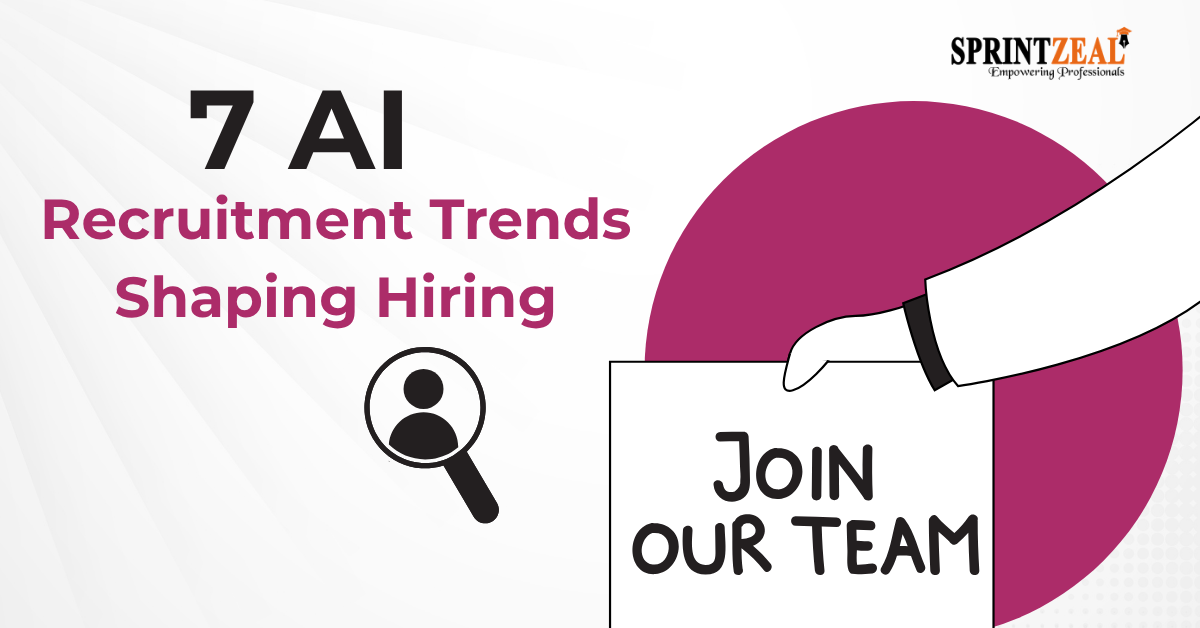
Recruitment has always been a people business. But in 2026, the infrastructure behind it is almost entirely machine-driven. AI isn't augmenting the hiring process anymore — it is the hiring process, at least for the early stages. The question recruiters are grappling with now isn't whether to adopt AI, but how to stay relevant as it takes on more of the work they used to own.
Here's where the real transformation is happening.
The days of a recruiter manually triaging a 400-application inbox are largely over. AI-powered screening engines now rank candidates against job requirements in real time, pulling signals from career progression, skill adjacency, and tenure patterns that a human reviewer would miss — or never have time to catch.
But speed has a shadow side. When algorithms trained on historical hiring data determine who advances, they can quietly entrench the same demographic patterns that diversity initiatives are trying to dismantle. The organizations getting this right are the ones treating AI screening as a first filter, not a final verdict — with calibrated humans reviewing outputs and auditing for bias on a regular cadence.
For decades, employers held most of the cards in the interview process. They knew the questions, the frameworks, and what a "good" answer looked like. Candidates prepared in the dark.
That asymmetry is gone. Today's job seekers come equipped with AI tools that don't just help them rehearse — they help them perform. LockedIn AI is one of the more sophisticated examples: an AI interview assistant used by over a million professionals that listens to live interviews, interprets questions in real time, and delivers tailored responses and coaching directly to the candidate — invisibly, mid-conversation. It works across Zoom, Teams, Google Meet, and most major video platforms.
A poorly written job posting is a recruiting liability. It attracts mismatched applicants, depresses qualified candidate conversion, and often contains language that inadvertently signals cultural exclusion. AI writing and optimization tools are fixing this at scale — flagging gendered language, benchmarking requirements against actual market norms, and improving search discoverability before a role ever goes live.
The downstream effect is significant: better job descriptions produce stronger applicant pools, which means less time wasted at every subsequent stage of the funnel.
Video-based asynchronous screening became mainstream during the pandemic. In 2026, the format has grown up. AI analysis now runs on top of recorded responses — evaluating communication structure, language precision, and response coherence — and feeds those signals into recruiter dashboards alongside traditional qualifications.
Used well, this gives hiring teams a meaningful early read on communication ability for roles where that skill is mission-critical. Used poorly, it reduces human beings to audio-visual data points. The difference lies in how organizations define what they're actually measuring — and whether those metrics connect to genuine job performance.
Nowhere is the talent crunch more acute than in data and AI. Demand for machine learning engineers, data scientists, AI architects, and analytics leads has far outpaced supply — and the cost of a misaligned hire in these functions is extraordinarily high. Employee data can help sourcing teams map these talent pools by skills, experience, and location. A data engineer who looks strong on paper but lacks hands-on experience with the specific stack your team runs can set a project back by months.
This is precisely where staffing partners earn their keep. DataTeams operates specifically in the data and AI talent space, connecting enterprises with pre-vetted engineers and analysts across data science, ML, data engineering, and AI — with contract placements delivered in as little as 72 hours and full-time candidates within 14 days. In a market where generalist recruiters often can't tell a data warehouse from a feature store, that depth of specialization isn't a luxury — it's a sourcing advantage.
The most forward-thinking talent teams are no longer just asking "is this candidate qualified?" They're asking "is this candidate likely to succeed here, and for how long?" Predictive analytics models — trained on internal performance data, tenure patterns, and team composition — are beginning to answer those questions with meaningful accuracy.
Early attrition is one of the most expensive problems in recruitment. A hire who exits within the first year can cost 50 to 200 percent of their annual salary when you factor in lost productivity, rehiring, and onboarding. Predictive tools that surface red flags before an offer is extended are starting to move that number — though they require clean historical data to function, which remains a significant implementation barrier for many organizations.
Recruitment doesn't end at the signed offer. How a new hire experiences their first 30, 60, and 90 days has an outsized impact on whether they stay — and how quickly they contribute. AI-driven onboarding platforms are now personalizing that experience at scale: adapting training content to individual learning velocity, automating manager nudges at key milestone moments, and flagging early disengagement signals before they become resignation decisions.
The best talent acquisition leaders understand that their responsibility doesn't stop when the candidate becomes an employee. AI is making it operationally feasible to own that full journey in a way that simply wasn't possible before.
What this all means for recruiting professionals: The administrative burden of hiring is being automated away, and that's largely good news. But it puts a premium on the skills AI can't replicate — judgment, relationship-building, cultural interpretation, and the ability to assess human potential that doesn't show up cleanly in a dataset. The recruiters who will define this decade are the ones using AI to handle the volume while they focus relentlessly on the quality.

Tue, 08 September 2026
Mon, 24 August 2026
Wed, 19 August 2026
Mon, 17 August 2026
Mon, 17 August 2026
Thu, 13 August 2026

Mon, 24 August 2026
Tue, 28 July 2026
Thu, 23 July 2026

© 2026 Sprintzeal Americas Inc. - All Rights Reserved.

 USA : +1315-322-7821
 UK : +44 7700 174870
 IND : +919036108287
 AUS : +61 480 005 455