From AI Theory to Practice: Building a Local LLM Workflow for Developers (2026)
Tue, 13 October 2026

Inspirational journeys
Follow the stories of academics and their research expeditions
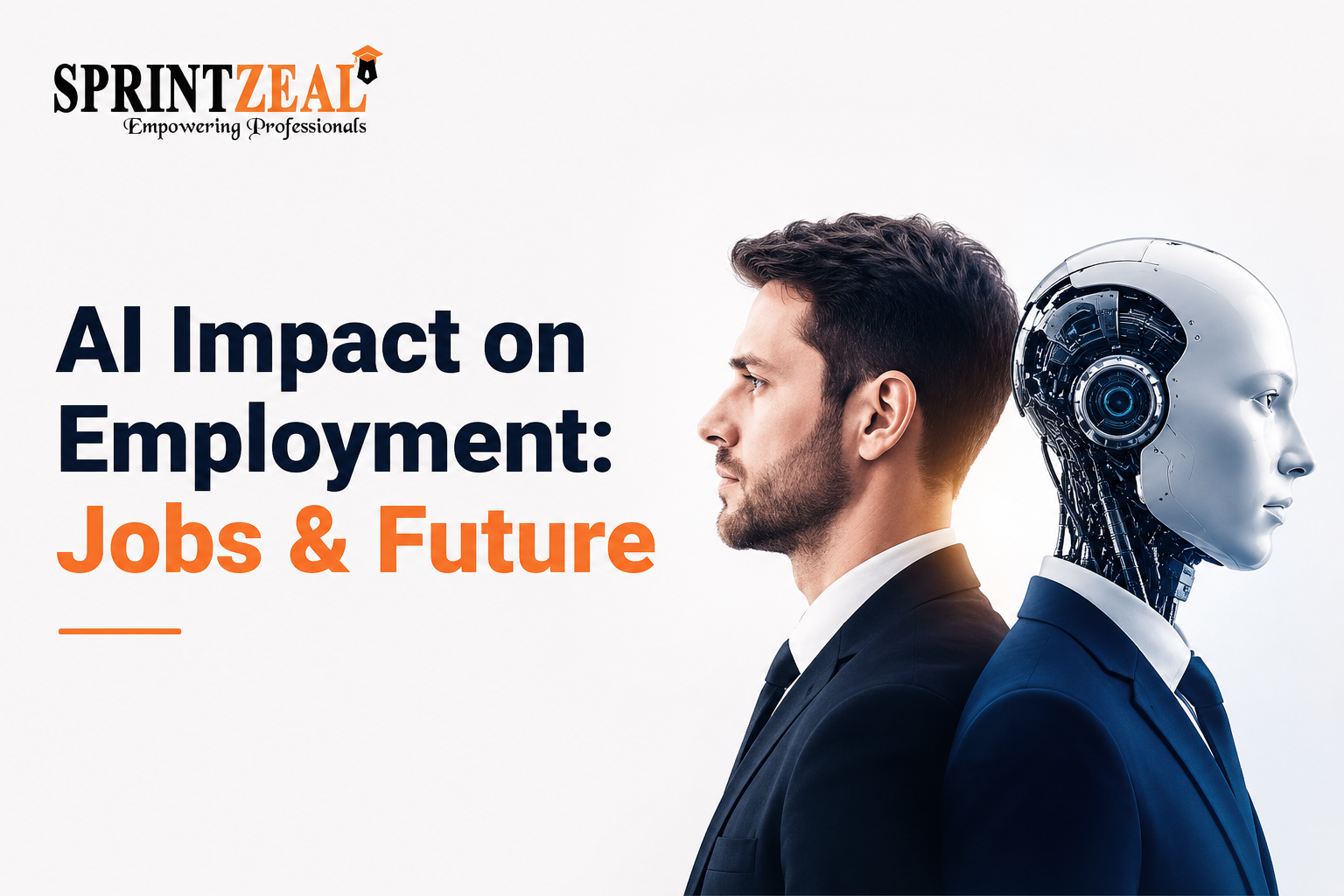
AI impact on employment: According to data from PwC’s AI Jobs Barometer, individuals with AI-related skills are paid in big figures. The AI impact on employment was reported as the year 2026 began. About 20,000 to 30,000 employees were laid off by Oracle as the organization spent hefty amounts on AI technology and infrastructure.
Jobs involving organizing data, like data entry, transcription, and basic data analysis, are at high risk as humans can’t match up to AI’s speed. Would you like to know more? Consider this blog, as it thoroughly covers the topic “AI Impact on Employment: Challenges and Opportunities Ahead”.
After the covid crisis, the AI impact on employment is changing the way organizations operate across industries. Companies are integrating AI to complete their tasks in a blink of an eye or days, which used to take months. Some of the tasks that are done in the same way every day(repetitive tasks), AI can perform them in a quick time. In fact, other tasks like creating content, analyzing data, and replying to customer queries, AI helps an organization in all ways.
The job market has been fluctuating because AI is slowly taking over humans on some tasks. However, there are also newly emerged job roles related to the field of data science, cybersecurity, and AI management.
Individuals who have skills related to AI and technology now have a better chance of getting into a job as AI usage is blooming. However, the employees have to be up to date with the skills. The growing usage of AI will change quite a few things, like the type of job role people are opting for, what will be expected from the employees of a company, and how the workplace will function in the near future.
According to data from Goldman Sachs, AI is projected to affect about 300 million full-time jobs. In addition, the AI impact on employment in the US and Europe will reach new heights. AI would handle about 25% of current work tasks in both nations. However, there is some good news as well: AI may also create new kinds of jobs, which will help businesses perform quickly while producing the desired outcome.
Well, according to the report, AI might boost the global production of goods and services by 7% in the future. The reports also say that the US and Europe will suffer an AI impact on almost two-thirds of jobs. Both countries could also see that approximately one-fourth of jobs are completely taken over by AI.Other research organizations, including the University of Pennsylvania and OpenAI, have discovered that the white-collar workers earning almost USD 80,000/year might be severely affected by automation.Furthermore, the McKinsey Global Institute study suggests that the growing usage of AI, robotics, and digital technology may force 14% of workers globally to change their careers by 2030.
Examining the AI impact on employment helps to identify why certain roles vulnerable to automation :
Receptionist
The usage of robots and AI has taken over the receptionists' work in many companies worldwide. Not only that, but in many companies, AI is also managing phone calls. Consider AimeReception for example, which is particularly designed to automate tasks done by receptionists in the lobby. Multimodal AI is employed to create photorealistic avatars that can see, hear, and communicate with the visitors in real-time.
Customer Support Agent
The majority of inquiries on phone calls or the communication done by the customer service support is done by AI. As most of the questions and issues raised by customers are often repetitive, it doesn’t require much human effort to emotionally understand them. Hence, AI does the job, an automated answer to the same kind of queries, and the job is done.
Accountants
To manage an organization’s daily financial transactions, many companies have shifted to AI to perform the work.
Many cloud services provide AI bookkeeping services online, with the help of which companies can manage accounts conveniently, safely, and effortlessly. Gathering data, storing it, and verifying the financial data correctly, an AI system is capable of doing all these things.
Moreover, employing an AI instead of recruiting a worker is typically affordable for performing the same amount of work.
Salesperson
Hiring a salesperson is no longer a requirement for companies. To advertise their products and eventually sell them, companies are mostly leaning towards websites and social media platforms. By making use of social media, the companies can target a particular group of people. Companies can customize ads and content according to the target audience.
Research And Analysis
The research and analysis field is the most impacted by AI. Within a fraction of seconds AI can conduct the research and organize the data as per the requirements of humans. Faster and without any help from human beings, AI can analyse volumes of data. In the near future, if AI technology advances, it is likely that humans may not be required at all to do research and analysis.
Warehouse Workers
Online shopping is touching new heights, so faster packaging and delivery of products remains a tedious process for companies. To carry out the process of packaging and delivery not only faster, but also in a smooth way, companies are increasingly utilising AI and automation.
Employees can easily locate packages and eventually have them delivered on time with the help of AI and automation. Who knows if, in the future, picking up parcels, loading them, and moving them will be automatically carried out by AI. As a result, companies will be able to ship more products within a shorter span of time.
Insurance
When the professionals conduct their formalities to check whether a person is suitable for the insurance or not, they analyse data and apply fixed rules for their calculations. Collecting data about a person to finally approve the insurance might take a few hours or even a few days.
Well, if the companies use AI and automation, within a few minutes or hours, the insurance can be approved. In the future, with advanced AI technologies, these complex tasks can be handled more accurately, lessening the need for professionals with this background.
Retail
Self-checkout systems are the new norm in shops, a typical example of automation in the retail sector. Large retail outlets and supermarket stores now frequently use these devices.
Self-checkout systems are mostly used by businesses to cut costs. Companies save money by using fewer workers at billing counters, even if there may be an increased risk of theft when customers scan goods themselves.
As mentioned in the above section some jobs are certain to face automation. On the other hand, AI impact on employment also highlights the fact that there are roles that very much require human expertise.
Teachers
A teacher is our mentor who heavily influences our career choices, moving ahead in life. We look up to teachers as our role models. Therefore, completely switching to digital teaching will be impossible in the future.
Lawyers And Judges
The job of a lawyer primarily involves planning, negotiating, and investigating different situations. In this profession, a lot of experience and knowledge are required to examine a large portion of tasks. In this particular field, reliance on the human brain is high, as before reaching the conclusion, a lot of aspects need to be carefully studied. AI is unlikely to replace that judgment, but an AI legal assistant can take over routine research and document review so lawyers can focus on strategy.
CEOs, Managers, And Directors
The job of a CEO is to clearly communicate the goals and core values of the company to the employees. The role of a leader is to manage teams in a company, and this role cannot be programmed into a machine. It is unlikely that in the future, a robot or an algorithm will fully control a company. Investors will have trust issues before even fully shifting to AI.
HR Managers
While going through everything, HR managers usually take days to shortlist a candidate, which AI can do in less time. Scanning a resume, AI can quickly give its justification for which one to hire and which one not to. However, HR managers have the ability to spot a candidate who, in the future, can disappoint with their work. Knowing the early signs and being alert is better than fixing when the damage is already done.
Psychologist & Psychiatrist
A person is more likely to open up with a human being about their worries than with an AI. Although nowadays AI is utilized to provide basic counselling support, a person will think twice before putting themselves out there. Moreover, there is also a risk of leaking confidential information.
Surgeons
With the help of technology, a medical professional can easily detect an illness and carry out the appropriate surgeries. However, technology cannot manage patients and make critical decisions during operations.
Computer System Analyst
No matter how automated we become, humans will always be needed to do maintenance tasks, update, enhance, fix, and set up complicated hardware and software systems that frequently need to be coordinated by multiple specialists in order to function efficiently.
A computer system analyst is in high demand these days, and their duties include reviewing the system's capabilities, managing workflow and scheduling enhancements, and increasing automation.
Artists & Writers
Writing requires a creative mind, and for that, placing the right words in the right way isn’t that easy. AI can also write while referencing a number of books, but it cannot generate the same feeling as humans do when writing with creativity and emotions.
Building new skills can help professionals to adapt to AI impact on employment.
The act of developing clear and detailed prompts for AI tools such as ChatGPT or Google Gemini, in order to get desired responses, is called prompt engineering.
Data Literacy & Analysis
The capacity to read, understand, and evaluate facts in order to gain valuable insights and make better judgments.
No-Code AI Building
Without having any knowledge of programming or coding, people can create AI tools and apps, which is called No-code AI. It makes it easy for people with little to no coding experience to create AI solutions by using straightforward visual interfaces, drag-and-drop functionality, and pre-made templates.
Critical Thinking & Ethics
If you know what is right and what is wrong, you can also make a fair choice. You can also think clearly and solve any problem by breaking it down into different steps.
Workflow Integration
The process of increasing productivity and efficiency by incorporating new tools, technologies, or systems into current work processes.
1. AI impact on employment? Will humans completely lose their jobs?
The answer is no, because of AI, humans are not going to completely lose their jobs. In fact, AI has been a great help to people in completing tasks with less effort and in less time.
Due to the expansion of AI, some of the repetitive tasks have been automated, but human thinking, understanding, and decision-making are important for some roles. AI isn’t taking away jobs; it’s the ability to perform work in a similar way to humans, which is actually making organizations trim the number of employees required to produce the same result.
2. AI impact on employment: which jobs will AI eat first?
Repetitive tasks, predictable tasks that involve the same steps on a daily basis, and jobs that involve working with large amounts of data, all these types of jobs are vulnerable to being taken over by AI. The job of accountants, customer support staff, data entry staff, telemarketers, transcriptionists, and low-skill content writers.
3. What new job opportunities are in the market due to AI’s heavy influence?
New job opportunities: AI/ML Engineers, Data Engineers, Prompt Engineers, AI Artists, AI Product Managers, Forward-Deployed AI Engineers, AI Literacy Trainers, AI Ethics Specialists, and AI Governance Leads / Compliance Managers.
4. How prepared should employees be to keep up with the impact of AI?
To keep up with the AI impact on employment, workers need to understand the fact that they have to work with AI. Therefore, they have to learn new skills to get the best results after collaborating with AI. Skills include prompt engineering, model literacy, and data literacy & output evaluation.
Moreover, cultivate skills (empathy, creativity, communication, critical thinking, leadership, teamwork, and emotional intelligence) that come naturally to a human being. At the same time, don’t forget to learn things yourself, explore free courses (coursera, and LinkedIn) and video streaming platform (YouTube), and actively participate in discussions with your manager on how AI can do the routine tasks, so that you can carry forward with other important tasks.
5. Why has AI had zero to no influence on some of the sectors?
AI has had zero to no influence on some of the sectors, including farming, construction, security services, and personal care, because clearly it requires human effort in terms of physically handling the work, making correct judgments based on the situation or past mistakes, and direct interaction with people to finish the work.
6. What "hourglass effect" does AI have on employment?
AI creates an hourglass effect by creating more job opportunities for high-skilled workers and, at the same time, reducing the number of beginner and mid-level roles. This means that while the high-skilled workers will have many options to apply for jobs, freshers and mid-level employees may struggle to progress in their careers.

Tue, 13 October 2026
Fri, 09 October 2026
Mon, 28 September 2026

Tue, 22 September 2026
Tue, 08 September 2026

Mon, 24 August 2026
Wed, 19 August 2026
Mon, 17 August 2026
Mon, 17 August 2026
Thu, 13 August 2026


© 2026 Sprintzeal Americas Inc. - All Rights Reserved.

 USA : +1315-322-7821
 UK : +44 7700 174870
 IND : +919036108287
 AUS : +61 480 005 455