Top 3 AI Humanizers for Students
Tue, 22 September 2026
Inspirational journeys
Follow the stories of academics and their research expeditions
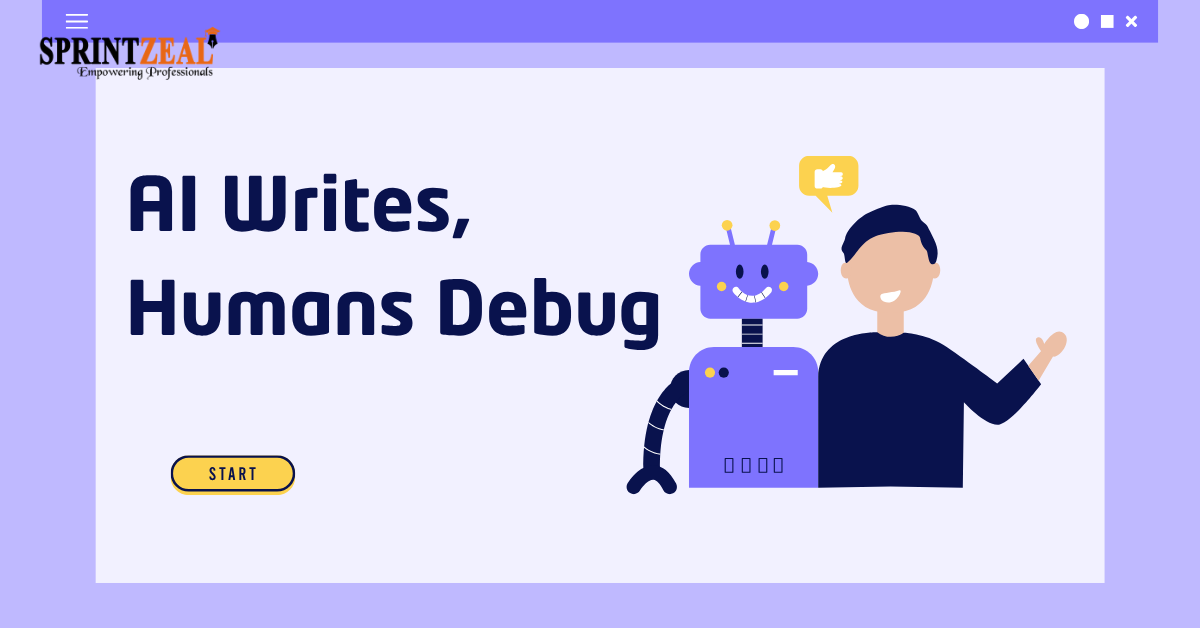
Artificial intelligence has transformed how developers approach software creation, with tools like Claude AI, GitHub Copilot and ChatGPT generating functional code within seconds.
These platforms accelerate routine coding tasks, allowing teams to ship features faster and iterate more rapidly. Yet a significant challenge remains hidden beneath the speed and convenience.
Recent studies have highlighted that the code produced by AI tools can contain errors that are not immediately apparent, with one study from Purdue University finding that ChatGPT's coding responses were incorrect 52% of the time.
The issue extends beyond simple syntax errors.
A report finds 43% of AI-generated code still needs manual debugging in production, with SRE and DevOps leaders citing major visibility gaps.
The bottleneck is not writing code anymore. The bottleneck is verifying that code behaves as expected under live, unpredictable conditions.
When AI generates code, it operates from pattern recognition trained on massive datasets scraped from repositories, documentation, and open-source projects. It has no lived experience running that code against production workloads or interpreting what happens when something fails in a live environment. Debugging is not just about fixing errors written into the source. It is about reading the feedback your system provides at runtime and making informed judgments based on incomplete, noisy, or contradictory information.
Context size limitations mean a real product with hundreds of thousands of lines of code, dozens of services, complex dependencies, and integrations simply does not fit into a single request, and LLM models start to hallucinate after reaching a threshold of 100-120k tokens.
Even when you provide substantial code snippets, the AI cannot fully reconstruct the network of relationships that make up your architecture, the module interactions, hidden dependencies, and system behavior over time.
Developers rely on tools like JS console log to trace execution flow and inspect variable states at runtime. These techniques expose what the browser or server is actually telling you at the moment a problem occurs.
The effectiveness of AI debugging follows a predictable exponential decay pattern, with most models losing 60-80% of their debugging capability within just 2-3 attempts.
That rapid decline happens because the AI cannot adapt its approach based on iterative feedback from the running system.
The main reason AI struggles with debugging is simple: AI does not explain its reasoning, does not show what assumptions it made, what decisions it took, or where it may have gone wrong.
When a developer examines a stack trace or steps through a debugger, they are synthesizing context from memory, prior incidents, environmental quirks, and the chain of method calls that led to the exception.
A stack trace shows an exact execution path, providing context to developers trying to solve bugs, and represents the last executed function call.
AI code assistants cannot reconstruct that interpretive judgment. They cannot tell you why a specific environment variable caused a null reference in production but not in staging. They cannot compare the current failure against the behavior you observed two weeks ago when a similar issue surfaced.
More than half of high-severity incident resolutions, 54%, still depend on tribal knowledge instead of diagnostic evidence from AI SRE tools or application performance monitoring systems.
Professional developers invest in structured training to sharpen problem-solving techniques and stay current with evolving methodologies. Debugging is as much about pattern recognition from experience as it is about technical tooling. When you encounter a cryptic error message, you draw on dozens of similar situations you have debugged before. You know which logs to check first, which services tend to fail under load, and which configuration settings are often misconfigured.
Employing logging frameworks to capture comprehensive contextual information leading to the error makes pinpointing the source of issues clearer, reducing the time spent deciphering traces.
Developers who consistently log variable states and application flow create a forensic trail that supports faster diagnosis. This practice transforms debugging from guesswork into evidence-based problem solving.
Research indicates that addressing context often resolves 30% of recurring issues, and engaging in peer reviews focusing specifically on critical stack reports often leads to new perspectives, with pairs in programming shown to identify an additional 20% of errors missed by individuals alone.
Collaborative debugging sessions surface insights that automated tools and AI assistants cannot generate because they lack the shared understanding that comes from working together on the same codebase over time.
Investing in testing frameworks and writing comprehensive unit tests provides a safety net that catches exceptions before they reach production.
Unit tests provide a safety net that ensures your application behaves as expected, reducing the likelihood of runtime exceptions, and writing unit tests can help you catch exceptions early in the development process.
Well-tested code produces clearer error messages and more predictable failure modes, which in turn makes debugging faster and more reliable.
Modern software runs across distributed systems with microservices, third-party APIs, cloud infrastructure, caching layers, message queues, and databases that all introduce variability.
A bug may only surface when specific conditions align: high traffic volume, a particular database query execution plan, or a race condition between asynchronous processes.
Software companies make excessive efforts to eliminate faults during in-house testing, yet some bugs reveal themselves after software release when end users discover and report them, and restrictions on available time, money, and people make manual detection and correction of programmatic bugs painstaking and impractical.
When crashes occur, a programmer often has to painstakingly try and work backwards from the crash to isolate and debug the root cause of the error, a process that is tedious, error-prone, and involves guesswork as typically the only information available is the stack trace and register values at the point where the program crashed.
Experienced developers know how to navigate incomplete information. They know when to reproduce the issue locally, when to inspect production logs, and when to instrument the code with additional telemetry to capture more detailed runtime data.
Statistical debugging techniques and automated fault localization tools offer valuable support, but they still require a developer to interpret findings and decide which corrective actions to take.
AI can suggest potential fixes, but it cannot evaluate whether a proposed change introduces new risks, breaks backward compatibility, or conflicts with business logic embedded elsewhere in the system.
Professional debugging also involves communication and documentation. When you resolve a production incident, you document the root cause, the steps taken to fix it, and the preventive measures implemented to avoid recurrence. This knowledge becomes part of your team's collective expertise. AI-generated fixes lack that institutional memory and do not contribute to the long-term resilience of your development process.
AI code generation tools deliver undeniable value by accelerating initial development and reducing repetitive coding tasks. However, debugging remains a distinctly human skill that requires runtime context awareness, interpretive judgment, and the ability to synthesize information from multiple sources.
Developers who master debugging techniques, invest in logging and testing practices, and continuously refine their problem-solving skills will remain indispensable as software systems grow more complex and distributed. The future belongs to professionals who can leverage AI for what it does well while applying human insight where machines cannot.

Tue, 22 September 2026
Tue, 08 September 2026

Mon, 24 August 2026
Wed, 19 August 2026
Mon, 17 August 2026
Mon, 17 August 2026

Thu, 13 August 2026

Mon, 24 August 2026
Tue, 28 July 2026

© 2026 Sprintzeal Americas Inc. - All Rights Reserved.

 USA : +1315-322-7821
 UK : +44 7700 174870
 IND : +919036108287
 AUS : +61 480 005 455