Top 3 AI Humanizers for Students
Tue, 22 September 2026

Inspirational journeys
Follow the stories of academics and their research expeditions
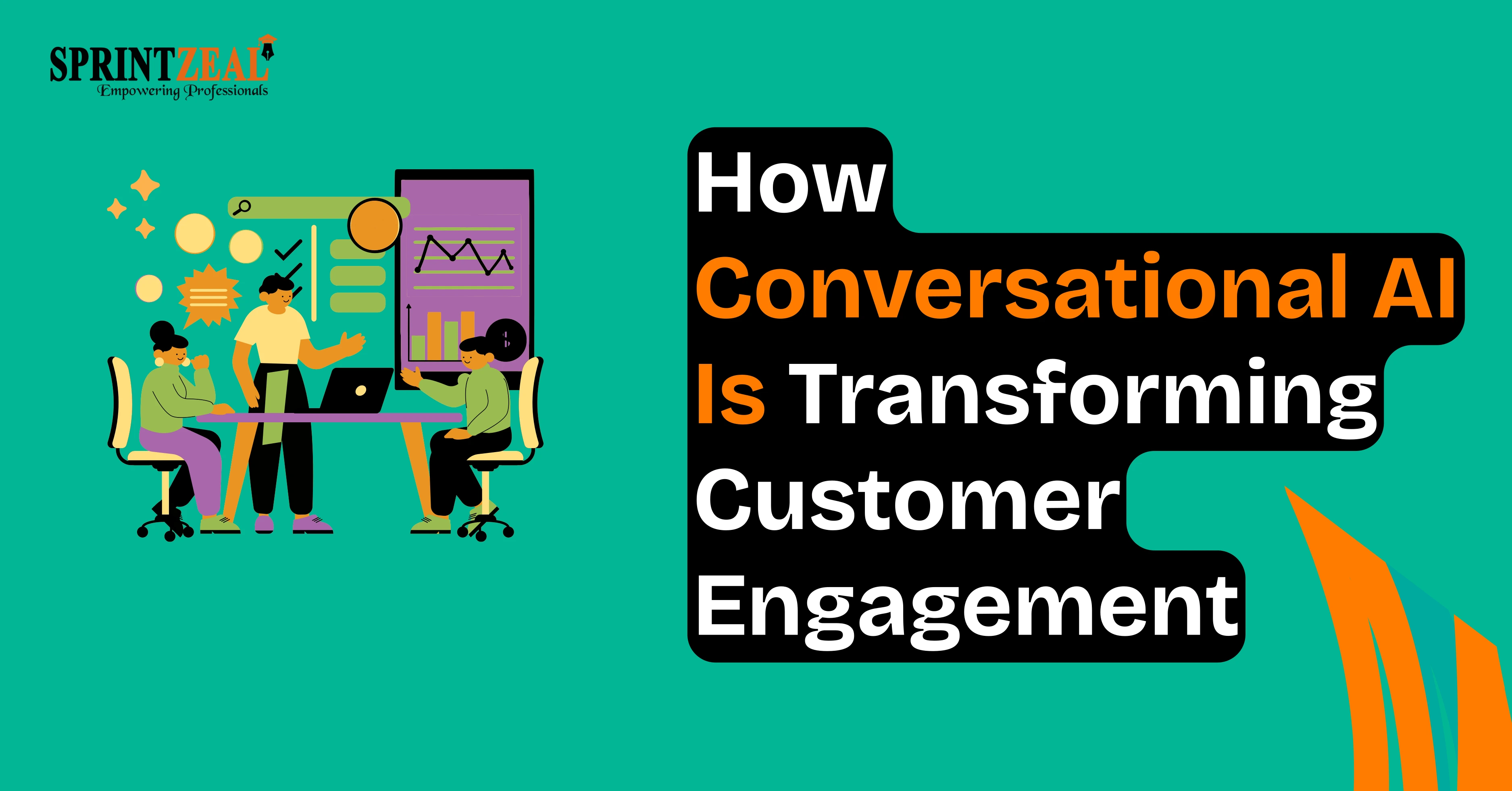
Conversational AI is rewriting the rules of customer engagement.
No longer is the awkward chatbot from 2015 that didn't understand "where's my order?" Modern systems talk to customers, fix problems and delight buyers at 2am on Sunday.
Here's the thing...
Companies that don't pay attention to this trend are already falling behind. Companies that embrace it are realizing massive benefits in:
This guide breaks down exactly what's happening and why it matters.
Conversational AI is a type of software that can conduct conversations with customers as if they are human.
Conversational AI uses natural language processing (NLP) along with machine learning to interpret customer inquiries.
Businesses often partner with an AI and ML Development Company to build intelligent conversational systems that integrate with enterprise applications
But it's much more than a chatbot.
It can retrieve information from a CRM system, handle an order, schedule an appointment and when necessary can hand off to a human representative.
The two main flavours are:
Now to the engine that makes it all work...
AI workflow automation is what elevates your chatbot from customer Q&As on gaming stones to legitimate business applications. Connecting your AI chatbot to your CRM software, inventory database, ticketing system and every other business app in your toolbox enables a true conversation to happen. That customer that asks, "where's my order?" can instantly be checked, responded to, and have that record updated without human intervention.
This is where a skilled Top Salesforce Agentforce consultant shines. They will architect AI workflow automation that takes care of lifting and shifting through sales, service, and marketing. They'll map out how conversations flow to AI, to humans, and how all data connects between every system.
Done right, this means:
Disclaimer: AI workflow automation is only as good as the systems integrated around it. Messy data and poorly designed processes are unacceptable.
Customer expectations have changed.
Customers demand immediacy. Customers demand personalization. And customers want those things through every channel - web, mobile, social, voice - simultaneously. Legacy support structures simply can't scale to meet that level of demand.
Which is why around 80% of companies have adopted or are planning to adopt AI-driven chatbots for customer service. Adapt or die.
Here's what customers are demanding today:
Conversational AI provides all four. Without exhausting your support team or exploding your budget.
Statistics don't lie. Here's what Conversational AI is actually doing for businesses today.
Customer support is expensive. AI changes the math.
Expect a decline of $80 billion in contact center labor costs due to conversational AI by 2026 according to Gartner. Yeah you read that right. It's already underway across banking, telecom, retail and more.
Surprising fact:
Customers would rather speak with a bot that's been trained well than be placed on hold. They receive their answers quickly, and don't have to repeat themselves to multiple agents.
It's no surprise, then, that CSAT scores increase (rather than decrease) with a successful conversational AI implementation.
Customers don't just need your help 9-5. Conversational AI is available 24/7 without any breaks, sick days or overtime. This is also transforming traditional support operations through an AI call center approach, where voice automation, intelligent routing, and human agent handoffs work together to provide faster and more efficient customer service.
This is especially powerful for:
Sales teams waste tons of time on unqualified leads. Conversational AI fixes that.
Predictor can qualify leads for you. It knows what to ask, scores the lead as it goes, and only sends the qualified ones on to sales. The result? Improved closes and a happier sales team.
Personalisation used to be expensive and hard to scale. Not anymore.
Chatbots can retrieve customer information from your CRM system and personalize each and every interaction by:
Customers experience your service as though it were tailor-made for them and you don't need to hire an army of staff members to do it.
Launching into Conversational AI does not require a budget in the millions nor a roadmap stretching 12 months. Here's how you can get started today.
Step 1: Choose one scenario.
Start small. Perhaps it's answering FAQs. Perhaps it's managing order tracking. Whatever you choose, narrow your scope.
Step 2: Select the best platform.
Salesforce Agentforce, Microsoft Copilot, Google Dialogflow - there are so many options. Select one that will integrate well with your current technology stack.
Step 3: Map conversation flows.
Draw up what a successful conversation looks like. Where does the bot help? Where does it handoff to human?
Step 4: Test and refine.
Pilot small. Gather feedback. Iterate flows. Rinse. Repeat.
Step 5: Scale.
After you have one use case working, implement another. And another. Soon you'll have a robust conversational AI program.
What's the number one business error? Automating too much, too fast. You'll drive customers and employees crazy.
Take it slow. Get the foundations right. Then scale.
Conversational AI is not a passing fad. It's the new standard for customer experience.
Customers demand it. Your competitors are doing it. Those who act fast will dominate the next decade.
To quickly recap:
The tools are prepared. The data is refined. Now all that's left is how quickly you can deploy it.
Too busy or lack the internal resources to do it yourself? Don't worry, you're not alone. Many organizations hire an outside consultant to help architect the plan, build out the workflows and ensure integrations are done correctly. This can often be the quickest path to see tangible gains and minimize team fatigue.

Tue, 22 September 2026
Tue, 08 September 2026

Mon, 24 August 2026

Wed, 19 August 2026
Mon, 17 August 2026
Mon, 17 August 2026
Thu, 13 August 2026

Mon, 24 August 2026
Tue, 28 July 2026

© 2026 Sprintzeal Americas Inc. - All Rights Reserved.

 USA : +1315-322-7821
 UK : +44 7700 174870
 IND : +919036108287
 AUS : +61 480 005 455