CompTIA Network+ Certification: Complete Career Guide, Skills, Exam Path & Benefits
Wed, 07 October 2026

Inspirational journeys
Follow the stories of academics and their research expeditions

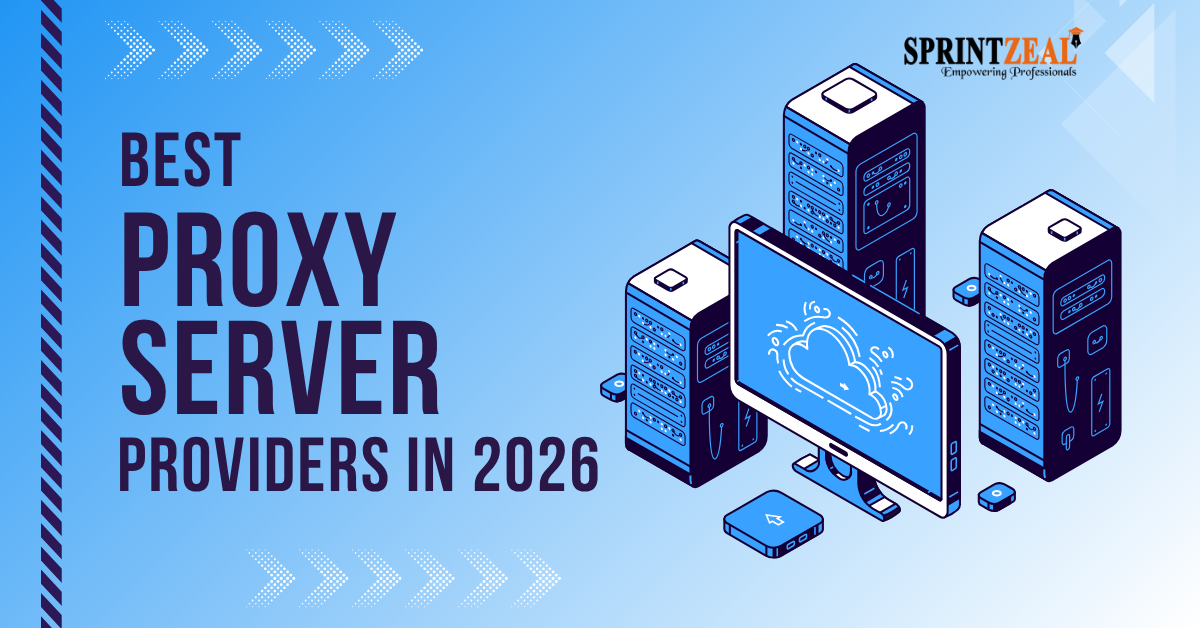
Proxy selection now affects workflow stability as much as access. In 2026, scraping, monitoring, and automation run as continuous processes, so rotation logic, sticky sessions, and bandwidth terms directly shape completion rate, retry volume, and monthly cost.
As reported by Technavio, the AI-driven web scraping market is expected to grow by USD 3.16 billion from 2024 to 2029 at a 39.4GR, which reflects how fast high-volume data workflows are scaling. In this environment, rotating proxies with unlimited or unmetered bandwidth stand out because retries, rechecks, and heavier pages can push traffic far beyond early test estimates. This guide compares eight providers through the factors that affect production results most: proxy type coverage, rotation and sticky session control, bandwidth model clarity, and operational fit for real workloads.
A rotating proxy service routes requests through a pool of IPs and changes the visible exit IP automatically. This helps businesses spread traffic across many identities and reduce repeated requests from one address. Instead of one fixed endpoint, rotating proxies can assign a new IP per request, by timer, or after a session window ends.
Most providers support two modes. Rotating mode changes IPs often, while sticky mode keeps one IP for a set time, so multi-step tasks can finish on the same identity. Unlimited bandwidth usually means no per-GB billing, but some providers use unmetered wording or fair usage rules, so plan terms still need a careful check.
Unlimited bandwidth matters because traffic volume in real workflows rarely matches the clean estimate from the first crawl test. Retries, failed pages, JavaScript-heavy targets, and rechecks increase request volume quickly.
Proxy selection now affects workflow stability as much as access. In 2026, scraping, monitoring, and automation run as continuous processes, so rotation logic, sticky sessions, and bandwidth terms directly shape completion rate, retry volume, and monthly cost.
As reported by Technavio, the AI-driven web scraping market is expected to grow by USD 3.16 billion from 2024 to 2029 at a 39.4GR, which reflects how fast high-volume data workflows are scaling. In this environment, rotating proxies with unlimited or unmetered bandwidth stand out because retries, rechecks, and heavier pages can push traffic far beyond early test estimates. This guide compares eight providers through the factors that affect production results most: proxy type coverage, rotation and sticky session control, bandwidth model clarity, and operational fit for real workloads.
A rotating proxy service routes requests through a pool of IPs and changes the visible exit IP automatically. This helps businesses spread traffic across many identities and reduce repeated requests from one address. Instead of one fixed endpoint, rotating proxies can assign a new IP per request, by timer, or after a session window ends.
Most providers support two modes. Rotating mode changes IPs often, while sticky mode keeps one IP for a set time, so multi-step tasks can finish on the same identity. Unlimited bandwidth usually means no per-GB billing, but some providers use unmetered wording or fair usage rules, so plan terms still need a careful check.
Unlimited bandwidth matters because traffic volume in real workflows rarely matches the clean estimate from the first crawl test. Retries, failed pages, JavaScript-heavy targets, and rechecks increase request volume quickly.
Proxy type matters as much as rotation. Many mistakes happen when businesses compare unlimited bandwidth claims without checking whether the plan is for datacenter, ISP, or residential traffic.
Rotating datacenter proxies usually offer the clearest unlimited bandwidth options. They are fast and cost-efficient for high-volume scraping and monitoring. Stricter targets can challenge them more often because their traffic profile is easier to detect.
Rotating ISP proxies often use pay-per-IP billing and may include unlimited bandwidth with fair usage conditions. They work well for longer sessions and stateful workflows that need stable identity and speed. This type is a practical middle option between datacenter and residential traffic.
Rotating residential proxies are often billed by traffic, but some plans also use unmetered or unlimited models. They fit scraping and automation workloads that need stronger trust signals than datacenter IPs. This type is often used when targets apply stricter filtering and repeated checks.
Rotating mobile proxies fit app-heavy or mobile-specific targets. They usually cost more and are not required for most standard scraping workloads. Businesses should review mobile pricing, session rules, and bandwidth terms separately before choosing this type.
A short checklist prevents bad comparisons because providers use different labels for unlimited traffic and different defaults for rotation and sessions.
The ranking below focuses on practical deployment fit for 2026 workflows. It prioritizes bandwidth policy clarity, rotating behavior, session controls, and how easy it is to run stable jobs at scale.
Providers rank higher when they clearly state unlimited or unmetered terms and explain any fair usage rules. Plans with vague usage language or hidden conditions are harder to evaluate before testing. Clear bandwidth terms make cost planning and provider comparison much more reliable.
Rotation flexibility matters because stateless crawls and multi-step workflows need different behavior. Providers that expose both rotation and sticky settings support more use cases with fewer workarounds. Clear session controls also make it easier to tune completion rate and reduce failed runs.
Broader product coverage helps when a business runs mixed workloads across different targets. One provider may need to support residential for stricter targets and datacenter or ISP for throughput-heavy tasks. A wider product mix also reduces the need to split operations across multiple vendors.
Set-up speed and day-to-day control matter in production environments. Clear pricing, visible limits, and simple targeting options reduce rollout time and lower scaling errors. A provider with better operational fit also makes testing and troubleshooting easier.
Businesses should compare rotating proxies by real workload fit, not only by IP pool size. In 2026, bandwidth policy, rotation logic, and session behavior affect completion rate, retry volume, and cost more than headline proxy counts.
The table below compares the eight providers by proxy types, bandwidth model fit, session control, and the workloads they support best. It gives a quick view before the detailed provider breakdowns.
|
Provider |
Proxy Type |
Bandwidth Model Fit |
Session Control Fit |
Best for Workload Shape |
| NodeMaven |
Rotating Residential, Rotating Mobile, Static ISP Proxies |
Traffic-based for rotating residential & mobile, IP-based pricing for static residential |
Flexible rotation and long sticky sessions (up to 7 days) |
Automation, multi-account workflows, and scalable data collection |
|
Live Proxies |
Rotating Residential, Rotating Mobile |
Unmetered option |
Strong for rotating and sticky sessions |
High-volume scraping and automation |
|
CyberYozh |
Rotating Residential, Mobile LTE/5G, Residential ISP (Static), Datacenter |
Mixed model: unlimited on mobile & datacenter, usage-based for rotating residential, IP-based for static ISP |
Flexible rotation with sticky sessions and controlled IP behavior |
Automation, scraping, multi-account workflows, and scalable operations |
|
SOAX |
Residential, Mobile, US Datacenter |
Mostly traffic-based |
Strong configurable rotation |
Geo-sensitive and mixed workloads |
|
Webshare |
Static Residential Proxy, Dedicated Static Residential, Rotating Residential Proxy, Private Static Residential |
Tier-based, with unlimited on selected plans |
Good rotation interval control |
Budget scaling and rotating jobs |
|
Rayobyte |
Rotating Data Center Proxies, Rotating ISP Proxies, Static Data Center Proxies, Mobile Proxies, Static ISP Proxies, Residential Proxies |
Strong on datacenter unlimited positioning |
Good for high-volume rotation |
Throughput-heavy scraping |
|
ProxyEmpire |
Rotating Residential Proxies, Unlimited Residential Proxies, Static Residential Proxies, Rotating Mobile Proxies, Dedicated Mobile Proxies, Rotating Datacenter Proxies |
Unlimited residential option available |
Good for rotating workflows |
Mixed targets with stronger trust needs |
|
Oxylabs |
Residential, ISP, Mobile, Datacenter, Dedicated Datacenter Proxies, Dedicated ISP Proxies |
Unlimited on ISP with fair usage |
Strong for long sessions |
Stateful workflows and enterprise ops |
|
IPRoyal |
Residential, Mobile, ISP, Datacenter |
Traffic-based, with non-expiring traffic on residential, unlimited on some static/mobile lines |
Good sticky session support |
Variable workloads with flexible usage timing |
|
Decodo (formerly Smartproxy) |
Residential, ISP, Mobile, Datacenter |
Dedicated unlimited product available, plus standard plans |
Strong for high concurrency |
Scale-heavy mixed workloads |
This list prioritizes providers that support rotating proxy workflows and offer unlimited or unmetered bandwidth on at least one relevant proxy line, or provide strong, high-volume rotating options that businesses commonly compare in the same shortlist.
NodeMaven is a strong fit for this list due to its focus on IP quality, flexible session control, and support for both rotating and static proxy workflows. The platform is designed for teams that need stable connections, clean IPs, and predictable behavior across automation and multi-account environments without relying solely on large IP pool size.
Live Proxies is a strong fit for this list because it supports a rotating proxy service workflow with clear session behavior and unmetered options on selected plans. The platform works well for businesses that need a residential rotating proxy with unlimited bandwidth for high-volume scraping and automation without forcing every workload into per-GB billing.
CyberYozh fits well in rotating proxy comparisons because it focuses on workflow stability, not just IP rotation. The platform combines rotating residential, mobile, ISP, and datacenter proxies with session control, allowing you to switch between rotation and sticky sessions depending on the task. With over 50M IPs across 100+ countries, managed pools, and built-in fraud checks, it reduces common issues like IP reuse, failed retries, and unstable connections. It also supports full API integration with automation tools while keeping the dashboard simple enough for daily use, making it practical for both technical and non-technical users.
SOAX is a strong rotating proxy provider for businesses that prioritize geo-targeting and rotation control, but its public pricing is mainly traffic-based. Its product lineup and controls make it a common comparison point when businesses evaluate rotating quality against unlimited-focused providers.
Webshare is a practical option for this list because it combines rotating proxy endpoints with plans that can scale to unlimited bandwidth on selected tiers. Its setup is easy to evaluate because the platform openly shows rotation intervals and control options.
Rayobyte is a strong fit for throughput-heavy workloads, especially when a business can rely on rotating datacenter or rotating ISP pools. Its broad catalog makes it useful for mixed deployments that need speed and scale across different proxy types.
ProxyEmpire fits this list well because it has a dedicated unlimited residential bandwidth option and also covers rotating residential, mobile, and datacenter products. This gives businesses a direct, unlimited residential path plus broader rotating coverage in one provider.
Oxylabs is a premium option, especially for businesses that need stronger enterprise support and long session behavior on ISP products. Its ISP plans are a strong fit for stateful workloads because they combine pay-per-IP logic with unlimited bandwidth under fair usage.
IPRoyal is a practical option for budget-sensitive workloads, especially when a business wants flexible traffic usage instead of strict monthly caps. Its residential model is useful for uneven workloads because purchased traffic does not expire.
Decodo belongs near the top of this category because it combines a dedicated unlimited proxies product with broad proxy coverage across residential, ISP, mobile, and datacenter lines. This setup fits businesses that need both unmetered options and flexible rotating proxy support in one platform.
Businesses often make four core mistakes: they treat unlimited and fair usage as the same, ignore session limits, compare providers only by IP pool size, and skip pilot validation. These mistakes usually lead to unstable sessions, weaker completion rates, and less predictable costs in production.
Unlimited and unmetered labels do not always mean the same thing, so businesses need to read the billing terms carefully before comparing providers. Some plans still apply fair usage rules, traffic shaping, or product-specific conditions even when the headline looks unlimited. Clear plan wording matters because billing logic directly affects cost predictability at scale.
Rotation quality is not only about how often IPs change during a job. Sticky windows, session persistence, and rotation triggers decide whether multi-step tasks finish cleanly or fail in the middle. This becomes critical in login flows, account actions, and long scraping sequences.
IP pool size alone does not show billing logic, session controls, or real throughput fit for a workload. A provider with a smaller network but clearer rotation rules and unmetered pricing can perform better for a specific task shape. Provider fit depends more on routing behavior and session control than headline IP counts.
A short pilot with real concurrency and retries shows more than a feature list. It quickly reveals target-side blocking, geo behavior, session stability, and completion rate under actual load. This is the fastest way to confirm whether the chosen proxy setup fits production use.
Businesses choose rotating proxies in 2026 by starting with workload shape, then matching proxy type, billing model, and session behavior to that workload. The most reliable choice is a provider with clear bandwidth terms and clear session rules before deployment.
Rotating proxies with unlimited or unmetered bandwidth can improve cost control and workflow stability, but provider fit depends on more than traffic labels. In 2026, the strongest options are the ones that combine clear bandwidth terms, usable rotation, sticky session controls, and a proxy mix that matches the real workload shape.
This comparison shows a practical pattern. Businesses get better results when they define the workload first, then compare proxy type, billing model, and session behavior together. Clear plan wording, stable session logic, and a short pilot under real concurrency remain the most reliable way to choose the right provider for production use.

Wed, 07 October 2026
Tue, 01 September 2026

Fri, 28 August 2026
Wed, 19 August 2026

Fri, 24 July 2026
Tue, 14 April 2026

Thu, 30 January 2025

Tue, 04 February 2025


© 2026 Sprintzeal Americas Inc. - All Rights Reserved.


 USA : +1315-322-7821
 UK : +44 7700 174870
 IND : +919036108287
 AUS : +61 480 005 455