Anthropic's LLM vs ChatGPT: Key Differences and Uses
Fri, 23 October 2026
Inspirational journeys
Follow the stories of academics and their research expeditions
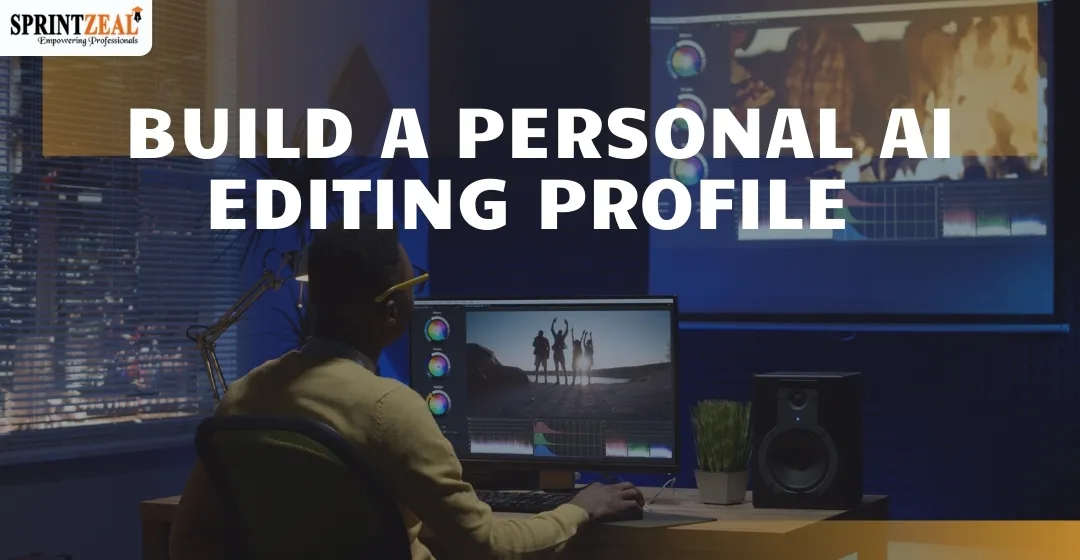
Imagine a photo editor that knows precisely what you want from your pictures--someone who knows your unique method of exposure as well as your preferences for skin tones and also your distinctive creative style.
This custom AI editing styles assistant is available for you. . It's just waiting for you to build it at the same time as you need to get your cup of coffee in the morning. Welcome to the world of custom AI editing profiles.
Creat personal AI editing profiles because its benefits extend way beyond mere time savings. If you create a customized profile, you can achieve:
Consistency across all projects:
Consistency across projects Instagram grid is consistent throughout the client galleries are unifying, and your branding is recognized. The consistency helps build confidence with customers who will expect a particular aesthetic and quality of your work.
Editing in bulk that looks as you do:
The profile is able to apply your personal style effectively, not in a formulaic manner. In contrast to pre-sets that perform flawlessly on one image but not on the other, an AI profile can recognize contextual context and can adjust accordingly.
Unpredictability from technical issues:
It's free from having to make technical decisions. AI handles exposure, color correction and tonal adjustments, allowing you to focus on storytelling. This freedom of thought is the least appreciated benefit. When you're not distracted by technical complexities, your mind can wander freely.
The creation of a unique AI profile is a bit of pre-planning. In the Imagen documentation the following are required:
at least 2500 of your most edited photos (these represent your images for training)
Original files that were not edited with your edited final versions
A platform that's supported (Lightroom,Imagen, Photoshop, or Bridge) that allows editing metadata to be in place
In the case of RAW photos, be sure XMP images are included; in the case of DNG and JPEG metadata should be included
Quality of teaching photos is far more important than their quantities. Select projects that reflect your finest work under various lighting conditions, subject matter and situations. The result of a well-curated training set of 2,000 photos will be superior to an uncurated collection of 5,000 pictures every time.
The quality of edited images isn't all made equal in terms of the training of AI. This is what you should look for:
Quality of the images:
Select photos that have flawless editing, including correct lighting, exact colour, thoughtful tonal adjustments. AI is able to learn from your most successful work. Don't put in any of your own experiments in images or ones that you've messed up.
Style consistency:
Your learning photos should represent your style of editing today and not images from the past when your style was differing. If your style has changed then only add the most recent images that reflect what you're currently doing.
Diverse scenarios to consider:
The bright sun Golden hour, cloudy daytime, indoor natural light, mixed artificial lighting, and challenging backlit situations. The more variety you have, the better your AI can handle unpredictable conditions and develop custom AI editing styles.
Begin by choosing 3-5 fully edited projects that show your unique design. Include variety:
Sunny outdoor scenes (beaches or fields under direct sun)
Low-light indoor shots (reception halls, candlelit ceremonies, evening events)
Portraits featuring a range of skin tone (close-ups, environmental portraits, candid and posed)
Details shots of landscapes (venue design and floral arrangements setting)
Lighting situations that are difficult or backlit (sunset portraits, light from windows striking shadows)
The diversity of the environment allows the AI how to deal with different situations. This ensures your techniques to create personal AI editing profiles work in every situation that you could face.
Imagine your training program as a record of your edits. In each case, you should provide numerous examples of how you manage the various variations in that particular segment. For instance, for backlit portraits, include:
Solid backlight and fill flash
Natural backlight that has reflectors
Creative Silhouettes
Golden hour backlight and lens flare
A variety of platforms provide individual AI profiles, however to photographers Imagen AI is the market leader. This platform was specifically created to be able to learn from the results of your Adobe Lightroom adjustments, including:
The white balance (temperature and color)
Tone adjustment (exposure and contrast) Highlights, shadows and blacks)
Setting the Presence (clarity and vibrance as well as texture and dehaze)
Full HSL adjustment of color (hue intensity, saturation, and luminance)
Even though Imagen may be the most well-known photographer's choice, there are alternative options are available:
Aftershoot:
Provides editing and culling AI offering profile creation features that are similar to Imagen. Many photographers love the interface and pricing arrangement.
Luminar Neo:
Includes AI-powered editing tools. However, it has a distinct approach, more focused on the one-click improvement rather than figuring out your own style.
Adobe Lightroom AI:
Adobe continues to add AI functions, but currently, the creation of an entirely personal profile for editing is a requirement for third-party software.
The 10-minute guarantee can be realized. Training actually takes longer (up up to 24 hours) however, your experience is essentially hands-on.
Sign in to your preferred platform and then go into your profile creation section. profile creation section
Send your training pair (unedited versions of the originals and the final edited versions)
Your profile's name (e.g., "My Signature Wedding Style" or "Documentary Portrait Look")
Begin the process of training and then walk out
The algorithmic platform analyzes millions of data points, looking at your before and post photos to pinpoint exactly what modifications you've made and how.
In the meantime, we'll tell you what's happening on the cloud:
Feature Extraction:
A feature extraction AI recognizes the most important elements of each photo--faces, skies shadows, highlights texture, midtones--and shows the impact of your editing on every element.
Pattern recognition:
In hundreds of photos The AI detects patterns that are consistent in the editing process. Do you always brighten shadows? Do you always reduce highlights? This pattern becomes distinctive.
Contextual learning A:
The AI recognizes that the edits you make depend on the content of your images. It is possible to handle skin tone differently when you are in the golden hour in contrast to shade. The AI can detect these subtleties.
Model construction:
This information is compiled into a mathematical model, your personal AI profile that is ready for you to add your personal style on any image you want to apply it to.
When you are notified that your training has been completed (typically in 24 hours) you can now be tested.
Upload a fresh gallery of photos that are not edited (not that you have taken from your existing training collection)
Make sure you apply your own AI profile across all the batch
Examine the data carefully
Verify the accuracy. Do the colors you choose match with the style you prefer? Do the skin tones match? Do you feel the light is right? Your goal is to reach the 90% perfect starting point which will require only small changes.
Develop the systematic review process:
Initial pass (quick scan):
Then, scroll through the gallery at regular speed. Do you notice anything that is evidently incorrect? If you feel something is out of place, mark it.
The second pass (detailed examination):
Zoom into photos that represent the subject. Examine skin tones highlighting Shadow detail, overall harmony of color.
Third time (comparison):
The third pass is to place AI-edited photos next to edited manually-created images that are similar to those from situations. Are they able to feel that they fit together?
Fourth step (client viewpoint):
The gallery should be viewed like a person would, full display, connection to emotions narrative flow. Is the editing in line with the story?
The profile you created may be a bit off--that's normal. If your results don't feel right it's possible to:
Include more examples of training: The variety of scenarios helps AI AI to understand your style more fully.
Set the profile's intensity levels: The profile can be fine-tuned to determine how much the profile applies edits.
Create profiles that have different Custom AI editing styles for various types of work.
A few photographers keep several different custom AI editing options for a variety of reasons.
Imagine creating profiles as a continuous process, rather as a single event:
Profile 1.0:
This is your first try basing your profile on the initial images of training. This is good, but not flawless.
Profile 1.1:
Following the test and finding weak points, you can add targeted training videos that target particular issues.
Profile 2.0:
With more learning information and refinement Your profile is considerably more accurate.
Profile 3.0:
When your personal style develops, you modify your profile in line with the latest style.
The method to create personal AI editing profiles doesn't mean altering your creative vision, but rather increasing the power of it.
When you delegate technical decision-making to a trained AI you can free up your day and time to do the work that really is important: connecting with your clients, taking beautiful photos, as well as pushing the boundaries of your creativity.
Your 10 minutes spent now in establishing your profile could result in hundreds of hours saved over your professional life. In addition, the hours are packed with creative fulfillment rather than technical monotony.
Imagine a photo editor that knows precisely what you want from your pictures--someone who knows your unique method of exposure as well as your preferences for skin tones and also your distinctive creative style.
This custom AI editing styles assistant is available for you. . It's just waiting for you to build it at the same time as you need to get your cup of coffee in the morning. Welcome to the world of custom AI editing profiles.
Creat personal AI editing profiles because its benefits extend way beyond mere time savings. If you create a customized profile, you can achieve:
The creation of a unique AI profile is a bit of pre-planning. In the Imagen documentation the following are required:
Quality of teaching photos is far more important than their quantities. Select projects that reflect your finest work under various lighting conditions, subject matter and situations. The result of a well-curated training set of 2,000 photos will be superior to an uncurated collection of 5,000 pictures every time.
The quality of edited images isn't all made equal in terms of the training of AI. This is what you should look for:
Begin by choosing 3-5 fully edited projects that show your unique design. Include variety:
The diversity of the environment allows the AI how to deal with different situations. This ensures your techniques to create personal AI editing profiles work in every situation that you could face.
Imagine your training program as a record of your edits. In each case, you should provide numerous examples of how you manage the various variations in that particular segment. For instance, for backlit portraits, include:
A variety of platforms provide individual AI profiles, however to photographers Imagen AI is the market leader. This platform was specifically created to be able to learn from the results of your Adobe Lightroom adjustments, including:
Even though Imagen may be the most well-known photographer's choice, there are alternative options are available:
Adobe Lightroom AI:
Adobe continues to add AI functions, but currently, the creation of an entirely personal profile for editing is a requirement for third-party software.
The 10-minute guarantee can be realized. Training actually takes longer (up up to 24 hours) however, your experience is essentially hands-on.
The algorithmic platform analyzes millions of data points, looking at your before and post photos to pinpoint exactly what modifications you've made and how.
In the meantime, we'll tell you what's happening on the cloud:
Model construction:
This information is compiled into a mathematical model, your personal AI profile that is ready for you to add your personal style on any image you want to apply it to.
When you are notified that your training has been completed (typically in 24 hours) you can now be tested.
Verify the accuracy. Do the colors you choose match with the style you prefer? Do the skin tones match? Do you feel the light is right? Your goal is to reach the 90% perfect starting point which will require only small changes.
Develop the systematic review process:
Fourth step (client viewpoint):
The gallery should be viewed like a person would, full display, connection to emotions narrative flow. Is the editing in line with the story?
The profile you created may be a bit off--that's normal. If your results don't feel right it's possible to:
A few photographers keep several different custom AI editing options for a variety of reasons.
Imagine creating profiles as a continuous process, rather as a single event:
The method to create personal AI editing profiles doesn't mean altering your creative vision, but rather increasing the power of it.
When you delegate technical decision-making to a trained AI you can free up your day and time to do the work that really is important: connecting with your clients, taking beautiful photos, as well as pushing the boundaries of your creativity.
Your 10 minutes spent now in establishing your profile could result in hundreds of hours saved over your professional life. In addition, the hours are packed with creative fulfillment rather than technical monotony.

Fri, 23 October 2026
Tue, 13 October 2026
Fri, 09 October 2026

Mon, 28 September 2026
Tue, 22 September 2026

Tue, 08 September 2026

Mon, 24 August 2026

Wed, 19 August 2026

Mon, 17 August 2026
Mon, 17 August 2026

© 2026 Sprintzeal Americas Inc. - All Rights Reserved.

 USA : +1315-322-7821
 UK : +44 7700 174870
 IND : +919036108287
 AUS : +61 480 005 455