Best AI Photo Enhancer Tools for Marketing Teams in 2026
Tue, 08 September 2026

Inspirational journeys
Follow the stories of academics and their research expeditions
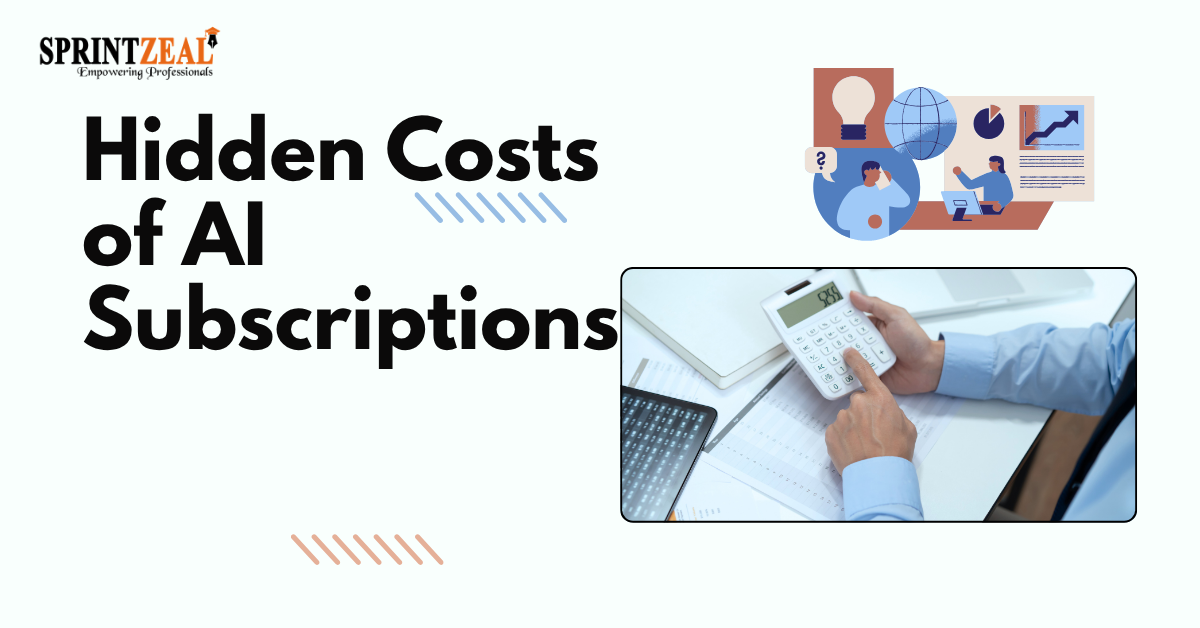
Your company is probably spending more on AI than you think. And getting less from it than you should.
Most mid-market companies did not build an AI stack intentionally. They accumulated one. A ChatGPT subscription here, a Jasper seat there, a few Notion AI licenses someone expensed last quarter. The result is a fragmented mess that costs real money, creates real risk, and delivers far less value than a consolidated approach would.
This article breaks down exactly what scattered AI subscriptions are costing you, and what to do about it.
AI tool sprawl is not the result of bad decisions. It is the result of decentralized, organic adoption.
Here is the typical progression:
Within 18 months, mid-market companies typically have 6 to 12 active AI tools across the organization. Most of them are siloed, some overlap in functionality, and a few are creating compliance exposure nobody has noticed yet.
The visible cost is the sum of your subscription invoices. That number is almost always higher than anyone realizes.
But the hidden costs are where the real damage lives.
When two departments are paying for tools that do the same thing, you are not getting twice the value. You are paying twice for fragmented outputs and zero consistency.
This is the cost most companies discover too late. When employees use personal or free-tier AI accounts for work tasks, company data flows into systems with no enterprise data protection. That includes client names, internal processes, and financial information.
Common examples:
None of these feel like compliance violations in the moment. All of them can become serious problems.
When AI usage is scattered across individual accounts, every conversation starts from zero. There is no shared context, no company-specific knowledge built up over time, and no way to capture what is working across the team.
If you cannot see how AI is being used across your organization, you cannot improve it. Scattered subscriptions mean no dashboards, no usage data, and no way to know whether the investment is paying off.
|
Cost Category |
Scattered Stack |
Consolidated Stack |
|
Monthly subscriptions |
$800–$3,000+ (fragmented) |
$400–$1,200 (rationalized) |
|
Data security risk |
High, with no governance |
Low, with enterprise controls |
|
Team consistency |
None |
High, with shared playbooks |
|
IT visibility |
Zero |
Full dashboards |
|
Onboarding new hires |
Chaotic |
One system to learn |
|
Time lost switching tools |
30–60 min/day per user |
Near zero |
The financial savings alone often justify consolidation. The risk reduction makes it mandatory.
A consolidated AI stack is not just fewer tools. It is a governed system built around how the company actually works.
The key components:
A single primary workspace
One environment where the whole company operates. Everyone logs in to the same place. Usage is visible. Billing is unified.
Company-specific context built in
The workspace knows who the company is, what it does, who its clients are, and how it operates. Every interaction starts from that foundation rather than from scratch.
Role-based access and playbooks
Different people need different things from AI. A consolidated stack does not mean everyone uses it the same way. It means everyone uses it in a governed, consistent environment.
Usage dashboards
Visibility into what is being used, how often, and by whom. This is the data leadership needs to actually improve AI ROI over time.
Clear data handling policies
Written documentation of what can and cannot be shared with AI systems. This protects the company and gives employees confidence to use AI without second-guessing every prompt.
Before you can consolidate, you need a complete picture of what you have.
A proper AI stack audit covers:
Most companies find this process uncomfortable. The numbers are higher than expected. The exposure is wider than anyone realized.
That discomfort is useful. It converts vague concern about AI governance into a concrete action list.
Mistake 1:
Cutting tools before understanding usage
Canceling subscriptions without knowing what people actually use them for creates resistance and forces people back to shadow IT.
Mistake 2:
Consolidating without retraining
Moving everyone to a new platform without role-specific guidance on how to use it just relocates the adoption problem rather than solving it.
Mistake 3:
Treating consolidation as a one-time project
AI tools evolve quickly. The consolidated stack you build today needs a governance process to stay current, not just a launch event.
Mistake 4:
Doing it without executive ownership
Consolidation requires someone with the authority to sunset tools that have internal champions. Without that authority, the process stalls.
Consolidating an AI stack is operational work. It requires an audit, a rationalization decision, a migration, a retraining program, and ongoing governance.
Most mid-market companies do not have the bandwidth to run this process while also running the business.
This is where working with a firm that provides AI consulting pays for itself quickly. The audit surfaces savings. The consolidation reduces risk. The governance framework makes every future AI investment more effective.
The alternative is continuing to pay for fragmented subscriptions, hoping nobody pastes the wrong data into the wrong tool, and wondering why AI adoption is not moving the needle.
Scattered AI subscriptions are not a minor inconvenience. They are a structural problem that compounds over time, growing in cost, in risk, and in the gap between what AI could be doing for your company and what it actually is.
Consolidation is not about doing less with AI. It is about doing more with it, in a way that is governed, visible, and built to scale as the company grows.
The companies that get this right in the next 12 months will have an operational foundation that is genuinely hard for competitors to replicate. The ones that don't will keep spending more and getting less.
The audit is the right place to start.

Tue, 08 September 2026
Mon, 24 August 2026

Wed, 19 August 2026
Mon, 17 August 2026
Mon, 17 August 2026

Thu, 13 August 2026

Mon, 24 August 2026
Tue, 28 July 2026

Thu, 23 July 2026

© 2026 Sprintzeal Americas Inc. - All Rights Reserved.

 USA : +1315-322-7821
 UK : +44 7700 174870
 IND : +919036108287
 AUS : +61 480 005 455