Best AI Video Generators in 2027: Tested & Compared
Mon, 28 September 2026

Inspirational journeys
Follow the stories of academics and their research expeditions
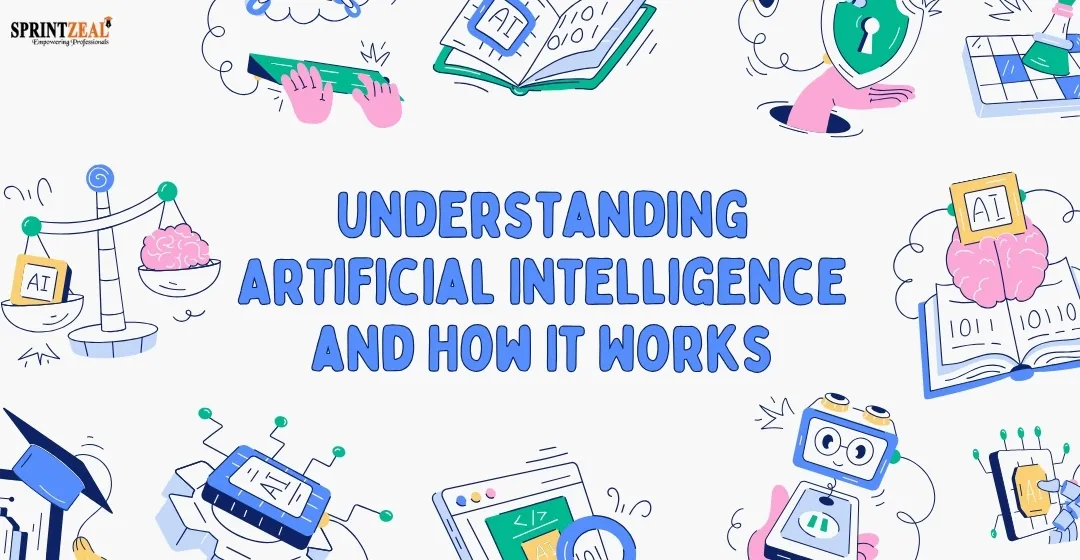
What is Artificial Intelligence?
Meaning and Definition of AI (Artificial Intelligence)
One of the main features of Artificial Intelligence (AI) is the idea that machines have to imitate human operations. Thus, AI stands for a technology that does the work of a human. In other words, AI is the creation of artificial agents that behave like humans, partially by learning and in other cases by reasoning.
For some fascinating context on this concept, read our article on 7 Amazing Facts About Artificial Intelligence!
Understanding AI in Simple Terms
AI can be regarded as a program that can learn and figure out problems by itself. For instance, if an AI is given a large number of identified images, it can very quickly figure out what dogs and cats are. In this way it is learning to identify characteristics and to find an answer, just like people learning from their own experience.
The essential objective of AI is not merely the substitution of work but also the letting of machines become capable of changing and dealing with complicated issues. To master the foundational skills required to build these models, start learning the Prerequisites for Machine Learning today.
AI vs. Human Intelligence
Artificial Intelligence can do a certain amount of work very well and quickly, but it does not have the capacity for creative invention, emotional understanding, and use of common sense that belongs to human intelligence. People are able to think in general and have different emotions, while AI concentrates on a very specific problem and does not have consciousness or general understanding of the matter.
Meaning and Definition of AI (Artificial Intelligence)
One of the main features of Artificial Intelligence (AI) is the idea that machines have to imitate human operations. Thus, AI stands for a technology that does the work of a human. In other words, AI is the creation of artificial agents that behave like humans, partially by learning and in other cases by reasoning.
For some fascinating context on this concept, read our article on 7 Amazing Facts About Artificial Intelligence!
Understanding AI in Simple Terms
AI can be regarded as a program that can learn and figure out problems by itself. For instance, if an AI is given a large number of identified images, it can very quickly figure out what dogs and cats are. In this way it is learning to identify characteristics and to find an answer, just like people learning from their own experience.
The essential objective of AI is not merely the substitution of work but also the letting of machines become capable of changing and dealing with complicated issues. To master the foundational skills required to build these models, start learning the Prerequisites for Machine Learning today.
AI vs. Human Intelligence
Artificial Intelligence can do a certain amount of work very well and quickly, but it does not have the capacity for creative invention, emotional understanding, and use of common sense that belongs to human intelligence. People are able to think in general and have different emotions, while AI concentrates on a very specific problem and does not have consciousness or general understanding of the matter.
The Origins of AI
While AI was created in the 20th century, the concept of it has been around for a few centuries, in fact. The current form of AI is basically the outcome of the brilliant mix of post-war logic, computation, and cybernetics research. Alan Turing's “Computing Machinery and Intelligence,” published in 1950, is one of the most vital papers that set the foundation for the computational theory of mind. In it, Turing laid out the Turing Test, which could measure whether a machine exhibited very similar behavior to human intelligence or if it could simply be treated as an area of science of its own.
Key Milestones in AI Development
The birth of AI was marked by the 1956 Dartmouth Symposium, where the term “Artificial Intelligence” was invented by John McCarthy. The era that followed the conference, known as the “Golden Years,” included the creation of a few early programs that demonstrated the capability of solving problems and proving theorems. Nonetheless, the limited computing power resulted in the “AI Winter” of the 1970s, when progress was slow, and the researchers decided to dedicate their time to the development of more practical and specialized expert systems.
The Rise of Machine Learning and Deep Learning
The comeback of modern AI is attributed to the developments of Machine Learning (ML) and Deep Learning (DL). ML makes a computer able to learn from data if it is not explicitly programmed. In contrast, DL, which applies multi-layered neural networks, is capable of handling images, speech, or text recognition tasks, to name a few, from a complex input. This newer approach of using data has led to breakthroughs in various industries, which is why the present period is the most successful and transformative in AI history.
To instantly understand the core ML models, grab our Machine Learning Cheat Sheet.
How Artificial Intelligence Works
AI Systems
Artificial intelligence implements complex models to examine the data, recognize the patterns, and decide by itself, thus creating intelligent units that are capable of taking the necessary actions to reach the set goals.
Algorithms and ML
Artificial intelligence uses an algorithm such as a neural network, decision tree, or deep learning to break down a complicated set of data and to find a pattern in it.
Data and Learning
AI employs larger datasets for training the model and fine-tuning internal parameters for optimal outcomes. There are three forms of learning: supervised learning, unsupervised learning, and reinforcement learning.
Decision-Making and Automation
Artificial Intelligence is creating the most likely scenarios, and it is also implementing the decisions automatically, which are resulting in the optimization of the existing work processes in different sectors.
The Core Components of AI Technology
Machine Learning (ML)
Machine learning (ML) is the main idea behind AI (Artificial Intelligence) that, with the help of ML can learn from available data and adapt to changes without being explicitly told. ML is the technology behind such instruments as spam filters, recommendation systems, and predictive models.
Deep Learning and Neural Networks
Deep learning is a fraction of machine learning that employs multiple connected units of artificial neurons to understand extremely complicated concepts in labeled data in the form of pictures, sounds, or written material. This is the main reason for the success of intelligence-capable cognition.
Natural Language Processing (NLP)
NLP is an AI that concentrates on communication between the computer and the human in the form of natural language. In simple words, it is a technology used in chatbots, voice assistants, translators, sentiment analysis, etc. These help to make the communication between humans and computers in the human language more natural.
Computer Vision and Robotics
Computer vision is the faculty of AI to comprehend the information that is presented visually to it, while with the help of robotics, it can be instructed to do specified tasks in the real world, thereby completing the cycle of perception, decision-making, and action for intelligence.
Narrow AI (Weak AI)
Narrow AI is a device or system basically developed for only one, specially defined job, like voice assistants, facial recognition, or recommendation systems. It performs well within its restricted area but is unable to work outside its programmed function. This is the kind of AI that is available nowadays.
General AI (Strong AI)
GI, or Strong AI, is the idea of a machine intelligence that, in principle, could interact, understand, and learn from different tasks like a human. It would be able to come up with solutions to new problems, think in abstract terms, and make choices by itself. However, it is still a distant goal.
Artificial Superintelligence (ASI)
ASI is a conceptual AI that will be smarter than the smartest humans in every respect, like scientific, creative, and strategic. Usually, it is associated with the idea of "technological singularity," which brings forth a lot of ethical and existential issues.
Examples and Applications
Most of the AI we have today is Narrow AI, like spam filters, search engines, and recommendation apps. General AI could eventually be able to do tasks such as writing novels or doing research independently, whereas ASI is a remote-future scenario of intelligence that is beyond comparison.
To have a broader understanding, read Types of Artificial Intelligence and its Branches
AI vs. Machine Learning vs. Deep Learning
Before moving on, clarify your technical understanding by reading Data Mining Vs. Machine Learning – Understanding Key Differences.
Important Differences and Connections
AI (Artificial Intelligence): The broad objective of providing machines with intelligence capable of performing tasks like people. A key element of AI encompasses its ability to learn and become adaptable to stimuli.
ML (Machine Learning): A subtopic of AI where the machine learns through exposure to data as opposed to explicit human instruction. This implies that the machine can improve its tasks without the machine having human-supplied programming.
DL (Deep Learning): A sub-topic of ML, where the machine utilizes multi-layer neural networks that automatically extract features and recognize complex patterns. The main advantage of DL is that the machine can learn or recognize complex representations of raw data without any human intervention.
Key Difference:
ML often necessitates a human to perform an engineering task to design the features, while DL naturally learns features through hierarchical layers. AI is the umbrella concept and includes ML and DL as the modernized, data-intense tools that accomplish it.
Examples from our lives:
AI: Chess software that follows programmed strategies without learning. Such a program uses a fixed set of rules and does not change its behavior.
ML: Stock price prediction systems that get better by learning from historical data. Such systems analyze past trends and make predictions based on them.
DL: Cancer detection in medical images or real-time language translation. These are examples of where large neural networks can learn to recognize subtle patterns in data.
These powerful examples demonstrate the real-world utility of Classification in Machine Learning.
Role of Data:
Data is what makes ML and DL possible. Large, high-quality datasets are necessary for the learning to be accurate, and at the same time, powerful computation is required for training complex models. Contemporary AI is data-driven and can be thought of as continually learning through exposure to vast amounts of data.
Enhanced Efficiency and Automation
An AI achieves automation that is very fast and accurate and can be done continuously without the need for a rest, and this automation is also capable of doing repetitive or data-intensive tasks more efficiently than humans. As a result, industries such as manufacturing, logistics, and customer service are going to utilize this process as a way to either clean, reload, or, in effect, restore to life. At the same time, this enhancement also enables people to be more creative and strategic in their work.
The improved accuracy and decision-making.
When dealing with very large amounts of data, AI can offer very precise, insightful data-driven diagnostics, fraud detection, or predictive maintenance. AI is the most consistent, objective, and accurate decision-making tool in different fields since it is difficult to suppose that it could be affected by fatigue or emotional bias.
Discover the critical difference AI makes by reading how it improves Consumer Buying Behavior analysis
Accessibility and Personalized Experiences
Artificial intelligence (AI) continues to improve human communication with the help of speech recognition, translation, and adaptive learning, and at the same time, it is also providing tailored suggestions and services. Besides these, AI can be a source of individual and societal progress when it is the accelerator of medical research as well as the speed of the discovery process.
Risks, Challenges, and Risks of Artificial Intelligence
Bias, Fairness, and Transparency
AI can inherit biases from the data set it is using for training and thus may produce results that are unfair or discriminate against certain groups of people. Complicated models are often still "black boxes" because their reasoning is hard to grasp. Explainable AI (XAI) comprises methods with which the AI system can be seen as transparent, fair, and trustworthy in making its decisions.
Job Impact and Economic Effects
The use of AI-powered automation technology leads to productivity growth; however, the result may be the reduction of monotonous or data-based jobs and, consequently, an increase in economic inequality. The only way of ensuring that the labor force is ready to work with AI as a tool and not as a rival is by implementing policies on reskilling and education.
Security, Privacy, and Misuse
For artificial intelligence (AI) machines to perform optimally, they must obtain a vast array of sensitive data. Therefore, they are a desirable target for cyberattacks and illegal misuse. Such threats’ examples are the fabrication of synthetic yet entirely fictional images and videos, the surveillance of others for unethical purposes, and the infringement of individuals’ personal privacy. The removal of such risks calls for measures being taken for data security, the prevention of cyberattacks, and the ethical use of AI systems.
Regulatory Challenges
The evolution of AI has thrown the world off its regulatory balance, hence the presence of certain areas without regulations. In order to guarantee the ethical use of AI, which is safe, fair, and trusted, the first thing necessary is to explicitly delineate the ethical and legal boundaries. Risk management through responsible governance is one side of the goal, while the other side is the provision of opportunities to the fullest to harness AI's advantages.
Emerging AI Technologies and Future Trends
Generative AI
Generative AI entails not only the analysis of data but also the creation of new content. It may involve text, images, music, or code. Some applications of generative AI tools are large language models (LLMs) or text-to-image generators. They contribute to AI, serving as a creative partner in ways that redefine or evolve the practices ofthe industry.
Agentic and Multimodal AI
The next generation of AIs will be able to operate with more independence and in a more flexible way. Agentic AI refers to an AI system that can think, make decisions, and act autonomously.
As agentic systems evolve, AI agent builder platforms are becoming increasingly important for developers and businesses looking to create autonomous AI assistants, workflow agents, and intelligent automation systems without building everything from scratch.
Multimodal AI refers to an AI system that understands and processes images, video, text, and audio in conjunction, allowing machines to interpret the world and communicate with the world as we do.
Edge AI and Decentralized Computing
Edge AI is a technology that makes it possible to shift the computing work from the cloud to local edge devices (smartphones, cars, sensors) that are close to the user in order to achieve speed, data privacy, and real-time interaction. The use of generative AI together with Edge AI can create a formidable mix that can be employed in several fast, secure, and efficient real-world application scenarios.
Are you aspiring to be an AI Specialist? Read our article on Top Artificial Intelligence Interview Questions for 2025
The Relationship of AI, Data Science, and Future Forecasting
There are some amazing facts about AI that everyone should be aware of. Artificial intelligence (AI) and data science are two closely related fields that merge concepts and methodologies from both fields to provide new and innovative solutions to data-driven problems. AI is, without a doubt, becoming the primary source of revolutions in the discovery of various scientific fields such as drug discovery, personalized medicine, and climate modeling. Future neuro-symbolic AI that integrates deep learning and logical reasoning is a step forward in giving machines a kind of common-sense understanding.
To sum it up, the combination of generative, multimodal, and edge technologies is making AI ready for the gradual ongoing integration into human life, which is a great future, but also needs to be managed responsibly.
Learning AI and the Human Future
Starting to learn AI is a move that puts you at the center of the big change in technology and, personally and professionally, opens new horizons for you. New learners get the most out of a well-organized course or a study plan that combines theoretical basics with practical training in AI and machine learning (ML). In fact, learning a programming language such as Python is necessary for making models and developing the systems of AI.
When you develop your skills, you get an even more profound understanding of the power and potential of AI. Knowing the benefits of the technology. For example, the very rapid medical advancements, automation, and great problem-solving capabilities, side by side with the ethical issues and possible job losses, are a must for a responsible future. Learners who invest time in AI now will be the ones to control its evolution and make sure that it remains a tool for human welfare.
The domain of AI is still changing very fast and is mainly influenced by improvements in hardware, new algorithms, and increasing availability of data. The journey of AI from the conceptual origin to the real-world application of the most advanced generative AI tools is the way of the planet; that technology is going to change the mode of human-machine collaboration radically. The way to handle AI in the future is to keep a balance between the innovation and ethical governance so that the amazing power of these systems can be used for the benefit of mankind. AI is not the future in which robots will take over the jobs, but it is the future in which humans will be assisted by AI and will be able to do what was previously thought unimaginable.
Sprintzeal provides a wide range of artificial intelligence course choices, which are appropriate for each level, starting from AI for beginners to advanced users. They have an ai training program that is intensive and covers the core concepts of AI and ML with the inclusion of the specialized tracks deep learning and data science. These programs are tailored to equip professionals with practical skills that make them competent in the latest ai technology and able to react to the ai news instantly.
To truly master the core concepts, practical skills, and specialized tracks like Deep Learning and Data Science, enroll in our intensive AI and Machine Learning Masters Program today.
The human-like AI is Artificial General Intelligence (AGI). Narrow AI operates within a limited set of tasks. Whereas AGI aims to replicate human-like reasoning, learning, and adaptability in any field. Though not yet achieved, researchers are modeling AGI after the manner in which children acquire knowledge, that is, by being curious, discovering, and receiving more and more reinforcement progressively.
As of 2025, OpenAI's GPT-5 is the strongest single-purpose AI. It can handle reasoning, coding, and maintaining consistency the best. Some of the nearest challengers to it are Claude 4 (Anthropic), Gemini 2.5 (Google), for and Qwen3-VL (Alibaba).
To gain the credentials required for working with these systems, check out the Top AI Certifications guide.
The predominant type of AI is known as Artificial Narrow Intelligence (ANI). ANI is the technology behind apps that we find on social media platforms, support systems, voice command devices, and network facial recognition. ANI is very good at completing a certain task, but it is not capable of general reasoning.
These four pillars are frequently referred to in AI-based technology changes:
Some frameworks give equal weight of importance to the fairness and justice aspect of AI. Showing characteristics such as transparency, accountability, and privacy.
AI is a system that imitates human brainpower by:
The 30% Rule means 70% of repetitive tasks will be handled by AI automation. 30% of the tasks will involve planning based on creative thinking, decision-making, and ethical values. The concept of the 30% Rule is humans together with machines, not machines completely taking over.
You can say, "AI is like having a very intelligent assistant who's always there to help. Maybe reminding you when your appointments are, suggesting meals, or helping you talk to your grandkids online. It is just like humans."
Such technological concepts are made easier through specially designed guides and courses provided by AARP and other organizations, which aim at familiarizing seniors with AI while ensuring their safety.
As obvious as it is, the United States is where major tech firms like OpenAI, Google, Microsoft, and NVIDIA were all started. After the US, China ranks second. And the remaining countries from the top five are the UK, Canada, and Germany.
AI is classified based on its capability and functionality as
Based on Isaac Asimov's Three Laws of Robotics:
These are ethical guidelines rather than actual software conventions.

Mon, 28 September 2026
Tue, 22 September 2026
Tue, 08 September 2026

Mon, 24 August 2026
Wed, 19 August 2026
Mon, 17 August 2026
Mon, 17 August 2026
Thu, 13 August 2026

Mon, 24 August 2026

© 2026 Sprintzeal Americas Inc. - All Rights Reserved.

 USA : +1315-322-7821
 UK : +44 7700 174870
 IND : +919036108287
 AUS : +61 480 005 455