Anthropic's LLM vs ChatGPT: Key Differences and Uses
Fri, 23 October 2026

Inspirational journeys
Follow the stories of academics and their research expeditions
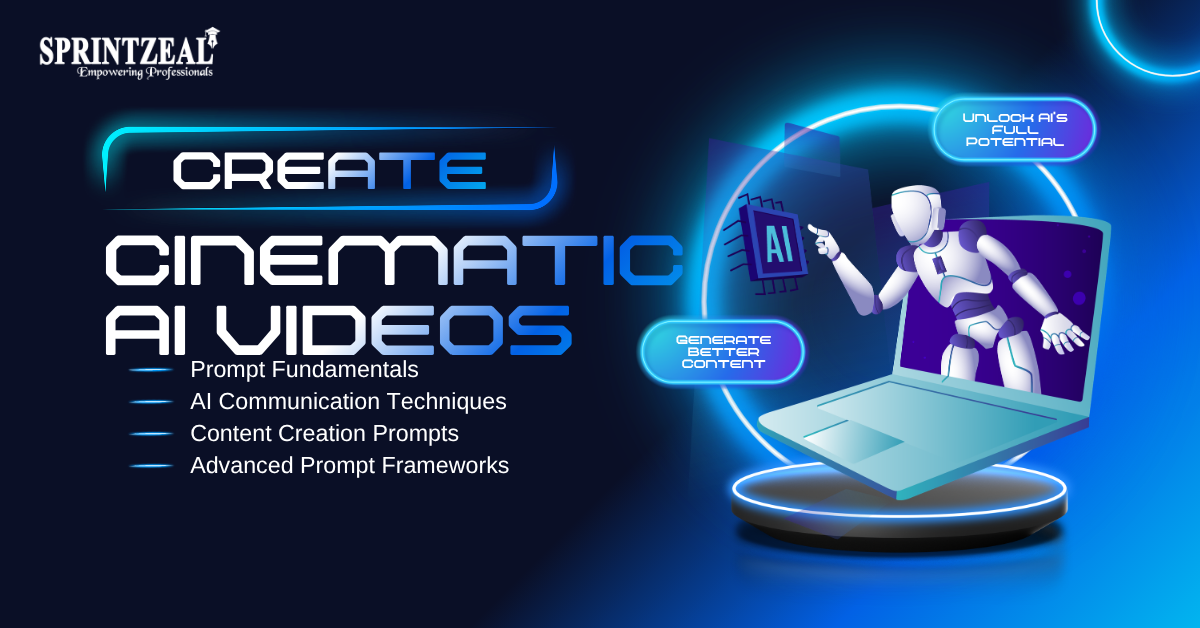
Let me be specific on what the cost of studio infrastructure really is as it is important to grasp this to understand why this transition is so significant.
The cost of a basic professional video shoot location, crew, equipment rentals, talent and post-production is $5,000 to $25,000 for a completed 2-3 minute asset. That's not a one time thing for brands which require the regular flow of content. It's a recurring cost that accumulates fast. A content calendar requiring four videos per month could easily absorb $80,000–$100,000 annually in production alone, before any media spend.
And that budget is just for competent production. True cinematic quality the kind that involves directorial craft, sophisticated lighting setups, motion control rigs, and color grading that creates a distinctive visual signature costs more. Significantly more.
From my experience advising content teams, the realistic version of "cinematic production" for most brands was a compromise: occasional hero shoots when budget allowed, supplemented by lower-quality content the rest of the time. The visual inconsistency itself became a brand problem. Audiences notice when a brand's video quality fluctuates, even if they can't articulate exactly why it undermines trust.
Here's the insight that reframes the whole conversation: the reason studio infrastructure was required wasn't just about quality for a single asset. It was about what you needed to produce cinematic content repeatedly and consistently which is the actual requirement for a functioning content operation.
One beautiful brand film isn't a content strategy. It's a moment. To build an audience, maintain presence across channels, test creative directions, and stay relevant through a content calendar, you need the ability to produce cinematic quality on a cadence. That's what the studio model was never built to support affordably.
This is exactly where an AI Video Generator changes the structural reality. When cinematic quality becomes a function of directorial input camera direction, motion specification, atmospheric control rather than physical infrastructure, the cost and frequency constraints dissolve simultaneously. You can produce visually sophisticated content on a schedule that matches publishing demands, not production capacity.
I found this realization transformative when I first tested it seriously. The asset quality was genuinely surprising not "good for AI," just good. And the ability to produce multiple assets per session, each with distinct cinematic direction, changed how I thought about what was operationally possible for brands without dedicated production teams.
Of the AI video tools I've tested in a professional context, Higgsfield is the one I keep returning to for work that needs to meet real brand standards. The reason isn't just output quality in isolation it's the combination of quality and control that makes the output actually usable in professional contexts.
Higgsfield was built as an AI video generator with cinematic craft as a core design principle, not a feature to be added later. That distinction shows in how the tool actually behaves.
The difference between footage that looks cinematic and footage that looks like generic video often comes down to camera behavior the relationship between the lens and the subject, how the frame moves or stays still, how depth of field is used, how the shot creates emotional register. In traditional production, this is what a director of photography brings to a shoot.
Higgsfield gives you directorial control over these variables as inputs. You're not accepting whatever the model decides to do with motion and framing you're specifying it. From my experience, this is the feature that separates Higgsfield from tools that produce visually competent but emotionally flat output. A slow push into a subject creates intimacy; a wide establishing shot creates scale; a handheld feel creates urgency. Higgsfield lets you choose, which means you can build a consistent visual language across your content without a director of photography on retainer.
One of the clearest signals of production quality in video is atmosphere the way light behaves, the way a scene feels, the density of visual detail in the environment. This is what expensive lighting setups and location scouting buy you in traditional production.
Higgsfield's generation quality produces atmospheric richness that genuinely reads as production value. My team noticed this most clearly when comparing Higgsfield output to reference footage from actual brand shoots the atmospheric qualities were comparable in ways that genuinely surprised us. The light felt intentional. The environments had depth. The scenes had the visual weight of something that was crafted, not just captured.
For brands, cinematic quality at a single moment means less than cinematic quality maintained across a body of content. Higgsfield's character and environment consistency tools allow you to maintain visual coherence across multiple assets the same subject, the same aesthetic register, the same brand atmosphere which is what creates the impression of a unified visual identity rather than a collection of unrelated videos.
This consistency is what transforms individual AI-generated assets into an actual content library with a recognizable brand signature.
Let me put concrete numbers on what this shift means operationally:
|
Production Factor |
Traditional Studio Model |
AI Video Generation (Higgsfield) |
|
Cost per cinematic asset |
$5,000–$25,000 |
Marginal cost per generation |
|
Annual production budget (4 videos/month) |
$240,000–$1,200,000 |
Fraction of that |
|
Lead time per asset |
1–3 weeks |
Same day |
|
Crew required |
Director, DP, crew, talent, editor |
1–2 people |
|
Location dependency |
High (scouting, booking, travel) |
None |
|
Reshoots and revisions |
Expensive and slow |
Near-instant |
|
Variation testing |
1–2 versions per budget |
10–20 versions per session |
|
Visual consistency across assets |
Dependent on crew consistency |
Controllable via inputs |
The financial case is clear. But the operational case is equally compelling: when production is no longer dependent on physical location, available crew, weather, talent schedules, and equipment availability, you gain a reliability and flexibility that studio production structurally cannot offer.
The brands getting the most from AI video generation for cinematic content fall into a few clear categories.
Scaling DTC brands that need consistent video presence across paid social and organic channels but can't justify enterprise production budgets. For these teams, Higgsfield as an AI video generator levels the visual playing field against larger competitors.
Agency creative teams that need to produce concept-level video for client presentations without commissioning full productions. The ability to show a client what a campaign could look and feel like cinematically before any budget is committed changes the pitch conversation entirely. I found this use case particularly powerful: clients respond to visual concepts in ways they simply don't respond to storyboards or written treatments.
In-house content teams at mid-market companies that are expected to produce video at a volume that traditional production could never support within a reasonable budget.
Startups and emerging brands that are building visual identity for the first time and need to establish cinematic standards without the infrastructure investment that would historically have required.
According to Forrester's 2025 Marketing Budget and Strategy Survey, visual content production costs are among the top three barriers to marketing effectiveness for mid-market companies with video specifically cited as the most underinvested format relative to strategic importance. Source: Forrester The brands that find ways to close that investment gap through AI video generation rather than studio build-out are the ones positioned to capture the attention share their larger competitors are currently dominating.
The infrastructure barrier was never a permanent feature of video marketing. It was a constraint of the production technology available. That constraint has lifted, and the brands moving fastest to replace studio infrastructure with AI video infrastructure will compound that advantage over the next several years.
|
Pros |
Cons |
|
|
Brand teams |
Cinematic quality without studio costs; consistent visual identity at scale; rapid concept testing; no location or crew dependency |
Brand guideline codification required; directorial input learning curve; quality review still necessary at volume |
|
Performance marketing teams |
High-quality creative at test-friendly economics; fast iteration on visual directions; cinematic ads without premium production budget |
Requires structured brief discipline; output still needs human curation; analytics setup must match higher variation volume |
|
Agencies and production companies |
Cinematic concept visualization before full production; scalable output for content-heavy clients; competitive differentiation |
Client expectation management around AI-assisted production; integration with existing production workflows takes time |
When your brand or budget is now only able to create videos occasionally, in 2026, you don't have to choose between the two. It's between new production model or falling behind brands which already have.
Higgsfield is the AI video generator I'd recommend as the foundation of that new model for brands that need cinematic quality not just functional video, but visually distinctive content that builds brand recognition and audience response over time. The tool was built for this use case, and the output quality reflects that intention.
The switch does not need to be a full or complete switch. My initial approach for most teams is to begin by leveraging AI video generation for high-frequency social media and creative testing, before planning to allocate additional time and resources to this feature as operations become more confident. The traditional studio model doesn't disappear overnight but it becomes a premium layer reserved for hero content rather than the only available option for anything that needs to look good.
The studio infrastructure that used to be the price of entry for cinematic brand content was never actually about quality, it was about the technology available to produce quality. AI video generation has changed the technology.The infrastructure requirement is the same, but the tool that is able to provide the need is now available without the need for a studio.
As a professional-grade AI video generator designed for cinematic control, Higgsfield is right where brands are looking: the studio production quality, digital-native economics, and quick turnaround time demanded by modern content operations. If brands are prepared to rethink how they produce, the competitive impact is significant.
If your content is still viewed as having a low budget, so was it, then it's time for 2026.. The infrastructure barrier is gone. What remains is the decision to build around what's now possible.

Fri, 23 October 2026
Tue, 13 October 2026
Fri, 09 October 2026

Mon, 28 September 2026
Tue, 22 September 2026
Tue, 08 September 2026
Mon, 24 August 2026
Wed, 19 August 2026

Mon, 17 August 2026
Mon, 17 August 2026

© 2026 Sprintzeal Americas Inc. - All Rights Reserved.

 USA : +1315-322-7821
 UK : +44 7700 174870
 IND : +919036108287
 AUS : +61 480 005 455