Professional Resume Examples: Top Templates & Expert Tips
Thu, 15 October 2026

Inspirational journeys
Follow the stories of academics and their research expeditions
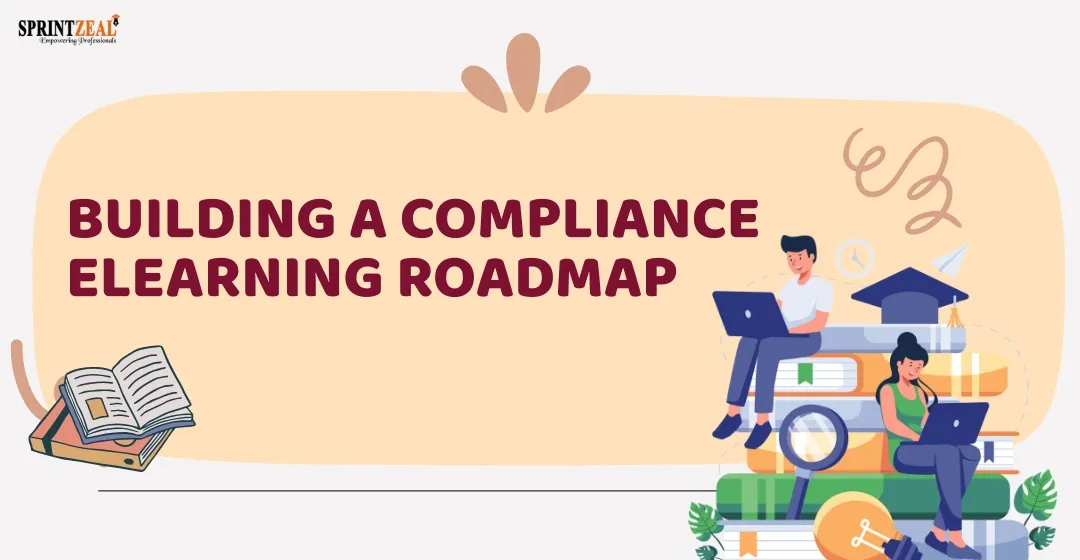
Building a comprehensive compliance training program is no longer a matter of box-ticking. As regulations grow stronger, legal responsibility and additional public attention increase, organizations must make sure that compliance is experienced in the organization.
Compliance eLearning is one of the most effective methods of doing so. However, to be successful companies require more than just online courses, they need custom elearning development services that align with their specific policies, workforce, and risk profile. They require a clear, step-wise roadmap through which the whole process of policy to practice takes place.
This blog will take you through each essential phase of building that roadmap in a practical, step-by-step approach.
Before any design of training, organizations should understand why a compliance roadmap is critical: A roadmap makes sure that directionally, everything has a relationship with the company's goals and regulatory responsibilities. Otherwise, the teams will end up churning out fragmented pieces of content that do not contribute to addressing real compliance risks or meeting the needs of learners.
A structured roadmap enables:
Alignment of training with corporate policies and laws.
Identification of who needs what type of training and why.
Recognition of gaps in current knowledge or behavior.
Establishment of realistic goals for training delivery timelines.
Building a model for sustained improvement.
This is not a one time roadmap but a living frame that will change with regulatory changes, industry shifts, and internal organizational growth.
Every successful eLearning project will start with a full discovery stage. This is where you accumulate data in order to determine your current situation and what should change.
Begin by conducting compliance policy and training program audits. Identify whether the modules you are using are old, irrelevant or generic. See previous audit reports, compliance incident logs and employee feedback to know where things may be going wrong.
The next step is to determine your major stakeholders. This covers compliance officers, department heads, HR representatives, IT teams and legal advisors. Engaged them early enough guarantees buy-in and as well as introducing the correct expertise. Carry out interviews or focus groups to find out about certain department-specific challenges, compliance-related problems or policy changes.
It is also essential to know your learners. Carry out surveys or unofficial tests to determine employee perception on existing training. Questions to ask them are what content they recall, what they find useful, and areas they feel they are unprepared in.
Lastly, group your audience according to job and level of risk. All the employees do not require the same amount of compliance training. As an example, the financial operations personnel may require more specialized training in fraud prevention and anti-money laundering, whereas the data personnel may need more in-depth training on the laws of data privacy.
At the conclusion of the discovery phase, you ought to have a good vision of your training needs, the target markets, content focus, and what you want to accomplish.
In such places where you have findings, the next thing that follows will be the designing of the architecture of your training program. This is a blueprint type that will focus on content development, resource allocation, and delivery.
Begin by creating a role-based learning path: Create a roadmap of training; customized to categories of employees, such as the frontline, managers, executives, and technical specialists. This way, all of them will be presented with the relevant contents, depending on the responsibility.
Choose your instructional design methodology. Really, modular learning is in effect quite good for compliance training because it can chunk content up into manageable pieces. Whenever possible, think about microlearning methods: small, highly concentrated classes can enhance knowledge retention and make busy professionals to consume the information without becoming unproductive.
Have cases, options to make, and examples. Compliance training requires often decoding rules and taking it to day-to-day workplace activity. Interactive content shows the way to build judgment, not merely knowledge.
Fading over time: plan how learning will be reinforced. In rare instances, one-time training will sustain behavior change. Plan follow-up quizzes, reminders, and periodic refreshers to keep the learning fresh. Repetition at spaced intervals improves retention over the long term and reduces the risk of noncompliance.
Also, ensure that the access is user-friendly and accessible to all learners irrespective of their physical capability and their command of the language.
A good strategy phase also includes the establishment of governance. Set up who will review and update the content on a regular basis, and how any new regulations are integrated into the modules going forward.
With the strategy, you can move into content development. This is where your learning plans become real-life tangible training experiences.
Firstly, commencement of creating course outlines, and scripting of the modules according to your learning objectives should be made. Explain tough policies in easy, simple language with crystal-clear explanations. More importantly, in compliance training, you have to be as accurate as possible; therefore, get all materials subject matter expert reviewed and reviewed by your legal team.
Construct assessments to measure application rather than recall. Pseudo-situation quizzes and simulations build some very valuable critical thinking as an exercise for situations learners will potentially face at work.
Multimediate your training: Attention and information retention is better when media are combined to present the information, such as videos, animation, voiceovers, infographics, and interaction.
Run small groups of pilots from different departments as content is developed, and ask for feedback regarding clarity, applicability, and usability. Use their insights to iterate before fully releasing.
Finally, take care of the technical aspect. Uploading your content to the LMS, establishing learner paths and permission, due dates, and ensuring tracking features are in place is critical. Good tracking means you can prove compliance in audits and flag those workers who may need extra help.
The opening of your compliance eLearning program is not a matter of flicking a switch, it is deliberate communication, support mechanisms and surveillance.
Establish the baseline on a good and efficient communication plan: Make the employees understand why the training is necessary, how the training secures the organization and what the employees must do. It can be created through email, team meetings, leadership messages, internal portals, each of which can be used as a source of awareness. Consider releasing it in phases.
A stage release can help you through the time-wasting process of sorting out bugs, revising content to reflect feedback, and managing learner support. Program channels of support for various scenarios where a worker may hit a glitch or feel unclear about the content.
Provide some FAQs, an internal help desk, or quick video tutorials in which the learner is instructed in how it works. Pay close attention to engagement. Track completion, assessment score and Feedback.
Send reminders on employees who have not enrolled or passed the training. In case of need, involve managers to pay follow-up visit to their teams.
Reward small successes--Publicize figures, testimonials of how training is paying off. Therefore, it is critical to establish momentum and enforce compliance that is highly vital across the organization.
The last phase of your roadmap is the maintenance of the program. Compliance training is not a box-ticking exercise. Laws are modified, policies are shifted and other risks are introduced. You need to train in line with the evolvement of it.
Measure the program efficiency using quantitative and qualitative data. Monitor the rates of compliance incidents, audit rates, and learner feedback.
Carry out post-training tests to find out the retention of knowledge in the long-run. Interview managers to see if employee behavior has improved in key risk areas.
Now, take that information and use it to continuously enhance and grow the training. Update the content for new regulations or business processes. Refresh modules that show low engagement or effectiveness.
Take into consideration A/B testing of different content of type to discover the best. Plan the periodic review of schedules: e.g., at least every six to twelve months one will be required to verify whether the content is kept up-to-date with ones own policies and legal requirements, even amendments, and release new editions.
Record all changes to updates, decisions, and learner records. It keeps you audit-ready and in a position able to show continued commitment to compliance. Treat your compliance eLearning roadmap for what it is-mostly a tool for continuous improvement. Because while your organization grows larger and changes, so too should your training. A roadmap gives you the structure to do this in a measured, consistent way.
Compliance eLearning development is less about a project and more about a strategy that goes from the very beginning, throughout the development process, to sustainment. A well-defined roadmap from discovery through sustainment will serve as a guide in your effort to build compliance training programs that are legally sound and meaningful to your employees.
Done well, compliance training extends beyond the box-checking that happens. It's a part of the culture, equipping your employees with responsible and confident choices in their roles.
Take your organization from a policy on a paper to practice in the real world with just a little careful planning and execution.
Building a comprehensive compliance training program is no longer a matter of box-ticking. As regulations grow stronger, legal responsibility and additional public attention increase, organizations must make sure that compliance is experienced in the organization.
Compliance eLearning is one of the most effective methods of doing so. However, to be successful companies require more than just online courses, they need custom elearning development services that align with their specific policies, workforce, and risk profile. They require a clear, step-wise roadmap through which the whole process of policy to practice takes place.
This blog will take you through each essential phase of building that roadmap in a practical, step-by-step approach.
Before any design of training, organizations should understand why a compliance roadmap is critical: A roadmap makes sure that directionally, everything has a relationship with the company's goals and regulatory responsibilities. Otherwise, the teams will end up churning out fragmented pieces of content that do not contribute to addressing real compliance risks or meeting the needs of learners.
A structured roadmap enables:
This is not a one time roadmap but a living frame that will change with regulatory changes, industry shifts, and internal organizational growth.
Every successful eLearning project will start with a full discovery stage. This is where you accumulate data in order to determine your current situation and what should change.
Begin by conducting compliance policy and training program audits. Identify whether the modules you are using are old, irrelevant or generic. See previous audit reports, compliance incident logs and employee feedback to know where things may be going wrong.
The next step is to determine your major stakeholders. This covers compliance officers, department heads, HR representatives, IT teams and legal advisors. Engaged them early enough guarantees buy-in and as well as introducing the correct expertise. Carry out interviews or focus groups to find out about certain department-specific challenges, compliance-related problems or policy changes.
It is also essential to know your learners. Carry out surveys or unofficial tests to determine employee perception on existing training. Questions to ask them are what content they recall, what they find useful, and areas they feel they are unprepared in.
Lastly, group your audience according to job and level of risk. All the employees do not require the same amount of compliance training. As an example, the financial operations personnel may require more specialized training in fraud prevention and anti-money laundering, whereas the data personnel may need more in-depth training on the laws of data privacy.
At the conclusion of the discovery phase, you ought to have a good vision of your training needs, the target markets, content focus, and what you want to accomplish.
In such places where you have findings, the next thing that follows will be the designing of the architecture of your training program. This is a blueprint type that will focus on content development, resource allocation, and delivery.
Begin by creating a role-based learning path: Create a roadmap of training; customized to categories of employees, such as the frontline, managers, executives, and technical specialists. This way, all of them will be presented with the relevant contents, depending on the responsibility.
Choose your instructional design methodology. Really, modular learning is in effect quite good for compliance training because it can chunk content up into manageable pieces. Whenever possible, think about microlearning methods: small, highly concentrated classes can enhance knowledge retention and make busy professionals to consume the information without becoming unproductive.
Have cases, options to make, and examples. Compliance training requires often decoding rules and taking it to day-to-day workplace activity. Interactive content shows the way to build judgment, not merely knowledge.
Fading over time: plan how learning will be reinforced. In rare instances, one-time training will sustain behavior change. Plan follow-up quizzes, reminders, and periodic refreshers to keep the learning fresh. Repetition at spaced intervals improves retention over the long term and reduces the risk of noncompliance.
Also, ensure that the access is user-friendly and accessible to all learners irrespective of their physical capability and their command of the language.
A good strategy phase also includes the establishment of governance. Set up who will review and update the content on a regular basis, and how any new regulations are integrated into the modules going forward.
With the strategy, you can move into content development. This is where your learning plans become real-life tangible training experiences.
Firstly, commencement of creating course outlines, and scripting of the modules according to your learning objectives should be made. Explain tough policies in easy, simple language with crystal-clear explanations. More importantly, in compliance training, you have to be as accurate as possible; therefore, get all materials subject matter expert reviewed and reviewed by your legal team.
Construct assessments to measure application rather than recall. Pseudo-situation quizzes and simulations build some very valuable critical thinking as an exercise for situations learners will potentially face at work.
Multimediate your training: Attention and information retention is better when media are combined to present the information, such as videos, animation, voiceovers, infographics, and interaction.
Run small groups of pilots from different departments as content is developed, and ask for feedback regarding clarity, applicability, and usability. Use their insights to iterate before fully releasing.
Finally, take care of the technical aspect. Uploading your content to the LMS, establishing learner paths and permission, due dates, and ensuring tracking features are in place is critical. Good tracking means you can prove compliance in audits and flag those workers who may need extra help.
The opening of your compliance eLearning program is not a matter of flicking a switch, it is deliberate communication, support mechanisms and surveillance.
Establish the baseline on a good and efficient communication plan: Make the employees understand why the training is necessary, how the training secures the organization and what the employees must do. It can be created through email, team meetings, leadership messages, internal portals, each of which can be used as a source of awareness. Consider releasing it in phases.
A stage release can help you through the time-wasting process of sorting out bugs, revising content to reflect feedback, and managing learner support. Program channels of support for various scenarios where a worker may hit a glitch or feel unclear about the content.
Provide some FAQs, an internal help desk, or quick video tutorials in which the learner is instructed in how it works. Pay close attention to engagement. Track completion, assessment score and Feedback.
Send reminders on employees who have not enrolled or passed the training. In case of need, involve managers to pay follow-up visit to their teams.
Reward small successes--Publicize figures, testimonials of how training is paying off. Therefore, it is critical to establish momentum and enforce compliance that is highly vital across the organization.
The last phase of your roadmap is the maintenance of the program. Compliance training is not a box-ticking exercise. Laws are modified, policies are shifted and other risks are introduced. You need to train in line with the evolvement of it.
Measure the program efficiency using quantitative and qualitative data. Monitor the rates of compliance incidents, audit rates, and learner feedback.
Carry out post-training tests to find out the retention of knowledge in the long-run. Interview managers to see if employee behavior has improved in key risk areas.
Now, take that information and use it to continuously enhance and grow the training. Update the content for new regulations or business processes. Refresh modules that show low engagement or effectiveness.
Take into consideration A/B testing of different content of type to discover the best. Plan the periodic review of schedules: e.g., at least every six to twelve months one will be required to verify whether the content is kept up-to-date with ones own policies and legal requirements, even amendments, and release new editions.
Record all changes to updates, decisions, and learner records. It keeps you audit-ready and in a position able to show continued commitment to compliance. Treat your compliance eLearning roadmap for what it is-mostly a tool for continuous improvement. Because while your organization grows larger and changes, so too should your training. A roadmap gives you the structure to do this in a measured, consistent way.
Compliance eLearning development is less about a project and more about a strategy that goes from the very beginning, throughout the development process, to sustainment. A well-defined roadmap from discovery through sustainment will serve as a guide in your effort to build compliance training programs that are legally sound and meaningful to your employees.
Done well, compliance training extends beyond the box-checking that happens. It's a part of the culture, equipping your employees with responsible and confident choices in their roles.
Take your organization from a policy on a paper to practice in the real world with just a little careful planning and execution.

Thu, 15 October 2026
Wed, 14 October 2026
Tue, 13 October 2026
Wed, 07 October 2026

Fri, 02 October 2026
Wed, 30 September 2026
Tue, 29 September 2026
Fri, 25 September 2026

Tue, 22 September 2026

Tue, 22 September 2026


© 2026 Sprintzeal Americas Inc. - All Rights Reserved.

 USA : +1315-322-7821
 UK : +44 7700 174870
 IND : +919036108287
 AUS : +61 480 005 455