Inspirational journeys
Follow the stories of academics and their research expeditions
5 Best Custom Packaging Suppliers Compared (MOQ, Cost, Lead Time)
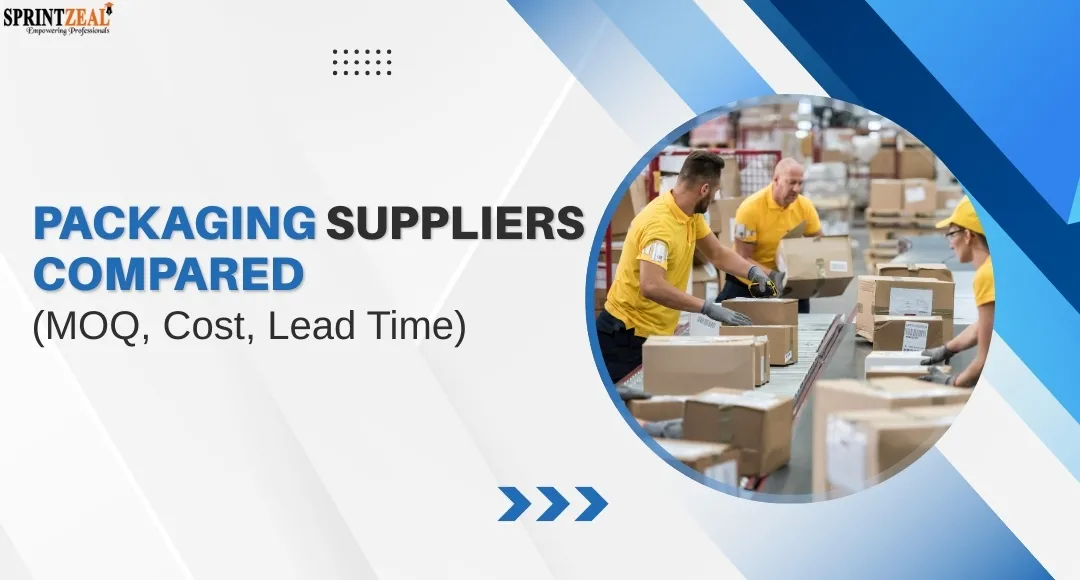
First impressions ride inside the box. The right custom packaging shields your product, trims shipping fees, and transforms every delivery into share-worthy branding. But when launch day looms, comparing custom packaging suppliers can feel endless—MOQs, lead times, and eco claims start to blur. This guide sorts the noise. We compare five of the best suppliers for small businesses—highlighting who wins on low minimums, speed, sustainability, and full-service support—so you can scan the table, dive into the reviews, and pick the partner that fits your budget, timeline, and brand values.
Table of Contents
Quick answer: the right supplier at a glance
Need a fast match? Start with the line that solves your biggest headache.
- Zenpack: All-in-one custom packaging supplier—design, manufacturing, and logistics under one roof. Typical minimum about 100 units; 3–6-week turnaround. Best when brand experience is more important than raw speed.
- Arka: Ultra-low minimums (as few as 10 boxes) let you test branding without tying up cash. Most small runs ship within a week.
- Packlane: DIY online studio with instant quotes; most box styles start at 25 units and deliver in 10–15 business days (rush as quick as 5 days).
- EcoEnclose: Recycled and compostable materials. Custom boxes begin at 100 units with 2–4-week lead times.
- Custom Boxes Now: Emergency restock option—custom dimensions produced in as little as 48 hours when you order before noon Central time.
Pick the line that matches your pain point, then keep reading for details on pricing, finishes, and sustainability.
Side-by-side comparison
Scan the table below to see which custom packaging supplier fits your minimums, timeline, and sustainability targets.
|
Supplier |
Min order |
Lead time |
Best for |
|
Zenpack |
100 |
3–6 wks |
Premium branding |
|
Arka |
10–25 |
7–10 bd |
Low-budget launches |
|
Packlane |
25 |
10–15 bd (rush 5) |
Fast DIY orders |
|
EcoEnclose |
100 |
2–4 wks |
Eco-first brands |
|
Custom Boxes Now |
25 |
2–5 bd (48h unprinted) |
Urgent restocks |
Figures show the lowest published numbers for standard orders as of early 2026. Confirm current specs before placing an order.
How to read the table
Minimum order is the smallest run you can place without surcharges; align it to a realistic three-to-six-month sales window.
Lead time includes production plus average U.S. shipping. Work backward from launch day and add a buffer week for holidays or freight delays.
A physical sample beats a PDF when color accuracy or fit matters; every supplier offers one, but costs and turnaround differ.
Packaging types list each company’s core formats, so if you need a die-cut mailer, skip vendors that focus on rigid cartons.
Design support ranges from drag-and-drop editors to a dedicated creative team. If you want one partner to carry the work from design and engineering through production, look at full-service custom packaging suppliers like Zenpack. Choose the level that matches your in-house skills
Finally, compare the Ideal for and Key watch-out columns. They condense reviews into one takeaway so you can move on to in-depth sections with a clear short list.
Zenpack: best full-service partner
Imagine handing one brief to one team and receiving retail-ready boxes that move cost-efficiently across three continents. Zenpack’s sustainable custom packaging solutions cover formats like premium rigid boxes, folding cartons, corrugated shippers, and custom inserts, with one team carrying the work from strategy and design through manufacturing and logistics. That connected workflow is backed by ISO-certified print plants and a dedicated fulfillment arm, so what you approve is what shows up.
Why Zenpack stands out
- Single workflow—design, prototype, and mass production happen together, so freight math and dieline tweaks stay in sync.
- Flexible MOQ—small batches are possible, though pricing hits its stride above 10K units.
- Deep R&D—rapid prototypes (4–8 weeks) and ISTA drop tests help luxury brands cut damage rates.
- Global reach—paper production averages 3–4 weeks, then about 2 weeks by air or 6–8 weeks by ocean to U.S. ports.
Quick cost sense-check
- Structural design projects: from $8,000
- Sampling: from $500
- Unit economics turn competitive once volume passes 10K units.
When to choose or skip Zenpack
Choose Zenpack when brand experience, supply-chain efficiency, and a memorable unboxing all matter. If you need 20 mailers by next week, consider Arka or Custom Boxes Now instead.
Due-diligence questions to ask
- Exact MOQ and price break for your box style
- End-to-end timeline, including freight
- Prototype cost and sample lead time
- Material and ink sustainability credentials
- Level of hands-on design support
- How the team will optimize dimensions to lower dimensional-weight fees
Packlane: best for DIY speed and transparent pricing
Packlane is the self-checkout lane of custom packaging. Open the online 3-D studio, enter dimensions, and watch the unit price update in real time—no email ping-pong, no hidden fees.
Key numbers
- Minimum order: 1–10 units for corrugated mailers and shippers; 25 units for paperboard cartons
- Standard production: 7–10 business days after you approve the digital proof
- Rush production: 4–6 business days on eligible orders (added fee)
Why it works
Tiny minimums let new brands test artwork without a big cash outlay, and quick turnaround means you can adjust a design on Monday and ship the product the following week.
Trade-offs to note
Packlane sticks to proven box styles and basic materials—no foil stamping, soft-touch lamination, or unusual shapes. When a campaign calls for luxury finishes, you will need a different custom packaging supplier.
Stay within those rails and you will be hard-pressed to find a faster, simpler route from mock-up to doorstep.
Arka: best for tiny test runs on a tight budget
When funds are limited and you are still chasing product-market fit, Arka lets you launch without overstock. The platform accepts orders as low as 10 custom boxes—or even a single paid sample—so you can validate branding before committing cash. Upload artwork, preview it in the 3-D editor, and check out like any e-commerce store—no sales calls required.
Key numbers
- Minimum order: 10 boxes (sample checkout available)
- Standard production: 7–10 business days after proof approval
- Rush production: 3–6 business days (added fee)
Per-unit prices stay reasonable up to 50 boxes, and the cart shows tiered discounts so you can decide whether jumping to 100 units makes sense. Eco options—recycled kraft and FSC-certified board—cost the same as standard stock, so choosing a greener path does not raise the bill.
Trade-offs to note
Arka limits finishes to straightforward CMYK; foils, embossing, or exotic materials require a different custom packaging supplier. Use Arka to validate branding or fulfill Kickstarter rewards without filling storage shelves with unused cartons. Once volumes climb past a few hundred units per SKU, compare bulk specialists for sharper price breaks.
EcoEnclose: best when sustainability drives every decision
If putting the planet first is core to your brand, EcoEnclose belongs at the top of your supplier list. Each product focuses on environmental impact: recycled corrugate, carbon-negative algae ink, and fully compostable mailer films.
Key numbers
- Minimum order for branded boxes: 100 units; unbranded starts at 1 unit
- Branded lead time: 4–6 weeks after artwork approval (no rush option)
That longer timeline covers specialty papers but rewards you with packaging that arrives curbside-recyclable and ready for serious sustainability claims.
Trade-offs to note
Recycled fibers are slightly stiffer than virgin board, and two-color printing is the limit because water- and algae-based inks behave differently from petroleum inks. For eco-minded shoppers, these limits reinforce credibility rather than hurting shelf appeal. Add a small “how to recycle” panel and responsible packaging becomes a marketing edge.
EcoEnclose posts detailed spec sheets—recycled-content percentages, ink chemistry, end-of-life paths—so you can cite hard data in life-cycle calculations or certification audits. Choose this custom packaging supplier when sustainability is your brand DNA. You will pay a modest premium per unit but gain loyalty from customers who vote with their wallets and their conscience.
Custom Boxes Now: best when the clock is ticking
Need cartons in a hurry? Enter your exact length, width, and depth in the online builder, and Custom Boxes Now can ship plain corrugated boxes the next day if you order before noon Central time and choose overnight delivery. Need branding? Printed orders ship in three to five business days once you approve the proof.
Speed still comes with safeguards. Every file goes through a pre-press check, so dimensions align and artwork lands where it should. Rush fees apply, but they are usually smaller than the cost of missed ship dates.
Trade-offs to note
You will get basic kraft or white board and one- or two-color flexo print—no foil, embossing, or soft-touch coatings. Fair enough when the priority is meeting tomorrow’s fulfillment run.
Pro tip: production is fast, but ground shipping is not. Pay for expedited freight if the calendar is tight; the team can arrange next-day air once the boxes roll off the die-cutter.
Keep this custom packaging supplier on standby. Its rapid turnaround keeps your line moving when forecasts miss, trade-show stock vanishes, or an influencer shout-out spikes demand overnight.
Buyer’s guide: work backward from real-world constraints
Packaging minimums versus inventory waste
Minimum order quantities can tie up cash and floor space. Suppose you ship 200 units a quarter. Ordering 1,000 boxes locks up $800 if each box costs 80 ¢—money better spent on ads or R&D.
Map monthly sales, then layer in seasonality. If you move 200 units nine months of the year and 400 in November and December, a 600-box run covers peak demand plus a safety buffer. Anything beyond that risks sitting idle.
Run a quick shelf-cost check. The average U.S. warehouse asked about $5.80 per square foot in Q4 2024 for storage space. Measure one bundle’s footprint, multiply by the number that will sit more than 90 days, and price that space. A cheaper large run can turn expensive once storage is factored in.
Account for obsolescence too. A logo refresh six months from now could send leftover cartons to recycling. Paying a few cents more per unit today is cheaper than trashing hundreds later.
Lean takeaway: order what you expect to ship in the next three to six months. Lean thinking isn’t stingy; it’s strategic.
Lead-time planning: design backward from launch day
Packaging timelines hide steps you don’t see on the factory floor: artwork approval, dieline tweaks, and prototype shipping. Two weeks on a product page can stretch to four.
Work backward. Pin the date cartons must reach your dock, subtract average production, subtract proofing, then add one extra week for surprises.
Example for a November 1 product drop
- Finished boxes needed in-house by October 15
- Production 10 business days → September 29
- Proofing 5 business days → September 22
- Add one-week buffer → approve artwork no later than September 15
Treat packaging as a parallel track to product manufacturing. Place milestones on the same Gantt chart, chase approvals with equal urgency, and you will avoid last-minute rush fees that drain margin and sanity.
Right-sizing boxes: stop paying to ship air
Carriers price parcels by dimensional weight (DIM), not sentiment. For most U.S. services the formula is:
(length × width × height) ÷ 166 = billable pounds
If your product moves inside an oversized carton, you pay to ship empty space.
Measure the tightest inner dimensions that still allow padding. Trimming 1 inch on every side of a 12 × 10 × 8-inch box (now 11 × 9 × 7) cuts volume by 27 percent and DIM weight from 5.8 lb to 4.2 lb—often enough to drop a pricing tier. That kind of right-sizing is usually the fastest win in logistics-friendly packaging , because it reduces DIM charges and improves how efficiently parcels move through warehouses and last-mile delivery
Smaller boxes also reduce filler: less kraft paper, fewer peanuts, and a cleaner unboxing. Customers notice restraint; nobody posts a reel about digging through bubble wrap.
Do not undershoot. Fragile items still need corner-crush strength and inserts. To confirm protection:
- Pack the product.
- Drop the box from table height on each corner and flat face.
- Open and check for scuffs or movement. Redesign if anything shifts.
Find the balance between protection and postage, and your shipping budget will thank you.
Packaging durability and return rates: penny wise, shipment foolish
Broken products cut profit faster than any savings on box cost. In a 2025 Shorr Packaging consumer survey, 31 percent of shoppers cited in-transit damage as a reason for returning an item. Add reship fees and lost lifetime value, and a flimsy carton turns into expensive “savings.”
Start with material strength. Corrugated flutes vary:
- B-flute for retail displays
- C-flute for most e-commerce shipping
- Double-wall when weight exceeds 5 lb or the journey is rough
Upgrading from C-flute to double-wall adds only pennies but can slash breakage costs.
Walls are only part of the story; internal movement is the silent culprit. Use a snug insert or molded pulp cradle, then verify performance:
- Pack the product.
- Drop the box from table height on each corner and flat face.
- Open and inspect for scuffs or shifts. Redesign if anything moves.
Track the metric that matters. Label damage-in-transit cases in your commerce platform, then calculate damage returns ÷ total shipments each month. Anything above 1 percent signals a packaging problem; tighten dimensions or add corner guards until the rate falls below 0.5 percent.
Treat packaging as insurance. Spending an extra 10 ¢ per unit to save even one of every 100 forty-dollar products is math that wins every quarter.
Lean packaging: delight customers, not landfills
Unboxing videos tempt brands to add tissue, stickers, and confetti—five seconds of flair, decades of waste. Ipsos research shows 56 percent of shoppers avoid products with excessive packaging, and 75 percent prefer items with as little packaging as possible. Lean packaging asks one question: does this element create real customer value or just visual clutter?
Trim where the message still lands. Swap plastic air pillows for a form-fit pulp insert, replace glossy flyers with a QR code created via The QR Code Generator (TQRCG), and print a pop of color on the inside of the box instead of adding an extra wrap.
Standardize sizes, too. Two well-chosen cartons can cover about 80 percent of SKUs, cutting die costs, storage space, and pick-pack training. Anything that rattles in the larger size drops into a padded kraft mailer instead of spawning a third box spec.
Customers notice. Lightweight, recyclable designs not only shave ounces and carbon but also earn higher review scores from shoppers who equate restraint with responsibility.
Lean isn’t about stripping joy; it focuses joy where it matters—on the product and the planet.
Sustainability claims: read labels like a skeptic
“Eco-friendly” on a product page means little until you see proof. Ask for numbers: is the box 100 percent post-consumer fiber or a rounded-up 83 percent? Does “compostable” meet ASTM D6400 for backyard bins or only industrial facilities your customers cannot access?
Look for verifiable badges: FSC or SFI for paper sourcing, How2Recycle for disposal guidance, and a carbon-neutral certificate tied to the plant that prints your run. Credible suppliers provide these PDFs without prompting; pretenders pivot to buzzwords.
Understand trade-offs. Recycled board can compress sooner than virgin stock, so you may need to step up one flute grade. Compostable films cost more and have shorter shelf lives, so budgeting and engineering must weigh in before marketing applies the green logo.
Finally, teach customers how to dispose of the package. A simple line inside the lid (“This box is recycled and curbside-recyclable. Please flatten before recycling.”) turns your sustainability spend into brand capital. Transparency beats slogans every time.
Choosing packaging by business model: e-commerce direct to consumer
For an online store, the shipping box is the storefront. The first physical touchpoint happens on the porch, so durability and brand mood share top billing.
Choose the right mailer. Corrugated E- or B-flute mailers balance strength and weight—light enough to avoid dimensional-weight fees yet sturdy enough for candles, skincare, or small electronics.
Add delight inside. A quick pop of color or a thank-you note printed under the lid turns routine delivery into share-worthy content. Custom packaging suppliers like Packlane and Arka keep inside-and-outside printing affordable at low volumes, letting you A/B-test designs before scaling.
Mind the dimensions. USPS cubic pricing applies only when the longest side is 18 in or less and volume stays under 0.50 cu ft. Measure the product plus minimal padding, add ¼ in clearance, and keep every side below the next rate break. Oversizing means paying to ship air and carbon.
Sync orders with your restock rhythm. If inventory replenishes monthly, order boxes on the same cycle. Holding a quarter’s worth of packaging ties up cash and floor space better spent on fast-moving products.
Nail these fundamentals and you deliver an on-brand unboxing, give ops a smoother pick-pack flow, and keep your cost per order in check.
Retail and wholesale products: packaging that sells itself on a shelf
Under bright store lights, the carton works as hard as the product. Printing quality, structure, and tiny dimensional tolerances influence whether a buyer says yes.
Choose the right substrate
Solid bleached sulfate (SBS) delivers vibrant color and sharp registration; natural kraft signals eco-friendly but mutes saturated tones.
Mind planogram tolerances
Many buyers allow ±1⁄16 in at most. Measure a competitor’s box, then design to match or beat that footprint. Even a 1 in height difference can lead to rejection.
Lock in functional details
- Add a reinforced hanger tab with a standard 0.25 in hole if the product will hang.
- Leave a flat, unvarnished zone at least 1.5 in × 1 in for the UPC; gloss or embossing can raise scanner failure rates.
- If you ship by pallet, specify a master case rated above 32 ECT so retail cartons arrive square.
Think two layers deep
Primary cartons must pop on shelf, but the master case must survive forklifts and stacking. Full-service suppliers such as Zenpack align artwork so outer cases double as ready-to-display trays.
Pilot before rollout
Place 100 units in two test stores for four weeks. Check for color fade under fluorescent lights, crushed corners from restocking, and UPC mis-scans. Adjust board weight or finish based on real-world abuse, not CAD renders.
Nail these details and your package will clear the buyer meeting, survive the supply chain, and earn its keep on the shelf.
Subscription boxes: brand experience on repeat
Subscribers judge you on consistency. The same customer handles your package every month, so color alignment, box strength, and print accuracy must hold steady drop after drop.
Secure color and cost early. Choose a supplier with predictable color management and flat-rate bulk tiers. Packlane’s recurring-order program or EcoEnclose’s blanket purchase order can lock pricing and specs for an entire season, preventing shade shifts that ruin unboxing photos.
Refresh with inserts, not new boxes. Keep a neutral base mailer and add a monthly sleeve or card. Printing twelve unique cartons can cost 25–40 percent more than a single base plus inserts, and the simpler SKU mix cuts storage headaches.
Watch the ounces. An extra ounce on 10,000 boxes adds roughly $3,000 in USPS Priority Mail fees at July 2025 rates (29 ¢ per added ounce). Right-size the mailer and use paper void fill instead of foam.
Plan the calendar backward. If the April box closes on the first Friday in March, final artwork should be approved two weeks earlier. Map all twelve drops in a shared sheet so nobody scrambles before Mother’s Day or Black Friday themes.
Build feedback loops. Ask subscribers to rate packaging durability and design each cycle. Small tweaks—like adding a finger notch—lower churn more effectively than tossing in another sticker.
Maintain these rhythms and your subscription box becomes a monthly brand moment instead of a logistics scramble.
Amazon FBA and marketplace sellers: packaging that pays its own fees
Amazon charges by size and weight to the fraction of an inch. Anything that exceeds 18 × 14 × 8 in or 20 lb jumps from standard to oversize tiers, raising fulfillment fees by 30–60 percent.
Design once, fulfill twice
Build retail packaging sturdy enough to ship on its own when Amazon adds a Prime label. Poly bags need suffocation warnings; boxes need a flat, non-glossy area for the FNSKU barcode—warehouse scanners hate glare.
Earn Frustration-Free status
Easy-open, curbside-recyclable designs reduce chargebacks and unlock the Frustration-Free or Climate Pledge Friendly badges, which Amazon says can lift search rank and conversion.
Send inbound in bulk
Order master cartons in pallet quantities and ship them directly from your packaging supplier to fulfillment centers. You skip double handling, cut prep errors, and often tap supplier freight rates below Partnered LTL.
Watch storage fees
Long-term storage runs $6.90 per cubic foot after 365 days on most categories (2025 rate card). Smaller, more frequent replenishments prevent paying for Amazon’s premium real estate.
Sync your packaging specs with FBA rules and you protect margin instead of handing it to the fee calculator.
Premium and luxury brands: packaging as a collectible
When the product carries a three-digit price tag, the box becomes part of the value equation. Rigid board with wrapped edges, magnetic closures, and satin ribbon can lift perceived value by 10–15 percent in consumer studies.
Choose a one-stop specialist
Partner with a full-service house such as Zenpack or a boutique facility that handles structural design, finish sampling, and logistics under one roof. Luxury projects usually require two to three prototype rounds at $300–$1,000 each, but these iterations dial in foil depth, texture, and magnet strength.
Source materials that tell a story
FSC-certified art paper or recycled-cotton wrap paired with a spot-UV logo delivers subtle flair without excess. Luxury unboxing leans on restraint; two impeccable treatments outshine a fireworks display of finishes.
Budget for protection
Rigid boxes dent if they travel bare. A custom outer shipper with at least 44 ECT corrugate and corner foam keeps the gift box pristine, preserving the unboxing videos that fuel organic reach.
Order in smaller lots
Luxury SKUs move slower. Purchasing 1,000-unit rigid sets at $6–$12 each ties up less capital than a 5,000-unit run that risks color shifts or logo tweaks. Treat packaging inventory separately from the product; your finance team will thank you, and customers will never notice.
Treat the package like a collectible and you transform transit protection into a lasting brand asset.
Conclusion
Custom packaging influences shipping costs, customer perception, and brand sustainability. Match your supplier to real-world constraints—order volume, timeline, eco goals—and the right partner will protect product, margin, and reputation in one move.

Categories
Related Posts
Importance of Procurement Management Software in Modern Business
Fri, 28 February 2025

5 Best Custom Packaging Suppliers Compared (MOQ, Cost, Lead Time)
Fri, 09 January 2026
Mastering Agile Project Management for High-Performing Teams
Mon, 05 January 2026

5 Ways to Navigate Workers' Compensation Claims
Tue, 13 January 2026

What Is Fire Safety Software?
Mon, 06 April 2026

What to Do if You’re Accused of Using AI (Step‑by‑Step Workflow)
Wed, 01 April 2026

Essential Tools for Agile Project Management 2024
Fri, 15 March 2024

Successful Product Strategies for Introduction Stage of Product Life Cycle
Thu, 19 October 2023


 USA : +1315-322-7821
 UK : +44 7700 174870
 IND : +919036108287
 AUS : +61 480 005 455