Why ISO 27001 Skills Are Becoming Critical Across Industries
Thu, 08 October 2026

Inspirational journeys
Follow the stories of academics and their research expeditions
Cybersecurity Mesh Architecture, also known as Mesh Network Security, is a security model that generates a mesh of interconnected security services to protect networks, devices, and data from cyber threats such as malware, phishing, ransomware, and other cyber-attacks.
This post will go through the critical parts of building a stable mesh structure and enforcing mesh cybersecurity solutions.
Mesh security architecture is a scalable, adaptable security paradigm that can be specifically adapted to meet the unique security needs of every company. Some of this framework's primary advantages include the following:
- It provides a thorough security strategy that is adaptable to shifting business requirements and emerging internet threats.
- Because it offers a higher level of flexibility and scalability, making it appropriate for agencies of all sizes, it can be modified to match the specific security demands of an organization.
Mesh Network Security
The foundation of mesh network security is the concept of connecting security services to create a safe environment.
It is crucial for companies that handle sensitive data and wish to guarantee the security of their networks. Based on their capacity to deliver efficient security and interoperability with other mesh services, mesh-based security solutions should be carefully chosen.
Building a Cybersecurity Mesh entails the following crucial steps:
- Identify the network's essential security services and decide how they will cooperate. Firewalls, intrusion detection and prevention systems, secure access gateways, and other tools are some examples of these services.
- Install mesh-based security tools all throughout the network to create a web of linked security services that can identify, stop, and react to possible cyber-attacks.
- Regularly monitor and upgrade these security measures to make sure they continue to be effective against the most recent online dangers.
A Mesh Security Architecture can be implemented according to a set of rules and best practices called the Mesh Cybersecurity Framework. It entails establishing a rigid security policy that controls how the mesh is accessed and utilized. When drafting this policy, keep the following things in mind:
- Describe the functions and obligations of each mesh service and user.
- Outline the steps to take in the event of a security incident or breach.
Cybersecurity To safeguard networks, devices, and data from online threats, mesh implementation entails deploying mesh security solutions and framework.
It entails choosing the appropriate mesh security infrastructure and services and developing a secure mesh architecture that can change to counter evolving cyberthreats.
Mesh Security Infrastructure
A cybersecurity mesh's supporting structure is its mesh security infrastructure. It consists of the networking, software, and hardware elements required for the mesh to operate. Infrastructural components of mesh security include the following:
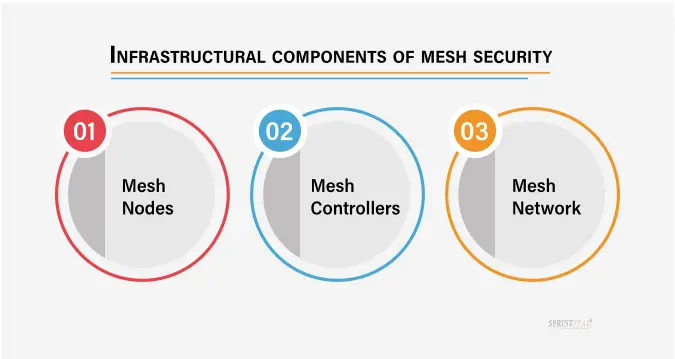
- Mesh Nodes: The mesh is made up of these components. Devices like firewalls, intrusion detection and prevention systems, or secure access gateways might be physical or virtual.
- Mesh Controllers: These are the gadgets in charge of orchestrating and managing the mesh. They offer a centralized point of control for the mesh and might be real or virtual devices.
- Mesh Network: The mesh nodes and controllers are connected via this network. The network might be real or virtual, and it has to be built with high availability, scalability, and security in mind.
A secure mesh architecture should be designed and implemented according to a set of best practices called mesh security. The following are some crucial Mesh Security best practices:
- Apply the least privilege principle to make sure that any user or service in the mesh has just the rights required to carry out its purpose.
- Use strict access restrictions to regulate who may access the mesh.
- Regularly check the mesh for any security problems and take prompt action in the event of any accidents.
- Protect data while it is in transit and at rest by using encryption and other security measures.
Networks, devices, and data are all protected from cyber-attacks by the Mesh Security Model, a thorough and integrated approach to security. The Mesh Security Model has the following essential components:

- Detection: Mesh security systems must be capable of quickly identifying possible cyber threats and alerting security staff to take appropriate action.
- Prevention: Mesh security solutions have to be able to stop possible cyber threats from infiltrating the network or propagating to other areas of the network.
- Reaction: Mesh security solutions should be able to act swiftly and successfully in the event that any cyber threats are identified.
Organizations wishing to protect their networks, devices, and data from cyber-attacks can benefit greatly from the cybersecurity mesh architecture. The following are a few major advantages of cybersecurity mesh architecture:

Organizations may get these and many more advantages by deploying Cybersecurity Mesh Architecture, giving them a strong and secure approach to cybersecurity.

Cyber security Mesh Architecture is a potent and adaptable method of cybersecurity that may assist companies in safeguarding their networks, gadgets, and data from online dangers.
Businesses may construct a secure mesh architecture that can adapt to evolving cyber threats and operational needs by adhering to the best practices of the Mesh Security Infrastructure, Mesh Security Best Practices, and Mesh Security Model.
A scalable and adaptable approach to cybersecurity is provided by mesh network security and mesh security architecture, which can be tailored to meet the unique security requirements of every organization.
Start building a secure and scalable Cybersecurity Mesh Architecture for your organization today. Consult with our experts at Sprintzeal and implement the best practices to ensure the safety of your network and data.
Learn more about topics like Mesh architecture from our Cybersecurity course-
Cybersecurity Mesh Architecture, also known as Mesh Network Security, is a security model that generates a mesh of interconnected security services to protect networks, devices, and data from cyber threats such as malware, phishing, ransomware, and other cyber-attacks.
This post will go through the critical parts of building a stable mesh structure and enforcing mesh cybersecurity solutions.
Mesh security architecture is a scalable, adaptable security paradigm that can be specifically adapted to meet the unique security needs of every company. Some of this framework's primary advantages include the following:
- It provides a thorough security strategy that is adaptable to shifting business requirements and emerging internet threats.
- Because it offers a higher level of flexibility and scalability, making it appropriate for agencies of all sizes, it can be modified to match the specific security demands of an organization.
The foundation of mesh network security is the concept of connecting security services to create a safe environment.
It is crucial for companies that handle sensitive data and wish to guarantee the security of their networks. Based on their capacity to deliver efficient security and interoperability with other mesh services, mesh-based security solutions should be carefully chosen.
Building a Cybersecurity Mesh entails the following crucial steps:
- Identify the network's essential security services and decide how they will cooperate. Firewalls, intrusion detection and prevention systems, secure access gateways, and other tools are some examples of these services.
- Install mesh-based security tools all throughout the network to create a web of linked security services that can identify, stop, and react to possible cyber-attacks.
- Regularly monitor and upgrade these security measures to make sure they continue to be effective against the most recent online dangers.
A Mesh Security Architecture can be implemented according to a set of rules and best practices called the Mesh Cybersecurity Framework. It entails establishing a rigid security policy that controls how the mesh is accessed and utilized. When drafting this policy, keep the following things in mind:
- Describe the functions and obligations of each mesh service and user.
- Outline the steps to take in the event of a security incident or breach.
Cybersecurity To safeguard networks, devices, and data from online threats, mesh implementation entails deploying mesh security solutions and framework.
It entails choosing the appropriate mesh security infrastructure and services and developing a secure mesh architecture that can change to counter evolving cyberthreats.
A cybersecurity mesh's supporting structure is its mesh security infrastructure. It consists of the networking, software, and hardware elements required for the mesh to operate. Infrastructural components of mesh security include the following:
- Mesh Nodes: The mesh is made up of these components. Devices like firewalls, intrusion detection and prevention systems, or secure access gateways might be physical or virtual.
- Mesh Controllers: These are the gadgets in charge of orchestrating and managing the mesh. They offer a centralized point of control for the mesh and might be real or virtual devices.
- Mesh Network: The mesh nodes and controllers are connected via this network. The network might be real or virtual, and it has to be built with high availability, scalability, and security in mind.
A secure mesh architecture should be designed and implemented according to a set of best practices called mesh security. The following are some crucial Mesh Security best practices:
- Apply the least privilege principle to make sure that any user or service in the mesh has just the rights required to carry out its purpose.
- Use strict access restrictions to regulate who may access the mesh.
- Regularly check the mesh for any security problems and take prompt action in the event of any accidents.
- Protect data while it is in transit and at rest by using encryption and other security measures.
Networks, devices, and data are all protected from cyber-attacks by the Mesh Security Model, a thorough and integrated approach to security. The Mesh Security Model has the following essential components:
- Detection: Mesh security systems must be capable of quickly identifying possible cyber threats and alerting security staff to take appropriate action.
- Prevention: Mesh security solutions have to be able to stop possible cyber threats from infiltrating the network or propagating to other areas of the network.
- Reaction: Mesh security solutions should be able to act swiftly and successfully in the event that any cyber threats are identified.
Organizations wishing to protect their networks, devices, and data from cyber-attacks can benefit greatly from the cybersecurity mesh architecture. The following are a few major advantages of cybersecurity mesh architecture:
Organizations may get these and many more advantages by deploying Cybersecurity Mesh Architecture, giving them a strong and secure approach to cybersecurity.

Cyber security Mesh Architecture is a potent and adaptable method of cybersecurity that may assist companies in safeguarding their networks, gadgets, and data from online dangers.
Businesses may construct a secure mesh architecture that can adapt to evolving cyber threats and operational needs by adhering to the best practices of the Mesh Security Infrastructure, Mesh Security Best Practices, and Mesh Security Model.
A scalable and adaptable approach to cybersecurity is provided by mesh network security and mesh security architecture, which can be tailored to meet the unique security requirements of every organization.
Start building a secure and scalable Cybersecurity Mesh Architecture for your organization today. Consult with our experts at Sprintzeal and implement the best practices to ensure the safety of your network and data.
Learn more about topics like Mesh architecture from our Cybersecurity course-

Thu, 08 October 2026
Mon, 29 June 2026

Wed, 29 April 2026

Tue, 03 December 2024

Tue, 15 October 2024

Wed, 23 October 2024

Sun, 09 August 2026

Tue, 10 December 2024


© 2026 Sprintzeal Americas Inc. - All Rights Reserved.



 USA : +1315-322-7821
 UK : +44 7700 174870
 IND : +919036108287
 AUS : +61 480 005 455