How Certified Professionals Turn a Credential Into Career Momentum
Wed, 21 October 2026

Inspirational journeys
Follow the stories of academics and their research expeditions
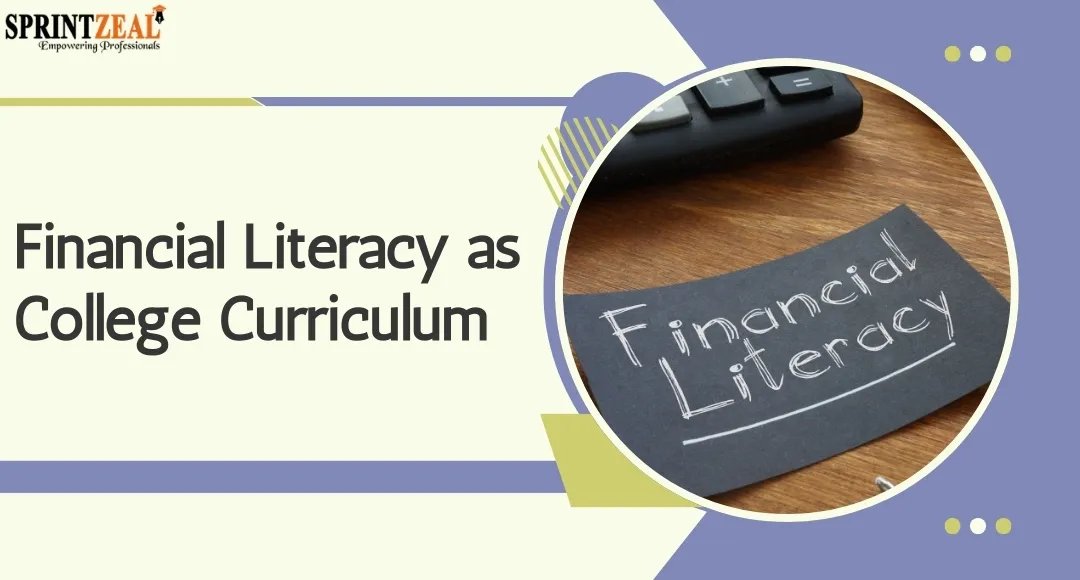
If our life is a movie, money is what directs it. It dictates how we live, what we eat, what risks we take, and whether we get to travel or not. As we enter college, money starts to become a more pressing concern.
Whether it’s paying tuition, working part-time jobs, worrying about rent, or overspending on weekends.
Tuition bills, part-time jobs, rent, weekend spending, that notification from the bank app that always seems to arrive at the wrong time. Yet for something so central, formal education treats money like a side character.
We learn complex theories, memorize formulas, analyze literature, but rarely sit down and ask a simple question. How do you actually manage your own finances? If college is meant to prepare students for the real world, then financial literacy deserves a permanent seat in the curriculum.
For millions of students, college begins with signing documents they barely understand. Loan agreements feel routine, almost ceremonial, but the implications last decades.
Interest accrues quietly, repayment schedules shift, and small misunderstandings snowball into long-term financial strain. Many graduates enter the workforce with impressive degrees yet a limited understanding of amortization, refinancing options, or income-driven repayment plans.
This is why colleges must teach students how loans function in real life. A required course could walk students through how interest compounds, what grace periods mean, and when it makes sense to refinance student loans based on income and market rates.
These are not abstract finance concepts. They directly affect graduates’ monthly budgets and long-term stability. Without guidance, students rely on scattered advice from social media or peers who are just as confused.
Financial literacy turns loan management from a guessing game into a strategic decision. This alone can protect years of earnings and reduce unnecessary stress.
Most students create a budget only after they overspend. It usually happens in a moment of panic, when the account balance looks more fragile than expected. Budgeting should not be a reaction to a crisis. It should be a foundational skill introduced before financial independence begins.
A structured financial literacy course would teach students how to track income, categorize expenses, and plan for irregular costs like textbooks or travel. More importantly, it would frame budgeting as empowerment rather than restriction.
When students understand cash flow, they make conscious choices instead of reactive ones. They can decide how much to allocate to savings, leisure, and necessities without guilt or confusion.
Budgeting also builds awareness of lifestyle inflation. When students begin earning through internships or freelance platforms, income often disappears just as quickly as it arrives. Without financial education, new earners may increase spending without increasing savings.
Teaching budgeting early helps students build habits that follow them into adulthood, where financial mistakes become more expensive and harder to reverse.
Credit cards are marketed to college students with irresistible simplicity. Sign up, get rewards, build credit. What rarely gets explained in detail is how quickly high interest can transform a small balance into a heavy burden.
Many young adults swipe first and calculate later, unaware of how minimum payments stretch debt across years.
Financial literacy education would break down how credit works, how interest compounds daily, and how credit scores are calculated.
Students should understand how payment history, credit utilization, and account age affect their future ability to rent apartments or secure car loans. These are practical realities, not niche knowledge.
Early education also reduces anxiety. Studies show that a significant percentage of young adults feel stress when discussing money. This anxiety often stems from uncertainty.
When people do not understand financial systems, they fear them. By demystifying credit cards, loans, and repayment structures, universities can replace fear with clarity. Clear knowledge transforms debt from a hidden threat into a manageable responsibility.
When students hear the word investing, many imagine stock tickers, volatile markets, and dramatic losses. Financial media often amplifies extreme stories, which makes investing seem intimidating and inaccessible.
In reality, investing can begin with small, consistent contributions and long-term patience. A college-level financial literacy course could explain the basics of compound growth, diversified portfolios, and risk tolerance.
A modern course should also explain how pricing works across asset types, using the American Silver Eagle as a simple example of “spot price plus premium” that students won’t see with an index fund.
Students should learn that investing is not reserved for business majors. It is a tool available to anyone willing to understand it.
High-yield savings accounts, government bonds, retirement accounts such as Roth IRAs, and index funds are all accessible options that do not require large starting capital.
Teaching these principles early unlocks time as an asset. A student who invests modest amounts in their early twenties benefits from years of compound growth. Waiting until thirty or forty significantly reduces that advantage.
Without education, students postpone investing because they feel unprepared. With structured guidance, they can start small, build confidence, and watch their money grow steadily rather than fearfully.
Money stress does not stay in bank accounts. It seeps into sleep patterns, academic performance, and personal relationships. When students feel overwhelmed by financial uncertainty, their cognitive load increases. Anxiety becomes background noise that never fully quiets.
Incorporating financial literacy into college curricula addresses this issue proactively. When students understand their financial position, create emergency funds, and plan repayments, they gain a sense of control. Control reduces stress. A clear repayment plan feels different from an undefined cloud of debt.
Financial education also teaches students to prepare for emergencies. Many young adults lack even a small emergency fund. Without savings, unexpected medical bills or sudden job loss create crisis situations.
A curriculum that emphasizes saving strategies and contingency planning equips students to handle financial shocks without spiraling.
Universities already invest in mental health resources. Integrating financial literacy complements that effort. When students feel stable about money, they can focus more fully on their academic goals and personal growth. Financial stability and mental clarity often move together.
Today’s college students are not waiting for graduation to enter the workforce. Freelancing platforms, internships, and online businesses allow students to earn income while studying. However, earning money and managing money are two very different skills.
Many students receive their first freelance payment and immediately spend it. Taxes are forgotten. Savings are postponed. Long-term planning feels distant. Without guidance, income becomes a temporary pleasure instead of strategic progress.
A required financial literacy course could teach students how to separate personal and business finances, estimate tax obligations, and set aside percentages for savings and reinvestment.
These lessons are crucial in a digital economy where side hustles and remote work are common. Students who understand cash flow management early can scale their earnings responsibly.
When education aligns with real economic behavior, it becomes relevant. Financial literacy bridges the gap between classroom theory and daily financial decisions. Instead of learning through trial and costly error, students gain structured insight before mistakes accumulate.
College curriculums often prioritize theoretical knowledge. While academic rigor is valuable, it sometimes overshadows practical preparation. Students memorize formulas and historical timelines, yet graduate unsure how to read a loan agreement or evaluate insurance options.
Financial literacy introduces immediate, tangible relevance. Students can apply lessons the same week they learn them. They can adjust spending habits, open appropriate accounts, or review credit reports with informed eyes. Education feels empowering when it produces visible change.
Some institutions already offer elective courses on personal finance, but limited seats and low awareness reduce their impact. Making financial literacy mandatory ensures equal access. It signals that money management is not optional knowledge reserved for business majors. It is foundational to adulthood.
Universities require general education courses in writing and communication because those skills shape every career. Financial literacy deserves a similar status. Whether a graduate becomes a doctor, engineer, artist, or entrepreneur, financial decisions will influence their freedom and stability.
Teaching these skills systematically honors the true purpose of higher education, which is to prepare students for life beyond campus walls.
Financial literacy should not be something students scramble to learn after graduation. It should not be pieced together from online videos, scattered advice, and painful mistakes.
If college is a bridge between adolescence and independent adulthood, then money management must be part of the structure. Student loans, credit cards, investments, budgeting, and emergency planning are not peripheral concerns. They shape careers, relationships, and long-term security.
Making financial literacy a required component of every college curriculum is not about adding another academic burden. It is about equipping students with tools that directly influence their quality of life.
When students understand how money works, they move with confidence instead of confusion. They build stability instead of stress. A financially literate generation is not just more independent. It is more empowered, resilient, and prepared for the complexities of the modern world.

Wed, 21 October 2026
Thu, 15 October 2026

Wed, 14 October 2026

Tue, 13 October 2026
Wed, 07 October 2026

Fri, 02 October 2026

Wed, 30 September 2026
Tue, 29 September 2026
Fri, 25 September 2026

Tue, 22 September 2026


© 2026 Sprintzeal Americas Inc. - All Rights Reserved.

 USA : +1315-322-7821
 UK : +44 7700 174870
 IND : +919036108287
 AUS : +61 480 005 455