Benefits of QMS Certification for Your Business
Mon, 01 July 2024

Inspirational journeys
Follow the stories of academics and their research expeditions

A thorough understanding of quality assurance and control is necessary before beginning a career as a quality manager. The need for skilled, quality top managers will persist even as the professional landscape changes in 2026. In addition to having a strong skill set, contenders in this field must also be able to perform well in quality manager interview questions.
The key to success in these interviews is the ability to respond intelligently to the most common quality manager interview questions. Understanding these interview questions is crucial, whether you are a skilled quality management professional looking for career advancement or an aspirant entering this field.
This blog acts as a thorough manual, simply stating the essential quality manager interview questions interviewers are likely to ask in 2026. You will also meet quality interview questions and answers on many other topics. Some rounds focus on quality control manager interview questions. Others cover quality assurance manager interview questions or quality director interview questions. Senior panels use quality executive interview questions. Team based rounds use quality department interview questions. This guide covers all of them in simple steps. Let's start looking into how we can become a reputable Quality Manager by 2026.
Key Takeaways
Quality manager interview questions test your systems skill and your people skill.
Answer with a short direct reply and one real example and a result.
ISO 9001 has a new 2026 edition so expect questions on what changed.
Last updated: September 2026
Whatever a product may be, irrespective of its genre, size, or shape, the main thing manufacturers should put effort into is maintaining the quality of their product through quality control.
Assuring and maintaining the quality of any product is a tough job to carry on. This is where a quality manager is required. Every organization that is involved in manufacturing some sort of product or service hires a Quality Manager. And is over for quality, the manager is to assist.
Guidance suggests various types of methods to maintain the quality of any product. A Quality Manager has to pay attention to a product from its inception till it is delivered to the end customers. Many quality related questions in an interview come from this one idea. The interviewer wants to see if you understand the full life of a product. So learn this role well before you practice the quality manager interview questions below.
A Quality Manager is required in every type of industry and organization undoubtedly. There’s no such organization that condemns denying the importance of quality management and quality control in their organization.
A Quality Manager Job is not only fixed to certain manufacturing industries. However, they are required in various industries, starting from the healthcare industry to the automobile industry.
Quality Managers play vital roles in every type of industry, by helping to understand the product's quality control. Their role may depend upon the type of industry they work within. But, there are specific and certain roles they have to play similar in every type of industry. Some of the basic responsibilities of an organization are:
They have to put forward better quality standards, procedures, and specifications in order to maintain the quality of manufacturing.
They have to review the end of consumer demands while managing the quality of the product and quality control.
They will have to work hand in hand with the vendors to maintain the quality of any product at the time of delivery.
They are not only responsible for establishing quality for the product and controlling it, but they are also responsible for establishing the quality of health and safety while working.
They’re responsible for explaining each and every procedure of quality management to their staff.
They have to face all types of challenges that may arise while managing the quality of any product.
They have to manage resources while managing the quality of any product.
While working with waste, they are responsible for reducing wastage and increasing efficiency.
They have to keep track of each quality management procedure by reviewing and gathering data and statistical reports.
They have to check each and every area of work and have to work on the weak areas and recommend some better plans to improve the weak areas of quality management.
These are the top quality manager interview questions that most employers ask. Read them first. Then move to the role based sections that follow. Each one is a useful quality question for interview practice.
As a Quality Manager, a person has to work effectively in order to develop a team as a whole. As a Quality Manager, an individual should never think with ego. It is the major responsibility of a Quality Manager to develop a team individually. And a Quality Manager should never look at any of their team members on the basis of inferiority.
The Quality Manager, being a leader of a quality management team, should never compare any team member with another team member by any means. Quality managers should always behave like good leaders.
They should participate in various processes and activities with their team members to make them feel comfortable enough to work in any type of environment. Last but not least, a Quality Manager should always pay attention to the feedback he or she gets from their team members.
A quality manager is a professional who is involved in inspecting a product from its inception till its delivery by maintaining its quality control. They have two strategies and different types of processes that can be used to develop the quality of an imperative sufficiently. They must know how to sustain their resources while managing the quality of any product.
They have to review each and every process that is going to be involved in managing quality, this means it helps in a better understanding of quality control.
They have to clearly explain the need for quality management to their teams. They must keep their eyes open while managing the quality of any product, this is how quality control is managed.
They should keep into account each and every process that is involved in managing the quality of the product. They should always stay prepared for the changes in the request that may arise from the stakeholder's end.
Is Your Quality Manager Salary Competitive? See how you measure up and take steps to earn more.
Quality manager salary in the United States The U.S. Bureau of Labor Statistics does not list quality manager as a separate job. The closest match is industrial production manager. The median pay for that role was$93,000 to $115,000 per year in 2026. BLS expects about 3 percent job growth from 2026 to 2035. Indeed shows an average of $93,127 per year for QA managers based on its own data. An ASQ salary survey from 2018 found that Six Sigma Green Belts earned over $10,000 more than Yellow Belts on average.
Sources: BLS Occupational Outlook Handbook and Indeed Career Guide and ASQ Quality Progress salary survey.
The daily routine of a quality manager should include tasks like:
Apart from these three attacks, a quality manager should always pay attention to every detail in the quality of a product. By doing all these tasks and responsibilities in the daily routine, a quality manager can easily handle the pressure from the stakeholders, higher authorities, and competitors.
The major motive of a quality manager should be to save the reputation of their organization by quality control and quality management.
Further, they should also consider conducting quality auditing to check the integrity of the production process and quality process.
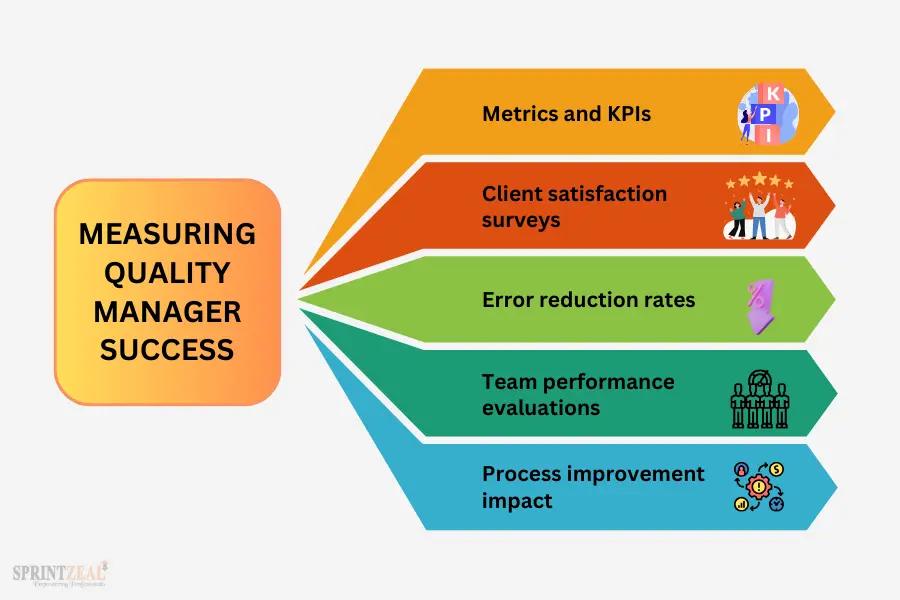
The measures that a Quality Manager should take to calculate his success are:
He should put effort into meeting the demands of the employees. And he should also pay attention to employee satisfaction.
He should always look forward to improving the levels of standards of service provision and Product deliverance.
He should aim and work to gain the given target.
You should always consider completing any quality awareness workshop successfully.
Ultimately, here are two who work hard enough to develop their employees individually to meet the required demands of their customers.
The greatest strength of a quality manager should be:
The Quality management process is comprised of various quality standards In accordance with the PMBOK. These standards can guide any quality manager to easily deliver any project and product. It also guides a quality manager with steps to efficiently meet the compliance of any project.
The Project Quality Management process of PMBOK includes 3 main processes, and those are:
The process of quality planning comes along with quality metrics. The process of quality assurance deals with the analysis and continual development of production processes and project processes.
In contrast, quality control is a process that is implemented in order to control the quality metrics. While working with these three processes, a Project Manager works hand in hand with a Quality Manager.
And, they basically aim to procure all the project and business-related goals while delivering the required product for the outcome.
A quality Manager is able to bring any result to life by following certain motives or objectives. To bring inefficient results, a Quality Manager should make sure that everything is done according to a set plan. They should pay attention to each step or process that is carried out while developing any product. Further, they should also make sure that:
By completing the abovementioned objectives only, a Quality Manager can bring in the result.
A Quality Manager should meet all their commitments within the three months of their employment. They should prove their ability to their employers by working hard enough to maintain the integrity of the goals and vision of the company.
They should be loyal and reliable enough for their organization to push envelopes of the Quality Department.
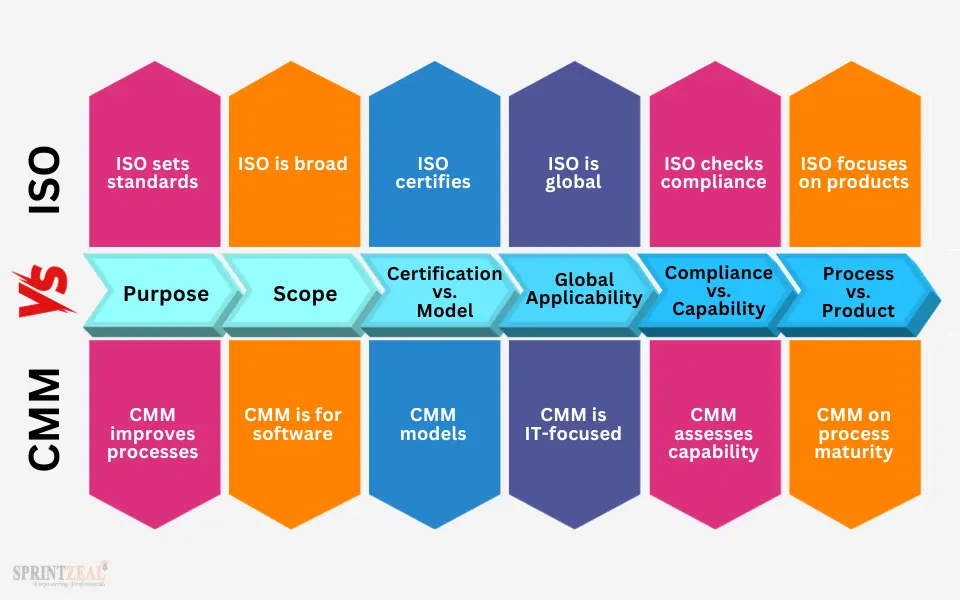
ISO and CMM serve two different purposes. ISO 9001 is an international standard. It sets clear requirements for a quality management system. An external auditor checks if the organization meets them and then issues a certificate. CMM stands for Capability Maturity Model and it is now called CMMI. It does not certify a system. It rates how mature the processes of a team or company are on a scale of five levels from Initial to Optimizing.
In simple words ISO asks if you meet the standard. CMM asks how well your processes run and improve.
I use ISO 9001 to give customers and auditors proof of consistent quality. I use CMMI to bring order to how teams plan and control their work. I have seen them work best together. ISO gives a strong base and CMMI takes process discipline to the next level.
By following a Quality Management System and effectively implementing the same, an organization can enjoy various benefits.
For instance, achieving the ISO 9001 Certification implies that an organization is providing its customers with good quality products and services. Some other benefits of following a Quality Management system are:
By creating formal documentation, a quality manager can easily keep track of every process involved in the Quality development of a product and help in the quality management system.
They can also provide this documentation to their higher authorities and stakeholders for a better understanding of the quality management system. At current, the stats of Quality development. The major benefits of formal documentation are:
To answer this question, a Quality Manager should possess the best data analytical skills. And he or she should demonstrate their analytical skills using data in front of their employers.
Quality Manager plays a very important role in managing the quality of their product and quality control of the product. They act as a catalyst for change in the organization. They not only create a better channel of communication when it comes to change.
They also play a vital role in handling the relationship of their organization with stakeholders. And they do so by maintaining the integrity of the product cycle.
At the same time, managing and monitoring the quality while managing and monitoring the quality of any product.
There are several contents of test plans and test cases that allow a Quality Manager to test various aspects of any project. By testing various aspects of any project, a Quality Manager can easily understand the requirements and the weaknesses. The following contents of test plans and test cases are:
A test case can be redefined as a certain condition. In this condition, checking against the Application under Test is carried out. It comprises information like test steps, prerequisites, changes in demands test environments, and other such outputs.
The strategy for the automation test plan is described as:
There are various procedures that are carried out in an organization to check the quality of an end product. However, a quality manager regularly checks each step efficiently to reduce the scope of quality-related faults.
But, even after running a number of obligatory quality inspections, there are chances that the quality of the end product may get hampered. This is the reason why it is important to carry out a Quality Audit. Generally, Quality Audit can be defined as a systematic way to determine the efficacy of quality.
It allows a Quality Manager to investigate the Quality Control procedures that are carried out to maintain and enhance the quality of a product.
The discovery process is a process that is used to produce basic information. Such information can provide a Quality Manager with a decision and various points of action that can be used to enhance the quality of the product.
The Discovery process is more focused on the ways to bring in a set of robust methods. And those methods can be used as a foundation to create an efficient Quality Management System.
To move from the state of Discovery to Action, one has to move away from producing accurate data. And, they should focus more on presenting a set of actionable information that needs several techniques and tools.
Product Quality can be defined as a condition where the Quality Manager focuses more on finalizing the quality of a product. Whereas a Product Process can be defined as a procedure of setting required perimeters to manage the process involved in managing the quality of a product and its quality management system.
In general, as per 2026 latest update, there are seven quality principles, and those are:
Seven Quality Principles in Quality Management
1. Customer focus
2. Leadership
3. Engagement of people
4. Process approach
5. Improvement
6. Evidence-based decision making
7. Relationship management
In the field of quality management, risks can be defined as any defect, fault, or failure in achieving the projected quality of a product. It can also be defined as a situation that disturbs the developmental phase of a process.
However, a Quality Manager is a trained professional who is equipped with skills that can be used to detect and avoid any type of risk. A Quality Manager can avoid risk by applying different types of risk matrix in any process.
The risk matrix is capable enough to show the possible risks in a process. It also allows a Quality Manager to control such risks by identifying and reducing those risks. It also allows a Quality Manager to learn about the presence of risks in different segments of a process.
For instance, when a number of team members decide to leave amid the quality development phase. Then such type of instance can be called risk. So, to avoid such risk, a Quality Manager should sign a bond or contract with their team members for a particular time period.
I believe in addressing conflicts swiftly and impartially. My approach involves actively listening to each team member's perspective, analyzing the situation without bias, and facilitating a solution that fosters collaboration while supporting.
A key component of my management approach is developing a culture of ongoing progress. In order to ensure adherence to organizational goals and industry standards, I put a high priority on open communication, defining measureable quality goals, and allowing the team to take the right steps.
Quality basic interview questions come early in the round. They look simple but they set the tone. Give short and clear answers with one real example. Panels use these quality basic interview questions to judge your clarity before the harder quality manager interview questions start.
Tell me about yourself and your quality experience.
Start with your years in quality. Name the industries you have worked in. Mention one system such as ISO 9001 and one result you achieved. End with why this role fits you. Practice this answer out loud before any quality interview.
What does quality mean to you?
Quality means meeting customer needs every time. It also means meeting legal rules. Good quality comes from strong processes and not from checking alone. Expect quality related questions like this one in the first ten minutes.
What is the difference between QA and QC?
Quality assurance prevents defects by fixing the process. Quality control finds defects through checks and tests. QA looks ahead and QC looks at results. This is one of the most asked QC interview questions. A strong quality manager uses both.
Which quality standards do you know?
Talk about ISO 9001 first. Add IATF 16949 for the car industry or ISO 13485 for medical devices if they fit your field. Say how you used them and not only that you know them.
I review historical quality reports and customer complaints to spot recurring issues. For example, at a previous company, production delays were traced back to inconsistent machine calibrations. By scheduling regular maintenance, we resolved the bottleneck.
I use tools like Fishbone Diagrams for root cause assessment to recognise flaws and Statistical Process Control (SPC) to verify process stability. These methods have helped me address production failures early.
I standardize production processes and conduct in-process quality checks. At my previous company, introducing a mid-production quality check reduced rework significantly.
I identify key control points within the production process and establish visual and automated inspections. One such setup in a packaging line caught minor defects before final sealing, preventing delivery delays.
I involve them in practical audits, provide hands-on training on inspection tools, and encourage learning through case studies.
Aligning quality goals requires a deep understanding of the organization's strategic vision. I prioritize initiatives that impact customer satisfaction, cost reduction, and process efficiency. For example, while working at a manufacturing company, I introduced lean management practices that reduced waste by 15% and enhanced production efficiency by aligning KPIs with overall business objectives.
Key points for success:
Scaling operations demands standardized processes and robust monitoring systems. I implement advanced automation tools for data capture and real-time analytics to monitor quality at scale. For instance, during a factory expansion, I adopted machine learning-based predictive maintenance to minimize breakdowns, maintaining product consistency across facilities.
Tips for effective scaling:
I start with a gap analysis to identify non-conformities, followed by creating a step-by-step implementation plan. I ensure that the workforce understands compliance requirements through tailored training programs. In a previous role, implementing ISO 9001 reduced defect rates by 20% and improved overall operational transparency.
Implementation steps:
I track defect costs, warranty claims, and customer returns. One initiative involved switching to higher-grade materials, reducing warranty claims by a noticeable margin and improving brand reputation.
I operate stress tests on production processes and Failure Mode and Effects Analyses (FMEAs). In one case, we prevented a costly launch failure by detecting potential material instability in early trials.
When environmental regulations tightened for a manufacturing client, I led a team to redesign waste disposal processes, ensuring compliance without production delays.
I would assess the defect's impact and communicate with the supplier for immediate corrective action. At one point, we worked with a secondary supplier to keep production on schedule while negotiating a long-term improvement plan with the original supplier.
I document the non-conformance and implement corrective actions with a priority timeline. In one instance, we revised a calibration schedule that the auditor flagged as inadequate and passed the follow-up audit successfully.
I investigate the root cause by reviewing processes and workloads. By redistributing tasks and offering training on inspection procedures, the team significantly improved KPI adherence.
I work closely with the production and customer service teams to investigate the root cause. In one situation, adding a pre-shipment quality check resolved the problem and regained customer trust.
I present data showing the long-term cost of rework and returns. By implementing lean workflow adjustments, we were able to meet deadlines without compromising quality.
In this situation, staying competitive requires a strategic approach that balances cost efficiency with quality improvement.
Steps I took in a similar case:
ISO published a new edition of ISO 9001 in September 2026. Interviewers may now ask about it. They want to know that you keep up with your standards.
What is new in ISO 9001:2026?
The new edition builds on ISO 9001:2015 and keeps its core ideas. The process approach and the PDCA cycle and risk-based thinking stay central. The update gives more weight to quality culture and ethical behavior. I would read the official text before I claim more detail than that.
How would you plan the move to the new edition?
I would start with a gap analysis against the new text. Then I would update documents and train staff and adjust the internal audit plan. I would agree the timing of the transition audit with the certification body. A three year transition period is expected. Certificates to ISO 9001:2015 stay valid during that time. I would confirm the final rules with the certification body.
How do you build a quality culture?
I lead by example and set clear expectations. I make it safe to report problems. I recognize good catches and share lessons openly.
QC interview questions test how you find and stop defects. These quality control interview questions and answers show what a strong reply looks like. Use them for quality control manager interview questions and for lower level roles too.
What inspection methods do you use?
I use incoming checks and in process checks and final checks. I add sampling plans and control charts to keep results stable. I pick the method by risk and by the cost of failure.
How do you handle a defect found before shipment?
I stop the shipment first. I put the batch on hold and label it clearly. Then I find the root cause with a fishbone diagram or the 5 Whys. I fix the cause and tell the customer if needed. Last I update the process so the defect cannot return.
How do you keep measuring tools accurate?
I keep a calibration schedule for every tool. Each tool carries a label with its next due date. If a tool fails calibration I review the results it checked before. This keeps the data honest.
How do you decide which problem to fix first?
I rank problems by risk. Safety and legal issues come first. Customer impact comes next. I use FMEA scores to sort the rest.
Which quality tools do you use most?
I use Pareto charts to find the few causes behind most defects. I use control charts to watch process stability. I use fishbone diagrams and the 5 Whys for root causes. I use checklists and flowcharts to keep work consistent.
Explain DMAIC.
DMAIC is the Six Sigma method for fixing a process. It stands for define and measure and analyze and improve and control. First you define the problem and the goal. Then you measure current performance. Next you analyze the root causes. Then you improve the process. Last you put controls in place so the gains last.
How can AI and IoT help quality work?
Sensors can track a process in real time and flag drift early. AI can study past defect data to show where problems may appear. I still keep people in charge of decisions and I check data quality first.
Quality assurance manager interview questions focus on systems and audits and people. They are also common interview questions for a quality manager. Job boards often list them as interview questions QA manager roles use.
How do you build a quality assurance plan? I start with customer needs and legal rules. Then I list each process step and its risks. I set checks and owners and review dates. I test the plan in a small pilot before a full rollout.
How do you keep your team ready for audits?
I run mock audits each quarter. I train staff on what auditors ask. I keep records clean and easy to find. After each audit I close every finding and share the lesson.
How do you measure the success of a QA program?
I track defect rate and customer complaints and audit findings. I also track the cost of poor quality. I watch trends over months and not single points. I share the results in management reviews.
Quality related questions in this area reward a clear plan and real data.
Some quality manager roles sit in IT and software teams. These questions come up often in QA manager and QA lead rounds.
What is the difference between verification and validation?
Verification checks that you built the product right against the specs. Validation checks that you built the right product for the user. Verification happens during development through reviews and inspections. Validation happens near the end through testing against real user needs.
How do you decide what to automate?
I automate tasks that repeat often and follow clear rules. Regression tests are a good example. I keep manual testing for new features and exploratory work that needs human judgment. I review the split as the product changes.
What do you do when the defect rate suddenly rises?
I look at what changed first. That includes new code or new suppliers or new settings. I group the defects by type and severity. I find the root cause and fix it and record the action. Then I add a check so the problem cannot slip through again.
Supplier roles ask many behavioral questions. Use these behavioral questions to prepare for supplier quality manager interview rounds. Answer each one with the STAR method. State the situation and the task and your action and the result.
Behavioral questions to prepare for supplier quality manager interview panels:
Sample answer for supplier quality manager interview questions and answers: A supplier sent parts that failed our incoming check. I put the lot on hold the same day. I asked the supplier for a root cause report within a set time. The cause was a worn tool at their plant. I then set up a supplier scorecard and a monthly review. Defects from that supplier fell in the following months.
Quality director interview questions and quality executive interview questions test strategy more than tools. Panels want to see how you link quality to profit and risk and customer trust.
For every answer link quality to business results. Talk about cost of poor quality and customer retention and audit outcomes. Show how you grow future leaders in your team. The core quality manager interview questions still apply at this level. Only the scope gets bigger.
Quality department interview questions and answers cover teamwork and reporting lines. Like all quality interview questions they reward real examples. Here are three that come up often.
How does the quality department work with production?
I hold short daily meetings with production leads. We review defect data and plan fixes together. Quality is a shared goal and not a policing job.
How do you handle a disagreement with another department?
I bring data to the table. I listen to their limits first. Then we agree on a fix that protects the customer and fits their capacity.
How do you grow skills inside your team?
I map skills against needs. I plan training and cross training. I give juniors real audit tasks with support.
Quality related interview questions reward clear structure. Good quality interview questions and answers all follow one pattern. These steps work for interview questions for a quality manager and for interview questions for quality technicians. Apply them to the top quality manager interview questions listed earlier.
Common mistakes to avoid:
Ask smart questions at the end of every quality interview. It shows you think like a quality manager.
To become a Quality Manager, follow these steps:
Get Quality Manager Interview Questions Ready! Top questions and smart answers for Senior Quality Manager.
So, these were some of the questions for quality manager interview, which can be helpful for an aspiring Quality Manager to crack their interview easily. However, the job of Quality Manager is described as one of the toughest jobs in the field of product development.
To manage the quality of various types of products, a Quality Manager should be experienced enough.
Further, one should keep in mind that before preparing for the interview questions and answers for a quality manager, they should consider achieving some experience in Quality Management systems. Gaining experience will help an individual to answer all the Quality Manager Interview Questions from every aspect. Keep practicing with the quality interview questions and answers in each section above. Review the quality control manager interview questions and the quality assurance manager interview questions again before the day. Study the quality director interview questions and the quality executive interview questions if you aim for a senior post.
Rehearse the supplier quality manager interview questions and answers and the behavioral questions to prepare for supplier quality manager interview panels. Run through the quality control interview questions and answers and the quality department interview questions and answers one more time. Add the interview questions QA manager panels ask and the interview questions for a quality manager to your notes.
Quality related interview questions and interview questions for quality roles become easy with practice. These quality manager interview questions are your best warm up. A calm and clear reply wins more offers than a perfect one. Good luck with your next quality interview.
To know about Six Sigma certifications and to find the Six Sigma course that fits your career goals, chat with our course expert. Subscribe to our latest newsletters, free ebooks and have your jobs crack with the Q&A rounds.
How do I prepare for a Quality Manager interview?
Prepare for Quality Manager Interview Questions by researching the company, reviewing quality management principles, and having examples of your quality improvement initiatives ready.
Why should we hire you as Quality Manager?
I bring a proven track record of improving quality, strong leadership skills, and a commitment to driving continuous improvement in processes and products.
What are the strengths of a Quality Manager?
Strong problem-solving abilities, attention to detail, effective communication, leadership skills, and a commitment to quality excellence.
What is the role of a quality manager?
A quality manager performs audits and improves the collection of features, services and goods assurances that fulfill quality standards.
What is the greatest strength of a quality manager?
Their skill is to guarantee output, address disputes, and promote a continuation system.
What are the top 10 questions asked in a QA interview?
The top 10 cover QA versus QC and audits and root cause analysis and KPIs and supplier quality and customer complaints and Six Sigma and Lean and team leadership and why the company should hire you.
What are the basic questions for a QC interview?
Basic interview questions for quality control roles cover inspection methods and defect handling and calibration and standards and record keeping. Most QC interview questions start here.
What are the 5 hardest interview questions?
Tell me about yourself is one. Others are why should we hire you and what is your biggest weakness and describe a failure and where do you see yourself in five years. Prepare a quality example for each.
What are the 5 C's of interviewing?
The 5 C's are a memory aid and sources vary. A common set is confidence and competence and communication and culture fit and character. Confidence shows belief in your skills. Competence shows you can do the job. Communication shows clear answers. Culture fit shows you match the team. Character shows honesty and ethics. For quality roles character matters a lot because the job depends on honest data.

Mon, 01 July 2024
Tue, 04 June 2024

Wed, 28 August 2024

Fri, 09 August 2024

Tue, 03 September 2024

Thu, 11 July 2024

Thu, 06 June 2024

Mon, 09 September 2024

Mon, 19 August 2024

Thu, 22 August 2024


© 2026 Sprintzeal Americas Inc. - All Rights Reserved.

 USA : +1315-322-7821
 UK : +44 7700 174870
 IND : +919036108287
 AUS : +61 480 005 455