AWS Certification Roadmap: Complete Cloud Certification Roadmap
Wed, 05 August 2026

Inspirational journeys
Follow the stories of academics and their research expeditions
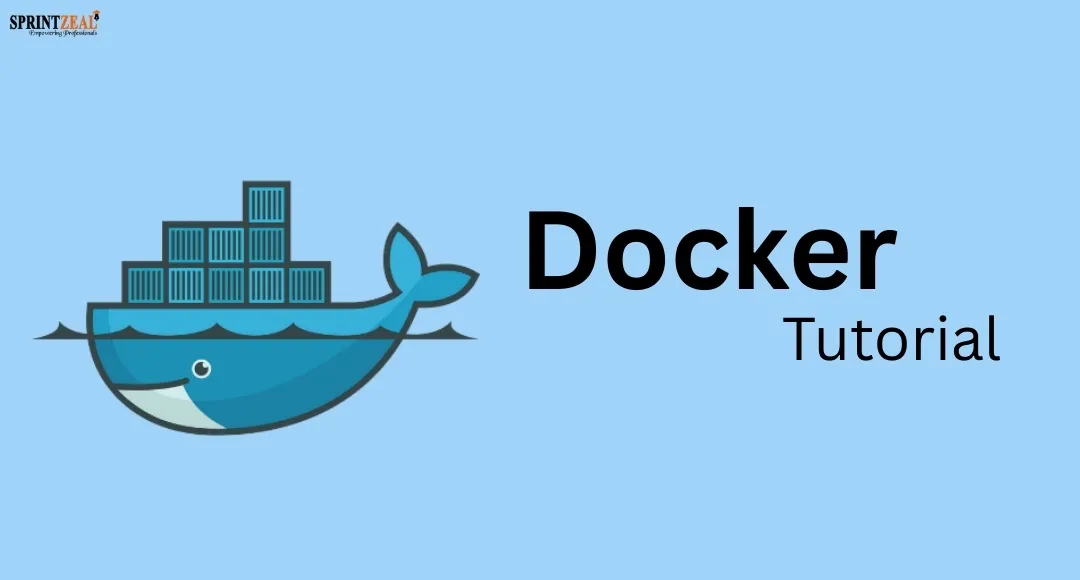
Have you ever had the "It works on my machine!" problem where an application runs perfectly on your system but fails elsewhere? Perhaps you have encountered bugs that occur only in production while everything appears to be fine in development. You are definitely not the only one. This usually happens because applications behave differently in different environments.
Now think of a situation where your app works the same way everywhere - development, testing, and production. This is precisely what Docker does. By containerisation, Docker makes developers lives easier by shipping the applications along with all their dependencies, configurations, and libraries in one lightweight container. By using Docker, developers can also achieve the same behavior in different environments, deployment can be done without any unexpected situations, and developers can concentrate on creating new features rather than fixing environment-specific issues.
Docker is the OG containerisation platform that popularised this tech since 2013. It lets you build, ship, and run apps in standardised containers via simple commands like docker build and docker run.
Key Benefits:
Portability supreme: Containers run identically anywhere—dev, test, or prod.
Lightweight & fast: Minimal overhead, quick startups, and resource-efficient.
Version control for environments: Dockerfile defines everything reproducibly.
Ecosystem gold: Integrates seamlessly with Kubernetes for orchestration, speeding scaling and deployments.
Docker transformed DevOps, making teams ship faster with fewer fires. Start with docker run hello-world and watch the magic.
Containerization is the practice of packaging an application with all its dependencies—such as code, libraries, and configs—into a small, portable unit called a container. Containers run the same way in any environment, be it a laptop, production servers, or clouds, thus solving the "it works on my machine" problem that developers get most of the time.
The reason that it is important is that modern applications require speed, scalability, and reliability. Containers dramatically reduce the time of the deployment (the start is in seconds, not minutes), increase the performance of the system by sharing the host OS kernel instead of duplicating VMs, and make microservices architectures possible for the isolation of faults—if one container crashes, the others continue to work. Portability means no more environment mismatches, cutting debugging headaches and accelerating CI/CD pipelines. Security improves too, with isolated sandboxes limiting breach impacts
Within a DevOps workflow, Docker is the base that collaborates with other DevOps tools for quicker and more dependable software delivery.
Getting Docker running is easier than you think—it takes about 5 minutes if you're on Windows, Mac, or Linux. Here's the no-fluff guide from someone who's set it up on 50+ machines.
Head to
and grab the installer for your OS.
Windows/Mac: Double-click, follow the wizard, and restart if asked. Linux? Use your package manager (apt/yum) or official script.
Pro tip: Enable WSL2 on Windows for buttery performance—Docker prompts you.
Open the terminal/command prompt, and run:
docker --version |
See "Hello from Docker!"? You're golden. That tiny container just proved everything's wired right.
docker ps # List running containers |
Quick Project Setup:
1. Create Dockerfile (no extension)
FROM node:18-alpine |
2. Build: docker build -t myapp .
3. Run: docker run -p 3000:3000 myapp
Troubleshooting:
Port busy? Kill with docker stop $(docker ps -q) or change -p 3001:3000.
Out of space? docker system prune -a frees GBs.
Docker images and containers revolutionise how we package, ship, and run apps consistently across environments. This guide breaks it down simply, drawing from real-world DevOps workflows I've used over five years writing about container tech.
Docker images are fixed plans of how your apps should work. They are layers of filesystems which have your code, runtime, libraries, dependencies, and configs – basically, everything that is required to run without any problem.
Layered Structure: Every line in a Dockerfile (for example, installing packages) makes a new layer, which can then be cached for quicker rebuilds and smaller sizes.
Portability: Share by pushing to registries such as Docker Hub; download from any place to get the exact same setups.
Versioning: Use image tags (like myapp:v1.0) to record changes, similar to how Git is used for code.
Images are read-only, ensuring no accidental changes corrupt the base.
Containers are the runtime instances of images – if you think of images as recipes and containers as the cooked meals. Docker puts a thin writable layer on top of the image for dynamic data and processes.
Isolation: Every container is running in its own namespace, thus sharing the host kernel but being isolated in the same way as lightweight VMs are—booting in seconds, not minutes.
Lifecycle: The lifecycle of containers is pretty simple—starting a container is done by "docker run," stopping it is done by "docker stop," deleting it is done by "docker rm," and you can inspect a container by "docker logs" or "docker exec."
Scalability: You can localize multiples with Docker Compose or Kubernetes for microservices.
One image works for several independent containers, which is perfect for testing or staging.
Aspect | Image | Container |
Nature | Static, read-only template | Dynamic, running instance |
Storage | Layers in registry | Writable layer + image |
Lifecycle | Built once, reused forever | Created, run, stopped, removed |
Use Case | Build & share | Deploy & execute |
Hands-On: Working with Them
Start simple: Compose a Dockerfile, create an image with docker build -t myapp . and start it with docker run -p 8080:80 myapp.
Best Practices: Keep the number of layers minimal, use .dockerignore, and employ multi-stage builds to obtain leaner production images.
Troubleshooting: docker images is the command to list images; docker ps shows running containers; pruning can be done by docker system prune.
Advanced: Use volumes for data that needs to be kept (-v host:/container), and use networks for communication between containers.
In CI/CD tools for pipelines, this setup cuts deployment friction dramatically.
Containers are stateless by design—great for scalability but lousy for databases or logs. Without persistence, data lives only in the container's writable layer, vanishing on restarts or removals.
The Problem: Ephemeral nature leads to data loss during updates, scaling, or crashes.
The Fix: Volumes store data outside containers, surviving lifecycle changes while enabling sharing across instances.
Real-World Win: Ensures consistency from dev to prod, simplifies backups, and supports stateful apps like MySQL or Redis.
Docker offers three main ways to handle persistent data, each with trade-offs.
Type | Description | Best For | Pros/Cons |
Volumes | Docker-managed storage, named or anonymous | Databases, shared data | Fully managed, performant; auto-backup friendly |
Bind Mounts | Map host directory to container path | Dev debugging, config files | Direct host access; risky in prod (host dependency) |
Tmpfs Mounts | In-memory, ephemeral storage | Sensitive temp data | Fast, secure; lost on reboot |
Volumes Docker-managed storage, named or anonymous Databases, shared data Fully managed, performant; auto-backup friendly
Bind Mounts Map host directory to container path Dev debugging, config files Direct host access is risky in prod (host dependency)
Tmpfs Mounts In-memory, ephemeral storage Sensitive temp data Fast, secure; lost on reboot
Volumes shine for production due to isolation and portability.
Kick off with named volumes—the gold standard for persistence.
Create: docker volume create mydata
Run with Mount: docker run -d -v mydata:/app/data --name myapp nginx
Inspect/Share: docker volume ls or mount the same volume in multiple containers for data sync.
In Docker Compose, define under services like volumes: - mydata:/app/data. Data written to /app/data persists on the host, even if you docker rm the container.
Keep things robust:
Use volumes for app data; bind mounts sparingly for dev.
Backup with docker
run --rm -v mydata:/data -v $(pwd):/backup ubuntu tar cvf /backup/backup.tar /data |
Prune unused : docker volume prune
Common Pitfall: Forgetting to populate—Docker copies container data to new volumes on first mount.
In CI/CD, volumes cut deployment risks dramatically.
Every Docker container operates in a different isolated network namespace that explains why each container has its individual network stack i.e. IP addresses, interfaces, and routing tables. It is this isolation that containers run with without the risk of one another's network traffic interference. Docker links these namespaces with the help of virtual Ethernet devices known as veth pairs that are like virtual network cables connecting containers to Docker networks.
Docker facilitates the interactions between containers and external networks by host-initiated automatic firewall rule (iptables) setting. These rules take care of routing and port forwarding thus enabling the traffic to flow securely and efficiently without manual network configuration.
Bridge Network: Thus, Docker’s default network creates a private internal network on the host. Containers linked to a bridge network can send data to each other internally but in order to communicate with the host or the outside world, they have to explicitly map their ports.
Host Network: Containers are directly hooked up to the host’s network stack which means they can get faster access to the host interfaces and also they share the same network namespace, i.e., network isolation is lost. Employ it if you want the least latency or direct port binding.
Overlay Network: So, this kind of a network is typical for multi-host setups where those containers running on different Docker hosts get the opportunity to connect with each other securely by using encrypted tunnels, which is the most vital thing for orchestrators such as Docker Swarm or Kubernetes.
Practical Highlights
If a container is hooked up to several networks, it enables that container to interact with different microservices layers (frontend/backend, database, PYTHON) by issuing the docker network connect command. For the sake of quick development cycles, Docker’s user-defined networks are equipped with DNS-based container discovery, which makes the communication between the containers using the names possible.
Docker Compose is a tool for defining and running multi-container Docker apps. Instead of juggling docker run commands for each service, you create a docker-compose.yml file that outlines services, networks, volumes, and dependencies. Key perks include service discovery by name (e.g., the app connects to "db" effortlessly), automatic networking, and one-command orchestration like docker compose up.
It shines for local dev environments mimicking production, supporting stacks like Node.js apps with MongoDB or Python services with Redis.
Services: Define containers (e.g., web, db) with images, builds, ports, and env vars.
Networks: Custom or default bridge networks for inter-service communication.
Volumes: Persistent storage mounts to survive container restarts.
Example snippet:
version: '3.8' |
Hands-On: Building a Multi-Container App
Create a project dir and add Dockerfile and app code. |
Compose boosts productivity with reproducible environments, easier collaboration (just share the YAML), and scalability previews before Kubernetes. Pro tips: Use profiles for env-specific services, multi-stage Dockerfiles for efficiency, and .env files for secrets. Avoid over-relying on it for production—pair with Swarm or K8s
Docker is the instrument that makes collaborations between Dev and Ops teams flawless by delivering to production environments what are tested in development. Containerized workflows of Docker command continuous integration in the fields of the build, test, and deployment stages, thus time-to-market is drastically lowered.
Microservice solution to one of the biggest problems – monolith application – is technology demanding the most reliable and independent deployment of each of the microservices. Docker allows this by wrapping one microservice in one container together with all its dependencies; thus, the microservice becomes scalable and deletable with the whole system uninterrupted and being isolated in the container by nature.
Developers may take advantage of such an approach to software testing as quickly setting up isolated containers which are also reproducible cases of the “works on my machine” problem solution. Isolation from the developers’ and testers’ point of view is a condition of quality assurance since it also guarantees that the tests are run in the same environment regardless of the underlying host setup, hence the debugging process is accelerated.
Docker containers are independent of the platform on which they are running. Thus the question of where to deploy (AWS, Azure, Google Cloud, or on-premises infrastructure) becomes insignificant in terms of what products and services a business should put into operation. This move is very flexible and friendly to the business, which is saved from vendor lock-in and can furthermore support disaster recovery strategies.
Containers are sharing the same OS, the question of isolation is put aside since they are separated by nature, yet this leads to a nice example of efficient utilization of resources in terms of containers vs. traditional VMs. The setting is the one allowing you to safely and securely run multiple services on a single machine without space or conflicts among each other, thus infrastructure costs are getting slashed.
Developers may use Docker containers that are exact replicas of production to quickly prototype applications. Such a move drastically lowers the chance of environment misconfiguration and quickens the whole development cycle.
Docker is the enabler in this case, allowing the packaging of all dependencies of a machine learning model in a single portable unit, thus definite reproducibility is ensured across various setups and cooperation on complex experiments is facilitated.
Docker demonstrates its support for network function virtualisation, the major benefit of which is the telecom service providers' capability to efficiently deploy and scale network functions, thus meeting the ever-changing requirements of 5G and edge computing scenarios.
Docker is a platform that is open for app development, shipping, and running. With Docker, the user is able to isolate apps from the hardware environment, which allows for fast software delivery.
The basic usage of docker build is very straightforward - basically, you can provide a name of a tag with -t and a path of a directory where your Dockerfile is. If python:3.8 image is not available on your machine, the client will do a pull first and then build your image. So, in fact, the output of your command will be different from mine.
Yes, this training is at a basic/foundation level, which means it is appropriate for people who have just started with Docker. It is always good if you already know a bit about Unix-like systems, but it is not a must.
In 2025, Docker will still be a good choice, but only if you use it wisely. It is a good idea to use Docker for multi-service applications, development environments, and pipelines where consistency is important. However, do not use it for ultra-performance workloads, serverless microservices, or very small single-purpose functions.
Docker is the leading-edge technology that has changed the way businesses run their operations once they have adopted DevOps. With Docker, developers can use, build, test, monitor, ship and run applications through lightweight containers, which is why they can deliver code of better quality at a faster rate.
Docker is a revolutionary software platform that makes application development, deployment, and scalability very easy by using containerisation.Developers want speed. Operations wants stability. You can give them both. Become the critical link that makes modern software delivery possible. Master the tools of the trade with our AWS Certified DevOps Engineer Training.
This program not only teaches Docker but also gets you industry-standard tools and practices which help you to make your work faster and take collaboration to the next level. Time invested in formal education will give you the power to use Docker without any doubt and will be your ticket to many career opportunities. Why not take the first step to professional development and Docker mastery by enrolling in certified courses?
Have you ever had the "It works on my machine!" problem where an application runs perfectly on your system but fails elsewhere? Perhaps you have encountered bugs that occur only in production while everything appears to be fine in development. You are definitely not the only one. This usually happens because applications behave differently in different environments.
Now think of a situation where your app works the same way everywhere - development, testing, and production. This is precisely what Docker does. By containerisation, Docker makes developers lives easier by shipping the applications along with all their dependencies, configurations, and libraries in one lightweight container. By using Docker, developers can also achieve the same behavior in different environments, deployment can be done without any unexpected situations, and developers can concentrate on creating new features rather than fixing environment-specific issues.
Docker is the OG containerisation platform that popularised this tech since 2013. It lets you build, ship, and run apps in standardised containers via simple commands like docker build and docker run.
Key Benefits:
Containerization is the practice of packaging an application with all its dependencies—such as code, libraries, and configs—into a small, portable unit called a container. Containers run the same way in any environment, be it a laptop, production servers, or clouds, thus solving the "it works on my machine" problem that developers get most of the time.
The reason that it is important is that modern applications require speed, scalability, and reliability. Containers dramatically reduce the time of the deployment (the start is in seconds, not minutes), increase the performance of the system by sharing the host OS kernel instead of duplicating VMs, and make microservices architectures possible for the isolation of faults—if one container crashes, the others continue to work. Portability means no more environment mismatches, cutting debugging headaches and accelerating CI/CD pipelines. Security improves too, with isolated sandboxes limiting breach impacts
Within a DevOps workflow, Docker is the base that collaborates with other DevOps tools for quicker and more dependable software delivery.
Getting Docker running is easier than you think—it takes about 5 minutes if you're on Windows, Mac, or Linux. Here's the no-fluff guide from someone who's set it up on 50+ machines.
|
docker --version |
See "Hello from Docker!"? You're golden. That tiny container just proved everything's wired right.
|
docker ps # List running containers |
Quick Project Setup:
|
FROM node:18-alpine |
Troubleshooting:
Docker images and containers revolutionise how we package, ship, and run apps consistently across environments. This guide breaks it down simply, drawing from real-world DevOps workflows I've used over five years writing about container tech.
Docker images are fixed plans of how your apps should work. They are layers of filesystems which have your code, runtime, libraries, dependencies, and configs – basically, everything that is required to run without any problem.
Containers are the runtime instances of images – if you think of images as recipes and containers as the cooked meals. Docker puts a thin writable layer on top of the image for dynamic data and processes.
|
Aspect |
Image |
Container |
|
Nature |
Static, read-only template |
Dynamic, running instance |
|
Storage |
Layers in registry |
Writable layer + image |
|
Lifecycle |
Built once, reused forever |
Created, run, stopped, removed |
|
Use Case |
Build & share |
Deploy & execute |
Hands-On: Working with Them
In CI/CD tools for pipelines, this setup cuts deployment friction dramatically.
Containers are stateless by design—great for scalability but lousy for databases or logs. Without persistence, data lives only in the container's writable layer, vanishing on restarts or removals.
Docker offers three main ways to handle persistent data, each with trade-offs.
|
Type |
Description |
Best For |
Pros/Cons |
|
Volumes |
Docker-managed storage, named or anonymous |
Databases, shared data |
Fully managed, performant; auto-backup friendly |
|
Bind Mounts |
Map host directory to container path |
Dev debugging, config files |
Direct host access; risky in prod (host dependency) |
|
Tmpfs Mounts |
In-memory, ephemeral storage |
Sensitive temp data |
Fast, secure; lost on reboot |
Keep things robust:
|
run --rm -v mydata:/data -v $(pwd):/backup ubuntu tar cvf /backup/backup.tar /data |
Every Docker container operates in a different isolated network namespace that explains why each container has its individual network stack i.e. IP addresses, interfaces, and routing tables. It is this isolation that containers run with without the risk of one another's network traffic interference. Docker links these namespaces with the help of virtual Ethernet devices known as veth pairs that are like virtual network cables connecting containers to Docker networks.
Docker facilitates the interactions between containers and external networks by host-initiated automatic firewall rule (iptables) setting. These rules take care of routing and port forwarding thus enabling the traffic to flow securely and efficiently without manual network configuration.
Practical Highlights
If a container is hooked up to several networks, it enables that container to interact with different microservices layers (frontend/backend, database, PYTHON) by issuing the docker network connect command. For the sake of quick development cycles, Docker’s user-defined networks are equipped with DNS-based container discovery, which makes the communication between the containers using the names possible.
Docker Compose is a tool for defining and running multi-container Docker apps. Instead of juggling docker run commands for each service, you create a docker-compose.yml file that outlines services, networks, volumes, and dependencies. Key perks include service discovery by name (e.g., the app connects to "db" effortlessly), automatic networking, and one-command orchestration like docker compose up.
It shines for local dev environments mimicking production, supporting stacks like Node.js apps with MongoDB or Python services with Redis.
Example snippet:
|
version: '3.8' |
Hands-On: Building a Multi-Container App
|
Create a project dir and add Dockerfile and app code. |
Compose boosts productivity with reproducible environments, easier collaboration (just share the YAML), and scalability previews before Kubernetes. Pro tips: Use profiles for env-specific services, multi-stage Dockerfiles for efficiency, and .env files for secrets. Avoid over-relying on it for production—pair with Swarm or K8s
Docker is a platform that is open for app development, shipping, and running. With Docker, the user is able to isolate apps from the hardware environment, which allows for fast software delivery.
The basic usage of docker build is very straightforward - basically, you can provide a name of a tag with -t and a path of a directory where your Dockerfile is. If python:3.8 image is not available on your machine, the client will do a pull first and then build your image. So, in fact, the output of your command will be different from mine.
Yes, this training is at a basic/foundation level, which means it is appropriate for people who have just started with Docker. It is always good if you already know a bit about Unix-like systems, but it is not a must.
In 2025, Docker will still be a good choice, but only if you use it wisely. It is a good idea to use Docker for multi-service applications, development environments, and pipelines where consistency is important. However, do not use it for ultra-performance workloads, serverless microservices, or very small single-purpose functions.
Docker is the leading-edge technology that has changed the way businesses run their operations once they have adopted DevOps. With Docker, developers can use, build, test, monitor, ship and run applications through lightweight containers, which is why they can deliver code of better quality at a faster rate.
Docker is a revolutionary software platform that makes application development, deployment, and scalability very easy by using containerisation.Developers want speed. Operations wants stability. You can give them both. Become the critical link that makes modern software delivery possible. Master the tools of the trade with our AWS Certified DevOps Engineer Training.
This program not only teaches Docker but also gets you industry-standard tools and practices which help you to make your work faster and take collaboration to the next level. Time invested in formal education will give you the power to use Docker without any doubt and will be your ticket to many career opportunities. Why not take the first step to professional development and Docker mastery by enrolling in certified courses?

Wed, 05 August 2026
Mon, 13 July 2026

Fri, 10 July 2026
Mon, 22 June 2026

Fri, 13 September 2024

Wed, 27 May 2026

Tue, 04 June 2024

Wed, 09 October 2024

Sun, 06 September 2026

Tue, 21 October 2025


© 2026 Sprintzeal Americas Inc. - All Rights Reserved.

 USA : +1315-322-7821
 UK : +44 7700 174870
 IND : +919036108287
 AUS : +61 480 005 455