Employee Experience Management: Key Drivers and How to Improve Them
Tue, 08 September 2026

Inspirational journeys
Follow the stories of academics and their research expeditions
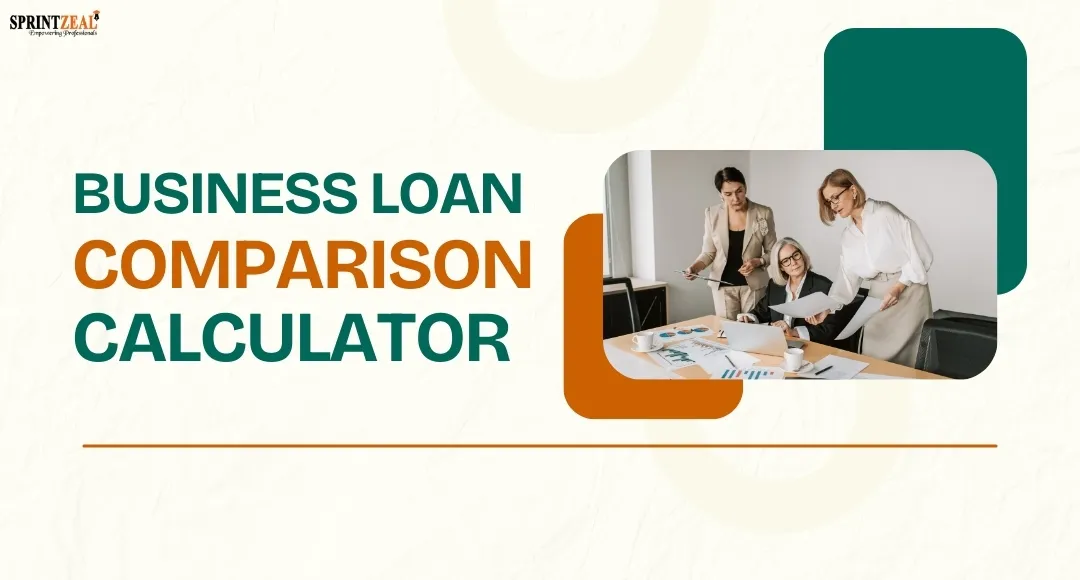
The goal for business borrowing in 2025 is subject to change. APRs, flat rates, or factor rates hidden under fees are all quoted by banks, fintechs, marketplaces, and e-commerce platforms, and rates fluctuate in response to every hint from the Fed. Overpaying occurs quickly.
This playbook cuts through the noise. You’ll see how to drop any quote into a business-loan comparison calculator, translate every rate into a true apples-to-apples APR, and weigh the non-price terms that shape your cash flow.
How to use a business-loan comparison calculator, step by step
2025 loan-disclosure rules: what a good term sheet must show
Open a typical repayment widget and you’ll see three core figures: monthly payment, total interest, and total repayable balance. Calculator.net’s Business Loan Calculator even adds an amortization table and a “real APR” line that rolls fees into the cost.
These numbers are useful for one offer at a time. After you enter the amount, term, and rate, you still have to repeat the process for each lender and juggle sticky-note math.
Modern comparison tools close that gap. Many let you stack two to four quotes side by side, convert factor or flat rates into APR automatically, and show how a 3 percent origination fee can push the “cheapest” loan into second place.
Founders often begin inside a marketplace. A calculators hub such as Lendio’s business calculators page shows term-loan, line-of-credit, and SBA scenarios without a full application; that makes a quick reality check possible before you invest more time.
Keep perspective, though. Most calculators skip variable-rate clauses, revenue-based repayments, or daily account sweeps. They will not flag a hidden personal guarantee or a steep prepayment penalty.
Treat the calculator as a translation engine: it turns every glossy offer into plain language (cash out, cash back, true cost). In the next section you will see how to feed it clean data and pressure-test the results.
A calculator only works if the inputs are meaningful, so get four basics straight before you touch a slider:
Purpose.
Are you smoothing cash-flow dips, buying a truck, or opening a second location? Match the goal to the product: working-capital line, equipment loan, or long-term expansion capital.
Repayment comfort zone.
Scan last quarter’s cash-flow statement. Mark the payment that still feels safe in a slow month, then note a stretch figure you could handle during a growth spurt.
Priority trade-offs.
Speed vs. cost, flexibility vs. paperwork, security vs. ease. If collateral is off the table, banks drop on the list. If timing is critical, a marketplace lender climbs.
Candidate offers.
Pull two to four real quotes: perhaps a bank term sheet, an online term-loan pre-qual, a government-backed option, and a revolving line. Four is enough to spot patterns without clutter.
With purpose, payment limits, priorities, and prospects in hand, you can feed clean data into the calculator and see which loan fits the business you run today.
Before you touch the calculator, copy each quote into a quick table with six columns:
Loan amount
Repayment term
Rate format (APR, simple interest, factor rate, flat rate)
Mandatory fees (origination, documentation, platform)
Repayment frequency (monthly, weekly, daily)
Collateral or guarantee required
Keep the figures exactly as the lender presents them, for example, 12 percent APR stays 12 percent and a 1.35 factor stays 1.35. Normalizing comes later; right now you are gathering raw ingredients.
Log every fee, even those rolled into the balance. Daily or weekly debits also belong here because cash-flow pacing can outweigh a headline rate.
With these details verified, the calculator will mirror reality instead of guessing.
Additional steps will follow in the next subsection.
A calculator nails the math but stays silent on the human side of borrowing. Keep these five variables in view before you crown any loan the winner.
Funding speed.
Traditional banks can take 30–90 days from application to disbursement, especially on SBA deals, according to Bankrate. Online lenders often wire money within 24 hours, notes small-business resource site The Funding Time. If you need cash next week, that gap may outweigh a two-point rate difference.
Repayment rhythm.
Fixed monthly installments suit steady revenue. Daily or weekly debits hit your account 20–28 times a month, which is helpful for discipline but painful in a slow week.
Flexibility.
Some contracts waive prepayment penalties; others claw back “discounted” interest if you refinance early. Read the clause if you expect a windfall.
Security.
A secured loan backed by equipment or property often wins on price but ties up assets you might need later. Unsecured offers free the collateral yet cost more; decide how much personal risk feels acceptable.
Operational friction.
Under Section 1071, many U.S. lenders now collect extra demographic data, lengthening forms and follow-ups. Fintechs skip some paperwork but recover convenience through higher fees.
Cost still matters, but these five elements decide how smoothly the debt lives with your business tomorrow.
Regulation seldom makes headlines, yet it shapes every business-loan quote you see. In 2025 two forces drive U.S. transparency:
Federal data regulation.
Lenders are pushed toward more standardized, transparent term sheets by the CFPB's Section 1071, which mandates that they gather and report application data.
State-level regulations.
Truth-in-Lending-style summaries are now required for commercial financing in California (SB 1235) and New York (Article 8 CFDL), usually on transactions up to $2.5 million in California and $2.5 million or less in New York. The California Department of Financial Protection and Innovation reports that in April 2025, the Ninth Circuit affirmed California's regulations.
According to U.K. lender Fleximize, the majority of SME financing in the United Kingdom is still unregulated across the Atlantic, so suppliers are free to quote APRs, flat rates, or factor rates. Because of this, having your own checklist and calculator is crucial.
Use this quick test when a term sheet lands in your inbox:
APR or equivalent annualized rate. If a lender dodges this, keep shopping.
Total repayable amount. Dollars or pounds, no hidden balloons.
Fee breakdown. Origination, documentation, broker—the lot.
Frequency and schedule of payments. displayed on a calendar that you can use on a daily, weekly, or monthly basis.
terms for early repayment. Discounts or penalties in simple terms.
The numbers you enter into your calculator will be reliable if a document checks all the boxes. If not, follow your instincts and go on.
To start a second product line, a firm needs $150,000.
Bank offer: The money arrives in roughly six weeks for a five-year loan with an 8% annual percentage rate.
Online offer: 5-year term loan at 11 percent APR, funds arrive in about three days.
| Monthly payment | Total interest | Time to fund |
Bank | $3,042 | $32,500 | ~6 weeks |
Online | $3,263 | $45,800 | ~3 days |
The online loan costs about $221 more per month (about $51 per week) and $13,300 more in interest over five years. If faster funding lets the new product hit shelves a month sooner and earn even $9,000 in extra profit, the premium can make sense. The calculator shows the numbers; strategy decides the winner.
A retailer needs $80,000 for a two-year upgrade.
| | Principal financed | APR | | Origination fee | Monthly payment | Total interest | All-in cost | |---|---|---| | ---|---|---|---| | Lender 1 | $84,000 (loan + $4,000 fee) | 7 percent | | 5 percent up front, rolled in | $3,753 | $5,500 | $9,500 | | Lender 2 | $80,000 | 9 percent | | None | $3,654 | $6,700 | $6,700 |
The “cheaper” 7 percent offer costs about $99 more per month and $2,800 more overall once the fee is baked in. The calculator shows why headline rates can mislead: fees can balloon the real cost on short terms.
To buy $60,000 of new equipment, you’re weighing two identical-rate offers:
| Term | APR | Monthly payment | Total interest | All-in cost |
Option 1 | 3 years | 10 percent | $1,936 | about $9,700 | $69,700 |
Option 2 | 6 years | 10 percent | $1,111 | about $19,900 | $79,900 |
Doubling the term cuts the payment by $825 a month but adds about $10,200 in interest. If predictable cash flow matters more than fast payoff, the longer runway works. If you want a cleaner balance sheet and lower total cost, the three-year sprint wins.
Running the math is step one, not the finish line. Treat today’s numbers as guardrails for every future money decision.
Re-run when rates move.
A 25-basis-point central-bank cut can trim about $11 a month from a $100,000 five-year loan. That saving is worth ten minutes of fresh inputs.
Pair with credit fixes.
Paying suppliers early or disputing an error can raise your score by 20 to 30 points. Many lenders drop APR by 0.5 to 1 point for the next tier, so enter the upgraded rate and watch the interest column fall in real time.
Time big moves.
Considering an equipment refinance? Model payoff costs today, then again after six months of principal reduction to pinpoint the break-even point.
Layer capital that is not debt.
The loan amount may be reduced by consumer pre-orders or government assistance. See how the payment image brightens when you enter the lowered amount into the calculator.
Keep the calculator on hand as a dynamic dashboard that expands with your company rather than as a one-time task.
In the United States, bank term-loan APRs average 6.7 to 11.5 percent, based on Federal Reserve Q2-2025 data (nerdwallet). In the United Kingdom, established SMEs with collateral typically see 4 to 15 percent APR ranges (bankrate). Anything above those bands usually reflects higher risk or extra speed.
Most marketplaces and many online lenders start with a soft inquiry, which does not affect your score. A hard pull happens only if you accept an offer; ask which method a lender uses before sharing your Social Security or Companies House number.
Aim for three or four: one marketplace match, one bank, one fintech, and one specialized choice like a government-backed program or SBA. That provides breadth without paralyzing analysis.
Yes, as long as it converts them to an annualized cost. For example, Fleximize shows that a 1.30 factor on a 12-month loan exceeds 50 percent APR once the figure is normalized.
If you operate in California or New York, expect a TILA-style summary that lists APR, total repayable dollars, payment schedule, and every mandatory fee. These requirements are spelled out in SB 1235 (CA) and NY Article 8 CFDL.
Rarely on headline cost: MCAs often carry 40 to 350 percent APR-equivalent pricing (nerdwallet). They can, however, preserve cash during slow weeks because repayments flex with revenue.
Calculate a portion of the anticipated revenue from the total weekly or monthly debt service. Many owners manage well if daily sweeps remain below 5 percent of gross sales; above that threshold, cash flow pressure frequently outweighs any interest savings.
The goal for business borrowing in 2025 is subject to change. APRs, flat rates, or factor rates hidden under fees are all quoted by banks, fintechs, marketplaces, and e-commerce platforms, and rates fluctuate in response to every hint from the Fed. Overpaying occurs quickly.
This playbook cuts through the noise. You’ll see how to drop any quote into a business-loan comparison calculator, translate every rate into a true apples-to-apples APR, and weigh the non-price terms that shape your cash flow.
Open a typical repayment widget and you’ll see three core figures: monthly payment, total interest, and total repayable balance. Calculator.net’s Business Loan Calculator even adds an amortization table and a “real APR” line that rolls fees into the cost.
These numbers are useful for one offer at a time. After you enter the amount, term, and rate, you still have to repeat the process for each lender and juggle sticky-note math.
Modern comparison tools close that gap. Many let you stack two to four quotes side by side, convert factor or flat rates into APR automatically, and show how a 3 percent origination fee can push the “cheapest” loan into second place.
Founders often begin inside a marketplace. A calculators hub such as Lendio’s business calculators page shows term-loan, line-of-credit, and SBA scenarios without a full application; that makes a quick reality check possible before you invest more time.
Keep perspective, though. Most calculators skip variable-rate clauses, revenue-based repayments, or daily account sweeps. They will not flag a hidden personal guarantee or a steep prepayment penalty.
Treat the calculator as a translation engine: it turns every glossy offer into plain language (cash out, cash back, true cost). In the next section you will see how to feed it clean data and pressure-test the results.
A calculator only works if the inputs are meaningful, so get four basics straight before you touch a slider:
With purpose, payment limits, priorities, and prospects in hand, you can feed clean data into the calculator and see which loan fits the business you run today.
Before you touch the calculator, copy each quote into a quick table with six columns:
Keep the figures exactly as the lender presents them, for example, 12 percent APR stays 12 percent and a 1.35 factor stays 1.35. Normalizing comes later; right now you are gathering raw ingredients.
Log every fee, even those rolled into the balance. Daily or weekly debits also belong here because cash-flow pacing can outweigh a headline rate.
With these details verified, the calculator will mirror reality instead of guessing.
Additional steps will follow in the next subsection.
A calculator nails the math but stays silent on the human side of borrowing. Keep these five variables in view before you crown any loan the winner.
Cost still matters, but these five elements decide how smoothly the debt lives with your business tomorrow.
Regulation seldom makes headlines, yet it shapes every business-loan quote you see. In 2025 two forces drive U.S. transparency:
According to U.K. lender Fleximize, the majority of SME financing in the United Kingdom is still unregulated across the Atlantic, so suppliers are free to quote APRs, flat rates, or factor rates. Because of this, having your own checklist and calculator is crucial.
Use this quick test when a term sheet lands in your inbox:
The numbers you enter into your calculator will be reliable if a document checks all the boxes. If not, follow your instincts and go on.
To start a second product line, a firm needs $150,000.
|
|
Monthly payment |
Total interest |
Time to fund |
|
Bank |
$3,042 |
$32,500 |
~6 weeks |
|
Online |
$3,263 |
$45,800 |
~3 days |
The online loan costs about $221 more per month (about $51 per week) and $13,300 more in interest over five years. If faster funding lets the new product hit shelves a month sooner and earn even $9,000 in extra profit, the premium can make sense. The calculator shows the numbers; strategy decides the winner.
A retailer needs $80,000 for a two-year upgrade.
| | Principal financed | APR | | Origination fee | Monthly payment | Total interest | All-in cost | |---|---|---| | ---|---|---|---| | Lender 1 | $84,000 (loan + $4,000 fee) | 7 percent | | 5 percent up front, rolled in | $3,753 | $5,500 | $9,500 | | Lender 2 | $80,000 | 9 percent | | None | $3,654 | $6,700 | $6,700 |
The “cheaper” 7 percent offer costs about $99 more per month and $2,800 more overall once the fee is baked in. The calculator shows why headline rates can mislead: fees can balloon the real cost on short terms.
To buy $60,000 of new equipment, you’re weighing two identical-rate offers:
|
|
Term |
APR |
Monthly payment |
Total interest |
All-in cost |
|
Option 1 |
3 years |
10 percent |
$1,936 |
about $9,700 |
$69,700 |
|
Option 2 |
6 years |
10 percent |
$1,111 |
about $19,900 |
$79,900 |
Doubling the term cuts the payment by $825 a month but adds about $10,200 in interest. If predictable cash flow matters more than fast payoff, the longer runway works. If you want a cleaner balance sheet and lower total cost, the three-year sprint wins.
Running the math is step one, not the finish line. Treat today’s numbers as guardrails for every future money decision.
Keep the calculator on hand as a dynamic dashboard that expands with your company rather than as a one-time task.
In the United States, bank term-loan APRs average 6.7 to 11.5 percent, based on Federal Reserve Q2-2025 data (nerdwallet). In the United Kingdom, established SMEs with collateral typically see 4 to 15 percent APR ranges (bankrate). Anything above those bands usually reflects higher risk or extra speed.
Most marketplaces and many online lenders start with a soft inquiry, which does not affect your score. A hard pull happens only if you accept an offer; ask which method a lender uses before sharing your Social Security or Companies House number.
Aim for three or four: one marketplace match, one bank, one fintech, and one specialized choice like a government-backed program or SBA. That provides breadth without paralyzing analysis.
Yes, as long as it converts them to an annualized cost. For example, Fleximize shows that a 1.30 factor on a 12-month loan exceeds 50 percent APR once the figure is normalized.
If you operate in California or New York, expect a TILA-style summary that lists APR, total repayable dollars, payment schedule, and every mandatory fee. These requirements are spelled out in SB 1235 (CA) and NY Article 8 CFDL.
Rarely on headline cost: MCAs often carry 40 to 350 percent APR-equivalent pricing (nerdwallet). They can, however, preserve cash during slow weeks because repayments flex with revenue.
Calculate a portion of the anticipated revenue from the total weekly or monthly debt service. Many owners manage well if daily sweeps remain below 5 percent of gross sales; above that threshold, cash flow pressure frequently outweighs any interest savings.

Tue, 08 September 2026
Thu, 20 August 2026
Mon, 27 July 2026
Mon, 06 July 2026

Tue, 23 June 2026
Thu, 20 March 2025

Tue, 26 May 2026

© 2026 Sprintzeal Americas Inc. - All Rights Reserved.




 USA : +1315-322-7821
 UK : +44 7700 174870
 IND : +919036108287
 AUS : +61 480 005 455