Employee Experience Management: Key Drivers and How to Improve Them
Tue, 08 September 2026

Inspirational journeys
Follow the stories of academics and their research expeditions
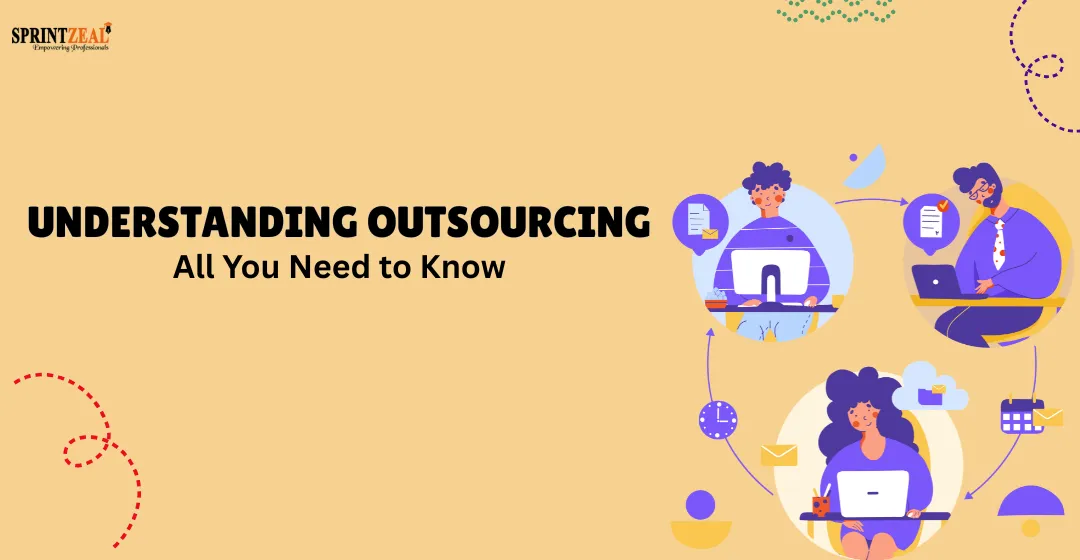
Outsourcing, also known as contracting out, is a strategic business decision where a company hires an external individual or firm to perform tasks, provide services, or manage operations that were previously handled internally.
Outsourcing aims to significantly reduce costs and increase efficiency. Outsourcing means handing out any company’s functions to a third party for either their expertise or cost-effectiveness.
The outsourcing company sets up a compensation fee within the company instead of with the outsourcing company so that work can be done at a lesser cost.
Looking at a case study of outsourcing, a company decides to outsource bookkeeping duties to an accounting firm, as doing so is cheaper than retaining an in-house accountant.
In another example, many companies outsource functions such as payroll and health insurance.
An example of outsourcing is a software company outsourcing the work of building an app instead of building one in-house, as outsourcing is much cheaper and faster.
Here is a step-by-step guide to how outsourcing works:
Outsourcing is not a simple handing off of work. It has many steps and types. Outsourcing has many types, which are as follows:
Offshoring—Many businesses choose to hire offshore developers as this is where a company outsources their work to a company in another country. This allows the outsourcing company to cut costs, gain access to skilled workers, and work around the clock due to different time zones.
Nearshoring—Here, outsourcing is done to a nearby company, a practice often referred to as nearshore software development, though it can also include services like customer support, marketing, finance, or human resources. This ensures not only reduced cost but also ease of communication, as they belong to the same region. Nearshoring means that both the companies work in the same time zone.
Onshoring—offshore outsourcing is done within the same country to avoid language and cultural barriers. Outsourcing to the same country also allows the outsourcing company to have better control over goods and services as they can monitor the process.
Business process outsourcing is where companies contract out non-core business functions to external service providers. This company, to which the work was outsourced, primarily handles repetitive tasks such as customer service outsourcing, technical support, and various administrative duties. For customer service at scale, many organizations choose Call Center Outsourcing in Philippines to leverage English-speaking talent, 24/7 coverage, and cost efficiency.
Professional Outsourcing—This is where the work is contracted for a specific area to a company for their highly skilled work and expertise. The work is assigned to a specific professional
Process-specific outsourcing involves contracting specific tasks or processes from an outsourced company, service provider, or specialized personnel in that particular field. This can include things like phone answering service, bookkeeping, IT support, or specialized marketing tasks.
There are many benefits to outsourcing in addition to cost savings. Some of these benefits are as follows:
Outsourcing offers many benefits, including but not limited to cost savings. Some other benefits of outsourcing include
Cost Savings: Outsourcing can reduce operational and labor costs and can get work done at a lower cost by skilled professionals. Outsourcing reduces the cost of recruiting, hiring, and running internal staff.
Access to Expertise: Outsourcing allows the company to use expertise and specialized skills they might not possess. Companies that lack expertise may work closely with the manager, and the internal team can help the internal team gain skills.
Focus on Core Activities: Outsourcing allows the company to hand off jobs so that it can direct its attention more to core activities, increasing the overall efficiency of the business. When nonessential activities are outsourced, more time and resources can be spent on important activities that can pursue company growth.
Improved Efficiency and Speed: A specialized outsourcing company allows the company to get the work done in a faster and more efficient manner instead of doing the task in-house. These tasks are usually repetitive.
There are also downsides and precautions that come with outsourcing; some of these include
Confidentiality: There is great danger to vital confidential information of the outsourcing company. The outsourcing process involves sharing critical knowledge and information, so there is always a risk of this information getting leaked to the competitor.
Ethical concerns: Often to cut costs and make profit, companies outsource their work to countries that can do labor at a cheaper cost, and it is usually done in an unethical way, which raises ethical concerns.
Sweatshop: Outsourcing aims to receive at low cost the maximum benefits of the outsourced company. In this case a sweatshop-like situation is created where there is a lot of labor done for little benefits to the outsourced company
Cost: When a company signs a agreement with the outsourced company, all the services and charges for those services are discussed, but those services which are not mentioned in the contract, which may come up later, In addition to this, the company has to hire a lawyer to go over the contract and make adjustments; thus, the cost of outsourcing is correlated to the expertise and services that are provided.
Employee Morale: When any organization decides to outsource, especially the work of an entire department, it can impact employee morale. It is thus important for the human resource team to inform the team beforehand and get their feedback
Quality: To avoid potential quality concerns, companies producing a specific product or overseeing a particular process may choose to implement a training program prior to outsourcing functions. Outsourcing has the potential to affect quality.
Range of control: Outsourcing means transferring the function of an entire department to another company.
This leads to the outsourcing company having limited control. The outsourced company may not have the same goals and standards in mind. Given that many contracts are fixed-price, reducing expenses may be necessary for the company to increase profits.
Contractual obligations: When a company outsources a part of its operations, the financial health of the outsourcing provider can impact the hiring organization.
Evaluating the outsourcing company's financial statements and conducting due diligence can help assess its financial stability. A financially underperforming provider may fail to meet its contractual obligations, making it an ineffective outsourcing partner.
There are many current trends in the outsourcing industry. Some of these trends are as follows:
Nearshore is one of the latest trends in outsourcing. Nearsourcing means outsourcing work to nearby regions instead of far-away countries.
Nearshoring has various benefits; it allows effective communication as both the countries are in the same time zone, and since both the countries are in the same region, there is a limited issue of language barrier.
Nearshoring is also cost-effective, as outsourcing work is given to a nearby country, which allows the company to get a quality product at a lower cost. Nearshoring also makes travel simple, making it easy for the outsourcing company to visit the outsourced company if and when needed.
Knowledge process outsourcing—This future trend of outsourcing involves outsourcing tasks such as research and development and data science.
For example, a pharmaceutical company looking to develop a new drug can hire a KPO team specializing in pharmaceutical research instead of building a team in-house.
The same applies to game art outsourcing, where studios hire specialized teams for character design, 3D modeling, and animation instead of maintaining a costly in-house art department.
This allows the company to get work done by highly skilled professionals with leading-edge technology that can significantly improve the quality of research.
Multi-vendor outsourcing—This is another up-and-coming trend in outsourcing . It involves outsourcing tasks and services to various vendors.
This allows the company to access diverse expertise and domain knowledge. Multiple vendors allow businesses to gain access to niche knowledge and skills.
Multi-vendor outsourcing will allow the company to avoid competitive prices, as vendors will offer lower prices in order to retain the customer. Multi-vendor outsourcing allows the outsourcing company to mitigate risk as the task is outsourced to various vendors
Artificial intelligence and machine learning—It is obvious that artificial intelligence and machine learning are taking over most, if not all, industries.
The rise of artificial intelligence and machine learning technologies has taken over the outsourcing industry. Artificial intelligence and machine learning have the ability to make more data-driven decisions, automate complex tasks, and optimize various business processes.
Robotic process automation—Robotic process automation is a game changer when it comes to outsourcing and how businesses outsource repetitive work.
Robotic process automation employs software bots that mimic human actions, which helps efficiency and reduces dependency on human labor.
Outsourced companies that implement robotic process automation can help the outsourcing company stay ahead of the curve by providing high-quality products and efficient work.
Outsourcing is the process of hiring an outside company or person who is not associated with a company to do a specific task. The primary motivation for outsourcing is often cost savings, either in labor or production.
This is done by outsourcing non-core activities so that companies can enhance the efficiency and productivity of the company by concentrating on their central functions. Outsourcing is prevalent across numerous sectors, including healthcare, travel, transportation, energy/utility companies, retail, and so on.
In insourcing, nonessential tasks are assigned to employees within the department instead of a third party. It aims to utilize the resources within the company.
Examples of insourcing include a company employing their internal technical team to solve any technical problem that may come up with their new app.
Insourcing allows better control over operations as they are happening within the organization.
It also allows faster decision-making and collaboration between departments and can be potentially cost-saving if outsourcing is expensive.
Insourcing, however, also has it’s downside. Insourcing, in comparison, may have higher costs, as hiring and training personnel to work on the goods or services that are to be provided.
Due to this internal employee, the chances of failure are high if the employee does not possess proper knowledge or is not properly trained, which is another downside to insourcing.
Since insourcing relies on only the internal staff, the company may lose access to specialized skills that their staff may not possess, which may also impact their output of product or service. manager is no doubt very versatile.
They have this critical role of overseeing and supervising various important events. They assist firms in organizing events for multiple causes, such as celebrating the company’s achievements, among many others.
As we have had a brief understanding now about what outsourcing is, along with some of the current trends associated with it, let's go through some of the popular examples of outsourcing for an even more in-depth understanding.
A human resources specialist may supervise and navigate certain processes like hiring and firing. Small firms and even startups can outsource these responsibilities through certain third-party agencies instead of just hiring an efficient HR specialist.
Even though these specialists have this integral role towards the specific firm or company, outsourcing hr tasks like this paves the way for professionals to emphasize and concentrate on important duties for developing their industries.
Firms usually make use of these individuals to assist them in managing and filing precise income tax returns. The tax preparer also has this responsibility, where they make sure that the firm’s tax returns are submitted within the required time frame and are in accordance with all other necessary regulations.
III. Web designer/web developer A developer is usually the one who develops a website’s structure through coding. On the other hand, a web designer has this role of designing all the visual layouts and elements.
Certain small firms may have an advantage in outsourcing web design and developer roles so as to assist in designing and developing their websites if they don’t have the specific people or employees with this required skill set.
Some small or developing companies or startups, at times, use outsourced marketers for the promotion of their products and services to support their growth objectives.
Thus, we can agree that outsourcing third-party marketing services provides the company access to certain specialized and skilled marketers who are able to achieve the goals and objectives of the company’s business strategy.
Outsourcing has become an effective tool for companies that want to gain profit and excel in their business by focusing on main business functions by outsourcing any sub-business functions.
Whether it is a small business or a large corporation, choosing the right outsourcing partner is essential for a business's success. Here are 5 ways businesses can choose the right outsourcing partner
The first step is for the outsourcing company to identify the goals of outsourcing and the area that they would like to outsource. Common areas in which outsourcing is done include web and app development, cybersecurity, IT support, etc.
It is important at this stage to set a realistic budget as well as set realistic expectations on the outcome of the project.
Before contacting potential outsourcing partners, develop a clear scope-of-work document. This document should align with your business goals and define the specific functions where your business needs assistance.
Clearly articulate how outsourcing these functions will help you achieve your desired outcomes.
It is important to research and understand the technical expertise, skill set, and access to the latest technology of a potential outsourcing partner before selecting one.
It is important at this stage to review the potential outsourced company's portfolio and past projects to determine if they would be able to successfully finish the task. It is also important to check the expertise of the company’s expertise in the industry they are being outsourced in and are familiar with the regulatory rules and market trends.
At the same time, it is important to have language and communication proficiency to make sure there is ease of communication between both parties and also analyze time zone compatibility, as though different time zones do ensure the company works around the clock, it also lead to broken communication and delayed decisions.
III. Review Contract and Pricing—
It is important at this stage to establish a clear pricing structure without any hidden figures or costs. The pricing contract must include service fees, potential extra charges, etc.
This is to ensure that there are no pricing-related disputes later. It’s vital to set this pricing based on the outsourced company’s track record to meet deadlines, expertise of their work, and reviews from their previous customers so that the pricing matches the value.
One of the benefits of a trial project is the ability to determine the work quality and reliability of the outsourced company. The trial period offers an opportunity to assess the outsourced company's technical skills, attention to detail, and ability to deliver results within the agreed timeframe.
Communication and responsiveness are also critical factors to evaluate during a trial. A trial project helps determine how well the outsourcing partner responds to queries, adapts to feedback, and maintains transparency throughout the process.
The trial phase also helps identify any potential red flags before entering into a full contract. Issues such as inconsistent quality, missed deadlines, unclear reporting, or a lack of proactiveness in problem-solving.
As we know that outsourcing involves a very clear and smooth communication for a more systematic and efficient process, it's important that we know about the essential outsourcing tools along with their correct uses.
Secure File sharing and cloud storage solutions for remote teams
Remote teams often need dependable cloud storage platforms to securely access certain important and critical documents. Therefore, the efficient use of tools for outsourcing helps in supporting real-time collaboration and provides very smooth and seamless file access from anywhere.
Some of the most popular file-sharing and cloud storage solutions are
Project Management Tools for Outsourcing:
Project management tools aid the outsourcing company in assigning tasks and tracking progress. These tools set a place where deadlines can be set and productivity can be observed. So here are 3 project management tools that can aid in outsourcing
Automation tools for an easy and seamless delivery of the workflow
Automation tools are quite beneficial in helping companies ignore certain recurring projects, in a way, reducing the manual and tedious work. Through automation processes like invoicing and email replies, remote teams are able to put their concentration on only the necessary and extremely essential work.
Some of the highly suggested automation tools are:
For software developers and technical teams that need greater flexibility, self-hosting options, or deeper customization, exploring a zapier alternative can provide more control over complex workflows and integrations.
Through outsourcing certain tasks, firms and companies can make efficient use of the resources in some well-strategized and success-driven tasks, which can benefit the firms in reaching their targets and objectives.
Firms are able to get in touch and build connections with newer markets, which no doubt assists them in gaining more success.
For certain non-core roles, outsourcing can be very effective for companies to use their time and available resources on the integral skills and abilities they already possess.
III. Availability of new and emerging technologies—Outsourcing is also quite advantageous for various firms when it comes to building and enriching their potential in their integral skills.
Through outsourcing some non-core roles, firms can avoid getting slowed down on certain activities or tasks that aren’t really necessary for the company’s growth.
Now, since we have a proper comprehension of what outsourcing is, we can no doubt agree that outsourcing offers a variety of advantages for companies and firms, such as efficient optimization of resources and a globalized reach.
Companies are able to enrich their effectiveness and stay relevant in this very growing and digitized technological sphere through the proper use of outsourcing. Whether you're a startup or a well-established company aiming to streamline operations, outsourcing offers flexibility and efficiency that in-house teams may not always provide
Therefore, firms, no matter how big or small, will reach huge heights and achieve all their business targets and objectives through proper and well-strategized outsourcing.
Outsourcing strategy is basically a plan that explains the process through which various firms and companies hire certain professionals or third-party companies for performing some kind of task. This is usually considered a very effective strategy since it reduces the price and enriches the features of a particular good or any relevant project of the company.
Some relevant and popular examples of outsourcing are as follows -
Business process outsourcing, or BPO, refers to outsourcing any business task or function to any business or service provider. BPO allows companies to focus on their core activities while their non-core or non-essential activities are outsourced to outside vendors.
India is a country every industry goes to for outsourcing, followed by the Philippines and China. UAE, Egypt, Saudi Arabia, Mexico, and Brazil...

Tue, 08 September 2026
Thu, 20 August 2026

Mon, 27 July 2026

Mon, 06 July 2026

Tue, 23 June 2026

Thu, 20 March 2025

Tue, 26 May 2026


© 2026 Sprintzeal Americas Inc. - All Rights Reserved.




 USA : +1315-322-7821
 UK : +44 7700 174870
 IND : +919036108287
 AUS : +61 480 005 455