Best Multilingual Call Center Outsourcing Companies
Thu, 24 September 2026

Inspirational journeys
Follow the stories of academics and their research expeditions
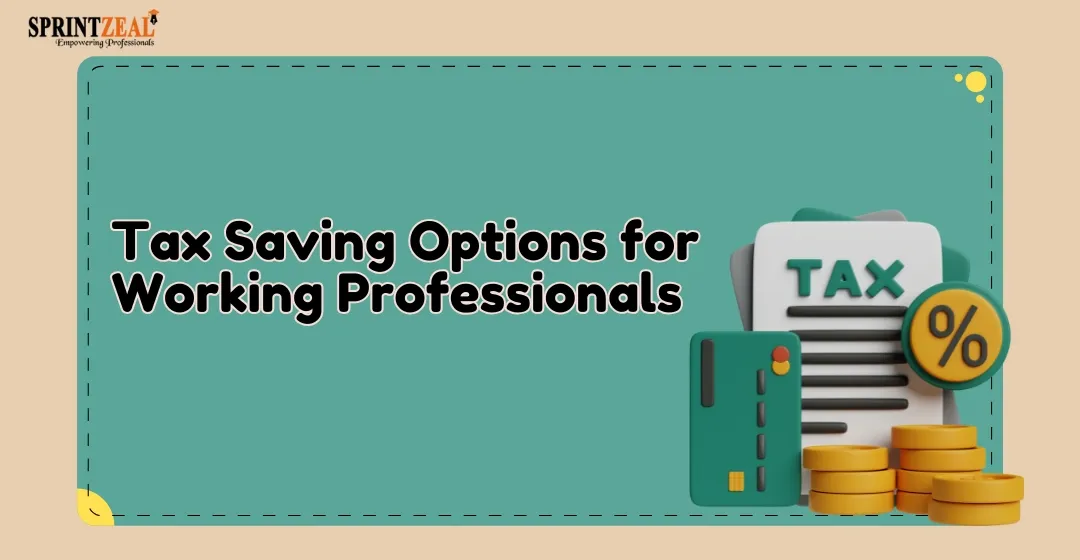
Tax is levied on individuals or corporations by a government entity. Revenue collected from taxes is then used by the government to fund public works and services, such as the building of roads and schools.
There are mainly two types of laws that are levied on individuals and corporations, which are direct and indirect taxes.
Direct taxes, which are levied on individuals or businesses, are proportionate to the income of the individual or the business and are borne by the taxpayer. On the other hand, indirect taxes are levied on goods and services and are equivalent to the amount of goods and services. This form of tax is also transferable, unlike direct tax, and is usually paid by the consumer of the goods or service.
Many countries, despite having different taxation systems, share several common types of taxes. One of the most common types of law is the income tax, which applies to both individuals and businesses for their earnings from employment or services provided. Value-added tax or goods and services tax is another internationally levied tax on the consumption of goods and services.
Property taxes are commonly levied taxes on real estate owners and are often a major source of local government revenue. For agricultural landowners, understanding ag exemptions Texas offers can be particularly important, as qualifying property may be appraised according to its productive agricultural value rather than its full market value, potentially reducing the property tax burden. In addition, most countries collect payroll taxes to fund public services like pensions, healthcare, and unemployment benefits. Excise taxes are also levied on goods such as alcohol, tobacco, and fuel, both to raise revenue and discourage harmful consumption of these substances.
Import duties or customs taxes are nearly universal as well, charged on goods brought into a country. Capital gains tax is also charged on profits from the sale of assets like stocks or real estate.
Commonly known as tax havens, several countries do not charge income tax on their citizens. These places are sought after by both individuals and investors who want to minimize their tax liabilities and maximize their income. Availability of natural resources plays a vital role in the county being tax-free or not.
For example, the UAE has an abundance of gas reserves, and it is from these oil and gas exports that the money for government spending is made, and thus, that’s how the country manages to stay tax-free.
Countries that are tax-free are:
A prestigious island in the Caribbean, the Bahamas is the most sought-after tax-free area in the West Indies. There’s a catch: Residency or a temporary residence permit can be obtained in the Bahamas for a modest fee of $1,000, but those seeking long-term stays will need to invest at least $750,000 in real estate to qualify for permanent residency. Instead of leaving tax, the island uses VAT and Stamp Tax to pay for its government expenses.
The Cayman Islands are a tax haven located in the Caribbean Sea. Apart from having no income tax, this country also has no payroll, capital gains withholding, or corporate tax. Thus, making the Cayman Islands one of the best tax-free countries. However, on the downside, living in the Cayman Islands can be very expensive, and you'll need a huge sum of money in order to gain long-term residency.
Bermuda does not levy any tax, be it income tax, corporate tax, or capital gains tax, on its citizens. However, while Bermuda does not impose these direct taxes, it does charge its citizens indirect taxes such as payroll tax, stamp duties, and customs duties. According to the payroll law, employers bear the responsibility of paying 9.5% of their employees' salaries, while self-employed individuals handle the tax payments themselves.
Located in the Persian Gulf, Qatar is an oil-rich country that does not levy taxes on salaries, wages, or allowances on individuals. It, however, introduced a new taxation value-added tax in 2019, which is levied on goods and services at a standard rate of 5%.
One of the most successful oil-producing countries in the Middle East, the UAE does not charge personal income tax, capital gains tax, or inheritance tax. However, a 5% goods and services charge is levied on the goods and services sold in the country. There are also withholding taxes and excise duties on tobacco items.
Tax harvesting is a way to reduce taxes on mutual fund investments. It works by selling underperforming mutual fund units to counterbalance the gains made on other investments, which in turn will reduce the tax you have to pay on capital gains.
Short-Term Tax Harvesting refers to selling investments that have decreased in value within one year of purchase. Thus, by selling a security at a loss, you can counterbalance any short-term capital gains of the year and thus reduce the short-term capital gains tax.
On the other hand, Long Term Tax Harvesting involves selling investments that you’ve held for more than one year. Losses from these sales can offset long-term capital gains.\
The following are the benefits of tax loss harvesting:
The wash sale rule prohibits investors from selling a security at a loss and repurchasing the same security, or one identical, within 30 days before or after the sale. The rule prohibits the investor from claiming the loss for tax purposes and was established by the Internal Revenue Service.
I - You can carry your capital losses forward to next year if they are not completely used in the present year. You can continue this practice for around 8 years as long as you are filing your return on time each year.
IIa - A very important responsibility from your side is, if you have ever made any profit or loss through selling any kind of shares or any other assets, you must immediately report it in your (ITR) Income Tax Return.
b - Along with this, one more important thing to take into consideration is, you must file the return on or before the due date, and if you miss the deadline for any reason, you won’t be able to carry forward the losses for being able to set off against future gains.
IIIa - If you have an (LTCG), i.e, a long-term capital loss, you will be able to adjust it only against long-term capital gains.
B - Yet, in case you have an (STCG), i.e, a short-term capital loss, then you’ll be able to reduce both long-term and short-term capital gains.
IVa - In simple terms, Tax loss harvesting means selling or losing investments to reduce your tax on gains.
B - Here in India, there is no specific limit on how much loss you can book through the use of this method.
Va - If you do intraday trading, i.e, buying and selling of the shares on the same day, it will not be considered as capital gain or loss. It will be treated as speculative business income that will be taxed at your regular tax slab rates.
B - Losses from intraday trades can only be set off against speculative profits, and only for up to 4 years.
Since we got a brief comprehension of how Tax loss harvesting mainly involves selling investments at a loss to reduce your overall tax liability, one important thing we need to consider is that, even though the concept is simple, timing plays a very essential role in making the strategy a truly effective one.
A deeper understanding of why timing is truly important in this scenario is as follows :
The condition of the market has a direct influence on when and how you can harvest losses.
Through Strategic timing, you’ll be able to spread out and fully utilise your tax-deductible losses.
Example: You incur ₹6 lakhs in capital losses in FY 2024–25 but only have ₹3 lakhs in gains. The remaining ₹3 lakhs loss can be carried forward and used to offset gains until FY 2032–33.
There are various pros and cons associated with whether Tax Loss Harvesting is truly worth it or not. Well, in very clear and simple words, we can agree now that tax loss harvesting has the potential for tax savings. Through selling and losing investments and replacing them with similar ones, investors have the privilege that they can stay invested while reducing their taxable gains.
Along with this, by reducing the tax impact of winning trades, tax loss harvesting also supports rebalancing and, at the same time, creates flexibility for portfolio transactions.
Tax loss harvesting is indeed a very beneficial strategy for reducing tax liabilities by offsetting capital gains with investment losses. It undoubtedly plays a very integral role in optimising after-tax returns and maintaining portfolio efficiency.
Thus, due to these factors, we can agree that tax law harvesting is definitely worth it.
A tax treaty is an agreement between two countries to settle tax issues such as double taxation and tax evasion. When an individual or business invests in a foreign country, the issue of which country should tax the investor’s earnings may arise. Both countries—the source country and the residence country—may enter into a tax treaty to agree on which country should tax the investment income to prevent the same income from being taxed twice.
Entering a tax treaty also helps solve the issue of tax evasion, which is the non-payment of the amount of tax that is owed.
The OECD tax rate is more favorable to capital-exporting countries than capital-importing countries. It requires the source country to give up some or all of its tax on certain categories of income earned by residents of the other treaty country. The two involved countries will benefit from such an agreement if the flow of trade and investment between the two countries is reasonably equal.
The United Nations Model Double Taxation Convention between Developed and Developing Countries is a tax treaty model aimed at increasing political and economic cooperation among member countries. The UN Model Convention provides favorable taxing rights to the foreign country of investment, benefiting developing countries by giving the source country increased taxing rights over the business income of non-residents.
A treaty that follows the UN's model gives favorable taxing rights to the foreign country of investment. Typically, this favorable taxing scheme benefits developing countries receiving inward investment. It gives the source country increased taxing rights over the business income. The United Nations Model Convention draws heavily from the OECD Model Convention.
No matter if you're investing with major platforms like Vanguard, Schwab, or searching for more personalized solutions like Wealthsimple, learning how to legally reduce your tax burden can, to a huge extent, help you in improving your financial condition.
One of the most powerful yet underutilized tax-saving strategies is tax-loss harvesting. This usually involves selling underperforming assets at a loss to offset capital gains on better-performing investments. The idea is quite simple, i.e, use investment losses to reduce your taxable income. Therefore, in such a situation, tools like a tax loss harvesting calculator are useful when it comes to estimating how much you might save.
For example, Vanguard tax loss harvesting tools offer automated features that allow you to sell and reinvest in similar (but not identical) assets to maintain your portfolio's balance.
In a similar manner, Fidelity’s tax loss harvesting calculator and Schwab Intelligent Portfolio tax loss harvesting tools can automate the process to help you remain compliant with tax loss harvesting rules.
But at the same time, it’s also important to be cautious of tax loss selling rules, particularly the IRS’s wash-sale rule, which disallows losses on sales if you repurchase the same or a substantially identical asset within 30 days.
Crypto investors are truly interested in crypto tax harvesting, which is another effective way to reduce taxes if you’ve had losses in digital assets. While crypto isn't subject to the same wash-sale rule (at least for now), it's still important to stay updated with IRS guidelines to avoid any sort of misreporting.
Mutual fund investors should also explore tax-loss harvesting mutual funds to optimize their tax position. Platforms like E*TRADE and Franklin offer certain insights into building tax-efficient portfolios.
Apart from offsetting capital gains, investing in tax-free investment accounts can make a huge difference. When it comes to US residents, accounts like the 529 tax savings plan (for education expenses) or iBonds (offering inflation protection and tax deferral) can be very advantageous and powerful tools.
In the UK, HMRC-approved tax-free bonds and ISAs offer similar benefits. Platforms like Money Saving Expert provide real-time comparisons of the best tax-free investment options. Meanwhile, Indian investors can look at EPF, SBI, LIC, or Old Mutual tax-free savings plans as part of their income tax saving options.
In India, Cleartax Invest is one of the most popular platforms helping users find the best tax-saving schemes, such as tax-saving fixed deposits, tax-free fixed deposit accounts, and tax-saving investment options that align with Section 80C benefits.
South African savers might consider Old Mutual’s structured products, while U.S. investors might benefit from using platforms like H&R Block or RAF-certified tax advisors to build personalized tax-saving strategies that go beyond cookie-cutter advice.

Thu, 24 September 2026
Thu, 24 September 2026

Wed, 23 September 2026

Wed, 23 September 2026
Tue, 15 September 2026

Tue, 15 September 2026

Tue, 08 September 2026

Thu, 20 August 2026

Mon, 27 July 2026


© 2026 Sprintzeal Americas Inc. - All Rights Reserved.


 USA : +1315-322-7821
 UK : +44 7700 174870
 IND : +919036108287
 AUS : +61 480 005 455