Employee Experience Management: Key Drivers and How to Improve Them
Tue, 08 September 2026

Inspirational journeys
Follow the stories of academics and their research expeditions

Human resource (HR) professionals are vital in a way that human capital is one of an organization's most important assets. The innovative skills and knowledge needed to manage and develop resources effectively are supplied by an HR MBA. However, what is an HR MBA exactly, and how can it help you advance in your career? This article reviews career prospects, the great business skills for 2025, the specifics of obtaining an MBA in human resources, and much more.
An MBA in HR covers strategic planning, organizational development, employee relations, and leadership in addition to people management. While it involves coordinating workforce strategies with organizational objectives, experts in this field are necessary. This course assists graduates between both theoretical and practical knowledge, preparing them for a range of HR-related roles. Due to the growing need for skilful HR professionals who decided to bring on by working remotely and in global teams, an MBA in HR will be a highly in demand degree in 2025.
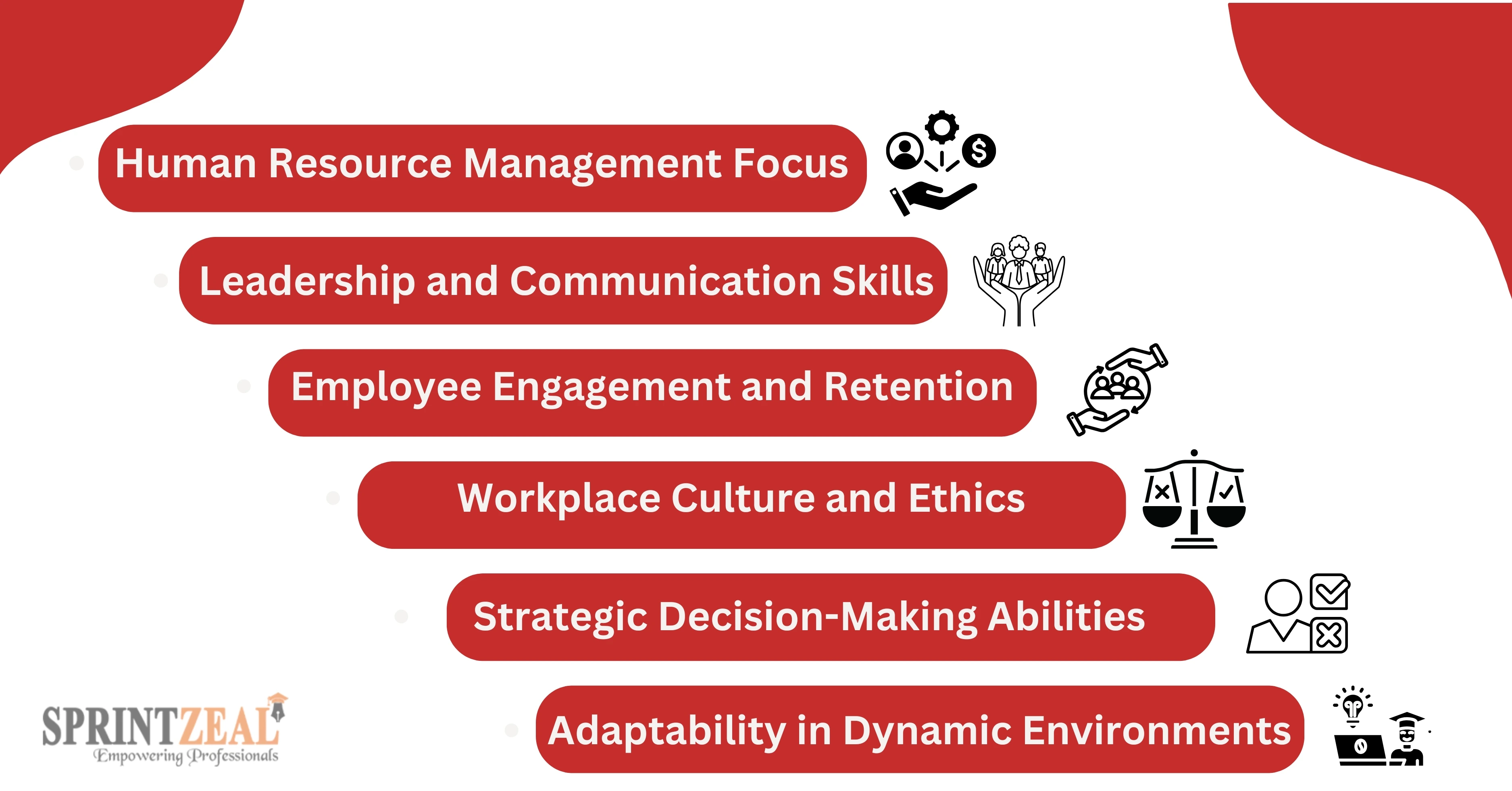
The following topics are covered by an MBA in HR:
1. Talent Acquisition and Recruitment: Acknowledging the best ways to draw in and employ top talent.
2. Employee Engagement and Retention: Methods for raising spirits and keeping workers on board.
3. Compliance with Labor Laws: Comprehension of rules and laws in the workplace.
4. Development of Leadership: Organizations should develop their leadership skills.
5. Compensation and Benefits: Designed to set up plans for workers' pay and benefits.
This program combines typical business administration skills with an HR-specific knowledge perspective on humans and provide thorough capital management.
For several reasons, think about obtaining an MBA in human resources.
• Career Development: Offers entry to more senior roles like Talent Acquisition Head, HR Manager, and HR Business Partner.
• High Demand: HR specialists who learn multicultural leadership are in high demand as companies develop internationally.
• Multiple Opportunities: Work in several kinds of sectors, such as production, IT, healthcare, and education.
• Strategic Planning Effects: Take part in the group responsible for making decisions relating to workforce strategy and organizational culture.
To pursue an MBA in HR, one must be dedicated and well-prepared. To assist you on this journey, here is a step-by-step guide:
1. Research Programs:
Look into prestigious colleges and business schools that provide Human Resources Master of Business Administration degrees. Verify for career services and support, alma mater reviews, syllabus details, and certification.
2. Meet Eligibility Criteria:
Typically, you’ll need a bachelor’s degree with a good academic record and a competitive score on entrance exams like GMAT, GRE, or equivalent.
3. Entrance Exams:
Prepare for exams such as GMAT, CAT, or other region-specific tests. High scores improve your chances of admission to top programs.
4. Prepare Application Materials:
Submit an updated resume, statement of purpose (SOP), and letters of recommendation. Highlight your leadership experience and interest in HR.
5. Apply to Programs:
Submit applications to your shortlisted schools, ensuring deadlines and requirements are met.
6. Ace the Interview:
Many MBA programs include an interview process. Showcase your passion for HR and career aspirations during the discussion.
7. Funding Security:
Examine financial assistance, subsidies, and bursaries. Likewise, some companies offer tuition assistance for career advancement.
After being accepted, get involved in the course work, connect with classmates, and take part in internships to gain real-world experience.
Many organizations today use an HR portal to manage employee information, recruitment, and training processes efficiently. Familiarity with such portals during your MBA studies can give you a practical edge and prepare you for modern HR roles.
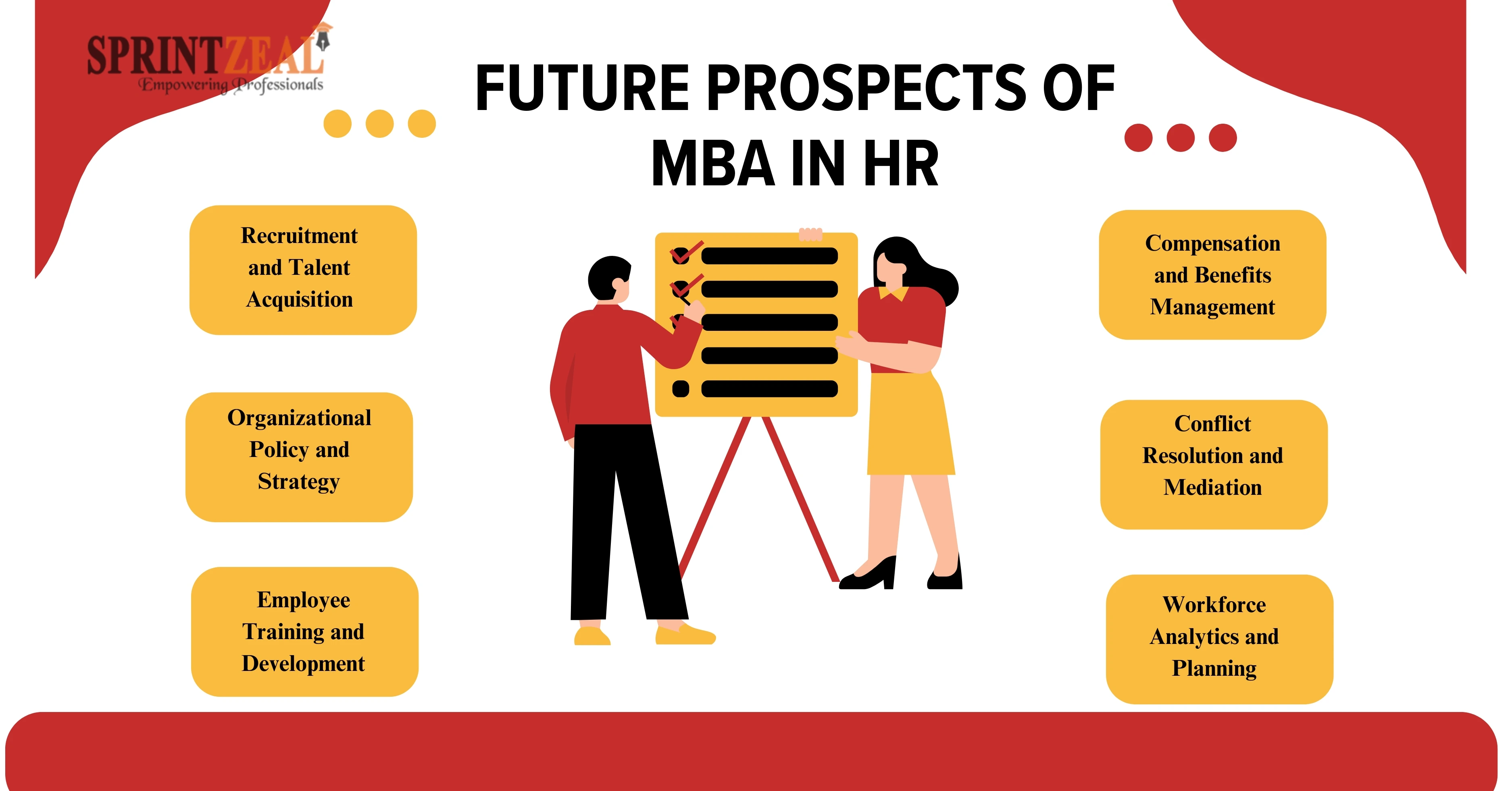
An MBA in human resources provides up a wide range of possibilities for careers across industries. HR MBA graduates usually have a number of roles:
1. HR Manager: supervise hiring, staff management, and employee involvement.
2. Talent Acquisition Specialist: Be particularly mindful of hiring strategies, candidate sourcing, and onboarding.
3. Compensation and Benefits Manager: Set up competitive pay scales and benefit plans.
4. Consultant for Learning and Development: Create and implement training programs to enhance employee competencies.
5. HR Analytics Specialist: Use data-driven insights to optimize HR operations and decision-making.
6. Employee Relations Manager: Manage workplace issues, settle conflicts, and create a positive atmosphere.
7. Consultant for Global Mobility: Handle foreign worker assignments and labor law compliance.
With chances for progress into leadership roles, as they gain experience, MBA graduates commonly find employment in sectors such as technology, universal health care, finance, and consulting. These same financial prospects ar
Leading global companies and organizations frequently hire MBA in HR graduates. Some of the top recruiters include:
1. Technology Giants: Companies like Google, Microsoft, and IBM seek HR professionals for workforce management and talent development.
2. Consulting Firms: Deloitte, Accenture, and McKinsey offer opportunities in organizational strategy and HR consulting.
3. Financial Institutions: Firms like Goldman Sachs and JP Morgan hire HR experts for compliance and employee management.
4. FMCG Companies: Nestle, Unilever, and Procter & Gamble need HR professionals to manage large, diverse workforces.
5. Healthcare: Organizations like Johnson & Johnson and Pfizer value HR specialists for workforce planning and employee wellness initiatives.
6. E-commerce & Retail: Companies like Amazon and Walmart require HR leaders to manage logistics and operations personnel.
7. Startups: As their HR systems are established and expanded, expanding tech and other industries look for human resources specialists.
Good interpersonal abilities, analysis aptitude, and a good grasp of organizational behavior are commonly given preferential treatment by top recruiters.
An MBA in HR positions you as a business leader in alongside getting ready you for HR-specific roles. You may take part in strategic decision-making processes by being an expert in fields like workforce analytics, organizational behavior, and handling conflicts.
Key Skills Gained:
• Leadership and management
• Problem-solving and decision-making
• Effective communication
• Negotiation and conflict resolution
An MBA in human resources is an effective credential that provides access to a wide range of fulfilling job options. You will gain the skills necessary to promote workforce strategies and push organizational success by getting this credential. An MBA in HR gives you the tools you require for achievement, whether your goal is to work in talent management or in global HR roles.
Are you prepared to advance in your HR career? We at Sprintzeal provide excellent business training and certifications to help you succeed in your HR profession. Our programs are internationally recognized and created by professionals in the field. Learn the abilities and information required to be successful in the competitive job sector of today.
Explore our popular courses:
• Human Resource Management Fundamentals
• Organizational Behavior Training
Visit our official website and take the first step towards becoming an HR leader today!
Which university is best for an MBA in HR?
London Business School, INSEAD, and Stanford Graduate School of Business are some of the best schools for an MBA in human resources. The optimal choice for you will depend on your budget statement, location, and career plans.
Is MBA in HR good for future?
Absolutely! A human resources MBA opens up a world of promising career opportunities. Across industry sectors, HR professionals have become more and more valued as organizational culture, talent, and worker well-being grab attention.
Which is the highest package for MBA in HR?
Graduates with an MBA in HR can expect to be paid remarkable compensation packages, with some taking the top $200,000 per year. These top offers typically come from multinational companies and leading consulting firms.
Which country is best for MBA in HR?
HR MBA programs are highly regarded throughout nations like the USA, UK, Canada, and France. These nations offer best educational resources, organizations, and fantastic global job prospects.

Tue, 08 September 2026
Thu, 20 August 2026

Mon, 27 July 2026

Mon, 06 July 2026

Tue, 23 June 2026

Thu, 20 March 2025

Tue, 26 May 2026

© 2026 Sprintzeal Americas Inc. - All Rights Reserved.




 USA : +1315-322-7821
 UK : +44 7700 174870
 IND : +919036108287
 AUS : +61 480 005 455