Buy Instagram Followers: 5 Best Services to Compare for Instagram Growth in 2026
Fri, 20 November 2026

Inspirational journeys
Follow the stories of academics and their research expeditions
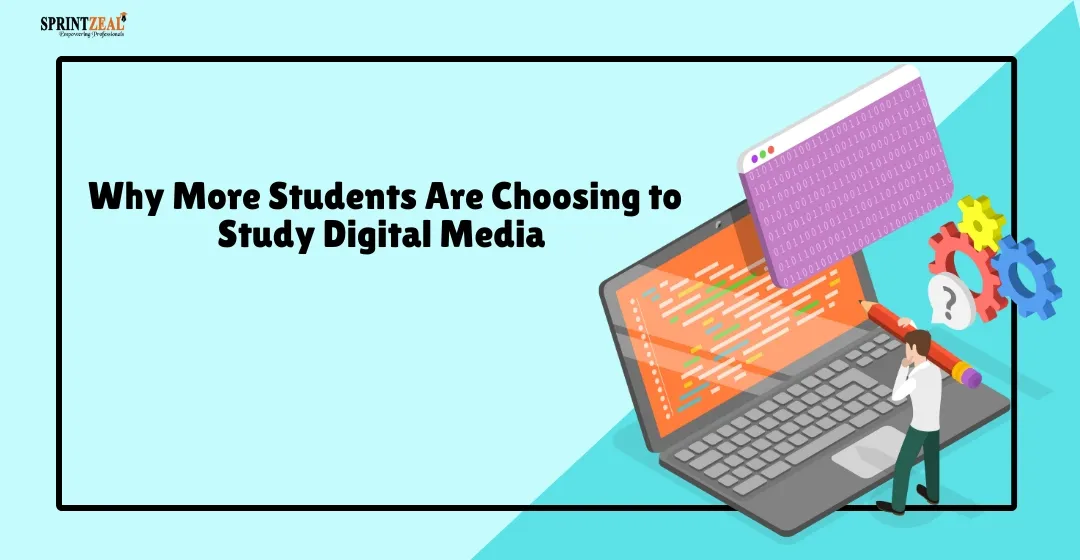
Spend five minutes on a college campus and you’ll feel it: students filming TikToks between classes, editing podcasts in coffee shops, sketching out storyboards on tablet screens.
They're not just playing around. They’re building something. And that “something” — whether you call it digital media, content creation, new media, or just “making stuff online” — is becoming a legit field of study.
Not because it’s trendy. But because it matches how people actually communicate now.
And honestly? It’s one of the few areas that still feels wide open.
There was a time when “media” meant broadcast journalism, newspapers, or maybe radio. But that definition doesn’t hold up anymore.
Today’s media world includes:
And because it's changing so rapidly, it's not surprising students are rushing toward it.
Companies are hiring across the board. Digital content roles have grown by nearly 50 percent since the pandemic. And they’re not limited to creative agencies.
You’ll find these roles in:
When industries evolve, students pay attention.
Real Work Instead of Hypotheticals
One reason students are into media-related programs is simple: they get to make things that matter now. Not years from now. Not “someday if you're lucky.”
Coursework includes:
They leave with portfolios that employers actually want to see.
And along the way, many pick up flexible work that fits the same ecosystem. Usually, an essay editing company, for example, is a common gig — teaching students how to write clearly, meet deadlines, and communicate for real audiences.
A lot of people assume studying digital media is all about tech skills. And yes, there’s plenty of that — design, editing, content systems.
But the good programs dig deeper. They teach how people behave online, how trends spread, how digital communities form and fall apart.
Students learn:
It’s not just about using the tools. It’s about knowing when and why to use them.
“It’s weird,” one student said, “because half of what I’m learning is stuff I kind of already knew. But now I can name it. Now I can use it.”
Career Connections Without the Cringe
Here’s something underrated: the way these programs connect students with the real world.
Networking doesn’t feel forced when it’s built into your class.
Many schools partner directly with companies. Others host public showcases. Students don’t have to cold-email strangers — the employers come to them.
For example:
Some students even get job offers after someone spots a class project online. "I started working with Essay Pay during my sophomore year," says one digital media student. "It helped me understand how to write for different audiences while earning some extra money. Those communication skills transferred perfectly to my content strategy classes."
The Bonus of Constant Change
Some subjects move slowly. Digital media doesn’t.
Courses update mid-semester. Professors redesign assignments because TikTok changes something. That would be a nightmare in most fields — but for these students, it's energizing.
They're not afraid of change. They expect it.
In fact, it’s part of the appeal. Students who grew up online are used to moving targets. Studying media lets them master something they’ve already lived with for years.
It’s Creative. It’s Strategic. It Pays.
Let’s be honest — money matters.
Digital media sits in a rare sweet spot: creative work that often pays well.
According to Glassdoor:
That’s a major reason why students (and their parents) take it seriously.
It’s not a starving-artist degree. It’s not a safe-but-boring one either. It’s something in between — creative, but with structure. Unpredictable, but employable.
Most of today’s students were already making digital content long before college.
They arrive with:
Studying it formally turns those instincts into a craft.
They don’t need to unlearn old habits. They just need to sharpen them.
So Why Are These Programs Filling Up?
Because students are no longer satisfied with majors that prepare them for a version of the world that doesn’t exist anymore.
They want to work in real-time. On real problems. With real people.
And they want to understand not just how to use tools, but how people live through them.
Media studies used to mean watching old films and writing essays.
Now it means making something — a campaign, a game, a short film, a trend — and asking why it works, who it’s for, and how it could be better.
It’s technical. It’s human. It’s full of contradictions.
And somehow, that’s exactly what makes it feel right.

Fri, 20 November 2026
Thu, 19 November 2026
Wed, 18 November 2026
Tue, 17 November 2026
Mon, 16 November 2026
Thu, 05 November 2026

Tue, 27 October 2026

Thu, 17 September 2026
Tue, 15 September 2026

© 2026 Sprintzeal Americas Inc. - All Rights Reserved.


 USA : +1315-322-7821
 UK : +44 7700 174870
 IND : +919036108287
 AUS : +61 480 005 455