Employee Experience Management: Key Drivers and How to Improve Them
Tue, 08 September 2026

Inspirational journeys
Follow the stories of academics and their research expeditions
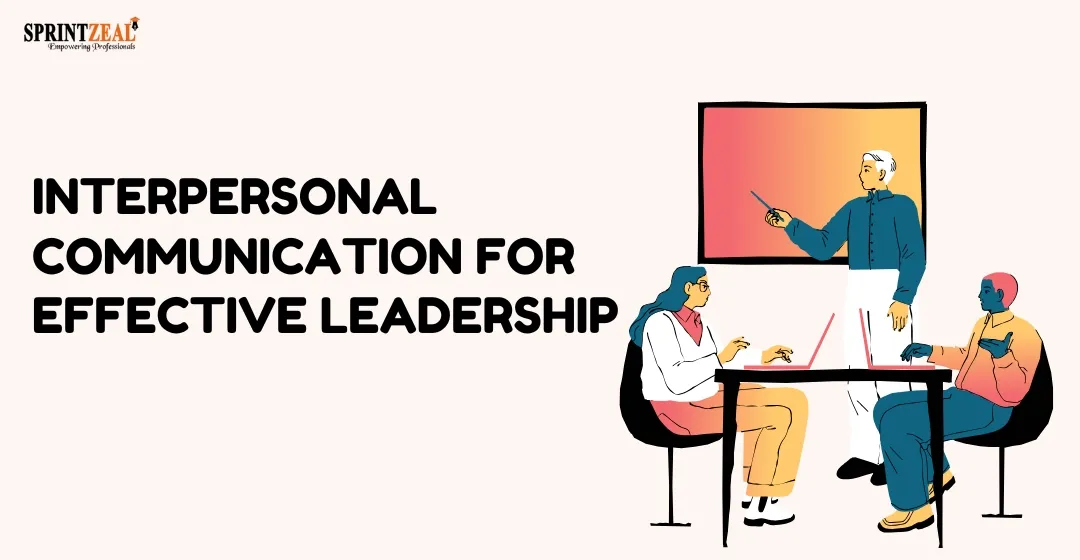
In this busy day-to-day schedule of everyday existence, where each day paves the way for learning certain new things and honing some brand-new skill sets, interpersonal communication brings the opportunity to develop your mastery in effective communication. .
Through effective interpersonal communication, one is able to develop and master their communication techniques as well as learn some formal styles of communication that can assist them to perform effectively in their respective workplaces.
In simple terms, Interpersonal communication means the processes and techniques incorporated by individuals to build and enrich their communication style. It is a manner through which individuals interact with other people, no matter if it's their family, friend groups, relatives, or people from the same workplace.
Interpersonal skills, whether it's interpersonal skills in the workplace or for any informal kind of interaction, are undoubtedly very crucial, especially in the present scenario where communication is considered to be the key to finding solutions to many serious problems and issues.
Here’s a look at certain interpersonal communication examples for an even clearer understanding. In the sphere of business communication, the manner through which we converse with our colleagues or coworkers, the tone of speaking, and body language, all of these are very crucial soft skills essential for effective interpersonal communication.
The need to develop effective interpersonal communication skills is indeed very important in all spheres and across all industries, from business firms to big media industries. Even for project managers , there is a growing need to build effective interpersonal skills.
In this ever-transforming and increasingly digitized environment, the definition of interpersonal communication is also going through a significant evolution. In this present year, interpersonal communication doesn’t just mean the manner and ways of interacting and conversing with individuals around us.
It also incorporates various other essential and certain critical segments such as,
our tone of interaction, our speaking skills, the manner we carry ourselves, and our confidence level while addressing a seminar or giving a presentation at a conference hall.
Yet, still, one of the essential reasons we use our interpersonal communication skills is when we communicate and interact with others to build and sustain our relationships with those around us.
Also referred to as ‘people skills’, these are some learned and inherent skills which are generally used in certain social situations related to your career or personal life.
Through these interpersonal skills, individuals are able to showcase their spirit of teamwork, collaboration, leadership, along with conflict resolution when it comes to efficiently managing and navigating any kind of situation.
Some of the important skills you must possess for effective interpersonal communication in 2026 are as follows :
I - Improved Communication - The ability to interact and communicate with clear and concise language, whether it's through talking or writing.
II - Efficient leadership skills - This is an extremely crucial skill that allows individuals to make smart and efficient decisions when it comes to guiding and supervising teams while inspiring others to do the same.
III - Active listening - The ability to become extremely attentive and completely focused while listening to other people.
No matter, if they are sharing their point of view or expressing a strong opinion on an important topic, being a focused and active listener is truly an important interpersonal skill that you must possess in 2026.
IV - Heightened confidence level - Being able to make gallant and smart decisions in every path of life. High confidence level in the way you interact and talk with other individuals.
V - Spirit of teamwork - Positive and improved collaboration with various diverse groups to achieve a specific goal
VI - Curiosity for knowledge-gaining - Developing a curious nature when it comes to learning different types of essential skills and gaining significant knowledge.
Interpersonal communication in the present era, especially in modern workspaces, is truly very important.
Oftentimes, it is observed how poor communication skills between coworkers and managers result in various kinds of misunderstandings and conflicts, which affect the proper delivery of work output.
Along with this, one crucial thing that we need to ponder about is, given the fact that poor communication skills affect individuals in such an immense way in their adulthood, it becomes quite a serious matter of concern how interpersonal communication which incorporates both, interpersonal dialogue and better communication skills aren’t really taught properly in most of the schools and other higher educational institutions.
According to Dr. Louis E. Rumpf, Lead Faculty of the B.A. in Strategic Communications program at National University, the lack of proper comprehension and understanding of interpersonal communication skills can at times result in dysfunctional communication practice, once the youth get into the current job market, like the IT sector or some MNCs, therefore creating possibilities for stress and inefficient work management.
Since we have had a thorough understanding of what interpersonal communication truly means, especially in this transforming and globalized scenario, let's have a brief understanding of the different types of interpersonal skills to improve your overall communication experience.
I . Verbal - Verbal communication mainly includes the manner you speak ( such as how appealing or persuasive your way of speaking is), the style and tone of language, the usage of short phrases and affirmative sounds, along with the words you emphasize upon.
For example, in a team meeting when you are required to give a presentation and explain some important concepts or processes to your fellow workers and colleagues, it's very crucial from your end to maintain a proper body language and tone of speaking while you are explaining important and serious information to your co-workers.
II . Listening - One of the most integral factors for effective interpersonal skills, listening is a very important aspect when it comes to maintaining good communication.
It includes the ability to listen in an attentive manner, no matter if it's ‘in person’ or through some other means, such as social media.
Being an active listener is indeed a skill, an extremely essential one which many individuals lack, especially as more and more time passes.
At the same time, it's important to realize that there are some other techniques, such as reflection and clarification, that determine if you are an active listener or not.
III - Written communication - Good written communication has become extremely valuable, especially in this emerging sphere of social media.
No matter if you are using digital media platforms in your workplace or texting someone, developing good writing skills is undoubtedly important in this sphere. This usually involves the style of writing, use of emojis, clarity, as well as tone of writing.
IV - Non-Verbal - This is a type of interpersonal communication that doesn’t involve any words. It mostly incorporates body language, gestures, facial expressions, and your tone of voice.
One very important thing about nonverbal communication is that the listener must be able to understand the correct interpretation of the nonverbal cues. This is quite important since sometimes misunderstandings take place because individuals are not able to interpret the gestures and other nonverbal cues correctly.
Even in the virtual space, when you are on a phone call or a video conference, the nonverbal cues, i.e, the body language and hand gestures you use, are critical in determining your thought process and communication skills.
There are various key elements that are highly important for effective interpersonal communication. Some of these are:
I - Sender and Receiver - For effective interpersonal communication to take place, a minimum of two people are required: One who conveys a message, i.e, the sender, and one who receives a message, i.e, the receiver.
II - Message - Any piece of information or idea that is being communicated and transmitted to the receiver through face-to-face or any verbal form of communication, tone of voice, gestures, etc.
Another important thing for us to consider is that communication itself is the process through which messages are able to develop and build meaning. Even though, as discussed earlier as well, these meanings might differ among various individuals, based on the way they have been interpreted.
III - Channel - Channel usually refers to the medium through which communication is made possible. This mainly involves face-to-face or ‘in-person’ communication, video conferences, video chat, and phone calls, among many others.
IV - Encoding & Decoding - In the sphere of interpersonal communication, the sender is the one who encodes and delivers their opinions and perspectives in words or a certain inverbal form of communication, while the receiver is the one who decodes the message by analyzing and interpreting the actual meaning behind the message.
V - Feedback - The response given by the receiver after the sender has transmitted the message through their respective channels.
Without proper feedback, Interpersonal communication cannot be considered as an effective one. Through feedback, the sender is able to understand if the message that has been sent is transmitted and received successfully by the receiver.
At times, when no feedback is received by the sender or it seems that the receiver did not comprehend the message clearly, then it would be considered as negative feedback.
Yet, if the receiver understands the message properly and sends feedback, then it is usually considered positive feedback.
Still, one important thing that we need to understand is, positive feedback does not mean that the receiver completely agrees with the message; instead, it means that the receiver has received the message and can understand what the sender is trying to communicate.
In a similar context, when the feedback is neither positive nor negative, it is considered as ambiguous feedback. An example we can refer to for an even clearer understanding is responses such as “Hmm” and “fine”. Through this kind of feedback, it is not exactly clear if the receiver was able to understand and correctly interpret the message or not.
VI - Environment - The situation or context where the interpersonal communication takes place is referred to as the environment.
To have a detailed understanding, have a look at this reference: In a classroom setting, we won’t really communicate in the same manner or in the same tone as we do at a party.
Thus, the environment where interpersonal communication takes place is very critical in determining how you are able to communicate.
VII - Noise - Any kind of interference or distraction that mostly harms the clarity and flow of interpersonal communication. These disturbances can be some kind of language barrier, misunderstanding, unpleasant and loud sound from nearby factories, or some external disturbances.
Without noise, the message would be clear and understandable by the receiver.
Noise can be physical (eg : cell phone ringing, loud music) or even psychological (eg : missing your friends or family).
To make sure that the communication process is clear and efficient, it is essential to understand the 7Cs of communication, which are indeed the core and foundational elements to build and enrich your communication skills.
Here are the 7Cs of effective interpersonal communication :
For effective communication, it's very important to be clear and have clarity regarding the objective of the message. You must set a proper goal for what you want you want the communication to be about.
Another important factor revolving around effective interpersonal communication is maintaining a concise tone. Keeping the language of communication concise and to the point will help you enrich your interpersonal skills.
This usually refers to the efficiency of the message that is communicated. It is very critical for the message to be detailed and thorough so that there’s no kind of confusion or misunderstanding while the message is transmitted. At the same time, it's also integral to keep in mind that there’s no sort of information overload in the message, which might negatively impact the interpersonal communication and overwhelm the other individuals involved in the communication process.
Always make sure to cross-check the information and see if it’s accurate and clear. This is again very important when it comes to effective interpersonal communication.
It is quite essential for the message to have a proper structure, and that all the information, along with the key points we add, are all linked to the main keyword.
For clear and effective communication, it's important to make sure that our message covers all important aspects that are necessary for the receiver to decode and interpret
To achieve the objective of your communication, you must make sure that your flow of interaction or the message you deliver is filled with courtesy. Having an empathetic tone and using courteous language while interacting will help you reach the objective of your communication and create a positive impression on you.
To make your interpersonal skills even better, it's highly suggested that you remember these four principles. These will not only help you improve your communication technique but will also help you draft and format more effective messages.
Even at times when we feel like avoiding communication and any sort of interaction with others, we simply can’t avoid it. Communication happens all around us. Even through nonverbal forms of communication, such as hand gestures, body language, facial expressions, etc, we communicate regularly to those around us.
We might be aware that when we deliver a message, it's just not possible to erase that. No matter if it's some kind of verbal or written communication, a message that is once transmitted and delivered cannot be taken back or erased.
Even with apologies or feelings of sorrow, we won’t be able to change our actions. Hence, it's very essential to be careful and extremely conscious while choosing the right words in interpersonal communication.
Taking an example from the workplace scenario, while explaining some important project or business strategy to our colleagues and teammates, we might unintentionally use certain negative or cruel remarks that might hurt them.
Therefore, to avoid situations like this, it's very important to be careful and particular with the words and gestures we use.
Communication is never easy, no matter which form of communication it is (Verbal or nonverbal).
Even if you think that it's quite simple, the fact remains that our everyday existence is comprised of hurdles, and interpersonal communication in itself has so many complexities.
As discussed earlier, the message that we transmit to the sender isn’t always interpreted correctly. Even the small, minute factors such as some tone of speaking or gestures and symbols we might have used, highly impact the communication process.
For every effective interpersonal communication, lies a context. Depending on the situation or type of communication, certain kinds of context are as follows :
This is mainly about who you truly are and what role you play in the communication process. From your thought process to your philosophical views, everything is integral in forming the psychological context.
This type of context is mainly based on the current situation and circumstances you are in.
For example, the communication that we have in a study hall or any academic seminar or conference will be quite different from the one that happens in a wedding or birthday celebration.
This involves the reactions that you have towards the other individual while they are communicating.
It can involve any kind of facial expressions(Surprised, happy, or shocked) or gestures based on the way you react to the other person’s words or speech.
Being aware of the various strengths and weaknesses you possess when it comes to maintaining social communication will truly help you in understanding those specific skills that you need to strengthen.
A strong determination, along with good confidence, will benefit you in the delivery of your interpersonal dialogue and build good relationships with people around you.
Some efficient measures for you to enhance your interpersonal communication are as follows:
Communication is usually effective when it is expressed and delivered in clear and concise language.
A message is easy to understand when simple words are used without the use of very difficult or tough jargon.
Hence, colleges and workplaces must use a clear and concise language while communicating or discussing some important strategies or policies, so that the message is understood properly by all students and employees.
This is a highly essential skill that you must definitely embrace. Being empathetic in the way you communicate and interact with others reflects your personality in a very positive way.
It’s not just about being appreciated by friends and close ones or being rewarded in your workplace, showcasing empathy in the way you communicate with others not only offers you multiple advantages but also creates a positive impact on the people around you.
Identifying and understanding your strengths and weaknesses is very important. By reflecting on some of the positives and negatives skill set you possess, you’ll be able to reflect on some of the past interactions you have had and, at the same time, realize the flaws you have made in your previous interactions.
No matter which field of work we choose for our career, communicating with people will always be there.
Hence, it's extremely essential to build and maintain good relationships with other individuals in our workplace, so that the work environment remains positive for us and we are able to work in a comfortable manner.
Nevertheless, for building such good relationships, making efficient use of interpersonal communication, whether through interpersonal skills training or interpersonal communication courses, has undoubtedly become quite vital.
Whether it's asking for leave or explaining a project idea to your senior, using the correct tone of language and facial expressions is truly very crucial.
Communication is extremely essential in all spheres of our daily existence, no matter what we do in our lives or whatever we plan to accomplish.
Effective interpersonal skills, no doubt, offer us several benefits, such as building harmony with family members, maintaining good relationships in the workplace, handling any kind of serious conflict, while also maintaining peace with friends and close ones.
Through regular practice of active listening along with the ability to be clear and concise in the way you deliver your message, you will be able to improve and enrich your interpersonal communication skills.
Interpersonal communication has several purposes, like sharing of information, maintaining formal ( like in the workplace, communication with managers, colleagues) and informal relationships (certain verbal and nonverbal forms of communication with friends and family members), providing smart and strategic solutions, and influencing others.
Several nonverbal forms of communication, such as our tone of language, the facial expressions we make, certain gestures, along
Interpersonal communication, therefore, is not that lucid. There are several elements and principles that are required for effective interpersonal communication.
Especially in this present scenario, making efficient and smart use of interpersonal communication can no doubt pave the way for several opportunities, both in your personal as well as professional life .
By understanding and reflecting on the various forms of interpersonal communication we carry about in our daily lives, we will be able to shape and enrich our communication style and techniques.
No matter if it’s interacting with our friends and relatives or discussing some serious project topic with our college professors, by mastering effective interpersonal skills, you will be able to accomplish several of your goals and sustain a healthy relationship with people around you

Tue, 08 September 2026
Thu, 20 August 2026

Mon, 27 July 2026

Mon, 06 July 2026

Tue, 23 June 2026

Thu, 20 March 2025

Tue, 26 May 2026


© 2026 Sprintzeal Americas Inc. - All Rights Reserved.




 USA : +1315-322-7821
 UK : +44 7700 174870
 IND : +919036108287
 AUS : +61 480 005 455