Why ISO 27001 Skills Are Becoming Critical Across Industries
Thu, 08 October 2026

Inspirational journeys
Follow the stories of academics and their research expeditions
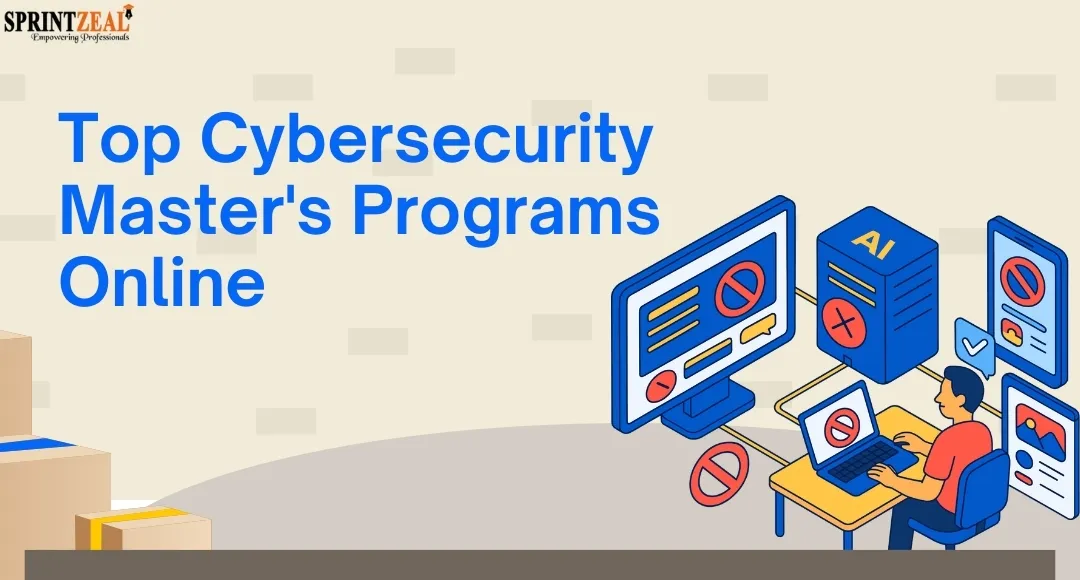
The threats in cybersecurity of today require leaders with quick and strategic thinking abilities. The financial losses from cyberattacks worldwide amount to trillions and the cybersecurity area still has to grow by almost 13% per year to satisfy the demand. So, the companies that can secure their critical assets are the ones that will hire the best and most qualified professionals.
Whether you are migrating from IT to security or simply taking another step up in the security area, these six online master’s in cybersecurity programs grant the working professionals needed flexibility, credibility, and career outcomes along with the possibility to do your trips, studies and work at the same time.
The program of UND stands out with NSA designation and customizable electives allowing you to create your own degree according to your career aspirations.
Before you assess certain programs, get familiar with the characteristics that distinguish outstanding cybersecurity graduate education from the mediocre ones. One of the features to take into consideration is the NSA/DHS award of being a Center of Academic Excellence in Cyber Defense (CAE-CD), which indicates that the curriculum and teaching are set according to very high national standards.
Check if the program is in line with industry frameworks such as the NICE Cybersecurity Workforce Framework. Think about the convenience of asynchronous content delivery, the option for different start dates and the timelines for the program to be completed that are all very reasonable.
Lastly, review additional certifications and the opportunity to work in practical labs that confirm employers’ appreciation of the candidate’s hands-on skills.
UND's online cyber security master program has been recognized as a National Center of Academic Excellence in Cybersecurity (NCAE-C) in Cyber Research and is also ABET accredited by the Computing Accreditation Commission. What separates them from the competition is the option for students to tailor their degree through stackable certificate tracks.
One mandatory Cyber Security Analyst certificate must be completed by the students along with two additional certificates from a pool that includes options such as Autonomous Systems, Cybersecurity and Behavior, and Data Security—this way the learners can align their careers with their studies rather than following a one-size-fits-all curriculum. The program has three start dates (fall, spring, summer) each year and links students with the center for access to cutting-edge projects.
Full academic coaching, library resources, career services, and 24/7 technical support are provided to online students. Leadership roles, such as Chief Information Security Officer, Director of Cyber Security, and Computer Network Architect, are the ones that graduates take on.
The Cybersecurity MS of the University of Arizona made entirely online is meant for the working people. The 33-credit interdisciplinary program brings together Management Information Systems, Electrical and Computer Engineering, and Systems and Industrial Engineering. When students complete the common core they can choose either the Information Systems track (securing software and cloud-based data) or Physical Systems track (protecting hardware and IoT devices).
The Information Systems track runs in an accelerated seven-week term, while Physical Systems follows a traditional fifteen-week semester. All courses are AACSB-accredited by the Eller College of Management, and graduates are eligible for the CISM designation one year of work experience.
Students will have to find out how far the systems will go through the use of penetration testing and hacking in the virtual labs. The NSA and DHS designate Arizona as a CAE-IAE.
The online master's degree in Cybersecurity Management at Purdue University Global is recognized by the NSA and DHS as CAE-CD. The focus of the program is on magnifying and strategic skills for higher positions rather than just technical implementation, hence information continuity, asset classification, compliance management, and incident response are all part of the curriculum.
Thus, graduates will be prepared for positions like those of an Information Security Manager and a Chief Information Security Officer. The faculty is made up of current professionals with backgrounds that include working with the Department of Defense and the curriculum is regularly reviewed by industry experts.
There are several start dates throughout the year and students can get recognition for certifications they have already earned in the industry. The military students receive very high tuition discounts and also have the chance to use their ACE-evaluated training towards getting a degree.
Through 2027, Bellevue University's online MS in Cybersecurity has the CAE-CD designation which highlights its affordability and at the same time rigorous standards. Among the faculty who provide students with experience in security operations are the professionals from the Department of Defense, U.S. Air Force, and NASA.
The areas of social engineering, offensive and defensive techniques, penetration testing, and risk management, among others, are included in the course. The Courtnage Intelligence Systems Lab puts students into a hands-on practice of a security operations center environment. The cohort-based structure makes scheduling easy—register once and take courses along with the same peer group.
Bellevue’s military-friendly policy offers a rate of $250 per credit hour for active-duty servicemembers, members of the National Guard, Reserves, and Coast Guard, as well as their spouses. The university also has a generous transfer policy for military training, helping students turn their service experience into credentials they can proudly display in military frames.
Among the online cybersecurity master's programs, Norwich is one of the oldest ones and has been a National Center of Academic Excellence since 2001. The federal authorities have allocated more than $90 million for research and education at Norwich's cyber centers. The program of 36-credits consists of six courses of 11 weeks each and offers specializations in Artificial Intelligence, Cybersecurity, or Information Warfare.
The collaboration with Hack The Box enables students to use the best platforms in the world for practice via hands-on challenges that are on par with the industry standards. Students who complete the training earn certifications that are connected to DoD job roles, which makes them more competitive when applying for federal jobs. The coursework consists of penetration testing and vulnerability assessment using professional tools such as Metasploit, Wireshark, and others.
Norwich claims that more than 90% of its graduates are already employed as cyber professionals in the areas of DoD, healthcare, education, and big corporations.
WGU's MS in Cybersecurity and Information Assurance takes advantage of a competency-based model that enables the student to learn at his or her own pace—when you pass through the assessment, you can immediately go to the next course. This system allows the professionals with experience to quickly go through the material that is already known to them.
WGU indicates that 63% of graduates complete their studies within 18 months, while some students finish in less than a year. A fee of $4,700 is applied for the six-month term, which is more economical than per credit fee charging, thus, the faster completion of the study would mean less total cost. The program of nine courses is compliant with NICE Framework, NSA Guidelines, and CISSP Common Body of Knowledge.
Besides the coursework, students obtain industry certifications like EC-Council Certified Ethical Hacker with the exam fees included in tuition—this is a huge benefit considering that these credentials cost hundreds if taken independently. A personal program mentor is assigned to each student for continuous assistance.
The Bureau of Labor Statistics anticipates a 33% increase in the number of information security analysts by the year 2033, and the entire industry will require hundreds of thousands of new managers by 2030. A master's degree obtained online gives you an advantageous position to seize these opportunities while still being employed.
Every program has its own unique benefits: UND offers the greatest degree of specialization flexibility with its NSA designation; Arizona merges business strategy with technical skills; Purdue Global provides a management-oriented and practice-centered preparation; Bellevue is the best option for those who cherish low prices and military compatibility; Norwich delivers the most powerful federal access; WGU is the most suitable for those who are experienced and can fast-track their process and want to have the certifications included in the tuition fee.
The process begins by getting information from the programs that fit your priorities, then you can assess the course sequences, faculty qualifications, and career support. The right program will create in you both the technical skill and strategic thought, preparing you for leading your company’s security posture for years to come.

Thu, 08 October 2026
Mon, 29 June 2026
Wed, 29 April 2026
Tue, 03 December 2024

Tue, 15 October 2024

Wed, 23 October 2024

Sun, 09 August 2026

Tue, 10 December 2024


© 2026 Sprintzeal Americas Inc. - All Rights Reserved.



 USA : +1315-322-7821
 UK : +44 7700 174870
 IND : +919036108287
 AUS : +61 480 005 455