Excel vs Power BI: Which Is Better?
Thu, 16 July 2026

Inspirational journeys
Follow the stories of academics and their research expeditions
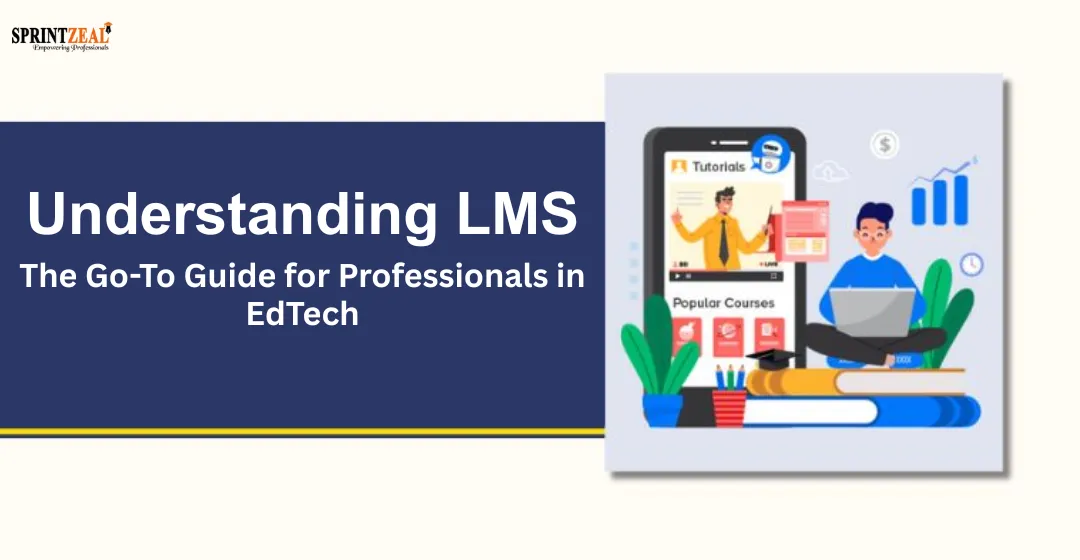
In this ever-transforming, technological, and digitized scenario, it is by no doubt that online learning is the new emerging realm in the field of education and educational advancements.
With the increasing demand and popularity of online classes and e-learning platforms, especially since the outbreak of the pandemic, there has been this growing need and requirement for online learning along with e learning platforms.
Hence, to get a very seamless experience through online learning, especially in this present age, various types of LMS software have been developed to enrich the design and management of several of your learning programs.
An LMS (Learning Management System) is a digital platform that helps organizations, along with various business firms, to deliver and manage certain forms of educational content. This educational content can range from online courses and blended learning programs to e learning programs and gamification-infused modules.
To understand in even simpler terms, an LMS
(Learning Management System) acts as a central hub for both learners and instructors by hosting various course materials, along with managing user access and producing certain analytic reports.
Even though their digital roots trace back to the 1990s with rudimentary systems, modern LMS platforms such as Moodle, Coursera, Blackboard, and Adobe Captivate have transformed into these feature-packed LMS systems and make use of AI, automation, and even augmented reality to improve the engagement of users.
In this present-day advancing scenario, there’s an emerging rise in the popularity of online learning, due to which LMSes have a variety of different functions and responsibilities in educational institutions.
LMSes (learning management systems) are usually used for knowledge management, i.e., the gathering and organizing of a company’s knowledge in the context of resources and people skills.
Yet, one critical thing we have to keep in consideration is that the function and responsibilities of the LMS will vary depending on the aims and strategies of the organization.
One of the core abilities of LMS (Learning Management System) is competing with video lectures and certifications, and, at the same time, hosting various asynchronous courses. For example, you can convert powerpoint to SCORM format and upload it to an LMS.
For example, you can convert powerpoint to SCORM format and upload it to an LMS.
Therefore, with the list of top LMS platforms we can observe how organizations and educators all over the globe use LMS software for various certification programs and compliance training.
Many programs mix self-paced e-learning with live instructor engagement.
LMS systems now support blended learning programs, thus enabling scheduling of ILT (Instructor-Led Training) or VILT, with progress tracking across modalities such as RedditAdministrate.
The best learning experiences include gamified elements such as badges, leaderboards, progress bars, and online learning games, which are quite useful when it comes to boosting motivation and retention.
Integrated LCMS (Learning Content Management Systems) and knowledge management frameworks help organizations create learning materials and capture certain valuable company knowledge. Tools like Adobe Captivate and Moodle come with built-in assessment features and offer rich content libraries. Other platforms like Paradiso Solutions and GyrusAim LMS also support these capabilities.
Next-gen LMS (learning management system) and LXP platforms make use of artificial intelligence to customize learning paths, recommend courses, and even adapt content based on user behavior.
Especially in the current scenario, we can see how AI-powered search, content tagging, and adaptive assessments are delivering truly learner-centered experiences, such as Wikipedia+2penceo.com+2Reddit+2.
Modern LMS systems these days are able to streamline user enrollments, reminders, and even cost management, which is quite useful when it comes to freeing up admin time and reducing manual workflows.
As remote work and digital learning are on the rise, secure content delivery and strong encryption protocols make sure that proprietary materials and data are effectively safeguarded from breaches.
Cloud-based LMS platforms and mobile app LMSes enable learning at any point in time from phones, tablets, and desktops to support various potential learners.
LMS platforms often integrate with HR systems, CRMs, single sign-on systems, and even TMS platforms, thus, in a way, providing smooth alignment between training initiatives and business processes.
Corporate compliance training uses LMS encryption and tracking for audit-readiness.
AI, augmented reality, gamification, and automation are also increasingly embedded in LMS software to enrich the learning outcomes and user engagement.
- User Registration & Role Assignment -
Admins import or manually create user profiles, defining their roles (learner, instructor, or admin) and assigning them to relevant courses or groups.
- Course Creation & Content Upload -
Course creators build modules using text, videos, SCORM/xAPI packages, and assessments, or import courses scripted in tools like Adobe Captivate. Optionally, an LCMS can streamline content creation and version control.
- Enrollment & Scheduling -
Learners are able to automatically or manually enroll in courses. For blended programs, LMS handles scheduling for ILT or VILT and syncs events with calendars.
- Delivery & Learning Experience -
Learners engage via the LMS UI, watching videos, completing quizzes, and participating in discussions and assignments, at the same time earning badges.
- Progress Tracking and Analytics -
The system records activity, such as logins, time spent, scores, completion rates, and feeds this into dashboards. AI-enabled LXPs may offer personalized dashboards along with smart recommendations.
- Assessment and Certification -
Instructors or built-in systems grade quizzes/assignments, with instant feedback for certain formats. At the same time, certificates can be auto-issued when criteria are met.
- Reporting, Cost, and Compliance Management -
Administrators pull reports showing learner performance and regulatory compliance. Budget tracking and ROI measures are also included in advanced platforms.
- Integration & Automation -
LMS integrates with HRIS, SSO, CRMs, and TMS software through APIs or LTI. Automations can trigger emails or even assign new courses based on role changes.
- Maintenance & Updates -
SaaS providers handle and navigate platform updates; self-hosted setups require internal maintenance. Open-source options like Moodle rely on community-based support.
- Scale & Security -
Modern LMSs are able to support thousands of users with uptime assurances and mobile optimization so as to accommodate remote learning.
Now, since we have had some kind of a brief understanding of some of the common uses of LMS (Learning Management System), especially in the sphere of online learning, we also must know that the advantages of using an LMS software are not just related to designing efficient online learning programs, but also many more far-reaching advantages that are extremely useful.
It is by no doubt that online learning programs are much more convenient and way more fun than sitting and attending long seminars or all-day lectures. This, in a way, also paves the way for more user enrollment and helps us to stay focused and learn with proper concentration and determination.
When a company takes the responsibility of providing training sessions and various other certification and learning opportunities for its employees, the employees will be able to see the commitment and immense efforts that the company has invested in them.
As per LinkedIn’s 2018 Workplace Learning Report, approximately 94% of the employees stated that they would remain at a firm for a longer time if it invested in their career.
When we join an organization, the first thing that is extremely essential for us to determine whether we have long-term prospects to work there or not is the onboarding process.
A well-rounded onboarding process helps in setting the path for our journey in that specific company. According to some studies, a very well-rounded and thorough onboarding process makes approximately 70% of the employees continue at the job for three or more years
Through online learning and certain personalized online courses, employees are able to gain more control over the learning process.
They have this advantage where they can take their own time to learn certain complex and complicated topics and even review the previous modules as required.
The Research Institute of America even found that e-learning is able to boost retention rates by around 25-60%
An LMS is also an investment when it comes to the future of e-learning in your respective organization.
Even though the expenses might be initially high, designing certain online and digital courses can, in a way, be cheaper when compared to managing certain in-person courses. Some firms and companies save thousands and even millions of dollars by effectively using online learning models.
Even though online learning might seem like a solitary activity, the prevalence of new user-friendly and collaborative learning platforms presents you with the chance to bring your employers into this sphere of accessing training requirements, designing popular and relevant courses, and at the same time, making space for leaving feedback.
Incorporating an online learning curriculum doesn’t really mean that you have to bring an end to or stop all your existing in-person training programs, since nowadays many organizations have blended learning programs that integrate the use of asynchronous LMS (Learning Management System) online learning programs along with instructor-led training or educational programs.
Even though we have read how LMSes offer several advantages and how they are extremely essential in this increasing shift towards e-learning, there are certain challenges associated with LMS that might cause some kind of a negative impact on upskilling and employees undergoing training.
Hence, it's important to understand some of these challenges that might affect the training process or the curriculum of LMS e-learning programs.
As per the research, the most commonly cited challenges in using LMS to improve effectiveness are a lack of proper integration and irregular reporting abilities.
A very intriguing fact is that these two challenges were also reported among the biggest enterprise LMS problems in learning measurement in a June 2007 ExpertusONE and Training Industry, Inc. study.
Without proper and efficient reporting abilities and an integration system, it is quite hard to provide business units with useful insights regarding the impact the training has on the specific business.
Now we can also agree that a proper and efficient skill is undoubtedly important to set up an LMS software and integrate it with the existing technological infrastructure of the company. We must also keep in mind that not all firms and companies have the required tools for this.
There are certain potential students and employees who learn and process things in a different manner from each other, and even grasp things better through certain personalized teachings. Yet LMS systems don’t really possess the fluidity to accommodate a variety of learning styles and meet the requirements of all students.
Certain LMS e-learning programs lack new digitized and built-in features, which are extremely essential for analyzing the performance of the student.
When it comes to the purpose and role, both LMS and TMS differ from each other. The individuals who work at the administrative level, along with the managers, make use of an LMS to design and develop engaging content for various potential learners.
In a similar manner, various employees specifically use LMS (Learning Management System) to enrich their knowledge and develop their practical and technical skills, which in turn will help them to boost their productivity in their respective workspaces.
On the other hand, the managers and various other admins make use of TMS (Time Management Systems) to organize and modify some of their training methods. This involves tasks such as scheduling training sessions, navigating the workings of trainers, as well as cost management
These two systems are usually merged to develop a very consolidated and seamless platform.
On one hand, we have our LMS, which manages processes like offering certain online courses and certifications to potential learners and interacting with them in the digital space.
On the other hand, the TMS handles and navigates various logistics that are required for training purposes.
Thus, a unified approach like this is appropriate only for in-person or virtual classes guided by trainers for large teams, when there’s a huge number of employees and instructors (or trainers).
There are various different types of LMS deployment options that might be truly beneficial for your knowledge. Some of these are being discussed here.
Cloud-based LMSes -
This type of LMS is hosted on the cloud, and they usually follow a software-as-a-service or business model. The provider mostly takes care of system management along with all the other essential updates and upgrades. Through this, it is very convenient for all the users to log in at any time by just using their password and username.
Third-party hosted LMSes -
These are usually managed by an external provider. For this, the courses, along with the training materials, are delivered from either the provider’s private data or a public cloud location, which again depends on the setup.
Self-hosted LMSes -
They require the firm or company to download and install the software on their own servers. This is also quite a convenient option since it provides much more creative freedom and customization, but still, the firm or company is responsible for the maintenance of the system and might also be required to pay for any kind of updates or technical support.
Mobile app LMSes -
These support on-the-go learning. These platforms are specifically designed for mobile phones, which makes it extremely easy for users to access and navigate training materials at any time and track their learning progress from their phones or tablets.
Open-source LMSes -
These are developed using publicly available code. With this type of deployment, firms and companies can freely modify the system to add certain features they want or even adjust functionalities to fit their needs.
Desktop application LMSes -
These are installed directly on the computer of the user. Even though the primary access point is the desktop, some versions might still allow access across multiple other devices.
Custom-built LMSes -
These are personalized systems that are developed by an internal team or through an LMS software consultancy that specializes in custom builds. Platforms like this are developed from the ground up to specifically include those features that the firm or company requires.
LMS Modules -
These are nothing but certain simplified learning tools that are built into broader HR systems. Even though these support specific training tasks, they don’t really offer the complete range of features available in standalone LMS platforms.
Learning Content Management Systems (LCMSes) -
These emphasize and focus mainly on the creation, management, as well as the delivery of training materials. Along with this, an essential point we have to keep in consideration is that these LCMs are also specialized tools built mostly for instructional designers and developers.
Some of the popular LMS software are discussed here for your in-depth knowledge
LMS (Learning Management System)—
As discussed earlier as well, an LMS is a software that is mainly used for navigating various online learning programs. These platforms often enable and enrich the process of online learning and are considered an important solution for strategizing and delivering various forms of online courses. Some of the traditional examples of LMS are Moodle, Blackboard, Adobe Captivate, and Oracle.
Along with this, another important thing we must comprehend is that LMSs were the growing roots of all the other e-learning solutions. Since the advancement of the technological sphere around online learning is emerging, various other types of online learning systems are also rising in popularity.
LXP -
Also referred to as LEP sometimes, it helps to distribute several online courses to employees in an exciting and captivating manner. Even though there’s some functional overlap between LXPs and LMSs, with many newer LMSs offering built-in LXP features, we often require both these software for an efficient learning environment. Certain popular examples of this include LinkedIn Learning and Docebo.
Through an LXP, the learning experience of the employee is customized, and this even allows the employees to go through various courses and choose those that fascinate them and reflect their career goals.
Collaborative Learning Platform -
Collaborative Learning Platform is a new type of software that is able to decentralize the online learning process and create a more user-friendly and flexible kind of learning scenario. Through collaborative learning platforms, any individual from a specific organization or firm has the opportunity to develop various forms of e-learning content.
SAP LMS Software -
SAP offers Litmos LMS, a very powerful cloud-based learning management system, which is designed specifically for enterprise training. It is very useful when it comes to helping organizations manage employee training, compliance, along with partner training in a very efficient manner, with improved analytics and integration with SAP’s broader ecosystem.
Adobe LMS Software -
It delivers an intuitive and media-rich experience, which is truly ideal for companies looking to deliver engaging training content since Adobe’s LMS not only supports interactive courses and certifications but also provides a very seamless integration with Creative Cloud tools.
Apple LMS Software -
Apple’s LMS tools, which include Apple School Manager and the Classroom app, focus on improving the sphere of digital learning in various schools.
Through incorporating a deep integration into iPads and Mac devices, Apple provides a very flexible and smooth educational experience, catered mostly for K-12 and higher education environments.
Google LMS Software -
Google Classroom is a very popular and user-friendly LMS for both educational institutions and educators. It is extremely convenient when it comes to simplifying course management and grading by integrating with Google Workspace tools such as Docs and Meet.
Microsoft LMS Software -
Microsoft Viva Learning, when integrated with Teams and Microsoft 365, transforms collaboration tools into a centralized learning hub. It allows employees to access content from LinkedIn Learning, Microsoft Learn, along with third-party LMS platforms within the Microsoft ecosystem.
Oracle LMS Software -
OLM (Oracle Learning Management) is developed and designed mostly to enrich the learning and training process of various employees and development across the corporate scenario. It combines seamless and efficient course creation along with powerful analytics through which it boosts and improves employee performance and paves the way for a more sustainable industry development.
Thus, we can agree that a learning management system has this extremely critical role where it streamlines and manages cost management by replacing physical classrooms.
They also maximize scalability for small to enterprise-level deployments and, at the same time, support UI-rich experiences, which undoubtedly play a major part in enriching the process of learner interaction.
They are also integral in certain compliance-heavy sectors, where encryption and secure content delivery guard confidential information.
Hence, no matter if you are seeking the best LMS for a small business or deploying a full learning management system, an LMS is considered a powerhouse for delivering structured and scalable learning experiences.
An LMS is a software that is mainly used to strategize, implement as well as access the various learning programs. Certain popular examples of this include Moodle, Coursera, Blackboard, and TalentLMS.
These platforms are truly useful to navigate the development process and delivery, as well as track several training materials and online courses.
One of the most commonly used LMS (Learning Management Systems) is Blackboard. Even though it is usually used by educational institutions, its role and uses are not just restricted to the sphere of education.
Blackboard is going through an emerging popularity in the business scenario and is mostly used for the training of various employees.
An LMS is a kind of software that allows you to strategize, develop as well as report on multiple training courses and programs.
There are various types of LMS software available, each of which offers various different functions and capabilities.

Thu, 16 July 2026
Fri, 31 January 2025

Tue, 18 February 2025

Thu, 24 September 2026

Fri, 30 May 2025

Wed, 28 May 2025

Fri, 23 May 2025
Wed, 18 June 2025

Fri, 18 July 2025
Wed, 30 July 2025


© 2026 Sprintzeal Americas Inc. - All Rights Reserved.

 USA : +1315-322-7821
 UK : +44 7700 174870
 IND : +919036108287
 AUS : +61 480 005 455