Excel vs Power BI: Which Is Better?
Thu, 16 July 2026

Inspirational journeys
Follow the stories of academics and their research expeditions
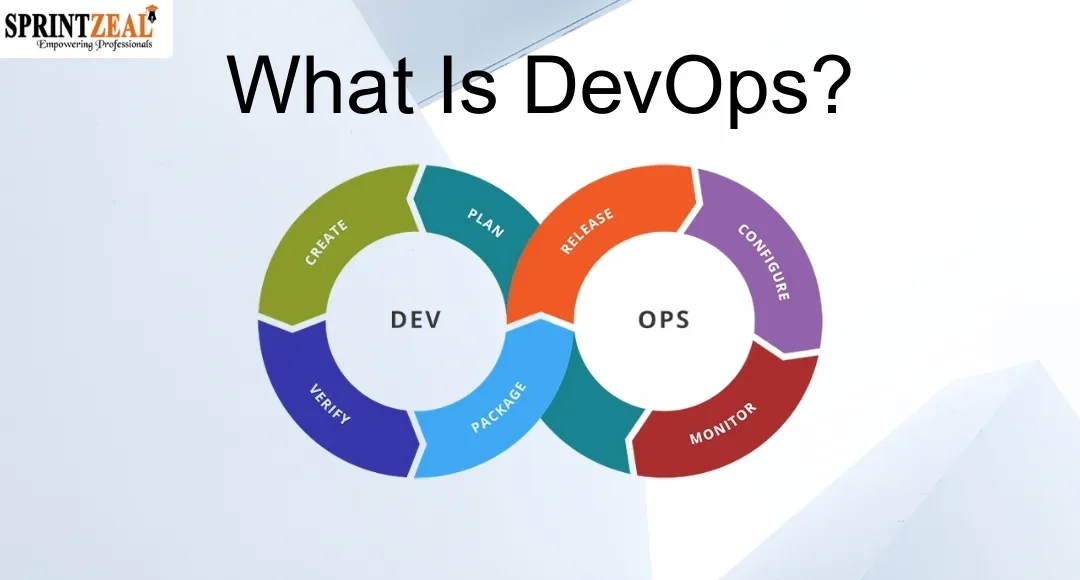
Speed in the digital world keeps accelerating; therefore, software has to leave the factory faster, receive updates more often, and still stay steady when traffic soars. DevOps is the reply to that pressure. Picture it as a joint effort—developers and operators sit at one table to design, build, test, roll out, and run every program with less friction.
Old-style development walls people off; one group writes the code, but another also handles servers. When handoffs wobble, outages and blame follow. DevOps topples the wall, favouring steady teamwork and repeatable machines as well as small continual fixes.
There are some practices that you need to know to perform well in DevOps; to get a gist of it, you can go through this blog on DevOps practices.
Organisations that follow the approach
- Ship software sooner without drops in reliability.
- Record fewer misfires and shorter blackouts.
- Strengthen trust among engineers, testers, or guardians of the servers.
- Unlock positions centred on cloud platforms and large-scale automation.
In short, the practice targets three persistent pains—speed, quality, and mutual trust.
Speed in the digital world keeps accelerating; therefore, software has to leave the factory faster, receive updates more often, and still stay steady when traffic soars. DevOps is the reply to that pressure. Picture it as a joint effort—developers and operators sit at one table to design, build, test, roll out, and run every program with less friction.
Old-style development walls people off; one group writes the code, but another also handles servers. When handoffs wobble, outages and blame follow. DevOps topples the wall, favouring steady teamwork and repeatable machines as well as small continual fixes.
There are some practices that you need to know to perform well in DevOps; to get a gist of it, you can go through this blog on DevOps practices.
Organisations that follow the approach
- Ship software sooner without drops in reliability.
- Record fewer misfires and shorter blackouts.
- Strengthen trust among engineers, testers, or guardians of the servers.
- Unlock positions centred on cloud platforms and large-scale automation.
In short, the practice targets three persistent pains—speed, quality, and mutual trust.
DevOps itself feels like a combination of two words which are closely related to each other. As this word stands for a mixture of terms for practices, principles, and cultural aspects that fuse together software development (Dev) and IT operations (Ops). The main objective of DevOps is to reduce the time it takes to develop a piece of software, at the same time continually delivering top-performing applications.
In other words, DevOps for a naive person is:
Developers and operations teams work together as a team. Automation takes over repetitive manual work. Software is constantly being developed, tested, and released. Significantly, DevOps is far more than just a tool or a single job function. While tools can help DevOps, at its core, DevOps is a collaborative and efficient work culture.
DevOps is crucial nowadays because most software applications are cloud, based, constantly updated, and have a large number of users.
Main reasons why DevOps is necessary:
DevOps lifecycle is an endless loop with stages feeding each other one after another and enabling the rapid and reliable software delivery.
Plan
Code
Build
Test
Release
Deploy
Monitor
Example: If there were a bug in Waterfall, it might be detected only after several months, while in DevOps it is found within a few hours via automated testing.
DevOps vs Waterfall Model
The Waterfall model employs a fixed, stepwise process, whereas DevOps is more about adaptability and rapidity.
Speed:
Risk:
Collaboration:
Example: If there were a bug in Waterfall, it might be detected only after several months, while in DevOps it is found within a few hours via automated testing.
DevOps vs Agile
Agile and DevOps are two different methodologies that can work together .
How Agile and DevOps Work Together
Agile is great for speeding up the development process, whereas DevOps guarantees that those developments are made available to the users without any hiccups.
Through its collaborative design and automated processes, DevOps transforms software development by uniting development and operations teams who use continuous enhancement methods to deliver software products at higher speed and better quality.
The essence of DevOps is automating the whole process of taking code, from its initial commit until it reaches production, using Continuous Integration and Continuous Deployment, in short known as CI/CD.
The system reduces release times from several weeks down to multiple hours while it improves software stability and decreases the period required to launch products. The commit of the feature branch by the develop will cause tests to run right away and then automatically deploy the change to production once tests pass, without requiring ticket approval or any other verification process.
Infrastructure as Code (IaC) enables users to create and manage their infrastructure through scripts or files that describe their desired state using Terraform or Ansible to achieve server provisioning and cloud resource management.
The system creates identical environments for all builds while it shortens the time needed to expand operations and it removes the possibility of human mistakes and it works together with version control systems to create easy rollback options.
Development teams achieve consistent environments throughout their entire development process while they create their disaster recovery systems and they expand their operations without encountering operational delays.
You can create servers through IaC by committing an IaC file to Git which triggers pipelines that apply the file to all environments within minutes.
The system creates identical environments for all builds while it shortens the time needed to expand operations and it removes the possibility of human mistakes and it works together with version control systems to create easy rollback options.
DevOps is based on an interaction between the professional mindset and the technical implementation. Although the philosophy of the idea is focused on the collaboration, the actual set of tools is what changes these ideas into a scalable, automated reality. For organizations moving from theory to practice, a structured DevOps implementation engagement helps ensure that tooling choices, pipeline architecture, and team workflows are aligned from the start — rather than pieced together reactively as pressure mounts.
The CI/CD pipeline functions as the core engine of today's software distribution, fully automating the path from writing code to delivering it to production.
Jenkins: This open-source software automation server is still one of the most widely used tools in enterprise-tier settings. Its major advantage is the huge plugin library that provides the necessary flexibility to create sophisticated, multi-stage pipelines perfectly matching the organisation's requirements.
Want to know more about this tool? Not sure what it is? Check out this interview question blog on Jenkins.
GitHub Actions: Automating directly in the version control repository turns GitHub Actions into a very user-friendly tool for cloud-native teams. It can handle the automation perfectly based on certain events like pull requests or code pushes.
How do teams determine if the trade, off between the deeply customizable Jenkins and the more straightforward and native experience of GitHub Actions is worth it when comparing these platforms?
Today, software engineering necessitates environments to be stable and able to be reproduced. This is realised through the notion of treating infrastructure as rigorously as application code.
The container usage has removed a significant number of the usual frictions between development and production environments.
Docker: With Docker, an application can be bundled along with its entire environment into a single image. Such an image can be used throughout the development lifecycle, ensuring that at each stage the environment is the same.
Kubernetes: As a central control system for the cloud infrastructure, Kubernetes manages a set of containers. It is responsible for the crucial tasks of auto, scaling, load balancing, and self, healing, thus ensuring high availability and dependable service.
Leading cloud providers have the elastic infrastructure that experiments with rapid speed and have the ability to scale globally.
AWS:
Delivers an extremely broad service portfolio, which can satisfy the technical needs of almost any business and its legacy integration.
A cloud platform that is a common selection of companies that have deeply integrated their businesses with the Microsoft ecosystem, as it offers very good integration of Windows, based technologies.
Google Cloud (GCP):
It is often the choice when requiring the best container management through GKE and making use of the high, level data processing features.
As the architectural complexity grows, how much emphasis should be made by businesses on managed cloud services rather than keeping platform, agnostic portability?
Cultural Foundations and Continuous FeedbackAt the end of the day, the aim of DevOps is to bring together people and processes to provide continuous value. Tools, on the other hand, serve as a means of speeding up the process, but the foundation of success in the long run lies in a culture of continuous feedback and iteration. With the help of automation, professionals are freed from the execution of low, level tasks thus are able to focus on higher, level improvements while the department environment continuously self, learns and self, improves through frequent deployments, data feedback, and iterative actions.
Before listing the advantages, it helps to recall what DevOps actually is. In daily practice it is a method of delivering software in which developers and sysadmins share the same automation tools, the same delivery pipeline plus the same responsibility for whatever runs in production. The aim is plain - ship better releases in less time and with fewer defects.
Below are the ways this approach profits a company, not only on the technical side but also in terms of business growth.
The clearest gain is speed - classic release sequences last weeks or months because each step - development, testing, hand over - waits on manual checks but also sign offs. DevOps replaces that sequence with a single automated flow.
Under DevOps
- Code merges to the mainline multiple times a day, not after “big releases”
- Automated suites detect faults within minutes of each merge
- CI/CD pipelines push the change into production without drama
Example - A user reports a fault - the same team writes the patch, triggers the automated tests and promotes the build through the pipeline, all within the same working day. Customers notice the fix before they have time to complain again as well as the firm retains its competitive edge.
Velocity counts for nothing if the service falls apart – DevOps raises quality – testing and reviewing code continuously.
DevOps secures quality by
- Running unit or integration checks automatically for every commit
- Requiring peer review of every change through pull requests
- Using staging environments that match production systems
- Monitoring performance after deployment
Many businesses think that implementing DevOps is costly because it requires tools, cloud platforms, and automation systems. But, in fact, DevOps drastically lowers the operational costs of the business over time.
How DevOps cuts the costs:
Example:
Instead of engineers configuring servers for every environment manually, DevOps teams employ Infrastructure as Code and automation scripts to do the entire setup within minutes. This not only reduces human error but also saves a few hours of work every week.
This is the top merit of DevOps that deployment becomes more reliable and stable. Failure in deployment in traditional ways is often attributed to different causes like environment mismatch, missing dependencies, or last, minute configuration issues.
DevOps improves deployment success through:
Usually, one of the initial questions that learners ask after comprehending the benefits is: "If DevOps is so significant, what are the exact duties of DevOps professionals?"
What Does a DevOps Engineer Do?A DevOps engineer serves as the link between developers and IT operations. Their role is not simply tool handlingit is more about creating efficient delivery systems.
The main duties revolve around:
Building and maintaining CI/CD pipelinesAutomatic provisioning of applications & InfrastructureCreating instance groups (VMs) and setting up cloud services / monitoringCreating Standard Operating Procedures (SOP) and maintaining themMonitoring infrastructure health, coordinating incident responseIntegrating security into the deployment pipeline. For instance developing a pipeline to take code from Github and build, test, scan for vulnerabilities and deploy to production with little to no downtime.
Core DevOps Skills to Know
If you want to succeed as a DevOps engineer and continue to grow in your career by pursuing further opportunities within DevOps, then you'll need to understand what the main DevOps skills needed by companies are.
Below are the most in, demand DevOps skills:
Scripting
Cloud Computing
CI/CD
DevOps is a career choice that practically keeps itself going.
Since it answers the global call for quicker delivery of software and automation, it even turns a whole field of beginner professionals into top executives.
Along the way, practitioners get quite proficient in various tools used in CI/CD pipelines, cloud platforms, and infrastructure as code, while they can speed up their promotion through getting certified and working on projects.
To know more in detail how to follow the path towards your dream job, make sure to read this article on DevOps Career Path
Entry, Level Roles
Begin your career as Linux Admin, Build & Release Engineer, or Junior DevOps Engineer, concentrating on simple scripting, version control such as Git, and tools like Jenkins for the builds. These roles comprise supporting deployments and monitoring and usually require 0, 2 years of experience and initial knowledge of Linux, Docker, and AWS basics.
You can expect salaries in the range of $60, 000, $90, 000 per year, with a fast track to the next level through close work on automation tasks.
Mid, Level Progression
Rise to the level of DevOps Engineer, Cloud Engineer, or Site Reliability Engineer (SRE) after 2, 5 years, when you will be responsible for designing scalable CI/CD pipelines using Kubernetes, Terraform, and monitoring tools like Prometheus. Your scope of work will be extended to the optimization of infrastructure, guaranteeing 99.9% uptime, and cooperating with both dev and ops teams.
Incomes go up to $90, 000, $130, 000, however, there are also chances in such frontline fields as fintech and e, commerce.
Senior - Level Expertise
Get to a Senior DevOps Engineer, DevOps Architect, or Platform Engineer level with 5, 8+ years of experience. You will be responsible for architecting enterprise, wide platforms, implementing GitOps, and leading migrations to multi, cloud environments.
Advanced security (DevSecOps), cost optimization, mentoring junior developers on observability stack technologies.
Total compensation typically exceeds 130,000 to 180,000 annually due to the major business impact from a strategic perspective on enabling business agility.
Job Titles as a Leader
Devops lead, cloud operations manager, head of engineering platform (10+ years of experience), general manager for teams (overseeing) and strategic alignment of DevOps within the C suite strategic goals and driving product/team/platform engineering efforts for the AI and ML workloads growing rapidly. Requires behavioural skills in addition to technical proficiency, particularly in edge computing, when implementing a strategic plan.
Top salaries in this field are 160,000-200,000+, with potential pathways to Chef Technology Officer (CTO) roles in growth focused organizations.
|
Level |
Core Technical Skills |
Certifications |
Salary Range (USD) |
|
Entry |
Linux, Git, Docker, Jenkins |
AWS Certified Cloud Practitioner, Docker Certified Associate |
$60K-$90K |
|
Mid |
Kubernetes, Terraform, CI/CD, Prometheus |
AWS DevOps Engineer, CKAD |
|
|
Senior |
IaC, Helm, Observability, Security |
CKA, Terraform Associate |
|
|
Leadership |
Platform Strategy, FinOps, Mentoring |
$160K+ |
DevOps is essentially a more intelligent approach to the construction and distribution of software in other words, developers and operations collaborate rather than work independently. Through automation, CI/CD, and monitoring, teams are able to deliver updates more rapidly and with less issues. If you are unfamiliar with DevOps, this blog serves as a very simple starting point for understanding it and if you wish to learn in a more organized way, here is an DevOps Certification Training course.
DevOps is the combined process of development and IT operations teams to build and deploy software better.
DevOps has the capability to automate everything that can be automated in the software delivery process. From steps including the building, testing and deploying of software. One more strong aspect of DevOps is that it ensures that application reliability and performance is not compromised.
Overall, virtually every technology company from high tech start-ups to many large brand-name vendors such as Amazon, Google, Microsoft, Netflix and IBM, has a DevOps practice.
DevOps is implemented in industries such as IT, banking, healthcare, e-commerce, telecommunications, education, gaming, and basically any industry that is developing software.
DevOps is considered more of a methodology and culture than a tool. For example, Jenkins and Docker are useful tools to help facilitate the use of DevOps.
Devops has primary goals like how it can include the process of reducing how quickly changes are delivered to customers. To reduce mistakes made while creating changes, along with that it increases the productivity of developers, and providing frequent and stable deployments.

Thu, 16 July 2026
Fri, 31 January 2025

Tue, 18 February 2025

Thu, 24 September 2026

Fri, 30 May 2025

Wed, 28 May 2025

Fri, 23 May 2025
Wed, 18 June 2025

Fri, 18 July 2025

Wed, 30 July 2025


© 2026 Sprintzeal Americas Inc. - All Rights Reserved.

 USA : +1315-322-7821
 UK : +44 7700 174870
 IND : +919036108287
 AUS : +61 480 005 455