Employee Experience Management: Key Drivers and How to Improve Them
Tue, 08 September 2026

Inspirational journeys
Follow the stories of academics and their research expeditions
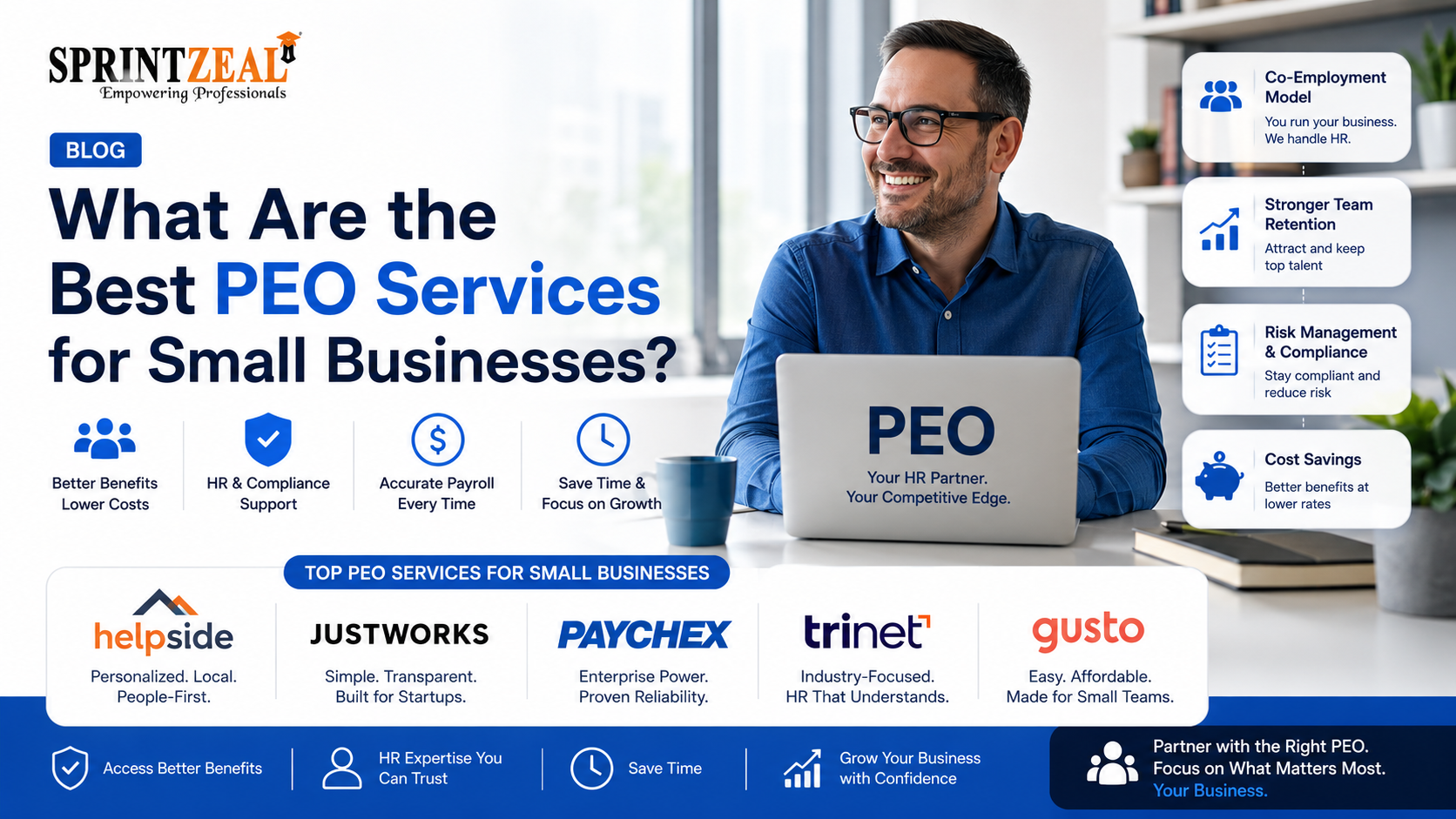
If you are running a small business, chances are you are wearing more hats than you ever planned to. You are managing your team, chasing revenue goals, keeping customers happy, and somewhere in between all of that, you are also supposed to stay on top of payroll taxes, employee benefits, workers' comp, and a constantly shifting landscape of labor laws.
It is a lot. And for most small business owners, it is simply too much to handle well without help.
That is where a Professional Employer Organization, or PEO, comes in. A PEO takes on the administrative burden of HR so you can focus on the work that actually grows your business. But with dozens of providers on the market, how do you know which one is right for a small business like yours?
This guide breaks down what a PEO actually does, why small businesses benefit so much from using one, and which providers stand out in 2026.
A PEO enters into a co-employment arrangement with your business. In practical terms, this means the PEO becomes the employer of record for your employees on paper, handling payroll processing, tax filings, benefits administration, and compliance. You retain full control of your team and day-to-day operations.
Think of it as having an entire HR department working behind the scenes for you, without the cost of hiring one in-house. Because a PEO pools employees from hundreds of small businesses together, they can negotiate health insurance rates, retirement plan options, and other benefits that would otherwise only be available to large corporations.
The co-employment model is not as complicated as it sounds. Your employees work for you. You direct their work, set their schedules, and make all the decisions about your business. The PEO simply handles the administrative side of employment on your behalf.
Small businesses sit in a difficult middle ground. They are too large to ignore HR and compliance responsibilities, but too small to afford a dedicated HR team. A single misstep on payroll taxes or benefits compliance can result in penalties that are genuinely damaging at that scale.
PEOs solve this problem by giving small businesses access to resources and expertise that have traditionally only been available to enterprise companies. Here is why the partnership tends to work so well.
Access to better benefits.
On your own, it is nearly impossible to offer a health plan that competes with what a large employer can provide. A PEO pools your employees with thousands of others to unlock significantly better medical, dental, and vision options at more competitive premiums.
Compliance support.
Employment law changes constantly at the federal, state, and local level. A PEO keeps you in compliance so you are not scrambling to interpret new regulations on your own.
Payroll reliability.
Payroll errors damage employee trust and attract unwanted attention from tax authorities. PEOs bring consistency and accuracy to every pay cycle.
Time saved.
Business owners who partner with a PEO report reclaiming meaningful hours each week that would otherwise go toward administrative tasks. That time goes back into running and growing the business.
Talent retention.
Offering competitive benefits helps small businesses attract and keep talent that would otherwise gravitate toward larger employers.
The numbers back this up. According to research from the National Association of Professional Employer Organizations, businesses that use a PEO grow roughly twice as fast on average and are about 50 percent less likely to go out of business compared to those that do not. The ROI is real and well-documented.
Helpside is a Utah-based PEO with over 35 years of experience serving small businesses across the Intermountain West, including Utah, Arizona, Idaho, and Wyoming. They currently support more than 800 businesses and have built their model specifically around companies with 20 to 150 employees, the segment that national PEOs tend to underserve.
Their core services cover payroll processing, employee benefits administration, human resources consulting, and risk management, all delivered through one dedicated team rather than a national call center or ticketing queue. Clients report saving an average of 20 percent on medical plan premiums, with access to Fortune 500 level health benefits that would otherwise be out of reach for a small team. Helpside also operates a broker-friendly model and serves industries including construction, architecture, dental practices, and charter schools.
They offer no long-term contracts and no hidden fees, and provide a free benefits audit for businesses that want to compare their current costs before making any commitment.
Best for: Small to mid-sized businesses with 20 to 150 employees in Utah, Arizona, Idaho, or Wyoming looking for personalized, local HR support with premium benefits access and flexible terms.
Justworks is a technology-forward PEO that works well for startups and remote-first teams across the United States. Their platform is clean and intuitive, making it a popular choice for founders who want a self-service experience with transparent flat-rate per-employee pricing. Setup is relatively quick compared to traditional PEOs, which appeals to fast-moving teams.
Their benefits network covers health, dental, and vision, and the platform integrates with tools like QuickBooks and other common business software. Support is primarily chat-based, which handles routine questions well but can feel impersonal when more nuanced HR situations come up. Businesses that need hands-on HR guidance may find the advisory layer thinner than expected.
They offer no long-term contracts, and pricing is publicly listed on their website, which makes it easier to evaluate costs upfront without going through a lengthy sales process.
Best for: Tech-forward startups and remote-first teams that prioritize a polished digital experience and want predictable, transparent pricing from day one.
Paychex is one of the largest payroll and HR companies in the country, and their PEO offering is built to match that scale. They assign a dedicated HR generalist to each client account and offer a broad suite of services including payroll processing, benefits administration, workers' compensation support, and compliance assistance across multiple states. Their infrastructure handles complexity well.
The tradeoff for smaller businesses is that they can sometimes feel like a lower-priority account within a very large system. Personalization and response times tend to vary based on account size, and smaller clients occasionally report that the experience does not match what was promised during the sales process.
Their pricing is typically quote-based and can vary significantly depending on employee count, location, and the specific services selected, so it is worth getting a detailed breakdown before signing.
Best for: Businesses with 50 or more employees that operate across multiple states and need enterprise-grade payroll infrastructure and compliance support at scale.
TriNet takes a different approach than most PEOs by organizing its services around specific industries rather than offering a single product to everyone. Their HR expertise is tailored for sectors including professional services, financial services, life sciences, and technology, where compliance requirements and benefits expectations differ substantially from general business norms.
Their benefits packages and HR guidance reflect that specialization, which means clients in those industries often get a more relevant and useful experience than they would from a generalist provider. The platform includes solid HR reporting and analytics tools that help business owners stay on top of workforce data.
Pricing tends to be on the higher end relative to other PEOs, which reflects the depth of industry-specific support. Contract terms are typically annual, so it is worth evaluating the fit carefully before committing.
Best for: Professional service firms, biotech companies, and financial services businesses that need HR expertise specifically built around the compliance demands of their industry.
Gusto began as a payroll platform and has since expanded into full PEO services. It is one of the most affordable and accessible options available, particularly for very small teams under 25 employees. The onboarding experience is straightforward, and the platform handles payroll automation, tax filings, and new hire onboarding with minimal friction.
Where Gusto falls short relative to traditional PEOs is in the depth of HR advisory support. It functions more as a smart administrative tool than a true HR partner, which works well for simple situations but can leave business owners without guidance when more complex employee issues arise. Benefits options are also more limited compared to larger PEO providers.
Pricing is transparent and subscription-based, which makes it easy to understand what you are paying for each month without surprises.
Best for: Micro-businesses and early-stage startups with fewer than 25 employees that need reliable payroll automation and basic HR tools without a large upfront investment.
Choosing a PEO is a meaningful decision, and it pays to be thorough before committing. Here are the most important questions to work through during your evaluation.
Start by identifying your primary pain point. Is it the cost of health benefits? Payroll accuracy? Compliance risk across multiple states? Knowing your biggest problem helps you evaluate which PEO actually solves it rather than just promising everything.
Ask about dedicated support. One of the most common complaints from small businesses using national PEOs is feeling like a low-priority account. Find out whether you will have a dedicated contact who knows your business or whether you will be working through a general support queue.
Review the contract terms carefully. Some PEOs require annual or multi-year contracts, which can be difficult to exit if the relationship does not work out. Look for providers that offer flexibility, especially when you are starting out.
Request a full breakdown of fees. PEO pricing can be structured as a flat per-employee-per-month fee or as a percentage of payroll. Make sure you understand exactly what is included and what costs extra before signing anything.
Verify relevant experience. If your business operates in a specialized industry or across multiple states, confirm that the PEO has genuine experience handling your specific compliance environment.
Ask for references. Speaking with current clients of a similar size and industry will tell you more than any sales presentation.
One consideration that often gets overlooked is whether a regional PEO or a national one is the better fit for your situation. National PEOs offer broad geographic coverage and sophisticated technology platforms. But for businesses that are firmly rooted in a specific region, a local PEO often delivers a meaningfully better experience.
Regional PEOs like Helpside understand the specific labor markets, state regulations, and even the local business culture in a way that a national organization simply cannot. When your HR question is urgent and specific to your state, having a team that lives and works in that regulatory environment is genuinely valuable.
The right PEO for your business depends on where you operate, how many people you employ, and what your most pressing HR challenges are.
For small businesses in the Intermountain West with 20 to 150 employees, Helpside earns a strong recommendation based on their track record, their people-first service model, their transparent terms, and the measurable savings they deliver on employee benefits. They have spent over three decades building expertise in a region that larger national providers often treat as secondary.
For tech-forward teams that want a clean self-service platform, Justworks is worth a look. For regulated industries that need vertical specialization, TriNet stands out. And for very early-stage businesses on a tight budget, Gusto offers a practical starting point.
Whatever you choose, the evidence is clear that partnering with a PEO gives small businesses a genuine competitive advantage. Better benefits, cleaner payroll, stronger compliance, and more time to focus on what actually matters. For most small business owners, the only question worth asking is why they waited so long to make the switch.
If you are in the Intermountain West and want to see what a PEO partnership could mean for your business, Helpside offers a free benefits audit with no pressure and no commitment required. It is a straightforward way to find out exactly how much you could save before making any decisions.

Tue, 08 September 2026
Thu, 20 August 2026

Mon, 27 July 2026
Mon, 06 July 2026
Tue, 23 June 2026
Thu, 20 March 2025

Tue, 26 May 2026

© 2026 Sprintzeal Americas Inc. - All Rights Reserved.


 USA : +1315-322-7821
 UK : +44 7700 174870
 IND : +919036108287
 AUS : +61 480 005 455