Switching Into Strategy? The Best AI for Case Interviews With Live Exhibits
Fri, 09 October 2026

Inspirational journeys
Follow the stories of academics and their research expeditions
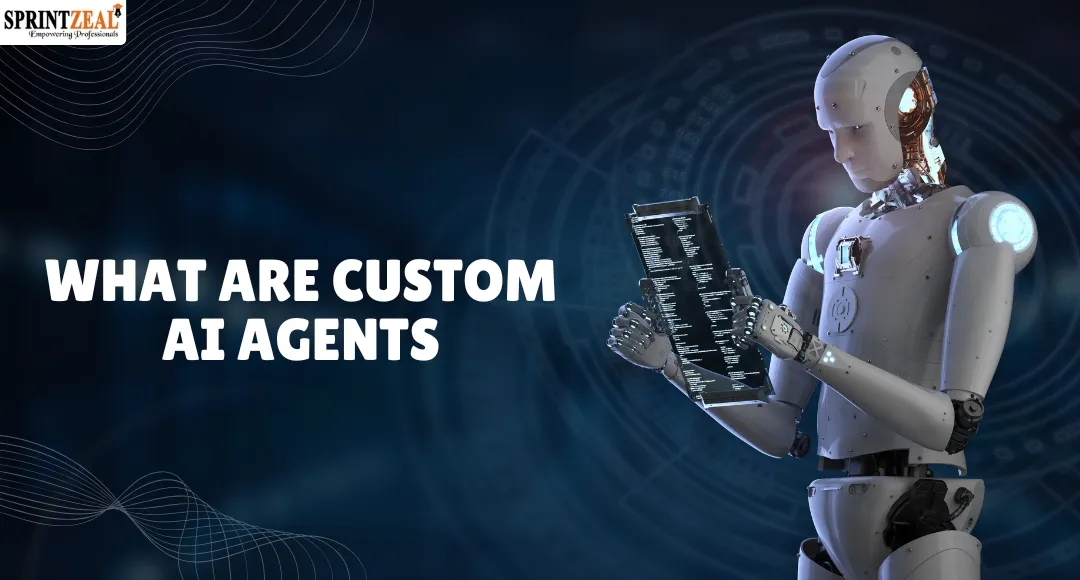
AI tools have changed the way teams work, but the real shift began when companies started asking for systems that behave more like teammates than software. That’s where Custom AI Agents come in. These agents don’t just answer questions or generate text. They can analyze the situation and make decisions.
An AI agent connects to the CRM, the analytics dashboards, the communication tools, the databases – whatever the team uses daily – and handles the repetitive parts automatically. Some companies use custom agents as assistants; others treat them as automated roles that take care of full processes end-to-end.
Custom AI agents aren’t meant for everything, but they shine in areas where humans lose the most time: routine communication, data movement, decision routing, and monitoring. Here are some examples.
Customer service teams deal with huge volumes of repetitive work. A well-built agent handles the predictable cases instantly and leaves the trickier ones for humans. A custom AI agent can:
access internal systems
update records
read and summarize conversations
follow escalation rules
trigger follow-up actions automatically
This blend of autonomy and structure is why many companies now rely on custom AI agents for customer service – not just for answering questions, but for keeping the workflow organized.
Most companies drown in tiny tasks. None of them is hard, but they pile up. An agent can take care of these pieces: watching for changes, nudging steps forward, sending notes, uand pdating systems.
Instead of building ten different automations, one well-designed agent can connect the dots and work across all the tools.
Sales work isn’t just calls – it’s a lot of admin. Logging info. Checking statuses. Following up. A custom agent can take over most of that and:
send reminders
schedule calls
prepare daily digests
identify stalled deals
draft follow-up messages
summarize activities for managers
The best AI agents don’t replace sales teams – they keep them focused on conversations, not administration.
HR departments handle numerous processes that rarely change but constantly repeat. A custom AI agent can manage scheduling, gather documents, answer policy questions, follow up with candidates, and notify managers when something requires human review. For larger teams, this removes a significant amount of routine clerical work.
One of the top AI agents use cases is real-time monitoring. Instead of having people check dashboards or dig through reports, an agent can watch key metrics and alert the right person immediately. This works for inventory, financial anomalies, marketing performance, system errors, and project delays.
Companies often discover that the agent becomes the first to notice issues long before a human would.
General AI tools are easy to try, but they rarely survive deep operational use. Custom AI agents, by contrast, are built around the company’s exact environment. That means they understand:
role-specific rules
Terminology
internal systems
approval logic
exceptions and edge cases
This is why companies usually turn to an AI agents provider instead of building everything themselves.The provider can educate the agent, incorporate it into current systems, establish boundaries, and guarantee it functions dependably on a large scale.
A further benefit is adaptability
As processes evolve, the agent evolves with them. Businesses don’t have to redesign everything each time a new tool or workflow appears.
Creating a custom agent isn’t about writing long scripts. The process usually looks more like designing a role:
define what the agent is responsible for
map the inputs it should watch
decide the systems it must access
establish its guardrails – what it can and can’t do
connect it to workflows
test it in real scenarios
let it learn from feedback and adjust
Teams often discover that once the first agent is working well, they start building more – an operations agent, a sales support agent, a QA agent, a finance assistant, etc. Over time, this becomes a network of agents that collaborate in the same way human teams do.
There’s no single “best AI agent” because each company’s needs are different. Some want speed; others want deep integrations; others need agents that can handle sensitive tasks. The goal isn’t to find the top AI agents in general – it’s to find or build the one that fits the company’s workflow so well that it feels like part of the team.
Conventional automation tools adhere to rigid, established guidelines. If X occurs, then perform Y. This approach functions well for straightforward tasks, but it fails when circumstances shift or context is important. Personalized AI agents function uniquely. They integrate rules with logic, situational understanding, and flexible decision-making. Rather than halting when an unforeseen occurrence happens, the agent assesses the scenario and selects the most appropriate reaction within its limits.
This ability to reason across systems is what makes AI agents seem less like programs and more like digital partners.
They are able to prioritize tasks, comprehend intentions, and modify their actions according to results. Eventually, this minimizes manual supervision and enhances uniformity throughout processes
The most significant benefits from tailored AI agents often emerge in positions where rapidity, uniformity, and scalability are prioritized over creativity. In rapidly expanding companies, operations teams find it challenging to manage the increasing volume. An AI agent isn’t stressed by 10 tasks or 10,000 tasks. It uses the same reasoning each time.
Custom agents hold significant value in workflows that span multiple functions. When a process involves sales, finance, and operations, delays in coordination frequently occur. An agent capable of interpreting signals from various systems and executing decisions automatically can significantly minimize friction and decrease cycle times.
Many companies start with a single agent focused on one narrow problem. Once that agent proves reliable, they expand. The next step is usually connecting agents together. For instance, a sales representative can transfer information to a finance representative, which subsequently initiates an operations representative to begin fulfillment.
This layered approach allows organizations to scale gradually. Instead of attempting a full AI transformation at once, teams build confidence and capability step by step. Over time, the agents become deeply embedded into daily operations.
Success isn’t measured by how “smart” the agent sounds. It’s measured by outcomes, an operating mindset reinforced in many leadership tracks, including a general management program. Companies typically track metrics such as response time reduction, fewer manual handoffs, lower error rates, faster deal cycles, or improved customer satisfaction.
In many cases, the most valuable sign of success is invisibility. When teams stop noticing the agent because the process simply works—a principle emphasized through ai agents certification—that’s when the real return appears.
Tailored AI agents are not a fleeting phenomenon. As systems increase in complexity and teams become more dispersed, the requirement for smart coordination escalates. Agents bridge that gap by serving as constant operators who maintain workflow.
Instead of substituting teams, they alter the way teams operate. People concentrate on strategy, decision-making, and relationships. Agents manage execution, oversight, and everyday decisions. The companies that gain the most advantages are those that view AI agents as integral components of their organizational framework rather than mere tools.
AI tools have changed the way teams work, but the real shift began when companies started asking for systems that behave more like teammates than software. That’s where Custom AI Agents come in. These agents don’t just answer questions or generate text. They can analyze the situation and make decisions.
An AI agent connects to the CRM, the analytics dashboards, the communication tools, the databases – whatever the team uses daily – and handles the repetitive parts automatically. Some companies use custom agents as assistants; others treat them as automated roles that take care of full processes end-to-end.
Custom AI agents aren’t meant for everything, but they shine in areas where humans lose the most time: routine communication, data movement, decision routing, and monitoring. Here are some examples.
Customer service teams deal with huge volumes of repetitive work. A well-built agent handles the predictable cases instantly and leaves the trickier ones for humans. A custom AI agent can:
This blend of autonomy and structure is why many companies now rely on custom AI agents for customer service – not just for answering questions, but for keeping the workflow organized.
Most companies drown in tiny tasks. None of them is hard, but they pile up. An agent can take care of these pieces: watching for changes, nudging steps forward, sending notes, uand pdating systems.
Instead of building ten different automations, one well-designed agent can connect the dots and work across all the tools.
Sales work isn’t just calls – it’s a lot of admin. Logging info. Checking statuses. Following up. A custom agent can take over most of that and:
The best AI agents don’t replace sales teams – they keep them focused on conversations, not administration.
HR departments handle numerous processes that rarely change but constantly repeat. A custom AI agent can manage scheduling, gather documents, answer policy questions, follow up with candidates, and notify managers when something requires human review. For larger teams, this removes a significant amount of routine clerical work.
One of the top AI agents use cases is real-time monitoring. Instead of having people check dashboards or dig through reports, an agent can watch key metrics and alert the right person immediately. This works for inventory, financial anomalies, marketing performance, system errors, and project delays.
Companies often discover that the agent becomes the first to notice issues long before a human would.
General AI tools are easy to try, but they rarely survive deep operational use. Custom AI agents, by contrast, are built around the company’s exact environment. That means they understand:
This is why companies usually turn to an AI agents provider instead of building everything themselves.The provider can educate the agent, incorporate it into current systems, establish boundaries, and guarantee it functions dependably on a large scale.
A further benefit is adaptability
As processes evolve, the agent evolves with them. Businesses don’t have to redesign everything each time a new tool or workflow appears.
Creating a custom agent isn’t about writing long scripts. The process usually looks more like designing a role:
Teams often discover that once the first agent is working well, they start building more – an operations agent, a sales support agent, a QA agent, a finance assistant, etc. Over time, this becomes a network of agents that collaborate in the same way human teams do.
There’s no single “best AI agent” because each company’s needs are different. Some want speed; others want deep integrations; others need agents that can handle sensitive tasks. The goal isn’t to find the top AI agents in general – it’s to find or build the one that fits the company’s workflow so well that it feels like part of the team.
Conventional automation tools adhere to rigid, established guidelines. If X occurs, then perform Y. This approach functions well for straightforward tasks, but it fails when circumstances shift or context is important. Personalized AI agents function uniquely. They integrate rules with logic, situational understanding, and flexible decision-making. Rather than halting when an unforeseen occurrence happens, the agent assesses the scenario and selects the most appropriate reaction within its limits.
This ability to reason across systems is what makes AI agents seem less like programs and more like digital partners.
They are able to prioritize tasks, comprehend intentions, and modify their actions according to results. Eventually, this minimizes manual supervision and enhances uniformity throughout processes
The most significant benefits from tailored AI agents often emerge in positions where rapidity, uniformity, and scalability are prioritized over creativity. In rapidly expanding companies, operations teams find it challenging to manage the increasing volume. An AI agent isn’t stressed by 10 tasks or 10,000 tasks. It uses the same reasoning each time.
Custom agents hold significant value in workflows that span multiple functions. When a process involves sales, finance, and operations, delays in coordination frequently occur. An agent capable of interpreting signals from various systems and executing decisions automatically can significantly minimize friction and decrease cycle times.
Many companies start with a single agent focused on one narrow problem. Once that agent proves reliable, they expand. The next step is usually connecting agents together. For instance, a sales representative can transfer information to a finance representative, which subsequently initiates an operations representative to begin fulfillment.
This layered approach allows organizations to scale gradually. Instead of attempting a full AI transformation at once, teams build confidence and capability step by step. Over time, the agents become deeply embedded into daily operations.
Success isn’t measured by how “smart” the agent sounds. It’s measured by outcomes, an operating mindset reinforced in many leadership tracks, including a general management program. Companies typically track metrics such as response time reduction, fewer manual handoffs, lower error rates, faster deal cycles, or improved customer satisfaction.
In many cases, the most valuable sign of success is invisibility. When teams stop noticing the agent because the process simply works—a principle emphasized through ai agents certification—that’s when the real return appears.
Tailored AI agents are not a fleeting phenomenon. As systems increase in complexity and teams become more dispersed, the requirement for smart coordination escalates. Agents bridge that gap by serving as constant operators who maintain workflow.
Instead of substituting teams, they alter the way teams operate. People concentrate on strategy, decision-making, and relationships. Agents manage execution, oversight, and everyday decisions. The companies that gain the most advantages are those that view AI agents as integral components of their organizational framework rather than mere tools.

Fri, 09 October 2026
Mon, 28 September 2026
Tue, 22 September 2026
Tue, 08 September 2026

Mon, 24 August 2026
Wed, 19 August 2026
Mon, 17 August 2026
Mon, 17 August 2026
Thu, 13 August 2026

Mon, 24 August 2026

© 2026 Sprintzeal Americas Inc. - All Rights Reserved.

 USA : +1315-322-7821
 UK : +44 7700 174870
 IND : +919036108287
 AUS : +61 480 005 455