Best AI Video Generators in 2027: Tested & Compared
Mon, 28 September 2026

Inspirational journeys
Follow the stories of academics and their research expeditions
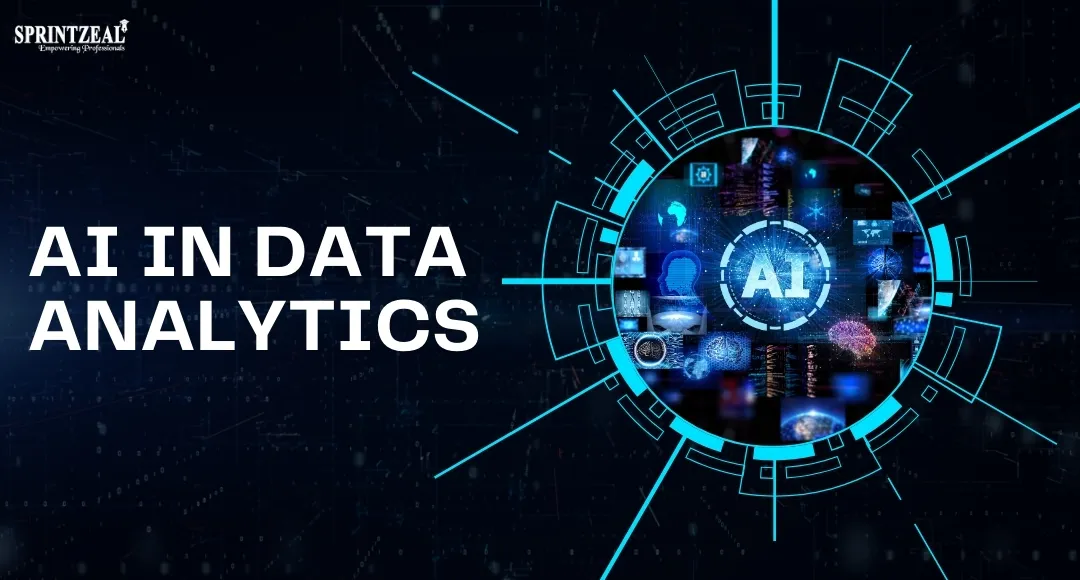
The present business world is largely influenced by an enormous overflow of data, known as Big Data. Dealing with this huge amount of both numerical and unstructured data sources requires skills beyond traditional statistical methods. As a result, the application of Artificial Intelligence (AI) is seen as the vital factor that changes the whole scenario. The data and AI relationship, which is very potent, is essentially changing the way firms get the meaning and the strategic worth of their data.
This change is a move of idea from mere descriptive reporting to predictive and prescriptive decision-making. With the help of sophisticated algorithms, AI in Data Analytics is turned on the spot into intervention-ready intelligence. The outcome of this is the creation of highly refined AI data insights. Thus, the cooperation between data analytics & AI is the condition for the survival of the game in the present world market. What results is an AI enhanced performance model in which the use of AI in data analytics at a strategic level not only fuels innovation but also pervades all the functional domains.
To properly discuss its influences on data processing, the first step is to define AI. AI (Artificial Intelligence) is a large area of computer science that is mostly about the development of computer systems that are able to do the work conventionally done by human beings in the areas of learning, reasoning, and problem-solving. The field concentrates on artificial intelligence systems exhibiting human-like intellect.
The AI capabilities of the present-day architectures are at the center of the modern Artificial Intelligence discussion and they are (mostly) dependent on certain computational techniques. The most prominent of these is machine learning, a method that gives systems the ability to learn from data, discover regularities, and make choices with little direct programming. A very important feature of this is deep learning, which employs artificial neural networks with numerous layers to model complex data, like images or natural language. The set of concepts behind these principles supports the existence of various sophisticated artificial intelligence tools, which have become the integration of numerous industries. For a deeper understanding of AI concepts, check out this blog, Understanding Artificial Intelligence
AI is very relevant to present-day data analysis because it can cope with Big Data's volume, velocity, and variety very well. Traditional analytics models are often incapable of processing in real-time and dealing with complex, non-linear data relationships. On the other hand, using AI in Data Analytics makes it possible to quickly accomplish the automation of a great number of tasks that are extremely time-consuming, like data cleansing, feature engineering, and anomaly detection.
The automated power is an AI in Data Analytics signature that enables the execution of continuous monitoring and pattern recognition. The discretion made by the AI for the data analysis mechanism tremendously improves the accuracy of the forecasts and the customization of the clients' interactions even at a large scale. Besides that, the work of a human AI data analyst changes from mere data handling to strategic interpretation and supervision, where he/she works together with the automated systems. The ultimate combination of AI and analytics. Thus, this means that the main concern is no longer reporting what happened but predicting what will happen, hence the necessity of data analysis using AI for organizations that want to perform at their best.
The incorporation of Artificial Intelligence is a revolutionary change in the way companies handle their data. Instead of just looking back, companies with the use of AI start to look at data in a whole new way. The era of "AI in Data Analytics" means organizations are now able to achieve far more with the use of intelligent algorithms. A contemporary "ai platform" is at the heart and is the most crucial element of the data pipeline. What these advanced "ai in data analytics" systems can do is not just the processing of huge datasets, but these systems can also perform complicated mathematical operations on a number of variables at the same time and do these operations thousands of times faster than the traditional ones.
Moreover, the use of AI to "ai predict" the market and "ai generate" a report or synthetic data that can be used for decision-making at the executive level is simply awesome. The widespread use of "ai automation" at every stage of the data lifecycle, from the moment data is captured to the time insight is delivered, is also made possible due to incessant "ai development" and improvement of these smart machines.
You can explore some of the most valuable programs in this field by checking out the guide to Top AI certifications.
Arguably, the first and the most prominent of the effects of AI in Data Analytics is the huge efficiency potential that can be realized through automation alone. The "AI automation" technology tackles those parts of the data pipeline that are the most boring and time-consuming, i.e., the cleaning, structuring, and transforming of the raw data. The collaboration between AI and automation is instrumental in workers' manual tasks being turned into machine tasks. Thus, the routine is drastically reduced. Key "ai features" in this domain are such things as automated anomaly detection and data flow management in real time. An "ai assistant" may alleviate the complex difficulties of data preparation by providing human analysts with in-depth guidance and instruction, thus enabling them to work more efficiently.
It is these fundamental "ai capabilities" that guarantee analysts less time to be wasted on data preparation and more time to be spent on strategic interpretation.
The main turning point for AI in Data Analytics change of power in the field of analytical investigations, is when the AI system is put to work in "predictive analytics" scenarios. The situation most clearly illustrating the close symbiosis between "machine learning and data analytics" is hence this issue. "Machine learning models" that have been exposed to mammoth-sized historical datasets are able to detect the intricate and subtle, as well as less-explored regularities. On the basis of such regularities, effective "ai predictive analytics" can be developed.
In particular, the use of "machine learning AI" enables the transition from a mere explanation model to one that can forecast events with a very high level of accuracy. Entities using "predictive analytics AI" can create complicated "ai predictions" and AI forecasting of almost anything, such as customer churn, market volatility, or even equipment failure. There is no doubt that this is the most important function of AI in Data Analytics when it comes to strategic business planning and risk management.
AI for Data Visualization & Insights
Even better than processing and prediction, AI is also the marketer's dream tool when it comes to the last stage of the data cycle: the communication of insights. Most of the time traditional ways of visually representing data are not only time-consuming but also not very flexible. The advent of "AI in Data Analytics" has however changed this and now it is possible for visual representations to be dynamic and context-aware.
Data visualization using AI can instantly see the most important trends in the data, decide the best chart types to use, and also point out the most critical anomalies. Thus, the time needed to carry out the whole process is cut dramatically. A sophisticated "ai dashboard" nowadays is an excellent interactive "ai data visualization" tool that is not only capable of answering natural language queries but is also able to create the bespoke views for different stakeholders. Hence, democratizing the enterprise-level complex analytical findings.
On the one hand, AI on its own is a power mover of any change in the field of data analytics. However, this transformation is due to a number of the most important AI breakthroughs, which basically form the foundation of the new data analytic systems. They embrace not only novel computational models such as machine learning and the superior sophistication of AI deep learning but also the revolutionary linguistic capabilities made possible by natural language processing technology. These technologies together represent the backbone of today's analytic systems, and their strategic integration makes it possible for firms to handle enormous volumes of data and identify intricate patterns that would otherwise escape human scrutiny. Moreover, the use of AI in Data Analytics in natural language processing and natural language AI has made it possible for systems to understand any type of unstructured data, such as customer feedback and documents, hence providing a direct linguistic interface with quantitative models.
The mutual enhancement of machine learning and deep learning represents the main idea of the most complex machine learning predictive analytics computational engine.
In a data-driven world, machine learning is the go-to technology for data analysis, as it is based on statistical models that are built through iterative learning from data, thereby achieving pattern recognition and decision-making with a programming effort that is kept to a minimum. Deep learning, being a branch of machine learning, utilizes artificial neural networks with multiple layers. The extensive and intricate structures of these networks empower ai deep learning and machine learning technologies to be capable of handling highly unstructured data, like images, audio, and text, and of reliable interpretation. In the situation where machine learning is suitable for linear prediction, deep learning has the ability to extract features and do complex, non-linear representation learning, which makes it indispensable for advanced data tasks.
Natural language processing (NLP) plays a pivotal role in changing the enormous unstructured textual information into manageable and concise data points for AI in Data Analytics. NLP AI makes it conceivable for a system to grasp, interpret, and react to human language. It consists of two primary units: Comprehend and convert the sense and reason of the input naturally, whereas NLG is the process of producing understandable and related-to-the-context language based on the structured input. NLU serves as a tool for the understanding of customer sentiments in reviews and emails, whereas NLG is exploited for the automatic generation of exhaustive summaries, reports, and narratives, thus fundamentally altering the mode of communication of analytical results.
The performance of any system for AI in Data Analytics is about the quality of the ai algorithms that implement the solution and the faithful ai statistical analysis that accompanies the algorithmic implementation. These algorithms vary from the most straightforward linear regressions that are used for initial forecasting to sophisticated ensemble methods like Random Forests and Gradient Boosting Machines, which improve their prediction power by the merging of multiple models. One of the most important applications is data anomaly detection, in which a set of specially designed algorithms constantly observe data streams that come in at high rates and in real-time to identify unexpected behavior or critical errors. Moreover, the basis of most predictive tasks is carried out by algorithms that are fine-tuned for machine learning predictive analytics, such as time series and classification algorithms, which enable transformation of the raw features of data into predictions and categories.
If you’re curious about where a career in analytics can take you, this guide to Data analytics career paths offers a clear roadmap.
AI’s theoretical frameworks have been translated into practical solutions of high value that spread across various organizational domains and form the critical ai applications and ai use cases. The strategic integration of artificial intelligence is, basically, the main tool for optimizing operations and enhancing customer engagement. Fundamentally, these applications are some of the least business intelligence ones that were significantly innovated with the help of AI in Data Analytics through the use of advanced analytical capabilities, which helped to solve the real-world business challenges and so led to the increase of efficiency and the generation of the new sources of revenue in an increasingly data-rich economy. The sections first of all cover those sectors where AI in business intelligence is immensely transforming effects.
The emergence of artificial intelligence (AI) in business intelligence is essentially the phenomenon that just came about that changes how the historical consumption of intelligence data is being done by business. Differences between traditional BI (Business Intelligence) tools and intelligent automated (business intelligence) AI systems comprise largely such factors of the first ones as offering mainly past insights and proposing real-time actions together with automatically generated next steps figured by the second ones. This creates opportunities for the inception of the term ai for decision-making," as the real-life process of making decisions based on AI recommendations comes into being. These instruments' phasing is a very good way for most organizations to move from being on the reactive reporting level towards proactive strategy formation by using such tools.
The use of intellectual AI in Data Analytics for business extends deeply into areas such as market condition analysis, supply chain optimization, and fraud detection, all of which allow predictive foresight that is essential for keeping the competitive advantage. The main purpose is to integrate the
AI analytical capabilities directly into the daily workflow so that data-driven decisions become instantaneous.
The implementation of AI in customer service has been a major change for companies in their relations with customers. Customer service AI technologies, commonly seen as intelligent chatbots and virtual assistants, employ Natural Language Processing (NLP) to comprehend and solve in a flash advanced inquiries. The use of AI for customer service is a good idea since the service is available all day and night throughout the week and routine transactions are also automated. The customer can take over a difficult problem with a human while the rest are solved automatically. This is a typical case of automation in the highest-impact category. Moreover, these advanced customer support AIs are equipped to analyze not only the mood of the person but also their behavior trends that enable them to customize the interaction and even forecast the customer's needs, thus greatly enhancing metrics of satisfaction and loyalty.
AI in predictive analytics works wonders and is highly beneficial in real-life scenarios across various industries for AI in Data Analytics. There are plenty of predictive analytics examples. For instance, AI can be used as a tool by financial institutions to assess credit risks. Similarly, retailers can forecast that there will be a demand surge if it is going to be a hot day based on input from social media or weather reports. Meanwhile, healthcare providers can prognosticate patient outcomes. These systems are never satisfied with just forecasting—they go further to provide complex, nuanced AI future predictions through the modeling of nonlinear relationships across thousands of variables. The main idea behind ai predictive analytics examples is that they do time-series forecasting, segmentation analysis for personalized marketing, and risk modeling, which are all heavily dependent on the algorithms that learn and adapt constantly to maintain their precision.
The integration of AI has been sped up considerably by the availability of user-friendly, sophisticated platforms and specially designed ai tools. These tools remove the barriers of complex analytical capabilities, thus enabling organizations of any size to utilize deep learning and predictive modeling. State-of-the-art ai analytics tools are in most cases cloud-based, thereby providing a scalable infrastructure with the data lifecycle already built-in through the functionalities.
Choosing the right AI in Data Analytics software is a very important strategic move because the appropriate solutions offer the required power for performing complicated tasks like real-time anomaly detection and advanced forecasting. This network of ai tools for data analysis is never-ending and moves at a very high pace. Thus, many new features are still being introduced, especially in the field of ai data visualization tools, which are used for easy communication.
If you’d like to understand the role and responsibilities of a data analyst, this detailed guide breaks it down clearly.
The field of AI in Data Analytics is characterized by the presence of a vast, diversified array of specialized software. The foremost products are capable of operating as a single ai platform. Hence, they offer a seamless environment for data preparation, model training, and deployment. The capabilities of these tools include, among others, the generation of automated ai insights, and low-code model building. In addition, analysts are now equipped with ai search innovation, enabling them to interrogate huge datasets with natural language. Thus, simplifying complex data exploration activities.
Besides that, the utilization of industry-specific pre-trained and custom-built ai models, from supply chain optimization to the creation of personalized recommendation engines, can be overseen directly within these cutting-edge ai platforms.
Most of the innovations that are instrumental in the data analytics revolution can be traced back to the efforts of a few major ai companies. Tech giants, which are the major ai data companies, usually provide a full range of cloud-based ai services, which include infrastructure, platform tools, and specialized applications.
In addition to these major providers, the community of niche-focused ai company startups and AI agent development services providers is very lively and they concentrate their efforts on, for example, advanced visualization or vertical-specific predictive modeling. The question of requirement for very highly tailored solutions has placed the position of independent artificial intelligence developers, who are the most responsible for customization and integration of these core ai services into the existing enterprise data architectures, at the forefront of the stage.
By the use of AI in Data Analytics the process is transformed to such an extent that the companies get elevated to the next level, where not only can they do basic reporting but also predictive modeling, decision-making that is automated, and pattern recognition at the level of a deep layer. AI (through machine learning (ML), natural language processing (NLP), and computer vision) dramatically changes the raw data, the data from different sources, and the unstructured inputs into business metrics. To facilitate the AI integration and AI implementation effectively, a well-organized plan is a must.
Step 1: Define the Use Case and Business Goal
First, pinpoint the problem of the highest value where the solution by ai would bring a measurable positive effect to the business (e.g., churn prediction, fraud detection). Defining success metrics in a clear way to check the return on investment is a must.
Step 2: Assess Data Readiness and Quality
Artificial Intelligence is a technology that makes possible its various uses only if provided with high-quality data that is in sufficient quantity.
Essential tasks: data inventory, data cleansing, preprocessing, feature engineering, and correct labeling. Data preparation for AI and machine learning takes up most of the time in a project.
Step 3: Choose the Right Model and Tools
Different problems require different algorithms:
Step 4: Model Development and Training
Use labeled data for training and a hold-out set for validation, and adjust hyperparameters to get better results.
Step 5: Interpret and Validate Results
Use explainability (XAI) tools such as SHAP or LIME to help the users to understand and thus trust. Also, domain experts can verify the results, further confirming that the business is aligned.
Step 6: Deployment and Monitoring
The model should be introduced to production systems, which are then observed for model drift. A time for model retraining will come when real-world data differs.
Challenge 1: Data Quality, Volume, and Bias
The point that is true for data when high-quality data are required for the construction of unbiased models is that biased data produce structurally biased models. In general, quite a lot of labeled data are needed for AI learning and AI-enhanced systems.
Challenge 2: Talent Gap
Creation and upkeep of AI systems call for a team consisting of data scientists, ML engineers, and domain experts, persons that are very scarce nowadays.
Challenge 3: Model Explainability and Trust
The description of the complex models may be referred to as "black boxes." On the one hand, this situation is dictated by regulatory requirements; on the other hand, stakeholder trust requires transparency, too.
Challenge 4: Scalability and Infrastructure (MLOps)
Only good MLOps practice along with a lot of computational resources can be capable of taking the AI system from a small-scale idea to full-fledged production.
Challenge 5: Ethical and Regulatory Compliance
The organizations are bound to respect privacy laws (GDPR, CCPA) and to provide for accountability and continuation of ethical principles when they are engaged in the process of developing AI systems.
If you’re preparing for job interviews in this field, this collection of Common data analyst interview questions will help you practice effectively.
The AI in Data Analytics embedded in everyday life, sophisticated new-gen AI and automatic revelations that change analytics from merely looking back at the data to proactive, autonomous thinking systems define the future of data analytics. The improvements of ai and ml, generative models, and MLOps have a direct impact on decision-making that becomes quicker and smarter across various organizations.
Large language models of AI in Data Analytics will radically alter the way users access and comprehend data by changing the analytics interfaces to natural language.
Democratized Querying
LLMs allow users to formulate complex questions in a conversational manner. In addition to translating natural language into SQL or Python, they also help to a great extent by breaking down the language barriers for people who are not experts and at the same time, ai can be utilized in business analytics workflows.
Unlocking Unstructured Data
With the help of LLMs, companies can extract data from various sources in different forms, such as documents, emails, audio files, and text. The latter is the data that makes up almost 80% of the total volume and has been left idle so far. Besides summarizing the data, by analyzing text they can identify themes, moods, etc.
Automated Reporting and Storytelling
LLMs take the data that are represented in the figures and tables of the dashboards and the output of the models and convert them into understandable stories for the reader that are time-saving for the analyst, as they do not have to explain and communicate them.
Code Generation for Analytics
LLMs facilitate the development of the next generation of LLMs that, by coding data cleaning, feature engineering, and model development tasks, will make the analytics lifecycle faster.
Once considered only as an assistance tool, AI in Data Analytics is now at the forefront of the transformation of enterprises as the main strategic driver of automation and intelligence.
Augmented and Prescriptive Analytics
The use of prescriptive analytics by businesses that integrate AI in Data Analytics in making recommendations for the best course of action represents a step forward for the companies from just being able to predict to being able to prescribe the future. The move here is a call for excitements that showcase the presence of ai for automation and ai for predictive analytics in operations.
Hyper-Personalization and Customer Experience
The use of AI in Data Analytics in a customer’s real-time needs has positive effects on advertising, recommendations, and service quality that lead to the maximization of customer value.
Autonomous Decision-Making
The decisions that are of low risk and high volume, such as pricing, routing, and trading, will be done by AI without human intervention, while humans will monitor them.
AIOps and Operational Efficiency
The application of AI goes far and wide into IT operations. It can spot anomalies, time failure situations, and record steps for self-healing systems. These functions are a testament to embedded AI and generating AI that is profoundly linked to the infrastructure both physically and logically.
AI is a significant change in the field of AI in Data Analytics that opens the way for companies to go beyond manual reporting by prescriptive autonomous decision-making. AI data analytics is becoming a must-have tool if a company wants to get faster and more profound AI insights and business transformation as data volumes continue to rise.
Strong data quality, dependable MLOps practices, and ethical governance aimed at reducing bias and meeting regulatory requirements are key to success. With LLMs turning analytics into a conversational and automated process, companies get the power of intelligence at scale, efficiency of operations, and betterment of analysis AI in all their activities.
By using well-planned implementation approaches and dealing with difficulties in skills, trust, and infrastructure, enterprises are in a position to harness AI in Data Analytics for hyper-personalization, automation, and strategic value.
To acquire such skills, you may consider Sprintzeal’s AI & ML Mastery Course and Sprintzeal’s Data Science Course. Reach out to us if you want to get started or know more.
AI allows for machine learning and automation through its capability of analyzing a large volume of data and finding patterns in that data and creating valuable insights in less time than it would take to use manual methods.
Unlike conventional analytical methods, which demand that users specify and inquire with their own questions, AI offers a method by which it can learn from data patterns and derive its own answers from that understanding.
Artificial intelligence also significantly improves data accuracy, discovers the trends that are less apparent, and offers a quite simple method for automating the repetitive reporting tasks through the speeding up of data processing.
The use of AI is not limited to the healthcare industry. The banking sector, retail businesses, manufacturing enterprises, and marketing agencies are equally benefiting from AI for their prediction, personalization, and efficiency needs.
Absolutely not. Artificial Intelligence is a tool that empowers human analysts by taking over the complicated tasks. however, human decisions are necessary to give the right context and make ethical choices.
The issues of data quality, algorithm bias, high prices, concerns over privacy, and demand for qualified professionals are some of the difficulties faced in the implementation of AI.
Companies can use AI in analytics by first understanding their business problem, then cleaning their data, running small-scale projects, and finally expanding their activities step by step along with employees' training.
AI is not an exclusive technology for big corporations anymore. With cloud computing and affordable AI tools, advanced analytics are accessible even to startups and small businesses.
The coming of AI means that businesses will be able to get insights in real-time, understand the working of the models easily, and have the AI systems integrated effortlessly into their everyday business tools for quicker and more informed decisions.

Mon, 28 September 2026
Tue, 22 September 2026

Tue, 08 September 2026

Mon, 24 August 2026
Wed, 19 August 2026
Mon, 17 August 2026
Mon, 17 August 2026
Thu, 13 August 2026

Mon, 24 August 2026

© 2026 Sprintzeal Americas Inc. - All Rights Reserved.

 USA : +1315-322-7821
 UK : +44 7700 174870
 IND : +919036108287
 AUS : +61 480 005 455